Should schools teach your kid how to use AI?
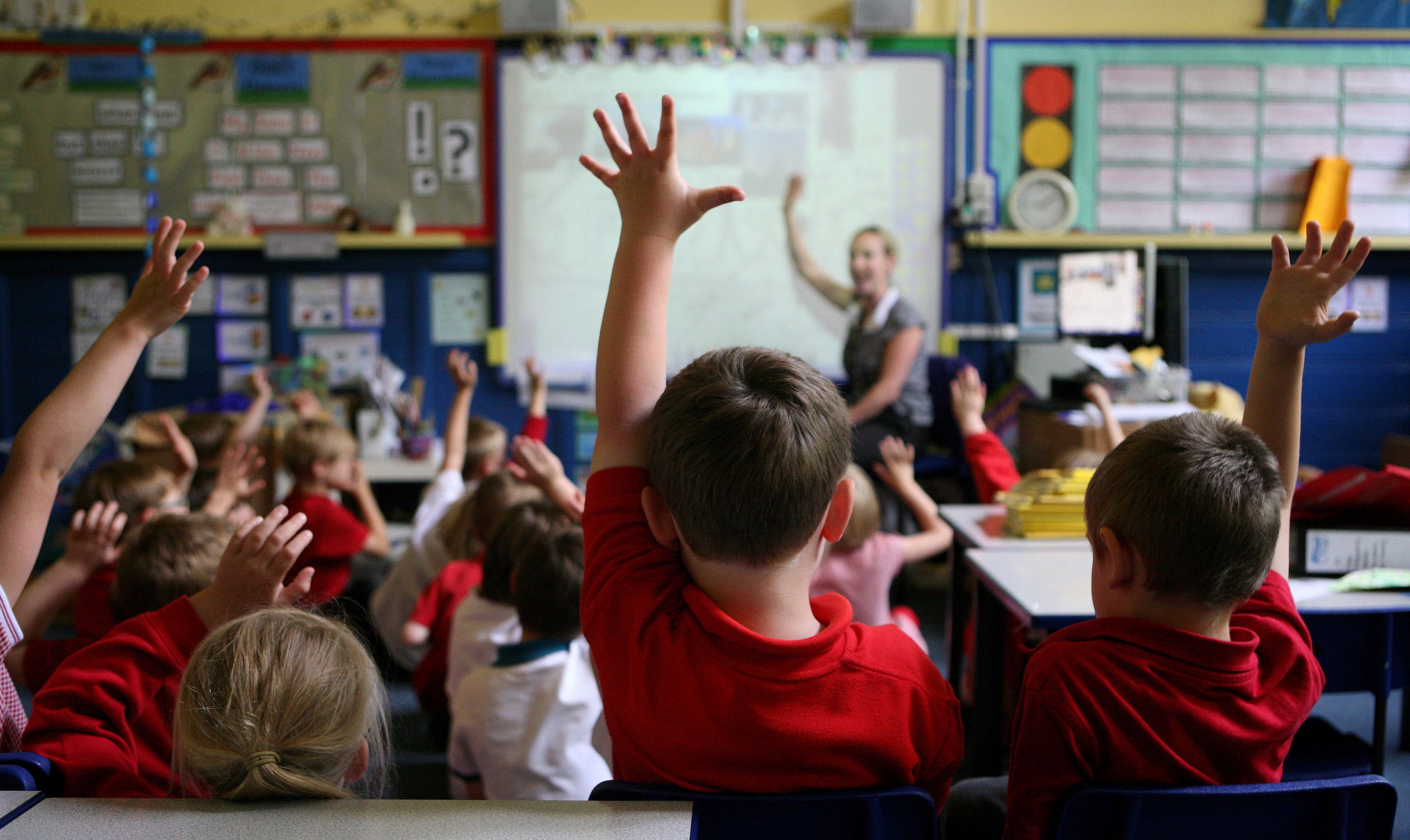
As the world struggles with the existential and moral implications of artificial intelligence, U.S. educators remain divided over its place in classrooms.
Should teachers encourage kids to use AI language models? While some still think the technology should be banned completely, for others the goal is now not to police kids’ usage, but to ensure that they are taught how to use it properly and safely.
“I think we owe it to our students and kids of this generation,” Shelby Reynolds, assistant director of instructional technology and library services in Washington’s Northshore School District, told The Independent. “If we're going to do our due diligence, I think that we should be using the safety of the walled gardens of our classrooms to be able to educate them in ways that are going to support them when they walk out into the world.”
Kids using AI for schoolwork is already a reality. Research published last October by College Board found that AI use was more prevalent than ever in America’s high schools, driven by tools such as ChatGPT, and is continuing to grow – with 84 percent of students reporting using generative AI tools to help with their schoolwork.
The same study found that half of high school students were using AI tools for schoolwork to brainstorm ideas, edit or revise essays, and/or conduct research and find sources.
 open image in gallery
“It's here. It's not going away, and it's literally in their pockets every day,” Reynolds added.
Mandatory AI literacy training is not yet widespread nationwide, though a growing number of high schools and school districts are beginning to enforce it. Boston Public Schools announced earlier this year that it plans to ensure all high school students graduate with AI literacy training, Atlanta Public Schools now automatically enrolls all seniors in a foundational AI Essentials course, and Irvine Unified School District previously introduced AI literacy lessons for students in grades 4 through 12.
Not all are happy about the emerging trend of AI integration at an early age. In March, more than 1,500 parents and educators in New York signed a petition calling for a ban on AI in classrooms, in response to guidance put out by the state Department of Education.
The AI Moratorium Coalition, which launched the petition, highlighted the guidance’s admission that “the long-term effects on how children learn, think, and develop in the era of AI are not fully understood,” and that “no school system in the world has accounted for all the implications.”
“Our main concerns are around the impacts on students developing brains and cognitive development,” Liat Olenick, a teacher and program director for Climate Families NYC, which is part of the AIM coalition, told The Independent. “All the research suggests that AI use can harm the development of the brain and children's ability to learn and retain what they're learning, which is what we all think the point of school is – learning.”
A 2024 study involving 1,000 students in Pennsylvania found that those who had access to ChatGPT solved 48 percent more practice math problems correctly. However the same group ultimately scored 17 percent less in a test than those who had not been helped by the AI – with researchers describing the chatbot as a “crutch.”
“There's a misunderstanding where people say, in order to be college ready, you need to learn how to use AI,” said Kelly Clancy, of Parents for AI Caution in Educational Spaces, also part of the AIM coalition.
“But kids are coming [to college] and they have no skills because they've just been allowed to use these programs to get their way through high school,” Clancy continued. “Using AI is the easiest thing in the world to do. What they need to learn is all of that hard stuff first.”
 open image in gallery
Jared Greene, Academic Director at Inspirit AI, a company that provides training AI literacy programs from students from kindergarten through to university level, says that the problem is that proper training and application for youngsters, to help them supplement their learning, is still scarce.
“I think this stuff is so urgent,” Greene told The Independent. “In an ideal world I would want to see this kind of thing made curricular yesterday. I remember growing up it was required that we had to learn how to type. That's a foundational skill because at some point you're gonna end up in front of a computer. I think this is as fundamental as that.”
Inspirit currently partners with over 250 schools across the U.S. and worldwide, including Northshore School District. Last summer Reynolds organized a two-week “AI camp” which provided AI literacy as well as focussing on real world application and problem solving,
But just because such a technology exists in society and is used by adults, doesn’t mean it belongs in schools, argues Olenick.
“We regulate all sorts of things when it comes to protecting our children and what they have access to in school, and we don't think that this should be any different,” she said.
“We feel that it's far more important to teach critical thinking media literacy, the ability to understand like sources and primary sources secondary sources,” she said. “That is what's going to prepare students to interface with this kind of technology.”
Last year, New York state governor Kathy Hochul imposed a ban on cell phones in schools, a move that was well received by parents and teachers alike. Olenick sees a parallel.
“Many people feel like [the cell phone ban] came 10 years too late,” she said. “We don't want to be in that position with AI, five to 10 years from now, where we've done a tremendous harm to a generation of students, and we had the opportunity to pause before the harm was done.”
Join our commenting forum
Join thought-provoking conversations, follow other Independent readers and see their replies
CommentsСхожі новини

What was hidden inside the Great Wall for 400 years: Secrets buried beneath centuries of silence unearthed

'Stop this crazy Indian migration': Row over Pennsylvania university hiring H-1B worker
