SF to LA in 3 hours? California explores 140 MPH buses
The California Department of Transportation (Caltrans) is exploring the idea of high-speed buses that could travel up to 140 mph on its freeways, a proposal officials say could one day reshape long-distance travel throughout the Golden State.
Under the concept being evaluated, a statewide network of high-speed bus service would connect major locations, including Sacramento, the Bay Area, Los Angeles and San Diego. The system would rely on dedicated freeway lanes, purpose-built transit hubs and a long-distance express bus service designed to move passengers between regions more quickly and efficiently than conventional bus travel.
“Long-distance travel by bus could become an attractive and affordable way to go between California metropolitan areas,” Ryan Snyder, Caltrans’ feasibility studies manager, told KCRA Wednesday.
As part of the research process, officials are also looking at international models to see how similar systems might function in the state, including Australia’s Adelaide O-Bahn busway and the Netherlands’ Superbus prototype, KRCA reported.
In one scenario discussed during a recent Caltrans webinar, planners suggested that buses traveling at about 120 mph could complete the trip between San Francisco and LA in about three hours and 12 minutes.
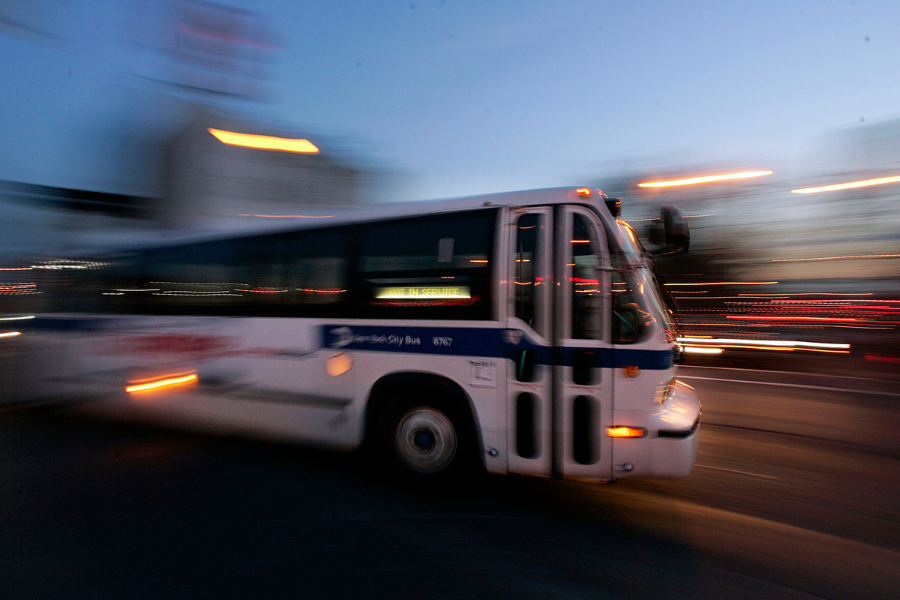
However, a preliminary assessment by Caltrans found that most U.S. freeways are engineered for speeds of up to about 85 mph, meaning that implementing significantly faster bus service would require extensive upgrades to infrastructure and roadway design, KCRA reports.
Achieving such speeds safely would likely depend on a combination of dedicated lanes, redesigned vehicles and advanced safety technologies, according to researchers. These could include automated driving systems, enhanced braking capabilities and vehicle-to-everything communication systems designed to improve coordination and reduce risk at high speeds.
“High-speed buses could, one day, provide some of the speed advantage at a lower cost using existing freeway corridors once the technology is ready,” Mehdi Moeinaddini, senior transportation planner at Caltrans, told KCRA.
Officials identified several possible corridors for future service, including Interstate 80, Interstate 5 and U.S. 101 as key interregional routes. State Route 99 was also noted as a potential starting point due to its direct connections through major Central Valley cities like Bakersfield, Fresno, Modesto, Stockton and Sacramento.
“It might offer as a complementary option alongside existing solutions like rail, not to replace them,” Moeinaddini told KCRA about the proposal, which he reiterated is in the early research stage.
Caltrans said that station construction would likely be the costliest part of the project, but that expenses could be partially reduced through joint development projects, such as building stations over sections of existing freeways, according to KCRA.
The Independent has contacted Caltrans for comment.
Join our commenting forum
Join thought-provoking conversations, follow other Independent readers and see their replies
CommentsСхожі новини

Indian-origin former CEO sentenced to 5 years in prison over $212 million fraud in New Jersey, asked to pay $125 million
Quote of the day by psychoanalyst Erik Erikson: “Hope is both the earliest and the most indispensable virtue inherent in the state of being alive. If life is to be sustained hope must remain, even where confidence is wounded, trust impaired.”
Засідання Радбезу ООН через ескалацію атак РФ проти України відбудеться 19 травня – постпред