Sergey Chernyshov: Should the Russian Diaspora Have Their Own Schools?
 By Sergey Chernyshov
May 13, 2026
By Sergey Chernyshov
May 13, 2026


The bankruptcy of Le Sallеy, a small school for fewer than 100 pupils based out of a French chateau but managed from Massachusetts, went viral on the Russian internet. As some rightly noted, the scale of the reaction was completely out of proportion, even by the standards of discourse both in Russia and the diaspora.
Former employees accused the school of financial mismanagement. But the news reopens the question of whether schools for Russian emigrants, even those like Le Salley that try to prepare them to transition to other systems, should exist at all. Should these children be sent to ordinary Spanish, German or American neighborhood schools and spared their parents’ nostalgia for distant Russian birch trees?
Is the existence of Russian schools outside Russia appropriate? Especially given that over the past few years we are supposedly an inately imperialist nation who bare collective responsibility for the Kremlin’s actions, and should all go home anyway.
Wherever you are, there are three main reasons why parents might choose to send their child to a school other than one assigned by the local authority.
The first reason is whether a child is capable of coping in a particular school. A psychologist might recommed that a child who struggles with anxiety or adjusting to the social demands of an institution goes somewhere with more specialist provision.
The second reason is the search for a better quality of education, regardless of how difficult that is to measure. Yet rankings often show that the Russian education system is not only no worse, but much better than most of its European counterparts.
Take the global PISA ranking, which for almost 20 years has compared schoolchildren from different countries according to their abilities in mathematics, reading and natural sciences. Russia was expelled from PISA in 2022, making that the last year for which we can directly compare the country to overs.
The results show that Russian schools have some of the best outcomes in Europe. The only schoolchildren who performed better than Russian pupils in mathematics (503 points) were their peers from Estonia (510 points) and Switzerland (508 points). Even Finland, with its celebrated education system, lagged far behind. In reading, the only European countries ahead of Russian schoolchildren, who scored 504 points, were Ireland, with 516 points, and Estonia, with 511.
That average only represents students in Russia itself. Teachers in emigre schools are highly selected — possibly from among the best — and clearly hold humanist moral convictions. Otherwise they simply would have stayed in Russia where they would be desperately trying to please their superiors by undressing schoolgirls whose clothes and jewelry set off metal detectors.
The conclusion here is not the most politically correct. Russian emigre schools like Le Salley objectively much better than any average school in Berlin, Madrid or Belgrade. It’s nothing personal — just international rankings.
There is also a third reason: the desire to preserve one’s culture for one’s family. There’s no grand philosophical reason for this. People want to hold on to the life they were brought up with — from their native language, to Olivier salad on the New Year’s (not Christmas) table.
But, concerningly, any attempt to talk about this runs into accusations of imperialism and Russian chauvinism.
The problem, however, lies in the astonishing selectiveness of this criticism. Yes, polite society considers total adaptation and integration to the point of blending in with the local population is for some reason considered an unconditional good.
This rule applies differently depending on a person’s citizenship. If you have the wrong passport — for example, a Russian one — then you are required to adapt, on pain of public censure. If you have the right passport — almost any other — then you are encouraged protect your sacred cultural traditions, for they enrich the treasury of human civilization.
Finally, there is one people who absolutely refused to adapt and assimilate not for decades, but for almost two millennia. The emergence of the state of Israel on the basis of ancient texts from two thousand years ago is now regarded as a triumph of humanitarian and other civilizational values. Yet that too is an example of a total unwillingness by Jews to give up their culture and belief in being God’s chosen people. Now, the country is held up as the example of the only stable democracy in the Middle East.
People will object, of course. Russians, they will say, bear collective responsibility for their government’s actions and therefore the hostility toward them is appropriate. Let us leave aside the fact that, for some reason, all the costs of collective responsibility are concentrated on a narrow group of emigres who are expected to answer for absolutely everything and to anyone.
When will the starute of limitations on this expire? If its term is 20 years, as in the notorious case of postwar Germany, then the varied peoples of the former U.S.S.R. would have been treated as pariahs for decades. All of them, in one way or another, also designated some of their own citizens as second-class, whether by declaring them aliens, driving them out of their homes or even killing them.
If the term of collective responsibility is 50 or 100 years, then every people of Europe can be found guilty of some bloody genocide against neighbors or their own subjects, of nationalist repression, fascism and other manifestations of the worst parts of human nature revealed in the 20th century.
Yet, the existence of Armenian or Turkish schools in Europe and around the world is considered the legal and even humanitarian preservation of cultural traditions. Meanwhile, the existence of Russian schools is awkward and inappropriate. I simply cannot understand why only Russians are supposed to be ashamed of ourselves when people from all corners of the world do the wrong thing.
Incidentally, the previous great wave of Russian emigration, which took place in the 1920s, had rather more courage than today’s. That is probably why they engaged not only in collective self-flagellation over the fact that they had allowed a Bolshevik dictatorship to arise in Russia, but also created good Russian schools and Russian universities from Paris to Prague and Harbin.
Those Russian emigre institutions ultimately became victims of the very tyrrany from which they were trying to protect themselves and their students: the arrival of Nazism in France, Bolshevism in Czechoslovakia and the Japanese invasion of Manchuria. Such is history’s cruel irony.
Who knows? Perhaps, if these institutions had survived until the late 1980s, they could have educated a generation of forward thinking democrats who could have led Russia and other former-Soviet countries instead of KGB and Communist Party functionaries who declared themselves democrats.The history of the former U.S.S.R. might have followed an entirely different path.
In that scenario, of course, we would not have had to prove the appropriateness or inappropriateness of Russian and Russian-language schools outside Russia. Their value would already have been obvious to everyone.
The views expressed in opinion pieces do not necessarily reflect the position of The Moscow Times.Sergey Chernyshov
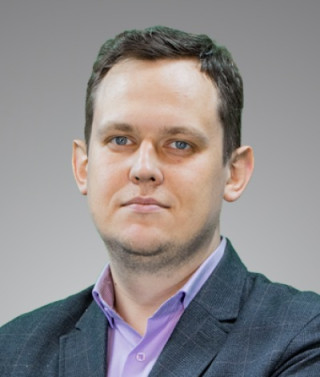 Sergey Chernyshov is a research fellow at the Ruhr University in Bochum.
Sergey Chernyshov
Sergey Chernyshov is a research fellow at the Ruhr University in Bochum. Read more about: Education , DiasporaSign up for our free weekly newsletter
Our weekly newsletter contains a hand-picked selection of news, features, analysis and more from The Moscow Times. You will receive it in your mailbox every Friday. Never miss the latest news from Russia. Preview Subscribe Subscribers agree to the Privacy Policy We sent a confirmation to your email. Please confirm your subscription.A Message from The Moscow Times:
Dear readers,
We are facing unprecedented challenges. Russia's Prosecutor General's Office has designated The Moscow Times as an "undesirable" organization, criminalizing our work and putting our staff at risk of prosecution. This follows our earlier unjust labeling as a "foreign agent."
These actions are direct attempts to silence independent journalism in Russia. The authorities claim our work "discredits the decisions of the Russian leadership." We see things differently: we strive to provide accurate, unbiased reporting on Russia.
We, the journalists of The Moscow Times, refuse to be silenced. But to continue our work, we need your help.
Your support, no matter how small, makes a world of difference. If you can, please support us monthly starting from just $2. It's quick to set up, and every contribution makes a significant impact.
By supporting The Moscow Times, you're defending open, independent journalism in the face of repression. Thank you for standing with us.
Once Monthly Annual Continue Not ready to support today?
 Remind me later. ×
Remind me next month
Схожі новини
