Santiago’s Oldest Neighborhood Is Also Its Coolest. Here’s What to See.
Few touchdowns are as dramatic as the descent into Santiago de Chile, where aircraft glide daringly close to Andean peaks. Despite the adrenaline-pumped arrival and those never-disappointing views (the mountains are just as impressive at ground level), it took me a while to warm to the Chilean capital. I moved from the United Kingdom to the coastal Chilean city of Viña del Mar at the tail end of the Covid-19 pandemic, and it was during this time I got to know Santiago on a series of weekend trips. On each I’d take the time to explore the city’s neighborhoods and work my way through the sites.
While I always appreciated walks up San Cristóbal and the Santa Lucía hills, the city’s spirited food scene, and practicing chilenismos (Chilean slang terms) with antique dealers in Barrio Italia, I found that I liked Santiago but wasn’t feeling much love for the city. Then, on my most recent trip, I spent time in Barrio Yungay and found my perception changing as I experienced Santiago’s more personalized, artistic, and community-centered side.
Exploring Barrio Yungay, Santiago’s oldest neighborhood
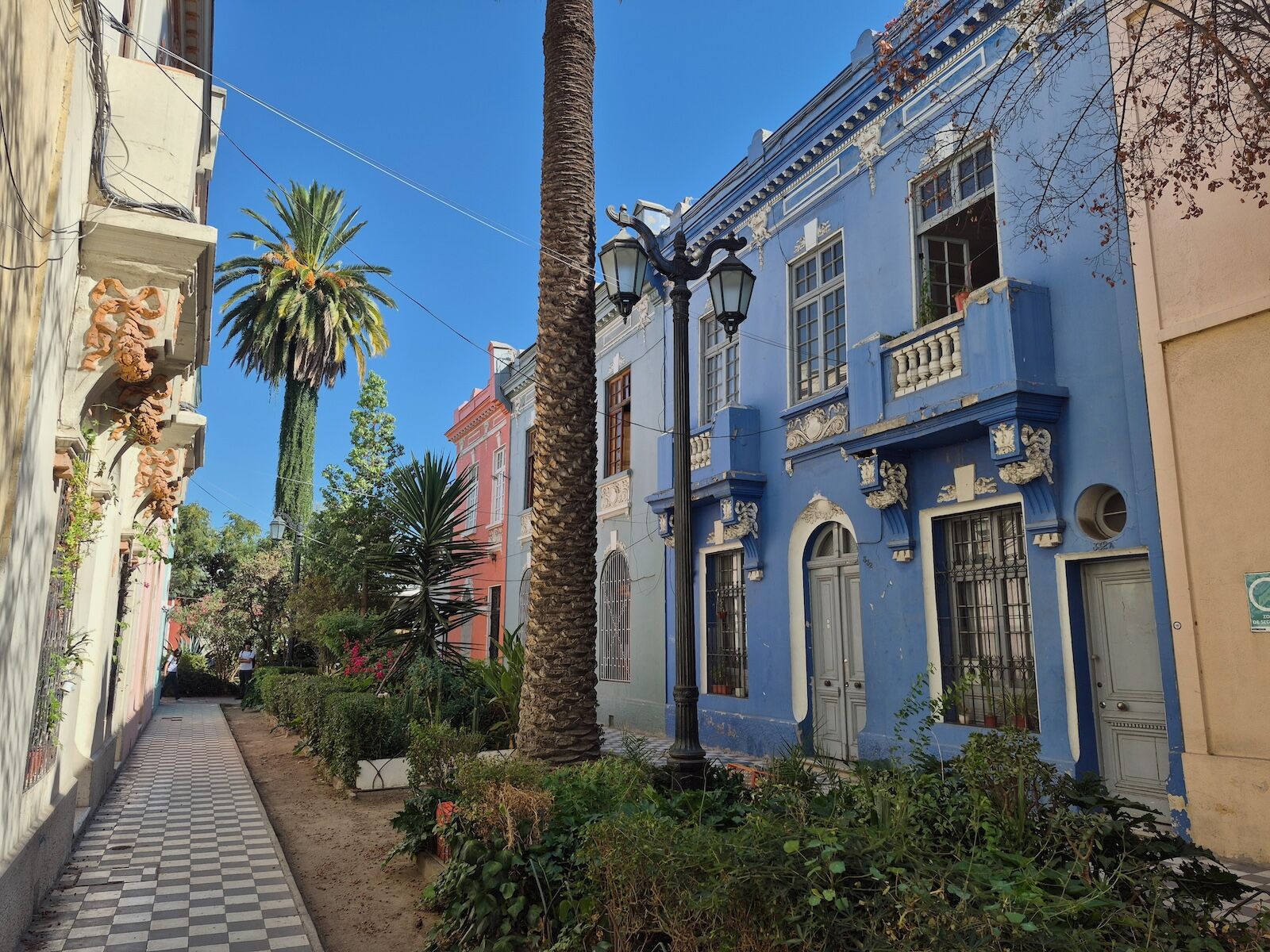
The Neoclassical and Belle Époque facades of Pasaje Adriana Cousiño make it among the most beautiful of Barrio Yungay’s “cités.” Photo: Hannah D. Cooper
Located to the west of the historic city center, Yungay is considered Santiago’s first republican neighborhood. Founded in 1839, it was designed as a planned urban development shortly after Chile’s independence and named after the Battle of Yungay, where Chile defeated the Peru-Bolivian Confederation. A bronze, named the Roto Chileno, stands in Plaza Yungay in honor of those who fought, but also as a cultural symbol of the everyday Chilean and resilience.
Wealthier families and intellectuals started throwing down roots in Yungay throughout the 19th century. The architecture is a hodgepodge of Neoclassical, Art Nouveau, and Art Deco residences mixed in with adobe homes built in the colonial style. Most curious are Yungay’s remaining “cités” — narrow residential complexes sharing a communal courtyard that doubles up as a pedestrian passageway. Pasaje Adriana Cousiño is the prettiest, with Neoclassical and Belle Époque facades painted cerulean blue and salmon pink. Travelers are welcome to wander through the passageway and stop for tea and cat cuddles at Tetería Cleopatra. I was surprised to learn that most apartments still house residents, rather than short-term vacation rentals.
Following the late-20th-century development of “Sanhattan” in Santiago’s modern east end, interest in Yungay faded. Many buildings show years of weathering, while others have undergone restoration. A bohemian energy lingers, and there is a hum of political thought, mainly expressed through the barrio’s street art. Chile’s former president, Gabriel Boric, even opted to live here on Huérfanos Street while in office.
Start by exploring Chile’s Museum of Memory & Human Rights
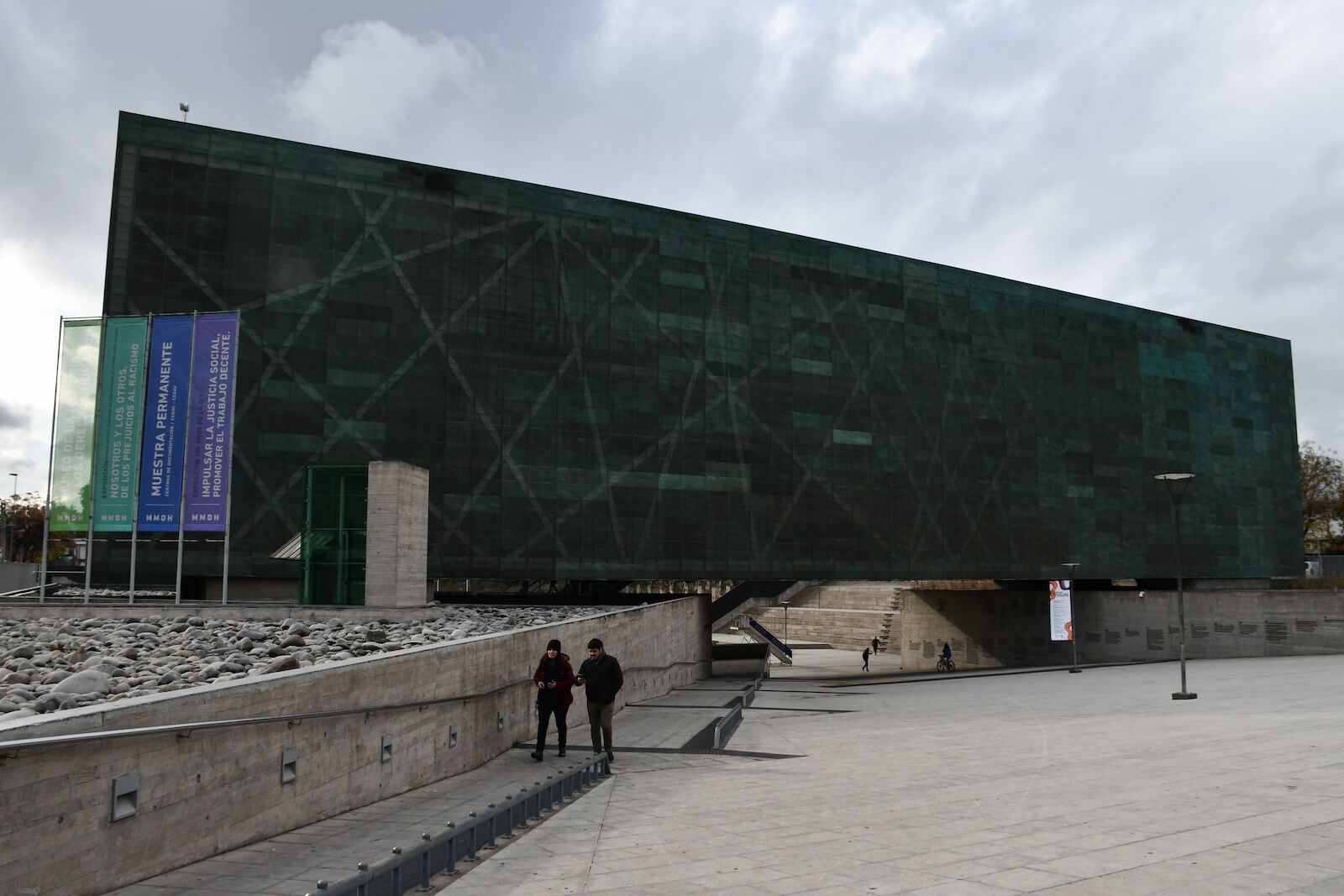
The Museum of Memory and Human Rights chronicles the brutal dictatorship of Augusto Pinochet. Photo: Anne Czichos /Shutterstock
Right on the periphery of Yungay, I’d recommend visiting the Museum of Memory & Human Rights before diving into the neighborhood. This is a tough but essential stop for understanding the consequences of Augusto Pinochet’s military dictatorship. Exhibits focus on the human rights violations committed during the regime between 1973 and 1990, spotlighting the stories of those tortured and killed — and the lasting impact on the family members whose relatives disappeared without a trace. The museum has audiobooks in multiple languages, and you’ll need two to three hours to make the most of your visit.
Leaving the museum, you can take a stroll around Quinta Norma Park. There is a clutch of other cultural landmarks, with the National Museum of Natural History being most notable. The galleries showcase Chile’s biodiversity, flora, and fauna, with a few paleontology finds on display. Most signage is in Spanish, and there’s no audioguide, so you’ll benefit from a translation app at this free-admission museum.
Walk around Barrio Yungay’s painted streets
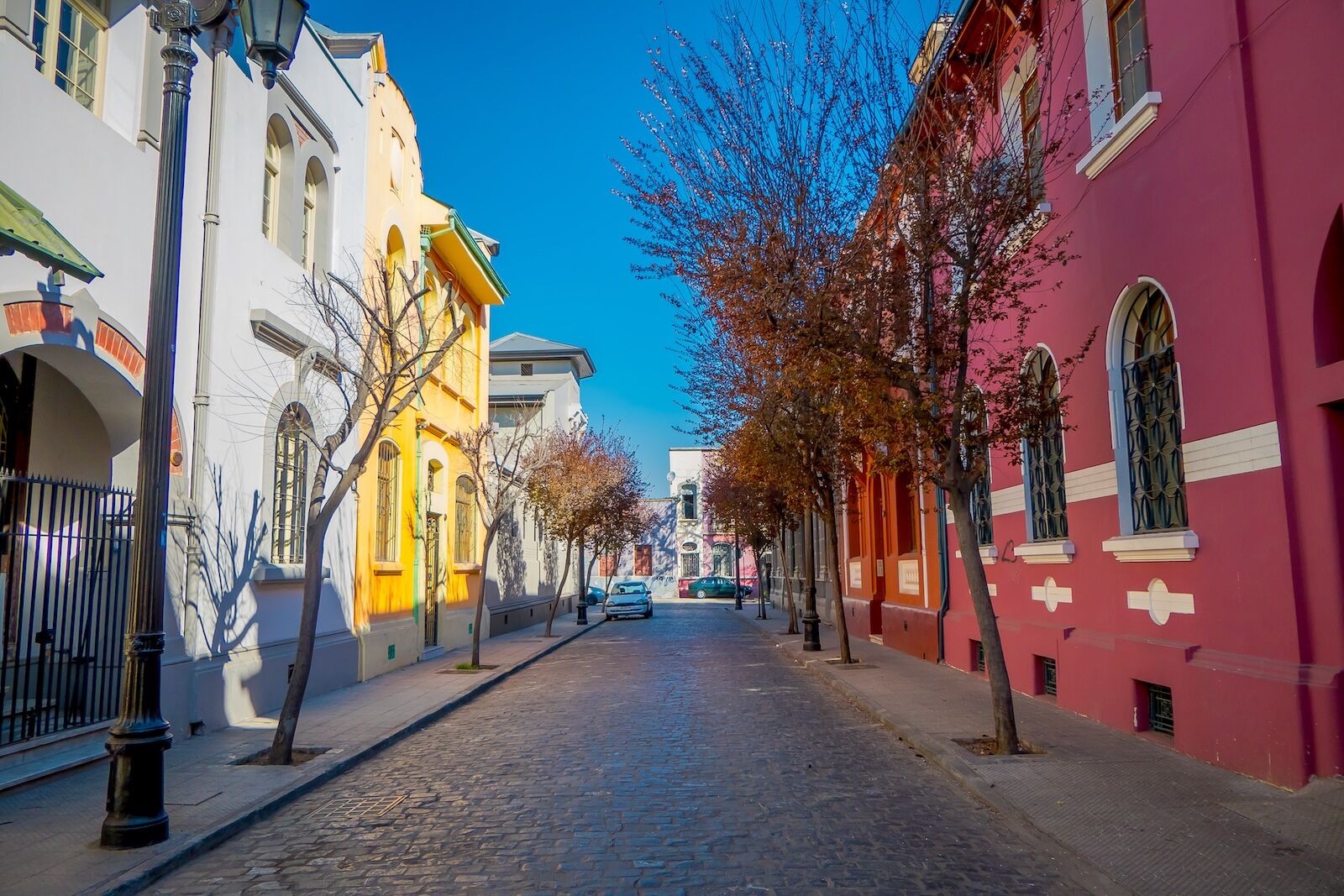
Barrio Yungay is known for its brightly-pained homes and pedestrian-friendly corridors. Photo: Fotos593 /Shutterstock
Once in the heart of Yungay, the best experience is simply walking the streets, admiring the architecture and street art of this small, colorful enclave. A tour is useful if you’d like to understand the meaning behind the installations; Héctor is a knowledgeable and passionate guide whose neighborhood walking tour recounts the deeds of activists and artists. I also have him to thank for my knowledge of Yungay’s coolest foodie spots.
Notable murals include the Nobel Prize winner, Gabriela Mistral, depicted with her supposed partner and the late activist Ana González de Recabarren, a Yungay local. Another commemorates the act of cacerolazo, where Chileans make a ruckus on their balconies — banging homeware — as a form of collective protest. The practice started in the 1970s and reappeared during the Estallido Social (Social Outburst) of 2019, when the country raged against economic inequality and increasing living costs. A mosaic commemorates Victor Jara, the folk singer and activist who was tortured and murdered under Pinochet’s regime.
Other murals celebrate Chilean culture, such as chinchineros, street musicians who beat a bass drum and cymbal strapped to their backs. One house is plastered in flora, fauna, and mythology from the island of Chiloé in Chilean Patagonia, and repeated motifs from Chile’s Indigenous Mapuche people appear.
Where to eat in Barrio Yungay
Espacio GaÌrgola restaurant is known for its chorillanas (fries smothered in caramelized onion, strips of meat, and fried eggs) and locos mayonesa. Photo: Hannah D. Cooper
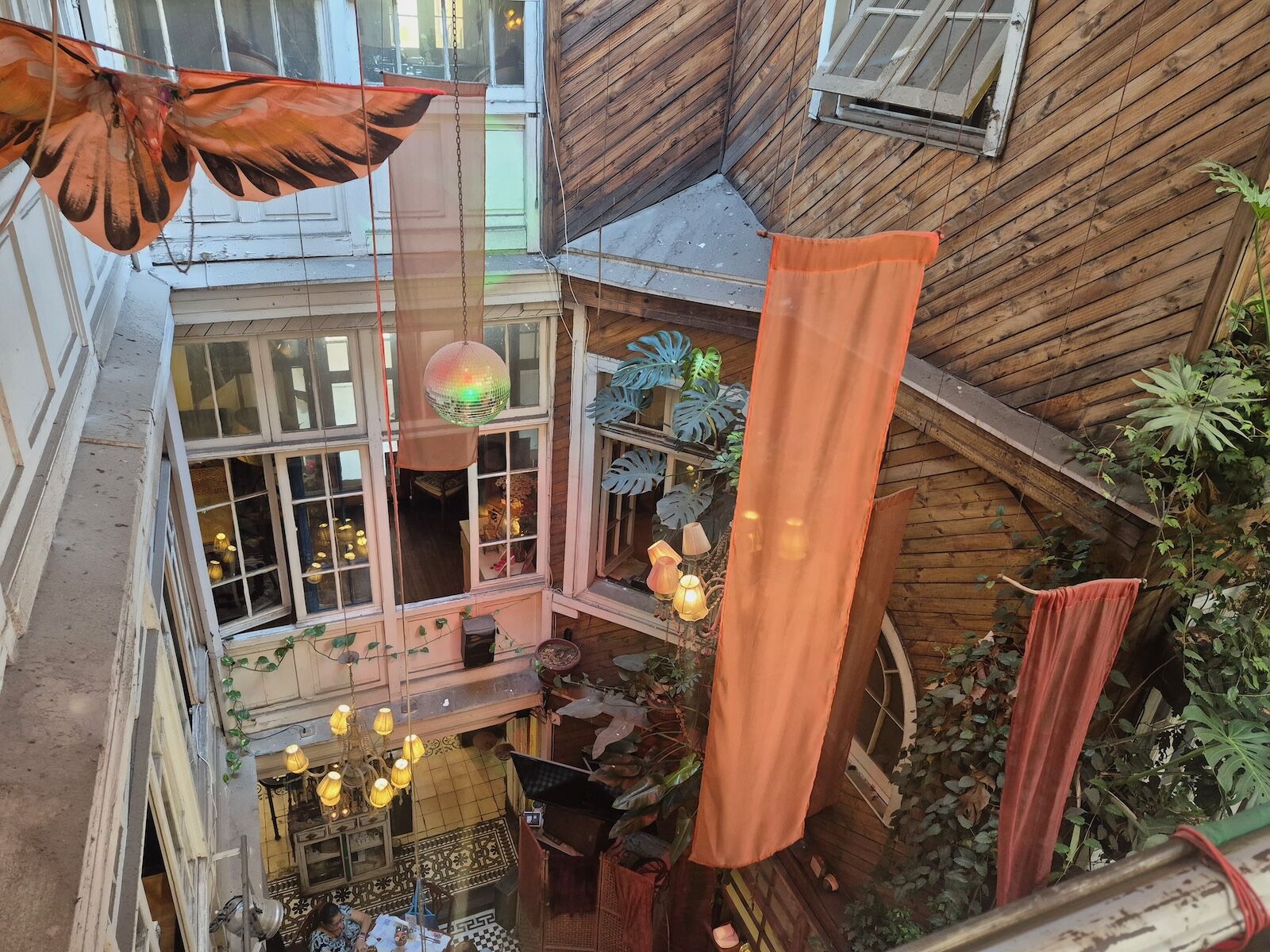
While Lastarria is the epicenter of Santiago’s food scene, Barrio Yungay impressed me with its one-of-a-kind joints in heritage buildings. The restaurant Peluquería Francesa is revealed after passing through one of the world’s oldest barbershops. Founded in 1868, the parlor remains in active service, and an archive of vintage barberware is housed in a small museum across the street.
Peluquería Francesa’s à la carte menu concentrates on comforting Chilean and French fusion dishes, and the daily offerings include two or three homestyle courses at a wallet-friendly rate. The restaurant also serves breakfast and once (pronounced “on-say”), the light meal of sandwiches, pastries, and cake most Chileans eat in place of dinner. The dining room hosts live music several nights a week and there are scores of vintage relics scattered across the various floors. It’d be tough to find a cozier place to take your time over pisco sours and smooth carménère wines — I could have stayed there until last orders.
Espacio Gárgola is another choice for an aesthetically appealing, but also equally satisfying, lunch. The restaurant claims the first floor of a Victorian-era mansion with free art exhibits on the upper levels. The menu serves typical Chilean fare such as chorillanas (fries smothered in caramelized onion, strips of meat, and fried eggs) and locos mayonesa (Chilean abalone topped with the nation’s most beloved condiment). The kitchen also does fabulous pizzas and a couple of popular Peruvian plates. Knowing I was eating at Peluquería Francesa later, I settled for a quick empanada de pino (a pastry stuffed with minced meat, onion, boiled egg, and an olive — mind the pip) in the internal courtyard.
If you feel like a challenge, head to Fuente Mardoqueo to tackle the epic Chilean sandwich; you’ll want to get ahead of the lunchtime crowd, as the place is usually full of local workers. This old-fashioned joint has a German beer hall vibe and specializes in meat sandwiches, using a base of either lomito (thinly sliced, slow-braised pork loin) or churrasco (slivers of beefsteak) loaded with your choice of greens. The classic order is a completo, which, like the Chilean hot dog, comes with toppings of avocado, diced tomato, and mayonnaise. I’d recommend trying the Austral Calafate, a Patagonian ale infused with calafate berries. 
More like this
TravelHow Chile’s ‘Place of Gold’ Became Home to the World’s Most Ambitious Wine RetreatСхожі новини

Від російської нафти частково відмовляється один із найбільших її покупців

Понад 5000 прольотів винищувачів: політик з Тайваню відповіла, як Китай готує блокаду її країни

Україна знайшла вразливу точку росіян – наслідки скоро відчують на фронті