Russians Pull Money From Bank Deposits for First Time Since 2022 Mobilization Panic

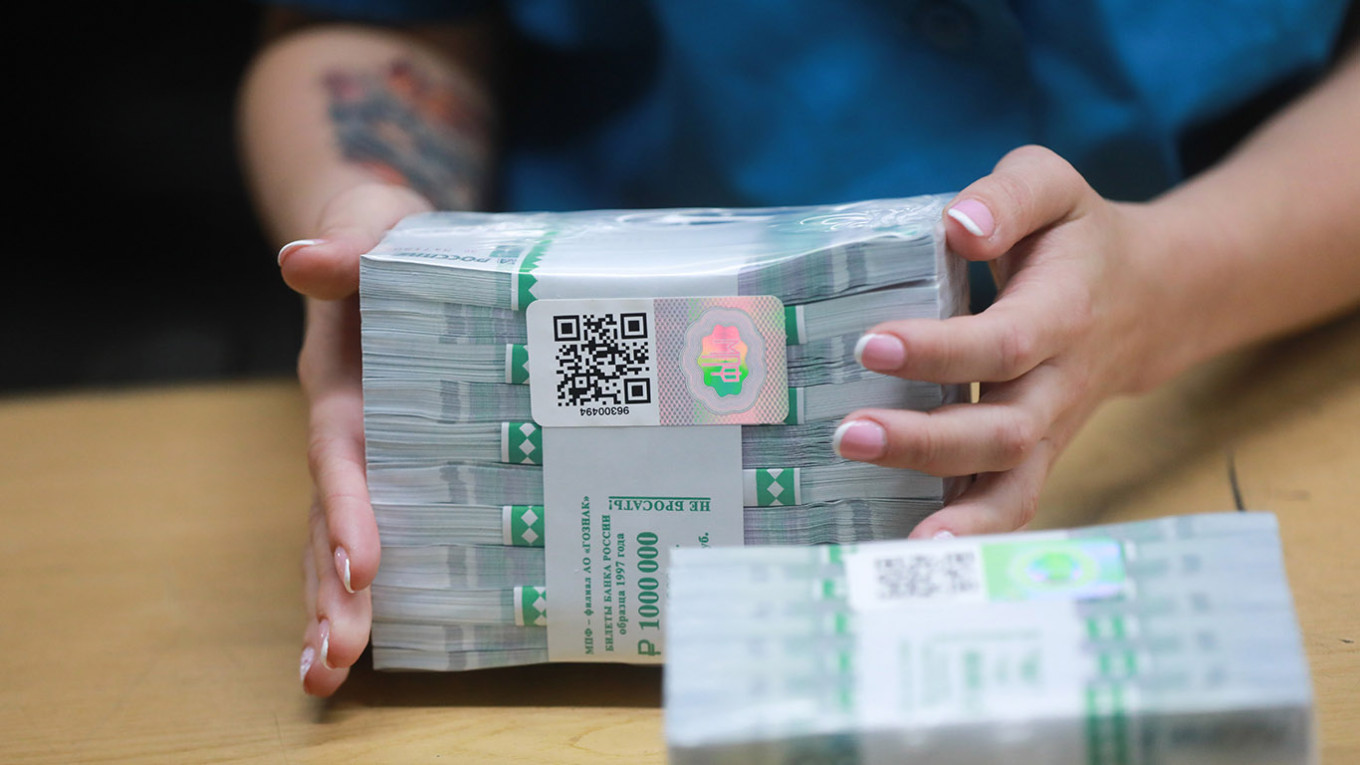
Russia’s households pulled money from fixed-term bank deposits for the first time since the panic triggered by the Kremlin’s 2022 mobilization drive, as falling interest rates prompted some savers to shift cash into bonds, big-ticket purchases and cash holdings.
Funds held in Russians’ fixed-term deposits fell by 288 billion rubles ($3.97 billion) in March, the RBC news website calculated based on banking data, marking the first monthly outflow from term deposits since October 2022.
The decline came as deposit rates eased from recent highs and consumers increasingly sought alternatives for their savings.
The withdrawals signal that lower borrowing costs and slowing returns on deposits are beginning to reshape Russian household behavior after two years of unusually high interest rates that fueled record savings levels.
Economists say some funds are now being redirected toward investment products while others are flowing into consumer spending, particularly on durable goods — a shift authorities hope could support economic activity.
The Central Bank said Russians’ total bank holdings rose only 0.3% in March, and solely because of growth in current account balances. Longer-term deposits, particularly those with maturities of more than one year, recorded the sharpest declines.
Analysts cited several factors behind the shift. Falling deposit rates reduced the appeal of fixed-term savings products, encouraging households either to seek higher-yielding financial assets or spend on expensive goods. Demand for cash also rose amid internet outages and disruptions to cashless payment systems.
Car sales rose 30.6% year-on-year in March and a further 15.1% in April after declining in January and February. Cash in circulation held by Russians increased by 0.3 trillion rubles ($4.14 billion) in March and another 0.6 trillion rubles ($8.28 billion) in April.
Most household savings in Russia remain concentrated in deposits. Of the 67.4 trillion rubles ($930.1 billion) Russians held in banks as of April 1, some 46.9 trillion rubles ($647.2 billion) sat in fixed-term accounts, according to Central Bank data.
But a study by consultancy Frank RG suggested that fresh money is no longer flowing into the savings market. In 2025, growth in household savings products — including deposits and current accounts — was driven almost entirely by accrued interest income. Interest payments accounted for 15.5% growth, while net new inflows contributed just 0.4%. A year earlier, interest income generated around 60% of total growth.
Under Russia’s Civil Code, depositors can withdraw money from fixed-term deposits at any time, sacrificing only accrued interest.
However, most Russians place deposits for less than six months, meaning many can simply wait for accounts to mature rather than renew them.
Deposits with maturities longer than one year that expired in March were likely opened in late 2024 or early 2025, when rates peaked. Since then, deposit rates have retreated to levels last seen in November 2023.
Economic Development Minister Maxim Reshetnikov said the share of household income directed toward savings reached a record 16.6% last year due to elevated rates, but predicted the savings rate would decline as returns fell and more money moved into consumer spending.
Economist Yegor Susin said a gradual unwinding of excess savings was already underway, with some funds likely shifting into demand for cars and other purchases.
Frank RG found that 27.5% of Russians would continue using deposits even if returns decline, while 24.8% said they would consider alternative financial products and 21.2% would begin spending accumulated savings.
Analysts at MMI said deposit rates had now fallen close to Russians’ inflation expectations.
“It is too early to say deposits have lost their attractiveness,” MMI analysts wrote. “But the fact that their appeal is declining is undeniable.”
Retail investors have increasingly turned to bonds. Russians purchased 139 billion rubles ($1.92 billion) in corporate bonds in March and 157 billion rubles ($2.17 billion) in April, while also buying another 80 billion rubles ($1.10 billion) in federal government bonds, becoming the largest buyers of sovereign debt on the secondary market.
The Central Bank has yet to publish full April data, but preliminary figures suggested deposit outflows had stopped without turning into a meaningful inflow.
New additions to household accounts and deposits totaled an estimated 1.2 trillion rubles ($16.56 billion), though the regulator said this was driven by early social benefit payments ahead of May holidays.
The Central Bank said inflows into ruble-denominated household accounts accelerated because of growth in current accounts, while balances in fixed-term deposits “remained largely unchanged.”
Read this article in Russian at The Moscow Times' Russian service.
Read more about: Economy , Central Bank , Banks , FinanceSign up for our free weekly newsletter
Our weekly newsletter contains a hand-picked selection of news, features, analysis and more from The Moscow Times. You will receive it in your mailbox every Friday. Never miss the latest news from Russia. Preview Subscribe Subscribers agree to the Privacy Policy We sent a confirmation to your email. Please confirm your subscription.A Message from The Moscow Times:
Dear readers,
We are facing unprecedented challenges. Russia's Prosecutor General's Office has designated The Moscow Times as an "undesirable" organization, criminalizing our work and putting our staff at risk of prosecution. This follows our earlier unjust labeling as a "foreign agent."
These actions are direct attempts to silence independent journalism in Russia. The authorities claim our work "discredits the decisions of the Russian leadership." We see things differently: we strive to provide accurate, unbiased reporting on Russia.
We, the journalists of The Moscow Times, refuse to be silenced. But to continue our work, we need your help.
Your support, no matter how small, makes a world of difference. If you can, please support us monthly starting from just $2. It's quick to set up, and every contribution makes a significant impact.
By supporting The Moscow Times, you're defending open, independent journalism in the face of repression. Thank you for standing with us.
Once Monthly Annual Continue Not ready to support today?
 Remind me later. ×