Russia to Resume FX Operations Under Fiscal Rule as Oil Prices Surge

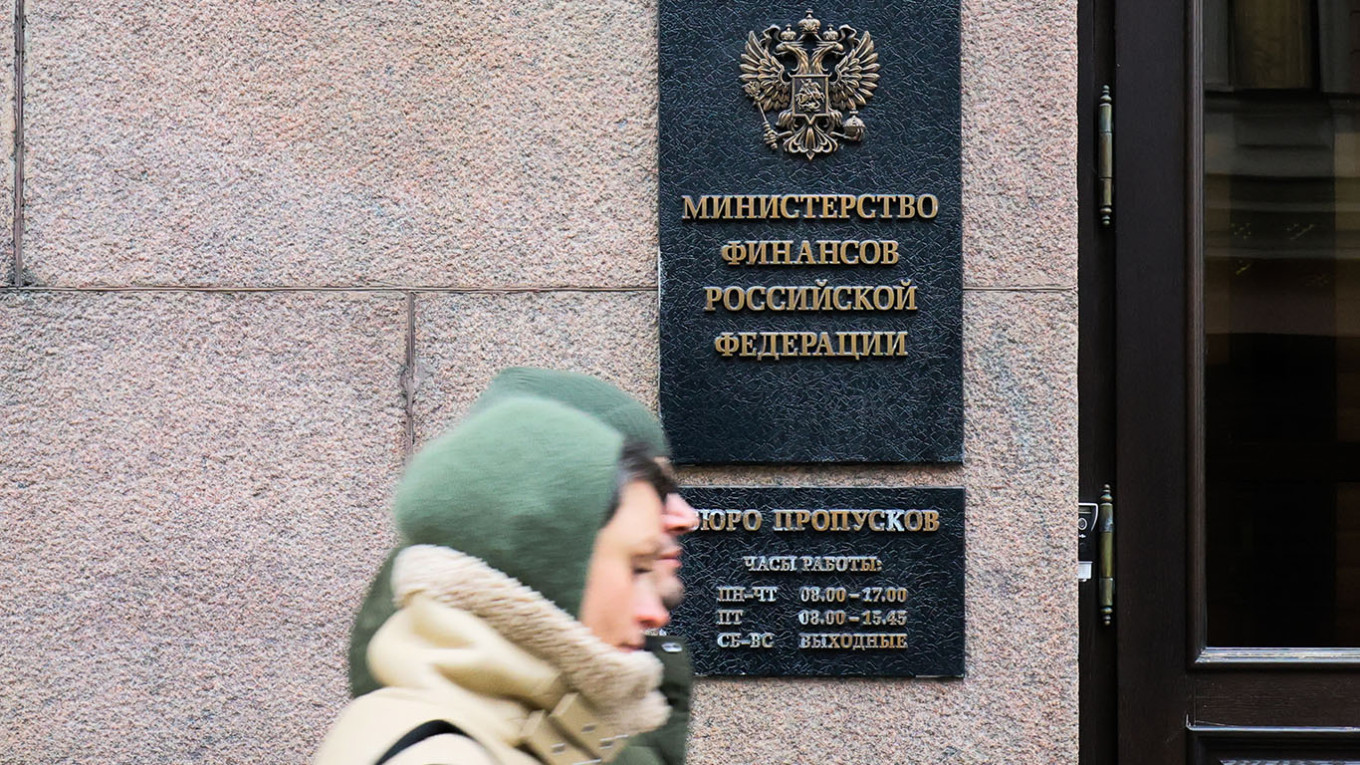
Russia’s Finance Ministry said Thursday that it will resume foreign currency and gold purchases and sales under its fiscal rule starting in May, citing a need to stabilize domestic economic conditions and shield the budget from volatile energy prices.
The move marks a return to a key policy tool that had been suspended earlier this year after a sharp drop in oil and gas revenues forced the government to tap its rainy-day reserves.
The resumption underscores how a rebound in oil prices — driven in part by geopolitical tensions in the Middle East — has eased pressure on Russia’s finances, while also raising concerns about an overly strong ruble denting budget revenues.
Under the fiscal rule, excess oil and gas revenues are used to buy foreign currency and replenish the National Wealth Fund (NWF), while shortfalls are covered by selling reserves.
The mechanism is designed to reduce the economy’s dependence on swings in energy prices and limit volatility in the ruble.
However, oil and gas revenues halved at the start of the year, prompting the Finance Ministry to sell roughly 200 billion rubles ($2.64 billion) per month from the NWF in January and February.
With about 4 trillion rubles ($52.8 billion) in liquid assets remaining, analysts warned the fund could be depleted within a year at that pace.
The ministry suspended operations in March, initially planning to keep them on hold until July.
Oil prices have since rebounded sharply. Russia’s so-called “tax price” for oil, which is used to calculate budget revenues, rose to an average of $77 per barrel in March from $44.6 in February, according to Economy Ministry data.
It is now around $100 per barrel, economist Yegor Susin said.
The ruble, which weakened to around 85 per dollar after the suspension of fiscal rule sales, has since strengthened to about 75 — close to levels seen in early 2023.
Analysts say the currency could have appreciated further without a return to FX purchases.
A stronger ruble reduces oil and gas revenues, as key taxes such as the mineral extraction tax are denominated in dollars.
Finance Minister Anton Siluanov had earlier signaled that the ministry could return to the market ahead of schedule.
The ministry said it will announce the scale of operations for May at a later date, taking into account deferred transactions from March and April, which Siluanov said were roughly balanced.
Analysts at consultancy Tverdye Tsifry estimate that FX purchases could total 300-400 billion rubles ($3.96-$5.28 billion) between May 8 and June 5, assuming oil prices remain near early April levels.
Susin gave a similar estimate, adding that such purchases would imply an effective oil price for the market of around $70-80 per barrel.
Even at that scale, the operations are unlikely to weaken the ruble significantly, said investment banker Yevgeny Kogan, arguing they would largely offset increased export revenues.
The ruble initially slipped more than 1% on the Finance Ministry’s announcement, with the dollar rising from below 75 to 75.8 rubles before easing back to around 75.3.
The yuan also strengthened, climbing from 10.96 to 11.09 rubles on the Moscow Exchange before settling at 11.07.
Read this article in Russian at The Moscow Times' Russian service.
Read more about: Finance Ministry , EconomySign up for our free weekly newsletter
Our weekly newsletter contains a hand-picked selection of news, features, analysis and more from The Moscow Times. You will receive it in your mailbox every Friday. Never miss the latest news from Russia. Preview Subscribe Subscribers agree to the Privacy Policy We sent a confirmation to your email. Please confirm your subscription.A Message from The Moscow Times:
Dear readers,
We are facing unprecedented challenges. Russia's Prosecutor General's Office has designated The Moscow Times as an "undesirable" organization, criminalizing our work and putting our staff at risk of prosecution. This follows our earlier unjust labeling as a "foreign agent."
These actions are direct attempts to silence independent journalism in Russia. The authorities claim our work "discredits the decisions of the Russian leadership." We see things differently: we strive to provide accurate, unbiased reporting on Russia.
We, the journalists of The Moscow Times, refuse to be silenced. But to continue our work, we need your help.
Your support, no matter how small, makes a world of difference. If you can, please support us monthly starting from just $2. It's quick to set up, and every contribution makes a significant impact.
By supporting The Moscow Times, you're defending open, independent journalism in the face of repression. Thank you for standing with us.
Once Monthly Annual Continue Not ready to support today?
 Remind me later. ×
Remind me next month
Схожі новини
Макрон назвав кредит ЄС Україні важливим сигналом рішучості
Кредит ЄС: цього року очікується три виплати макрофінансової підтримки - джерело

Енергетика, фінанси та компоненти для зброї: Власюк розповів про роботу над наступним пакетом санкцій проти РФ