Russia Readies for Dialed-Down Victory Day Spectacle as Drones Fly and Millions Go Offline
 By Leyla Latypova
May 8, 2026
By Leyla Latypova
May 8, 2026

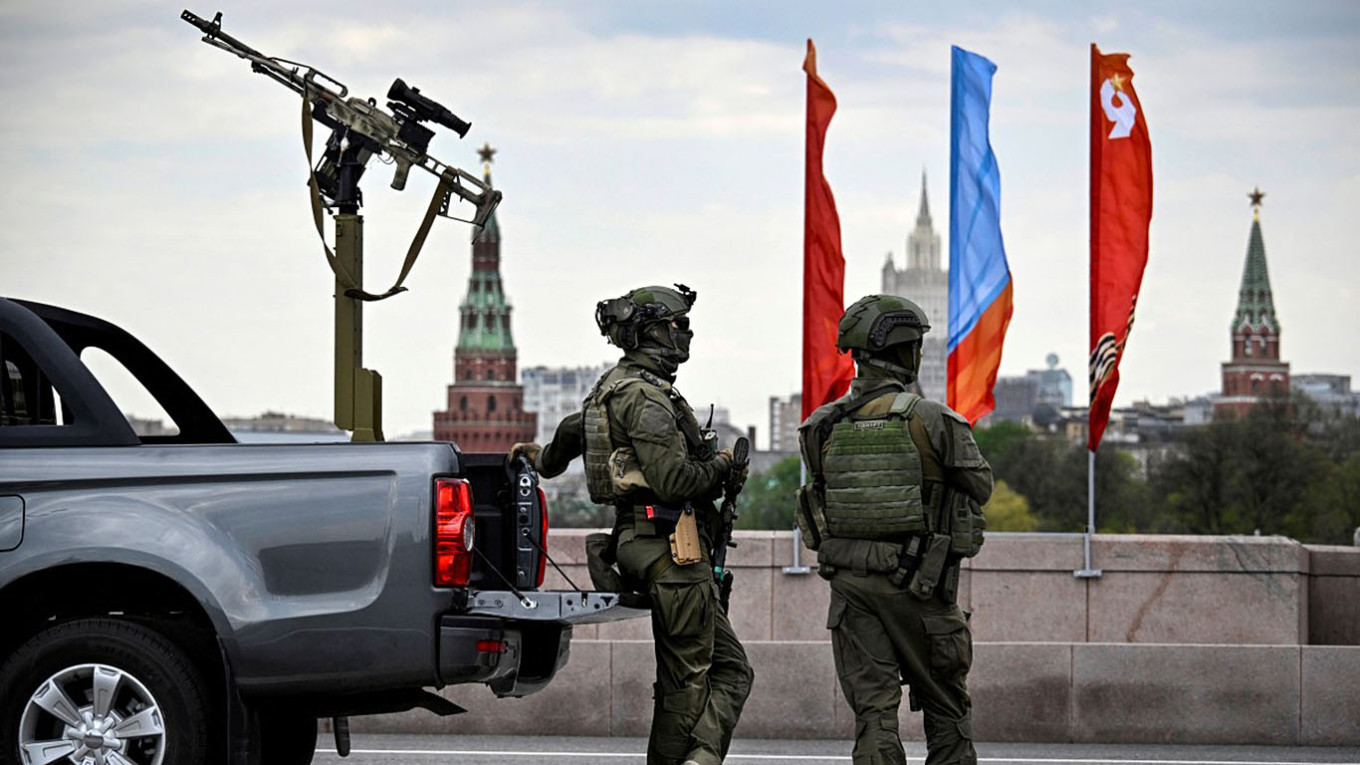
Under President Vladimir Putin, Victory Day — the date when Russians celebrate the Soviet victory over the Nazis in World War II — has become a flagship event in the annual calendar, with thousands of military personnel and dozens of military vehicles parading through Red Square.
But this year’s events are set to be their most subdued in years, with relentless Ukrainian drone attacks across the country and a widening digital crackdown enforced by the Kremlin reshaping one of the country’s most important public holidays.
The military parade on Moscow’s Red Square will be held without military vehicles for the first time in nearly 20 years, a dramatic break with the Putin-era tradition of using the event to flex Russia’s military might.
Though there has been speculation of a possible Ukrainian strike on the Moscow parade since 2023, the Kremlin had until now largely pressed on with the event in its pre-war format.
Last year’s 80th anniversary parade featured some 11,000 servicemen and almost 200 military vehicles, with nearly 30 world leaders in attendance, including China’s Xi Jinping and Brazil’s Luiz Inácio Lula da Silva.
The Defence Ministry has not disclosed how many troops will take part this year, but said students from elite Suvorov and Nakhimov military schools, as well as cadet corps, will not march.
“The military hardware column will not be participating in this year's military parade due to the current operational situation,” the ministry added.
Analysts have offered differing explanations for the scaled-back format. While some cited reputational risks from a strike on the capital during the parade, others pointed to “battlefield pressures” on Russia’s military in Ukraine.
The viewing stand from which Putin traditionally oversees the parade will also lack the prestige of last year’s event, with just three world leaders expected to attend, according to the list released by the Kremlin on Thursday.
While most heads of former Soviet states traditionally join Putin in the stands, Belarus’ Alexander Lukashenko was the only one to confirm attendance this year.
Laos President Thongloun Sisoulith and Malaysian King Sultan Ibrahim will also be by Putin’s side, as well as the Moscow-backed heads of Georgia’s breakaway regions of Abkhazia and South Ossetia and recently elected leader of Bosnia’s ethnic Serbs Siniša Karan.
Karan is expected in Moscow together with former Republika Srpska president Milorad Dodik and the confederate entity’s current speaker of parliament, Nenad Stevandić.
The Kremlin had said Slovak Prime Minister Robert Fico would attend, but he denied plans to join the parade.
"I will lay flowers at the Tomb of the Unknown Soldier [near the Kremlin]…and have a short meeting with President Putin. That's all. I am not going to any military parade," Slovak news outlet SME cited Fico as saying on Monday.
In Russia’s regions, most leaders have followed Moscow in scaling back customary local military parades and forgo military equipment displays, including World War II-era hardware.
As many as 11 regions in eastern and central Russia have called off public celebrations entirely, citing security concerns, according to media reports analyzed by The Moscow Times.
Among these regions is the republic of Chuvashia, where a Ukrainian drone attack on the regional capital Cheboksary on Tuesday killed two people, injured 37 and displaced more than 1,000.
Events were also canceled in annexed Crimea, where a drone strike killed five people on Wednesday.
May 9 remains one of Russia’s most widely celebrated holidays, as nearly every Russian family was impacted by the events of World War II.
But with fewer than 7,000 surviving veterans of what Russians call the Great Patriotic War, the holiday has transformed from a day of reflection and mourning into a propaganda tool.
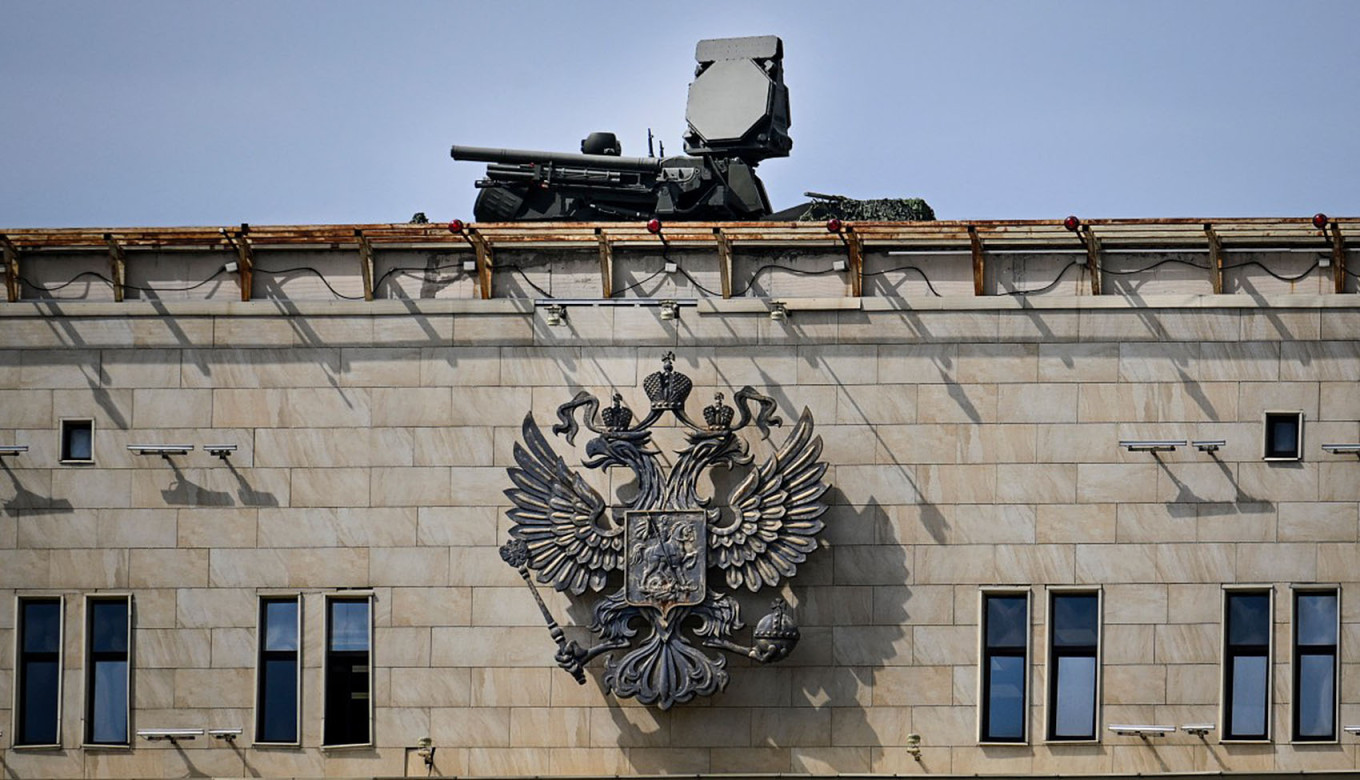
This has become especially apparent since the full-scale invasion of Ukraine, with the Kremlin using it to reinforce its narrative that Russia is fighting the same war against Nazism in Europe that it fought in the 1940s. Russia’s war on Ukraine has now gone on longer than the Soviet fight in World War II.
Authorities nationwide have scrapped Immortal Regiment marches, one of the holiday’s most visible patriotic displays, with a few exceptions such as the Far Eastern city of Vladivostok.
The marches, originally a grassroots initiative launched in the Siberian city of Tomsk in 2012 before it was co-opted by the Kremlin, allow descendants of deceased veterans to connect with their family history by symbolically marching on behalf of their relatives.
Last year, the Immortal Regiment was joined by relatives of Russian soldiers killed on the front lines in Ukraine in a rare act of public mourning.
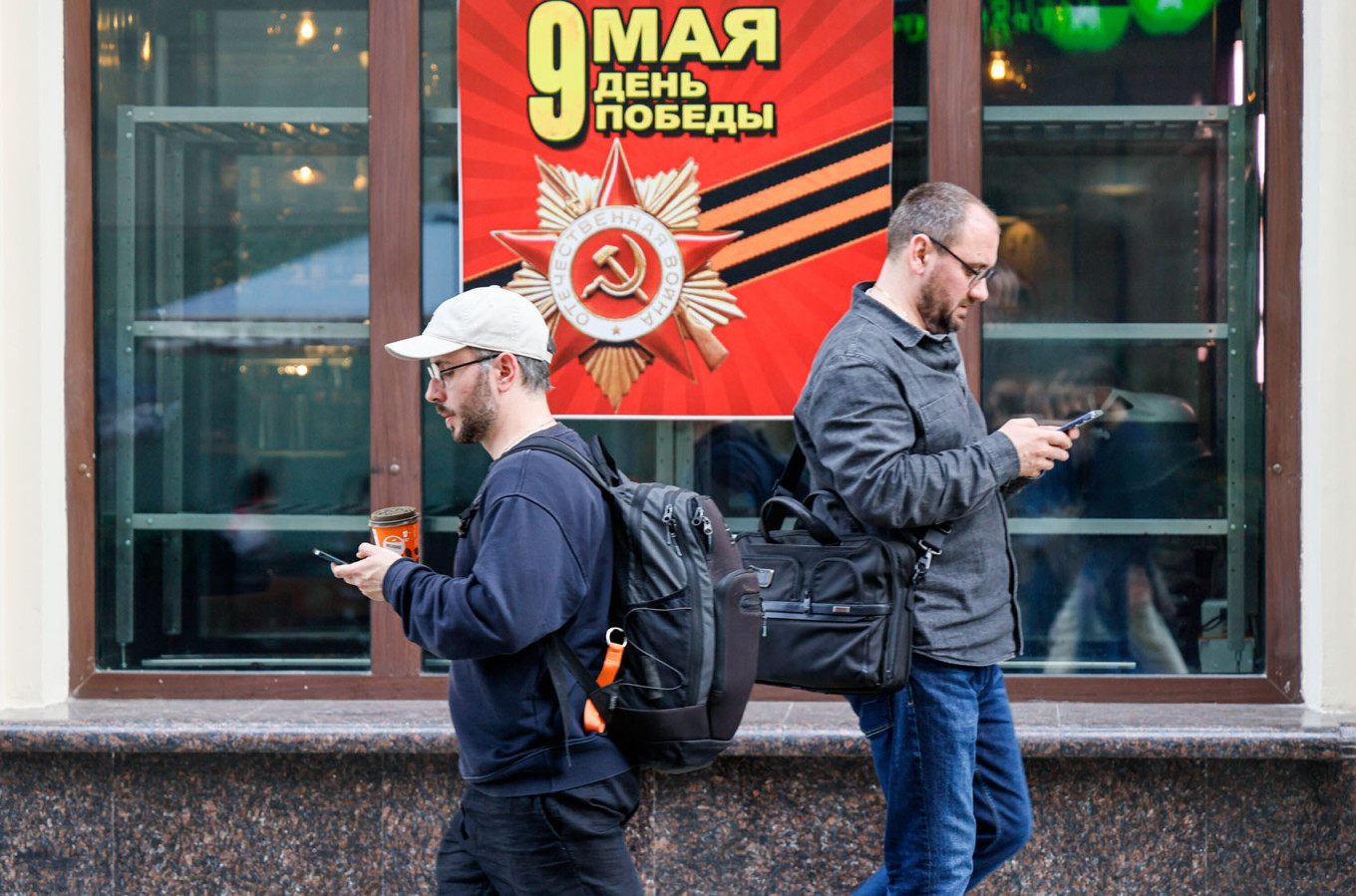
Authorities said the marches would be replaced by online displays of photos submitted by ordinary Russians, though these are expected to be affected by widespread internet disruptions.
Mobile internet outages have already begun in several regions, including Moscow, and are expected to affect at least 21 regions during the celebrations, according to a tally by the exiled outlet Novaya Gazeta Europe.
The restrictions are likely to prevent access to online services, including via virtual private networks (VPNs), while mobile operators warned that even government-approved platforms may face disruptions until May 10.
Meanwhile, authorities in 12 Russian regions have allowed full-scale military parades to go ahead despite evident security concerns, according to MT’s analysis.
In the republic of Bashkortostan, a frequent target of Ukrainian drone attacks due to its petrochemical industry, around 16 military vehicles and 2,000 troops will take part in a parade in the capital Ufa.
While Bashkortostan’s authorities vowed to display both modern and historic military equipment during the parade, most regions chose to roll out Soviet-era hardware like T-34 tanks rather than modern systems.
"There won't be any modern equipment…and this was initially decided by Moscow,” an anonymous source in the government of Volgograd, the site of the Battle of Stalingrad, told local news outlet V1 last week.
“I wouldn't rule out that if [other Russian regions] plan [large-scale] parades, it will be with equipment that has already been decommissioned and no longer used for its intended purpose," the source added.
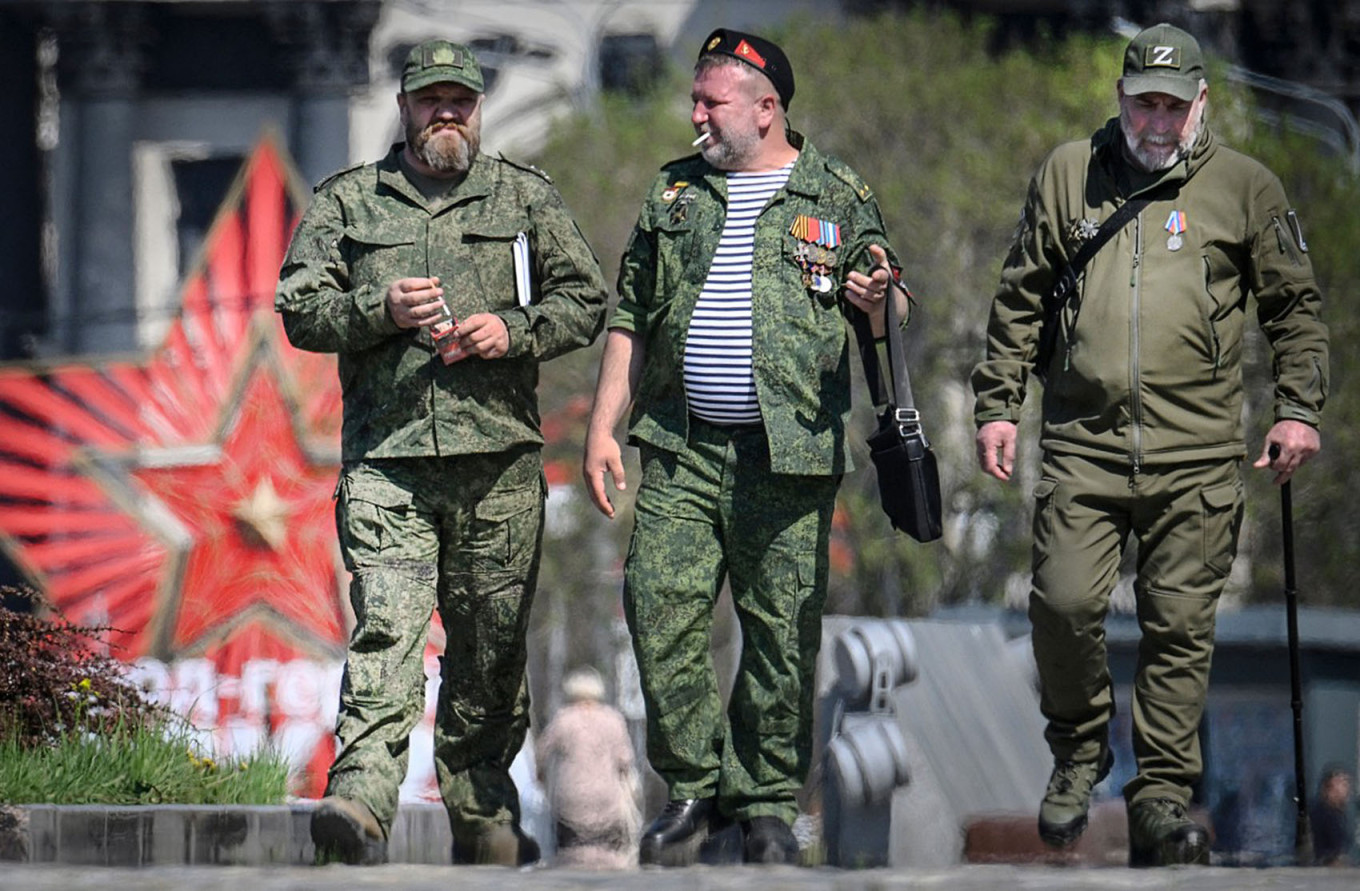
The Far East city of Vladivostok, which is seven hours ahead of Moscow, will be among the first places in the country to mark Victory Day on Saturday.
Though local media initially reported that Russia’s largest Pacific port city has no plans to “change its Victory Day parade traditions,” authorities announced Wednesday that military vehicles would not be displayed in the procession after all.
To keep up with the changing times, authorities plan to replace the military equipment parade with “a theatrical performance,” local media said.
Read more about: Victory Day , Ukraine war , Soviet Union , WWIISign up for our free weekly newsletter
Our weekly newsletter contains a hand-picked selection of news, features, analysis and more from The Moscow Times. You will receive it in your mailbox every Friday. Never miss the latest news from Russia. Preview Subscribe Subscribers agree to the Privacy Policy We sent a confirmation to your email. Please confirm your subscription.A Message from The Moscow Times:
Dear readers,
We are facing unprecedented challenges. Russia's Prosecutor General's Office has designated The Moscow Times as an "undesirable" organization, criminalizing our work and putting our staff at risk of prosecution. This follows our earlier unjust labeling as a "foreign agent."
These actions are direct attempts to silence independent journalism in Russia. The authorities claim our work "discredits the decisions of the Russian leadership." We see things differently: we strive to provide accurate, unbiased reporting on Russia.
We, the journalists of The Moscow Times, refuse to be silenced. But to continue our work, we need your help.
Your support, no matter how small, makes a world of difference. If you can, please support us monthly starting from just $2. It's quick to set up, and every contribution makes a significant impact.
By supporting The Moscow Times, you're defending open, independent journalism in the face of repression. Thank you for standing with us.
Once Monthly Annual Continue Not ready to support today?
 Remind me later. ×
Remind me next month
Схожі новини
Ukraine, Russia trade attacks despite 'ceasefire'
Переможець "МайстерШеф" вперше за довгий час після мобілізації до ЗСУ вийшов на зв'язок
Європа посилює захист розподільчих мереж – Bloomberg