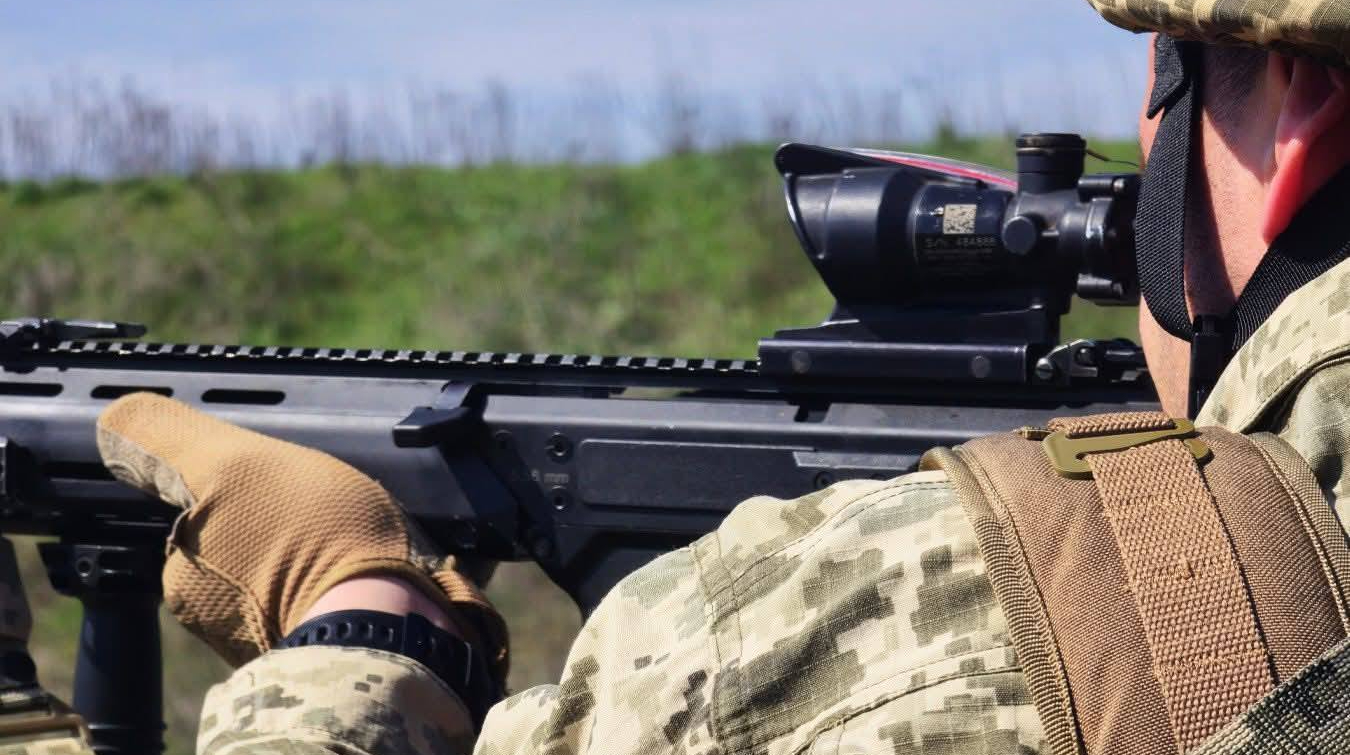
Russia loses ground – but not the war – in Ukraine

Moscow lost territory on the battlefield in April 2026 for the first time since Ukraine’s bold August 2024 incursion into Russia's Kursk oblast, according to an analysis published this week. Moscow's losses were equivalent to some 116 square kilometres across several areas of the front line.
Issued on: 08/05/2026 - 16:22
3 min Reading time Share By: Sébastian SEIBT
Russia lost territory in Ukraine in April for the first time since 2024, according to a report by the Institute for the Study of War (ISW) published May 2.
Ukraine gained some 116 square kilometres (45 square miles) along several areas of the front, including in the Sumy region north of Kharkiv but also further south in Zaporizhzhia province, says Huseyn Aliyev, a specialist on the war in Ukraine at the University of Glasgow.
The Russian advance has been slowing significantly since November 2025, according to the report, and is sluggish overall in 2026 compared to this time last year. But the changing nature of the war – and Russia’s increased use of infiltration tactics – make year-on-year comparisons difficult, it noted.
"Russian forces have been using infiltration tactics in part to create the perception of continuous Russian advances across the front and to support Kremlin cognitive warfare efforts to exaggerate Russian successes," the ISW wrote. "Russian forces, however, do not control these infiltration areas, which are often collocated among Ukrainian positions in contested 'gray zones.'"

Tactical withdrawals?
But this is not a large-scale military retreat that would involve a strategic repositioning along the entire front, says Erik Stijnman, a specialist in military security and the Russo-Ukrainian war at the Dutch Clingendael Institute for International Relations.
These are more like tactical withdrawals, with both sides testing enemy defences at different points along the front line, adds Ivan U. Klyszcz, a Russia specialist at the International Centre for Defence and Security in Tallinn, Estonia.
Nevertheless, the situation is much bleaker for Moscow than at the same time in 2025.
Russia had already begun its spring-summer offensive as the weather conditions improved around this time last year, Aliyev notes. Russia is still managing to advance, albeit modestly, on the fronts it considers priorities, such as the region around Pokrovsk and towards the city of Kramatorsk.
Fewer soldiers, more drones
Ukraine’s territorial gains also demonstrate the effectiveness of its strategy of harassing Russian troops rather than simply holding onto positions, Klyszcz says.
Simultaneously, Ukraine is intensifying its campaign of launching ever-deeper strikes on Russian infrastructure, forcing Moscow to allocate more resources to defending its territory, says Will Kingston-Cox, a specialist on Russia and the war in Ukraine at the International Team for the Study of Security (ITSS) Verona.
The Russian army has been struggling for months to mobilise more troops, Aliyev says, including recruiting more aggressively from universities.
These recruitment troubles can be seen on the battlefield, Klyszcz observes, with troops that are less well-trained and less effective than last year.
The difficulty in finding new troops for the front is even greater for Ukraine than for Russia, which has a much larger population. But the realities of the front line – which is now largely manned by drones – makes any offensive far more dangerous and deadly for the attacker, says Kingston-Cox.
War of attrition
And Ukraine now has another technological advantage: Starlink 's decision to cut off Russian troops' access to its satellites was a major blow to Russia, which is now struggling to communicate as effectively as before.
In February, the Kremlin also began restricting access to Telegram, where a lot of tactical communication was previously shared.
Read moreMoscow and St Petersburg internet blackouts raise fears of Kremlin surveillance
Ukraine’s territorial gains could have a long-term impact if they allow Ukraine to recapture ever-more-strategic areas, Aliyev says.
Nevertheless, recent Ukrainian territorial successes should not be overestimated. The 116 square kilometres lost in April will mean nothing if Russia eventually succeeds in destroying Ukrainian defences.
This is now a true war of attrition, Stijnman says, in which territorial gains are less important than one side's ability to inflict more losses than the other can withstand.
This article was translated from the original in French.
Advertising Keywords for this articleСхожі новини
Росія планувала передати Ірану тисячі стійких до РЕБ дронів для ударів по американських військах - ЗМІ
"ЄвроПравда" дізналася, що хочуть купити для армії України у 2026 році з 90 млрд від ЄС
У Нікопольському районі облаштовують антидронові дороги