Russia has signed a military pact with the Taliban. Could its fighters start turning up in Ukraine?
Russia has signed an agreement to deepen its military cooperation with the Taliban, deepening its ties to the hardline Islamist group and enshrining its outlier status as the only country in the world to recognise its regime in Afghanistan.
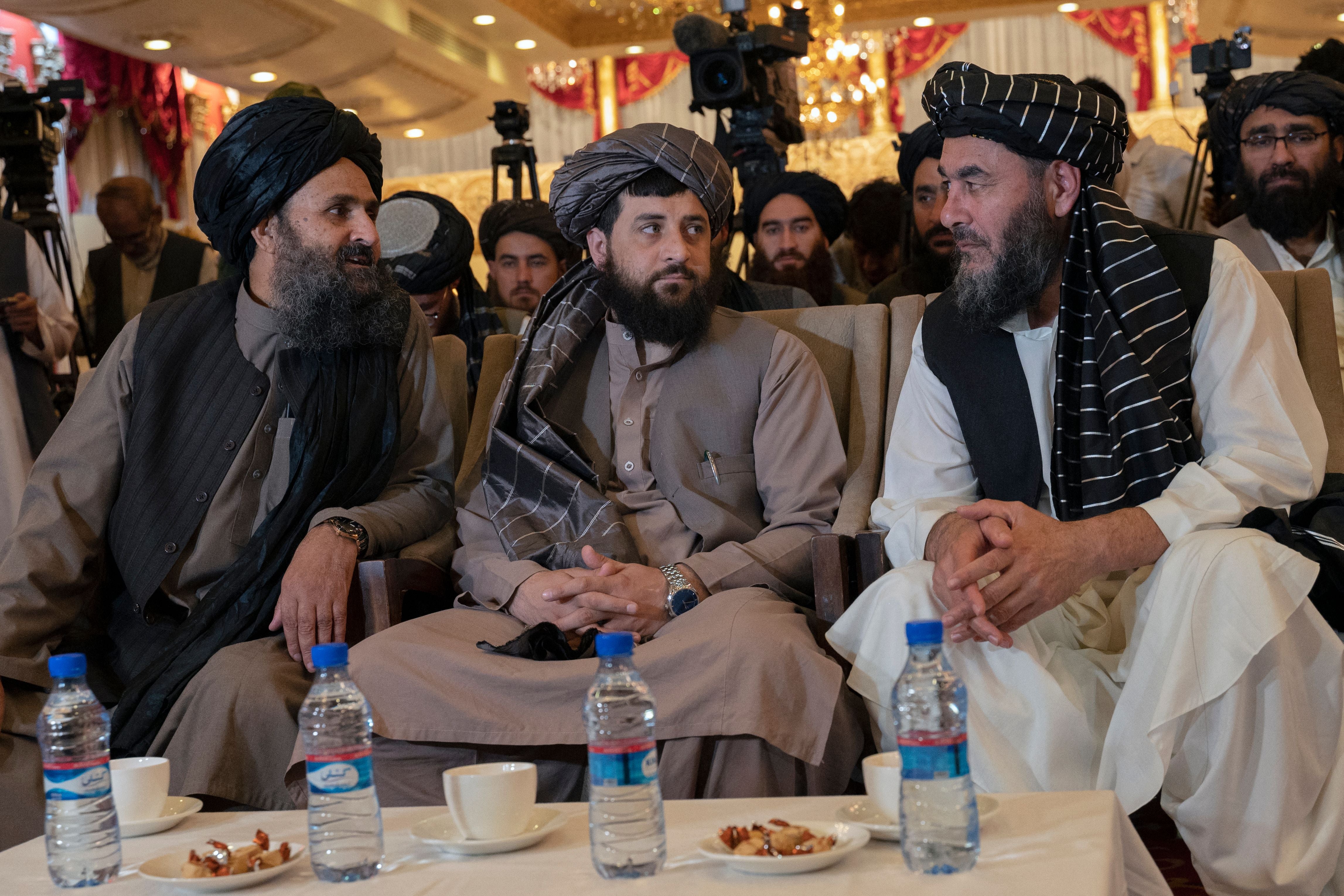
The agreement was signed at an event in Moscow dubbed the “International Security Forum”, hosted by Russia and attended by the Taliban’s defence minister and senior leader Mohammad Yaqoob on Wednesday.
This is the first high-level summit attended by Taliban officials after Russia recognised the group as the official government of Afghanistan in July 2025. No other nation in the world has done so.
Neither Russia nor the Afghan side shared details of the military technical agreement, but it will raise concerns that the Taliban could begin providing its seasoned fighters to join Russia’s war effort against Ukraine. North Korea sent thousands of troops to the frontlines of the war in Europe after Pyongyang and Moscow signed their own military pact in June 2024.
Mr Yaqoob said the Taliban and Russia have expanded their bilateral relations and the group views cooperation with Moscow as carrying “important meaning”.
"Afghanistan and Russia have long and historical relations, in this direction we want to move further. We have expanded bilateral relations,” Mr Yaqoob, the son of the Taliban movement’s founder Mullah Mohammad Omar, said at the meeting.
 open image in gallery
The Taliban official said "Russia is an important country in our region and throughout the world”.
Sergei Shoigu, a top aide to Vladimir Putin and former defence minister who serves as secretary of the Russian security council, welcomed the Taliban leader and used the meeting to denounce Western sanctions against the group.
"We are convinced that Western countries should unfreeze blocked Afghan assets, fully recognise the full extent of responsibility for their 20-year presence in Afghanistan and take upon themselves the full burden of post-event recovery of the country,” said Mr Shoigu.
He said Russia has noted the measures taken by the Taliban “to combat terrorism and drug trafficking in Afghanistan”.
“We consider unacceptable – both for us and for our Afghan friends – the return of military structures or facilities of the United States and Nato to Afghanistan or neighbouring states under any pretext,” Mr Shoigu said.
Experts said the level of military cooperation agreed by the two countries remains to be seen, and does not necessarily mean the Taliban will send troops in the same way North Korea has.
“Russia cannot expect any significant help from the Taliban – in terms of weapons or troops. In the absence of any detail on the agreement terms, it is actually hard to say what Russia can get from Afghanistan,” said Aleksei Zakhrov, a fellow at the New Delhi-based Observer Research Foundation think tank.
He noted fundamental differences between Moscow’s relationships with Pyongyang and with the regime in Kabul, noting that Russia only received troops and munitions from North Korea in exchange for advanced missile technology and economic support.
An equivalent deal with the Taliban is unlikely given the regime’s fragile position.
“The Taliban is currently struggling with rising instability in Afghan northern provinces and cannot fully protect the southern border with Pakistan. For this reason, Russia's aid with repair of the military equipment or supplies of some outdated weapons would be quite timely. However, Russia would unlikely be keen to share sophisticated technologies for proliferation risks,” Mr Zakhrov told The Independent.
Russia may instead prefer the Taliban to focus its energies on securing its northern provinces, and its long and porous border with the central Asian region that Moscow regards as its backyard. Russia has explicitly expressed its mounting concerns over the presence of Isis fighters in Afghanistan.
Alexander Bortnikov, director of Russia’s Federal Security Service, on Wednesday said that the Isis-Khorasan group – an active regional branch of the Islamic State – is “now actively recruiting from among citizens of Tajikistan, Uzbekistan, Kyrgyzstan, Kazakhstan, as well as labour migrants in Russia”.
“Secret terrorist cells are being formed and terrorist attacks are being planned,” Bortnikov said.
On this point at least, the two sides differ. The Taliban’s chief spokesperson, Zabiullah Mujahid, claimed that the Isis movement had been completely eliminated and no terrorist groups were operating from Afghan soil.
“No country should have concerns about Afghanistan. No individual or group is allowed to carry out such activities. Isis has been completely eliminated in Afghanistan, and the Afghan security forces have fought against it,” Mr Mujahid claimed.
Join our commenting forum
Join thought-provoking conversations, follow other Independent readers and see their replies
CommentsСхожі новини
Український фільм «Паляниця» отримав нагороду на кінофестивалі в Санта-Моніці
Bad Bunny in Lisbon: 'While we live, let us love as much as possible'
Music festival Zipangu offers a glimpse of J-pop’s future beyond anime
