Romania's government collapses after Prime Minister Ilie Bolojan loses confidence vote
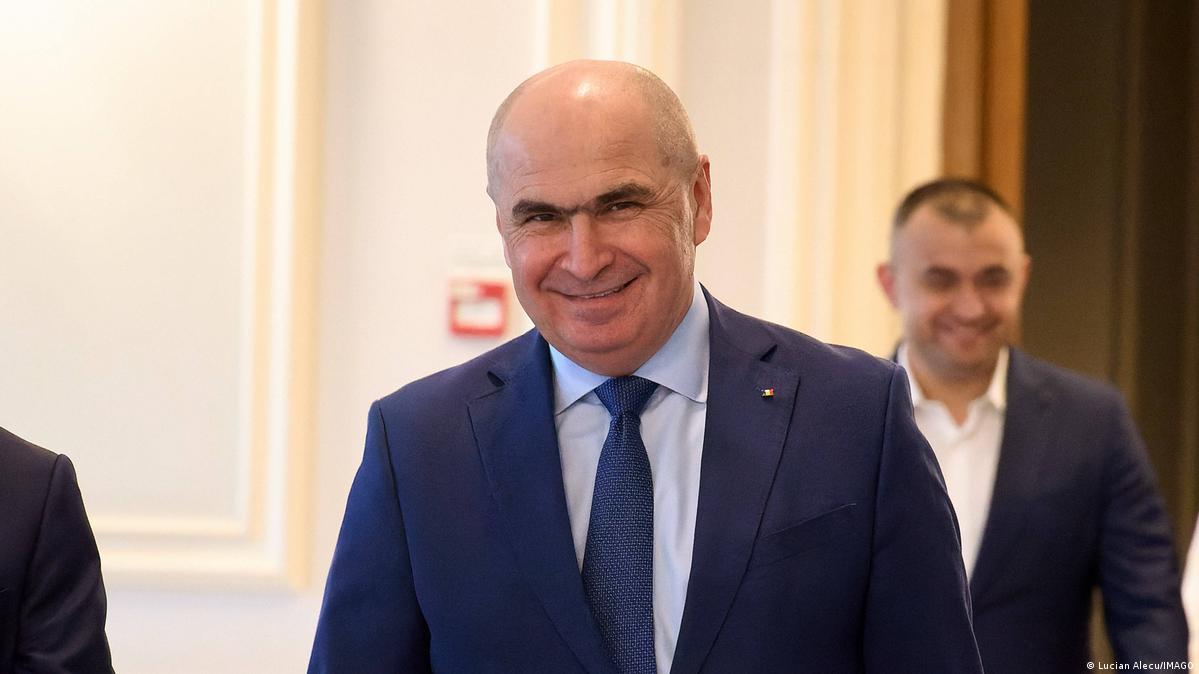
Parliamentarians in Romania voted on Tuesday to remove Prime Minister Ilie Bolojan from office.
The motion passed with 281 votes in favor across the 464 seats of the two houses of parliament, a majority of almost 50.
It's unclear what that will lead to in the debt-riddled EU member that has long been unable to join the eurozone because of its economic difficulties.
Even more lawmakers voted to oust Bolojan than the 254 who had supported the motion to table a vote, any tally above 233 would have been enough to remove him.
Who was in the coalition government and why did it implode?
Amid the rising influence of the far-right opposition in parliament, Romania formed a rainbow coalition last year after President Nicusor Dan won the May 2025 rerun of the presidential elections.
Dan named Bolojan as his prime minister in June after striking a deal between four parties, Bolojan's center-right National Liberal Party (PNL), the Social Democrats (PSD) — the largest bloc in parliament with 93 seats — and two other pro-EU parties.
The new government inherited wobbling public finances and the need to adhere to EU excessive debt procedures, which Romania has been subject to continuously since 2020. In the last quarter of 2025, the public deficit hit 7.9% of GDP, compared to the EU rule forbidding members from exceeding 3%.
The swinging cuts required to try to keep in touch with European debt targets were particularly unpopular with the PSD, which last month left the coalition and filed the no-confidence motion along with far-right opposition parties.
The PSD's erstwhile allies, more centrist or center-right pro-European parties, were highly critical of this step, saying it risked normalizing the once-ostracized, eurosceptic right-wing parties.
In the debate before the vote, Bolojan called the motion "cynical and artificial" and said it seemed to hail from people who had not participated in the government.
"It is cynical, because it does not take into account the context in which we find ourselves," he said. "I assumed the position of prime minister, being aware that it comes with enormous pressure and that I would not receive applause from the citizens. But I chose to do what was urgent and necessary for our country."
What did Romanian politicians say in response?
George Simion, the leader of Romania's largest far-right party, the AUR, celebrated the result online.
"The Bolojan government has just been ousted by the Romanian Parliament. An end to ten months during which the so-called pro-Europeans have delivered nothing but: taxes, war, and poverty," Simion wrote. "The voice of the Romanian people was heard today. Time for national reconciliation!"
The leader of the Social Democrats, Sorin Grindeanu, said after the vote that his party was willing to work toward a quick solution, saying "let's have a government quickly" and asserting that "all options are open."
"I expect that in the coming period, [President] Nicosur Dan will call us for consultations. It would be normal for Ilie Bolojan to resign from the position of prime minister, even if it is interim, because we are talking about an overwhelming vote," Grindeanu said. He added that he wanted to find a swift solution and move forward.
Prior to the vote, he had said the PSD had no interest in an alliance with the far-right, only that they shared a common goal to remove Bolojan as prime minister and break up the coalition government they had left.
What happens next?
What will happen now that Bolojan has fallen is not set in stone. As Grindeanu said, Bolojan will most likely lose his position, and the more probable scenario is more protracted coalition negotiations.
These could even end up yielding the same four-party alliance as before — as all four parties are needed to claim a stable majority. A new prime minister would seem likely, perhaps also from a different party within the alliance.
President Nicusor Dan on Monday had tried to assure reporters and other European leaders assembled in Armenia that he would work to maintain stability and fiscal discipline.
"Political discussions will be difficult, but it is my responsibility as president — and that of the political parties — to steer Romania in the right direction," he told reporters. "I invite you to keep calm. I would like to tell markets that Romania is sticking to its commitments on the deficit."
Romania's currency, the leu, has dropped slightly in value against the euro in recent days amid the uncertainty. Bucharest plans to join the eurozone single currency but as yet does not meet the economic requirements to do so.
Waste management in Romania — EU cash heading for the dump?
To view this video please enable JavaScript, and consider upgrading to a web browser that supports HTML5 video
Edited by: Roshni Majumdar, Alex Berry
AdvertisementСхожі новини
Germany: Who is CDU parliamentary leader Jens Spahn?
У Чернігові кількість постраждалих унаслідок удару РФ зросла до 17

Росіяни атакували "швидку" на Херсонщині: четверо працівників постраждали