Red Barrels co-founder talks the future of horror, 15 years of Outlast, and what’s next for the franchise
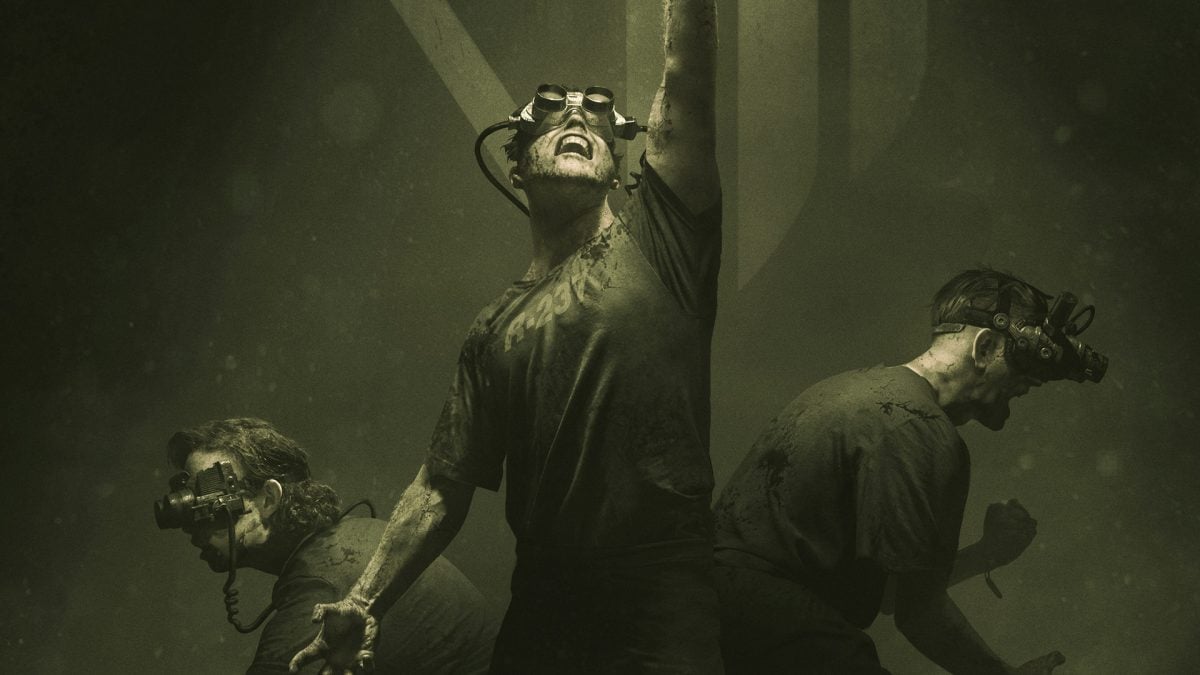
Red Barrels Games has been around for 15 years now, and Outlast is its crowning achievement.
The studio made a name for itself back in 2013 with the release of the first game in the series, and it went on to put out a standalone DLC, a sequel, and a co-op spin-off that came a decade later. It's been a wild ride for this horror giant, and we had the opportunity to talk with its co-founder, Philippe Morin.
Morin has been in games since the late 1990s, starting at Ubisoft and going on to found Red Barrels in 2011. It's been a long time since then, and in honor of the studio's 15th anniversary, we sat with Morin to discuss how Outlast was almost scrapped and what's next for the series.
Here is the full review.
Note: Some parts of this conversation were edited to better fit the written form.
How did you get started in video games, and what led you to found Red Barrels and start working on Outlast?
Philippe Morin (Red Barrels co-founder): I can start by saying I was hired by Ubisoft in 1998. Back then, there were not a lot of video game companies in town, maybe a couple. And really, it never crossed my mind that a career could be made in video games. I studied cinema at university. I applied at Ubisoft as a scriptwriter, and they said, "We'll give you an interview as a game designer." And I had to ask, what the hell is a game designer? I really had no clue.
Back then, because there were no school programs, everybody was hired, I guess, based on potential. And yet, because of my background in cinema, I kind of became a specialist in cameras, in-game cameras, behavior design, and all that. And that's what got me hired by Naughty Dog a few years later, because of the job I did on Prince of Persia: The Sands of Time. I worked on the first Uncharted.
I came back and made Shaun White Snowboarding, which was my own personal Vietnam. And then I worked for a few months on Forgotten Sands until I went to EA Montréal to work on a new IP with Hugo Dallaire, another one of the co-founders of the studio. And we worked on that project for a year.
Eventually, David Chateauneuf joined us, another co-founder. And after a year, EA decided to put the project on ice. They wanted to move us to another project.
We were not really motivated by the other projects. So we just started talking, realized we were at the same point in our lives and our careers, and decided to give it a shot. We thought it would take maybe three or four months to build a pitch and find out if we can get the money.
But it took a year and a half instead. That's for building the pitch. That was fairly quick. But to find the money, it took us 18 months before we could give ourselves a salary once again. Once we got the go from the Canada Media Fund, that was in June 2012. That's when we kicked off the production of Outlast.
Up until that point, we were doing mostly conception. And we shipped the game in 14 months on PC. It was a lot of long hours.
Outlast certainly made a splash when it came out. How would you describe the atmosphere around horror games back then? Because up until that point, singleplayer horror was very much from the center. Co-op and multiplayer weren't as popular in the genre. If Outlast came out today, how do you think it would be received?
Morin: Back then, it was a good context for us because big studios were not making horror games anymore. It was on pause. Then Frictional Games released Amnesia: The Dark Descent, which was a huge success.
But because there were not a lot of other games around it, it was a good case for a business because you got a proof of concept that it can work and be profitable. At the same time, it's the only one around, so there's room for more games. So that's the pitch we were giving investors and publishers we were talking to.
I think probably the biggest difference between then and now is that back then, it was really the beginning of the streamers, the wave of streamers, and YouTubers. We had a game that was almost perfect for them, not necessarily by design. I remember when we published our very first trailer a year before we shipped the game, we were reading the comments, and everybody was saying, "I cannot wait for PewDiePie to play this game."
And PewDiePie apparently hates barrels, and the studio is called Red Barrels. Everybody was tripping over that, but we were like, who the hell is this guy? We had no idea. And then, of course, we found out.
And when we went to PAX East, that was in the spring of 2013, that was the very first demo of Outlast. Obviously, the studio was not known at that point, and neither was the IP. So that's when we were able to get a lot of attention from media outlets.
And I think what really helped was those videos. I think IGN probably made the first one, at least for us, where they had staff members playing Outlast. And that video got a lot of attention, and eventually, PewDiePie asked to play the demo as well.
Up until now, I think it's got 20 million views or something like that. There are a lot more people who've seen footage of Outlast than people who've played Outlast.
After Outlast, you did Whistleblower and the sequel, and then The Outlast Trials. Would you say that the move from a singleplayer to a multiplayer, live-service-oriented studio was a natural one? Going from one established formula to another to give Outlast a place in the modern industry.
Morin: I wouldn't say it was a natural evolution, because really, we ourselves didn't have much experience in multiplayer games, aside from playing. So we had to hire people who had complementary experiences and knowledge, and it turned out to be a big challenge.
And I said at the beginning, we didn't think we were going to make another Outlast. After Outlast 2, we were so burnt out and a bit fed up. So we took a big break during the summer, and then we came back in the fall, and we started brainstorming ideas.
And I think the opportunity arose because we were seeing a lot of videos showing people play Outlast as a group. If somebody dies, they give the controller to somebody else. And we were like, well, what if we could provide these people a game that allows them to play at the same time? And that was basically the starting point.
What if instead of dropping one reporter in the asylum, we drop four people, players, and then they have to work together to try to get out? A little bit like you would see in the Saw movies, Cube, and a bunch of escape rooms. Stories like that, where people have to work together, but they don't fully trust each other.
The first couple of playtests were really promising, and we were confident we could pull it off. It wasn't a straight road. The third playtest didn't go as well as the other ones. It was actually pretty bad. So we had to take a step back and go back to the drawing board a little bit.
The first playtest we did already showed that the game, as it was, could work with more than one player at the same time.
But the funny thing is that a lot of these games are like Left 4 Dead, asking players, or almost forcing them, to stick together. And we didn't want to do that. We wanted the strategy to be the player's choice. Players are like, "Do I stick with my friend, which may mean that we make more noise, or are we less careful about our environment and pay less attention to the sound around us? Are we going to split up, and then we have a lot more focus? But if we're in deep shit, then people are further away from us to help us out."
So we wanted to have that dynamic in the game where you get the insecurity of leaving your friends and then get the satisfaction or the reward of getting back together. Just like in a haunted house or maze, where you're just trying to find your way out, and you're like, "Do we all stick together, or are we split up?" That was basically the initial concept for The Outlast Trials.
Would you say the live-service model of constantly updating one game is a good approach to keep Outlast fans up to speed with new content, lore, and stories instead of making full-blown games to explore all of those venues?
Morin: At some point, it comes down to numbers. You want to give new content and keep the game fresh, but it's got to make sense financially. In our case, all the cosmetics and stuff we sell on the side are just to help us keep the game profitable in the long run, so we can keep adding content like we've been doing.
For a while, we worked on that game for six years before we shipped the early access, so during six years, that's a lot of time to go too far left or too far right and try stuff and fail. So at some point, we said, "Let's just focus on making the best horror co-op experience we can and leave the door open for everything else, but don't worry about that for now."
Eventually, once the game was out, we started creating more content but, at the same time, adding an additional revenue stream just to make sure that, in the long run, the game can make enough money to be sustainable.
You don't have to be direct, but does that stable, additional revenue stream from The Outlast Trials enable you to explore new venues, new IPs, or new stories that you would want to do? Or are you now primarily committing to The Outlast Trials alone?
Morin: Well, we are switching to two projects at the same time. It's always been the goal, but we never found the good timing to try it. Right now, because The Outlast Trials is in good shape and sustainable, at least for the time being, then yes, some of us are starting to work on a second game in parallel.
A new genre of horror game has been crawling out of the woodwork for the past couple of years that fans have labeled as "friendslop." They're less serious, co-op-focused horror games, such as Lethal Company and R.E.P.O., both of which were huge successes. Is the team looking at these sorts of games and trying to reorient itself to sort of accommodate new trends rising in the horror genre?
Morin: I mean, there has to be a balance between paying attention to what's happening with other studios and other games, but at the same time not losing sight of what made your game a success in the first place.
There are internal conversations about all these games, but I think those conversations seem to happen mostly when you're in the conception phase. Now that game is out, the game has a life of its own, and yes, there might be inspiration or a few ideas in there when we look at other games, but I think we're mostly focused on our game and the feedback of the fans. We've got a really cool fan base, and we're reading and listening to what people are saying, so we're mostly paying attention to that more, I would say, than other games at this point.
Every game I've worked on, there's always been a game coming out that makes everybody say, "Oh, shit, we're in such trouble now with this game out." But in my experience, at least, it's never been the case where there was actually a real reason to just switch focus or make a big change. I think once you've established what your concept is and why you're doing it, then it's better to stick to your guns and just push forward.
A little doubt is always good because you want to make sure you do the best you can, but once you're in production, I think focus is better than paying too much attention to what others are doing.
So, you guys being you, I guess we won't be seeing inmates running around with firearms fighting gigantic Murkoff bossfights?
Morin: At this point, I think we feel like we have a good grasp on the DNA of the brand. Obviously, we've always approached the first game as the first one in the franchise, so we always made sure we would leave the door open for stuff to explore with other games. So, I mean, the Outlast universe with the Murkoff Corporation could be adapted into many genres of games, but for us, for now, at least as far as Outlast is concerned, obviously, no weapons, no guns, except what people expect.
If we ever do make a shooter, it won't be called Outlast.
Speaking of the older Outlast games, this series has always been about the story. About the mystique of this evil corporation doing untold things. The first game left a lot of questions unanswered, and each of them had a very ambiguous ending, the first one with the Walrider and the second game's theatrical cerebral closure.
How do you see The Outlast Trials, or do you see it at all, answering some of those questions or trying to fit into the broader storyline? Do you see those updates and seasons as ways to tell new stories that tie in with the previous games?
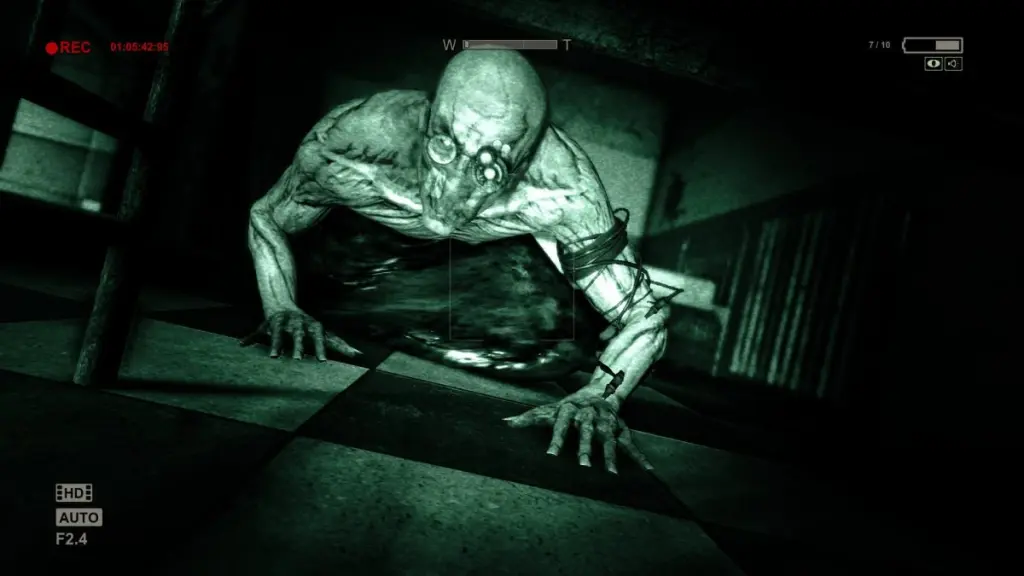
Morin: We're not working with an end in sight. It's more like just adding more building blocks. I think one thing, though, that I will admit is that we found out by making the games that ambiguity can be maybe more problematic in a game than it is in a movie. It seems to be more accepted, if I can use that word, in movies than it is in games.
I think, at least in the context of the first Outlast, I understood that after working, even though I thought we were making just a classic ending for a horror story, after working several hours to try to escape, some people really felt frustrated that they couldn't do it. Although I'll say that there was one thing missing in the game that we just ran out of time to do, and that might have made a difference, but I guess we'll never know.
Ambiguity is tricky when you're making a game, but the problem is that it's part of the DNA of horror, so you've got to find a balance. You've got to have enough what-the-fucks throughout your experience, because if people feel like they understand everything and they have a grasp on the rules of the universe, then your problem becomes that nothing is scary because people feel in control.
That was at least when people played Whistleblower. Of course, there were new characters, so that brought a certain level of what-the-fuck, but at the same time, it took place in the asylum, and some people were starting to feel comfortable in that environment.
That's why it's tricky, because every game you've got to find enough novelty to recreate that what-the-fuck feeling at the beginning of Outlast 1, but at the same time, it's a sequel, so you cannot go too far, and you've got to deliver what people expect from an Outlast game.
In a sense, it's almost harder to make a sequel than an original game, because with an original game, people have no expectations, so the game just turns out the way it is by your own subjectivity. But once you're working on a sequel, then you've got to take into account expectations, and those expectations can vary from player to player, so it becomes a bit trickier.
Of course, the upside is that if you're making a sequel, then it means that your brand is known, and it's a lot easier to market.
Would you guys ever address any, being as broad as I can here, of the ambiguities that happened at the asylum and so on within The Outlast Trials, perhaps?
Morin: Since the games don't happen within the same time period, it makes it harder, but there are some ways to touch upon it. For example, Dr. Wernicke is alive during The Outlast Trials. He was visible in the lobby for a while. If you read the comic books, there's a bit more information in those for the backstory of our prime assets, so there might be some information about Murkoff there.
But perhaps a future game will give more. I feel like you're trying to make me say something. You can't, so you're going sideways, haha.
It's definitely our goal to provide answers or give at least pieces of the puzzle here and there. Of course, the trick is, I mean, I'm not saying maybe I shouldn't say this because for some people, it might not be a good example, but it's like if you think about the series Lost, every time they would close a door, they would open two new ones. The problem is if you do that too long, then you just end up with so many doors open that it's almost impossible to close them all.
Still, I think that's the dynamic or structure you're looking for to keep the interest. You've got to give the satisfaction of closing some doors. Okay, now I finally understand that, or now I finally have the information I was missing.
But to keep the players engaged, there always has to be some doors not fully open. That's been our approach with The Outlast Trials since the beginning. More like a TV series. It's like you've got the trials, which are the episodes, but also you've got your story threads that are across seasons. In that sense, it's closer to a TV series than a movie story.
Okay, I'll stop going down this route and trying to draw out that definitive answer about Outlast 3 or something...
Morin: We did say we were going to work on it at some point. The Outlast Trials is big enough already, so it would only make sense from any sort of position. At least, that's what I think.
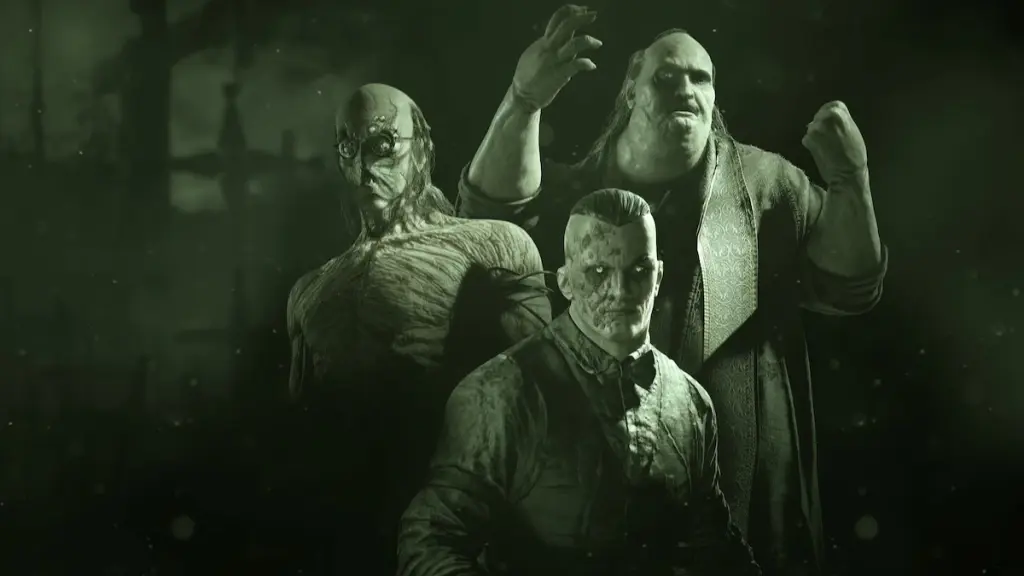
Now, let's look beyond Red Barrels. You guys certainly have an amazing perspective on horror and what makes it tick. What would you say you'd want to see more of in the horror sphere, or maybe less, because a lot of the genre is getting really oversaturated?
Morin: It's always tricky because nobody has a crystal ball to know how things are going to evolve in the future.
If you told me at the beginning of Outlast 1 that eventually we would make a multiplayer Outlast, I would have said I highly doubt it. For me personally, there are still a lot of things that we're used to seeing in a movie that are hard to include in a game. I think for two reasons.
One, because there's the question of point of view. In the movie, you can control what you see, from what angle you see it, and how long you see it. In a video game, unless you're playing a cutscene or cinematic, of course, but at least in an Outlast video game, the player controls the point of view most of the time.
I think that's what makes things maybe look worse in a video game than in a movie, even though to me it's completely illogical because in a game, it's a bunch of polygons moving. In a movie, you're seeing real humans. They're faking a situation, but still, you're watching real humans.
But yes, there are still some things that are terrible to do in a movie that I wish we could put in a game at some point. To me, the point of playing a game is to go through experiences and emotions that you cannot go through in your normal life. It's kind of similar to any other art form, but of course, the big difference with a video game is that you're participating.
It's interactive, so you have some control over what happens. I just want to provide the biggest emotional experience possible. That's why we approach Outlast like a roller coaster, the singleplayer version.
We're basically grabbing the players by the collar, and you're going to be entertained and scared. That was our one and only goal with the first Outlast: to make the game as scary as we could. If players have to stop playing after 60-90 minutes because they're too scared, then we would consider that a success.
It's maybe not a good business success, but on Steam, the average time for Outlast 1 is 90 minutes. The problem is that now they have this thing that if you play for less than two hours, you can get your money back. Of course, it's not very good for our game, because if you scare players too much, then they'll just get a refund.
I myself quit a dozen times. That point where you get to the basement and have to walk around the enemy in pitch darkness—I quit there so many times as a kid, so I can relate to people giving up there. That's one of the most unique gameplay elements that's stuck with the Outlast franchise for a while: the part where you have to stick to the shadows to avoid enemies, it's very oppressive.
Morin: It's almost like you're giving tools to players, but every tool has an upside and a downside. With the night vision, you're able to see better in the dark, but you don't see as well with your own eyes. The quality of the images is very low. Usually, you try to avoid the dark.
I'm not asking you to go into the dark if you want to be protected, but of course, it's counterintuitive to go in the dark. We're having fun with this stuff. Like I said, we just want to create a wide range of very strong emotions so that it has a lasting impact on players.
When I was a young kid, I remember going down to the basement. My father was watching a movie. He was watching The Omen, the original one. There's this scene in the hospital where the mother is getting dressed because she needs to escape the hospital. Then there's the nanny coming in the room, and her face is behind a curtain. You still see her face, but it's not super clear.
That face, that image, stayed with me my whole life. I was maybe six or seven years old. Obviously, I didn't watch the whole movie.
I think I just watched for a few seconds, and that was enough, and I went back up. But I guess what I'm trying to say is that if we can create something similar that stays with players for years and years, that's what would be the most satisfying.
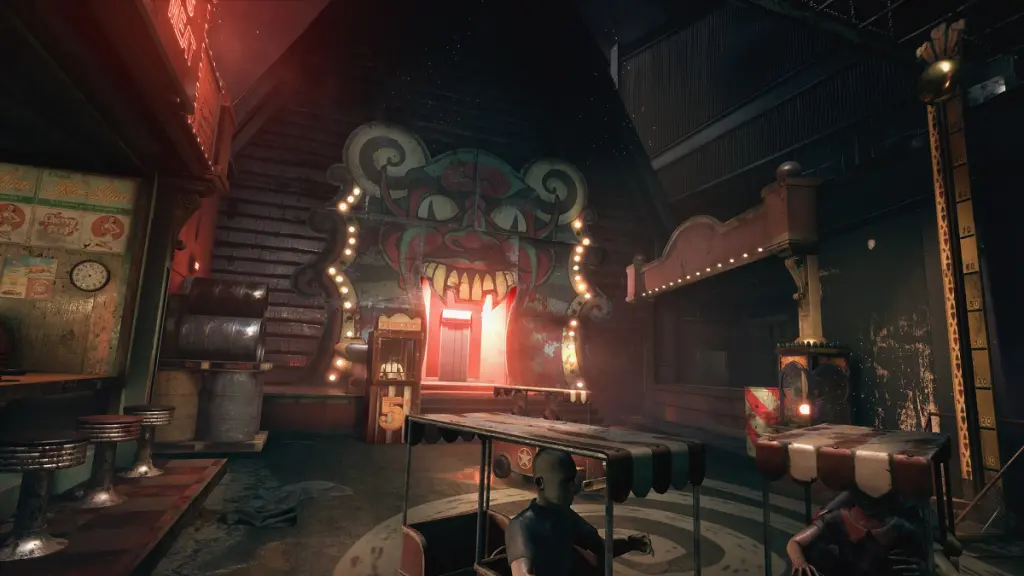
Horror is very active in the genre, and there are a lot of indies, I would say. There are a lot of games coming out on Steam every year. What are your views on that, the fact that so many titles are coming out left and right in just this one genre?
Morin: That's probably another big difference between when we shipped the first Outlast and now: there are three times at least the number of games released on the platform every year. So that makes a big difference for discoverability.
Would you say that so many games coming out is good because they can do trial and error en masse, or are they saturating the genre more?
Morin: It depends on the game, I guess. I don't want to say it's saturated.
There is a potential problem with discoverability and getting attention because, currently, what's happening is that there are a lot of good games out there that just don't make any money for various reasons. But you would think that if the game is good, it would eventually find its audience and provide revenue, but it doesn't seem to be happening this way.
So there's an issue to fix, but I wouldn't want to say anything along the lines of "There are too many games, there's too much of this, there's too much of that." I think it's just more pressure to do better than the others.
Now, as a final question, since you're celebrating 15 years of Red Barrels, it's been a long journey. Three major games and a huge DLC. Is there a message you'd like to send to fans of Outlast and the horror genre?
Morin: It's been an amazing journey. It has exceeded our hopes, and it's mainly because of the fans' reaction. We often hear ours is a niche, and some say Outlast is a niche within a niche.
Well, if that's the case, then our niche is very healthy. We have a very good community, and we enjoy the back and forth with the fans who've been with us since the beginning.
We feel blessed. Every time you're making a good living, doing what you love, it's a big win, and so we feel very fortunate that we were able to achieve our ambitions and are in the situation we are right now. Especially these days, it's not very rosy for the video game industry.
Fortunately, we're in the opposite situation. We're growing, and things are looking bright. I don't want to use the word "lucky," but there's always a little bit of luck in these types of things.
In our case, it's been mostly the team and the hard work of everybody on the team that makes the biggest difference. I think we've got one of the best teams in town, if not the best. I think when you launch a game, it shows.
The post Red Barrels co-founder talks the future of horror, 15 years of Outlast, and what’s next for the franchise appeared first on Destructoid.
Схожі новини

Трамп "серйозно розглядає" можливість зробити Венесуелу 51-м штатом США, – медіа

Crimson Desert виконує одне з найбільших прохань гравців у свіжому оновленні

Забудьте про мінімалізм: як відтворити головний тренд у дизайні інтер'єрів