Putin Defends Mobile Internet Outages as Necessary Measure in Fight Against Terrorism

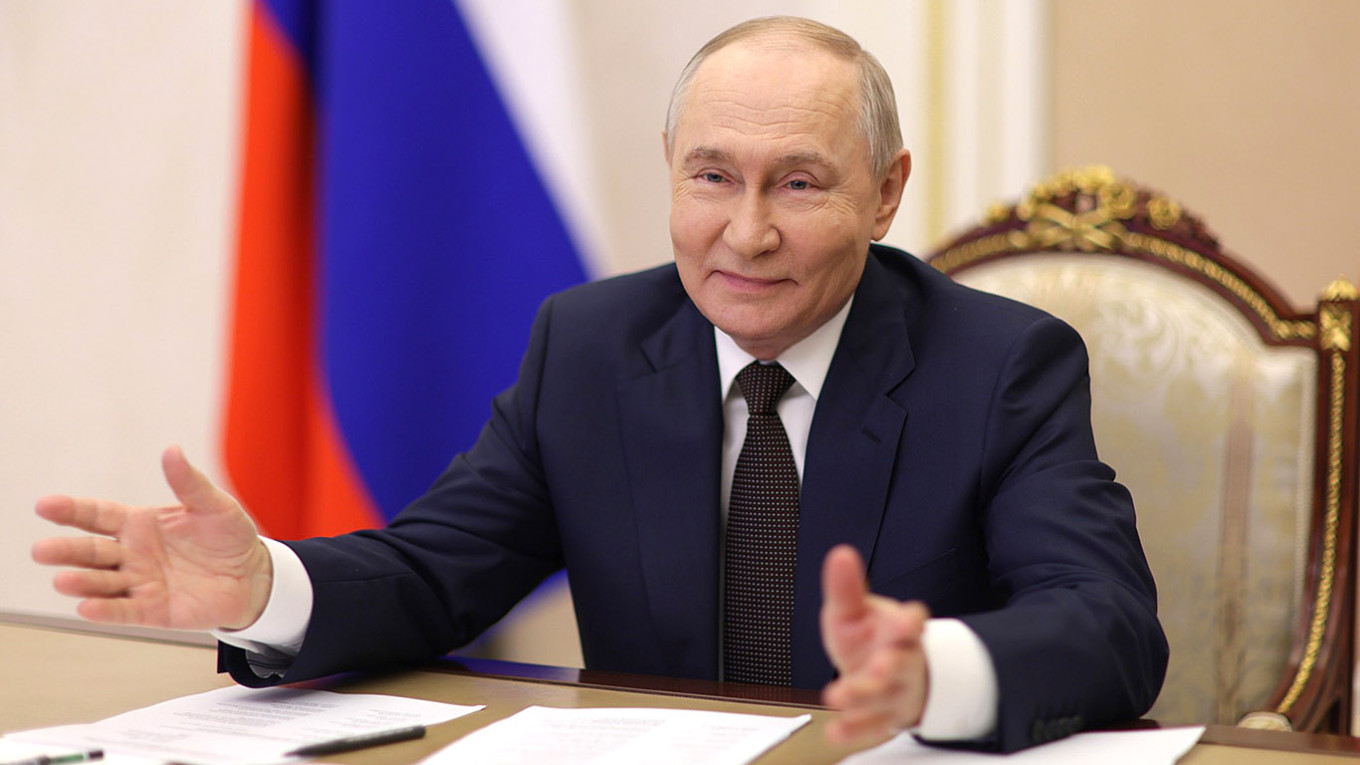
President Vladimir Putin on Thursday addressed the escalating wave of mobile internet blackouts sweeping Russia, defending the disruptions as a vital defense against “terrorist attacks” and dismissing calls for advance public notice as a threat to national security.
“Criminals, after all, hear everything and see everything. If some information reaches them, they will undoubtedly adjust their criminal behavior and their criminal plans,” Putin told a meeting of cabinet members.
The comments mark the first time Putin has personally waded into the confusion caused by the internet disruptions, which some have criticized as a kind of “digital iron curtain.” While online restrictions have become common since the full-scale invasion of Ukraine, outages have intensified in recent months, with monitoring groups saying most regions throughout the country now face daily internet disruptions.
The Kremlin previously defended the restrictions, including those targeting specific platforms like Telegram and WhatsApp, as legal and necessary for ensuring security.
On Thursday, Putin urged law enforcement agencies to “demonstrate the necessary ingenuity in their work, high professionalism and to take into account the citizens’ vital interests,” but he stressed that safety and security, in his view, remains the top priority.
He ordered Russia’s Digital Development Minister Maksut Shadayev to work more closely with the security services in order to ensure the uninterrupted operation of a so-called “white list” of online services. The registry, which includes the government-backed messenger Max, state news agencies and major banks, is designed to remain functional while the rest of the web goes dark.
Putin did not comment at all about the recent push to curb the use of virtual private networks (VPNs), which have become a key tool for bypassing the internet restrictions. Shadayev said in late March that reducing VPN usage had been set as a priority for his ministry.
Read more about: Putin , InternetSign up for our free weekly newsletter
Our weekly newsletter contains a hand-picked selection of news, features, analysis and more from The Moscow Times. You will receive it in your mailbox every Friday. Never miss the latest news from Russia. Preview Subscribe Subscribers agree to the Privacy Policy We sent a confirmation to your email. Please confirm your subscription.A Message from The Moscow Times:
Dear readers,
We are facing unprecedented challenges. Russia's Prosecutor General's Office has designated The Moscow Times as an "undesirable" organization, criminalizing our work and putting our staff at risk of prosecution. This follows our earlier unjust labeling as a "foreign agent."
These actions are direct attempts to silence independent journalism in Russia. The authorities claim our work "discredits the decisions of the Russian leadership." We see things differently: we strive to provide accurate, unbiased reporting on Russia.
We, the journalists of The Moscow Times, refuse to be silenced. But to continue our work, we need your help.
Your support, no matter how small, makes a world of difference. If you can, please support us monthly starting from just $2. It's quick to set up, and every contribution makes a significant impact.
By supporting The Moscow Times, you're defending open, independent journalism in the face of repression. Thank you for standing with us.
Once Monthly Annual Continue Not ready to support today?
 Remind me later. ×
Remind me next month
Схожі новини

Political turmoil in Nepal: Parliament suspended, Home Minister resigns amid financial conduct probe

Мудра: 22 країни заявили про згоду приєднатись до угоди для запуску Спецтрибуналу