Peter Molyneux has made a proper game again rather than a monetization experiment, and I really hope he finishes it
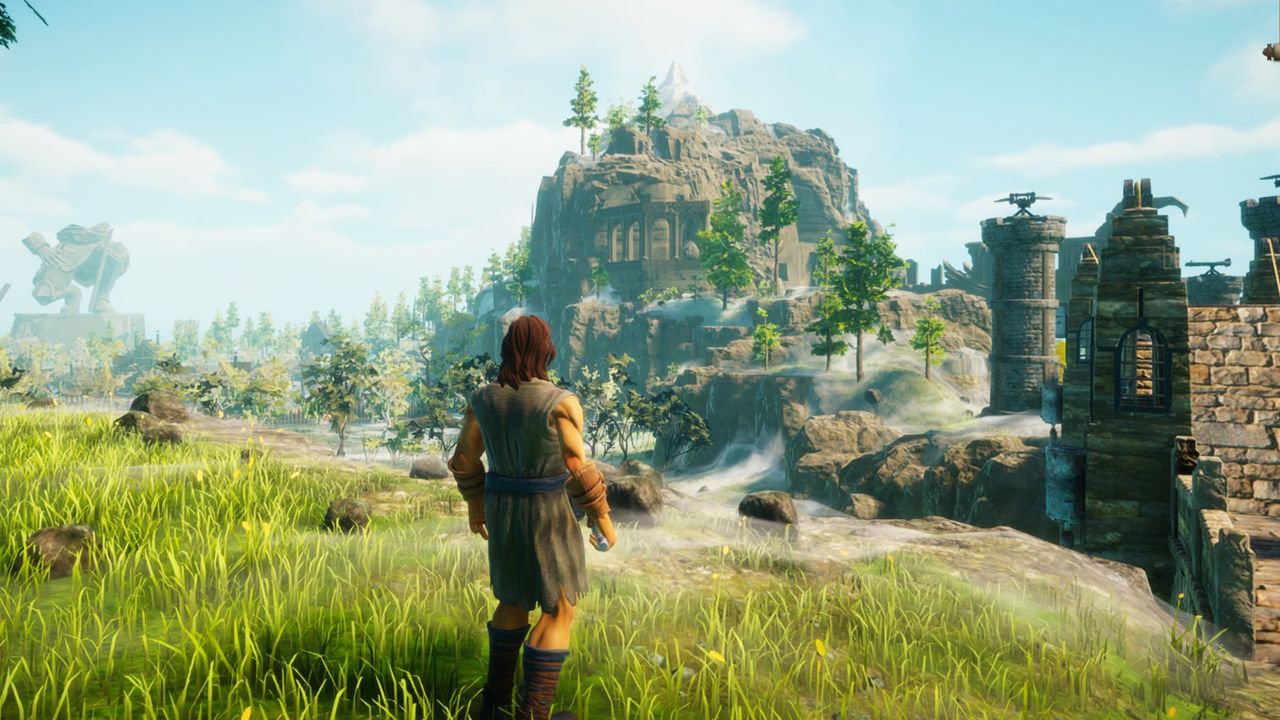
Masters of Albion has Peter Molyneux's paws all over it. The art style and arch British humor channels Fable, and it's even set in a place called Albion (not the same Albion as Fable, of course). It's all very gentle, very quaint, like I've just opened an Enid Blyton or Jill Barklem picture book.
But then my in-game mentor, who instructs me in all things being-a-god, goes hell for leather: "Fuck off it's a fucking zombie!" she cries. It's a response commensurate with the severity of the situation—midnight zombie attack—but it's the funniest case of tonal whiplash I've experienced in a game for a while. Imagine if Maru in Stardew Valley called you a cockhead every time you proffered a snow yam. That's how it felt.
Masters of Albion is a funny thing and yes, it kinda feels like the explicit, unadulterated version of previous Molyneux games mashed together. It's a god game, because I play as a godly hand in control of everything. It's a management and production line sim in ways that recall both Theme Park and Dungeon Keeper. It also has some light action RPG elements. It definitely feels like Molyneux and his team are making a game designed to be widely played rather than as an experimental commercial gambit, possibly for the first time in 22cans' existence.
God hand
Manufacturing sandwiches is pretty lucrative, but so is bashing hornet nests from trees, and kicking chooks back into their run
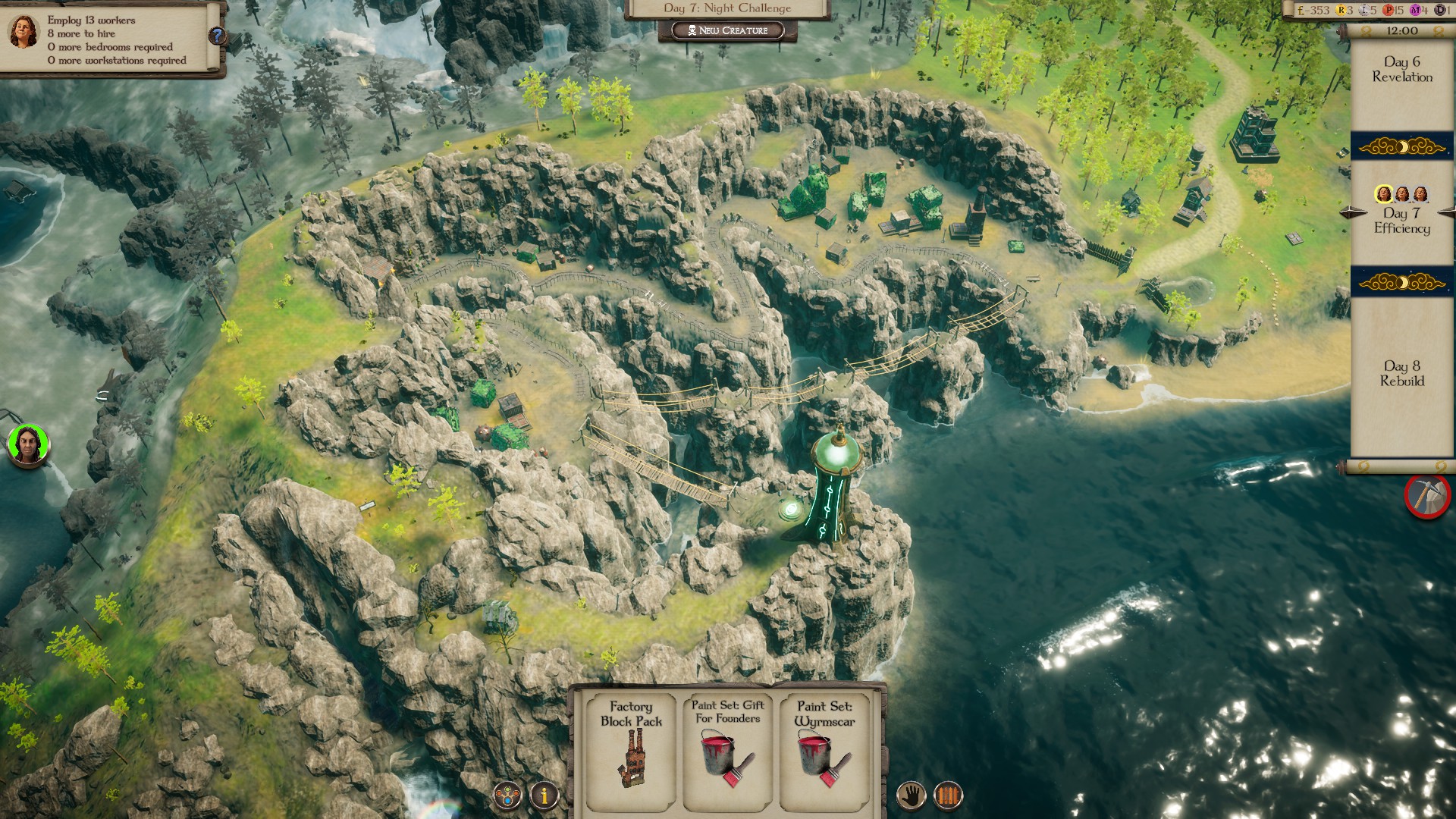
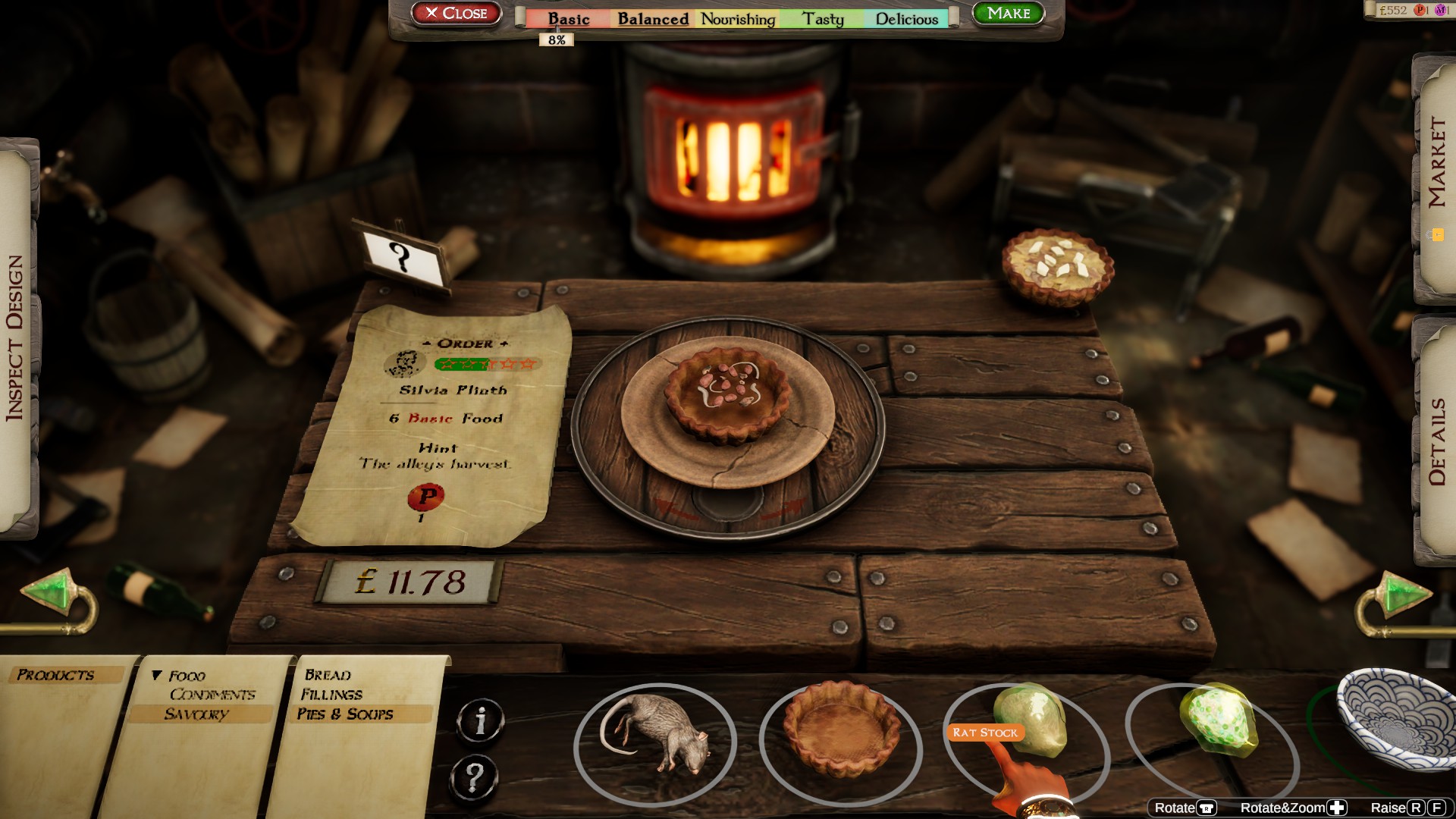
The first order of the day is to revitalise the little hamlet of Oakbridge. In Masters of Albion the protagonist—the god, the hand—is also the mouse pointer. I can construct buildings out of pre-fabbed blocks, all the better to get a little bit of industry going on in this backwater. My farm keeps a nearby mill supplied with wheat, and the mill keeps a nearby factory supplied with flour. At first my town's specialty is making weird sandwiches, which I'm tasked with making manually, by way of learning how the mini in-game economy works. From a selection of ingredients—stale sourdough, moldy white, lettuce, tomato, rat—I click and drag ingredients onto a plate, and the customer delivers their verdict.
It's a wholesome way to live. But the problem with this revitalisation plan is there's a graveyard nearby and it tends to spawn vicious undead by night. Masters of Albion is also, therefore, a tower defense game of sorts. I can fix or mend fences, build catapult sentries, and eventually open a heroes guild where the heroes I employ bed down.
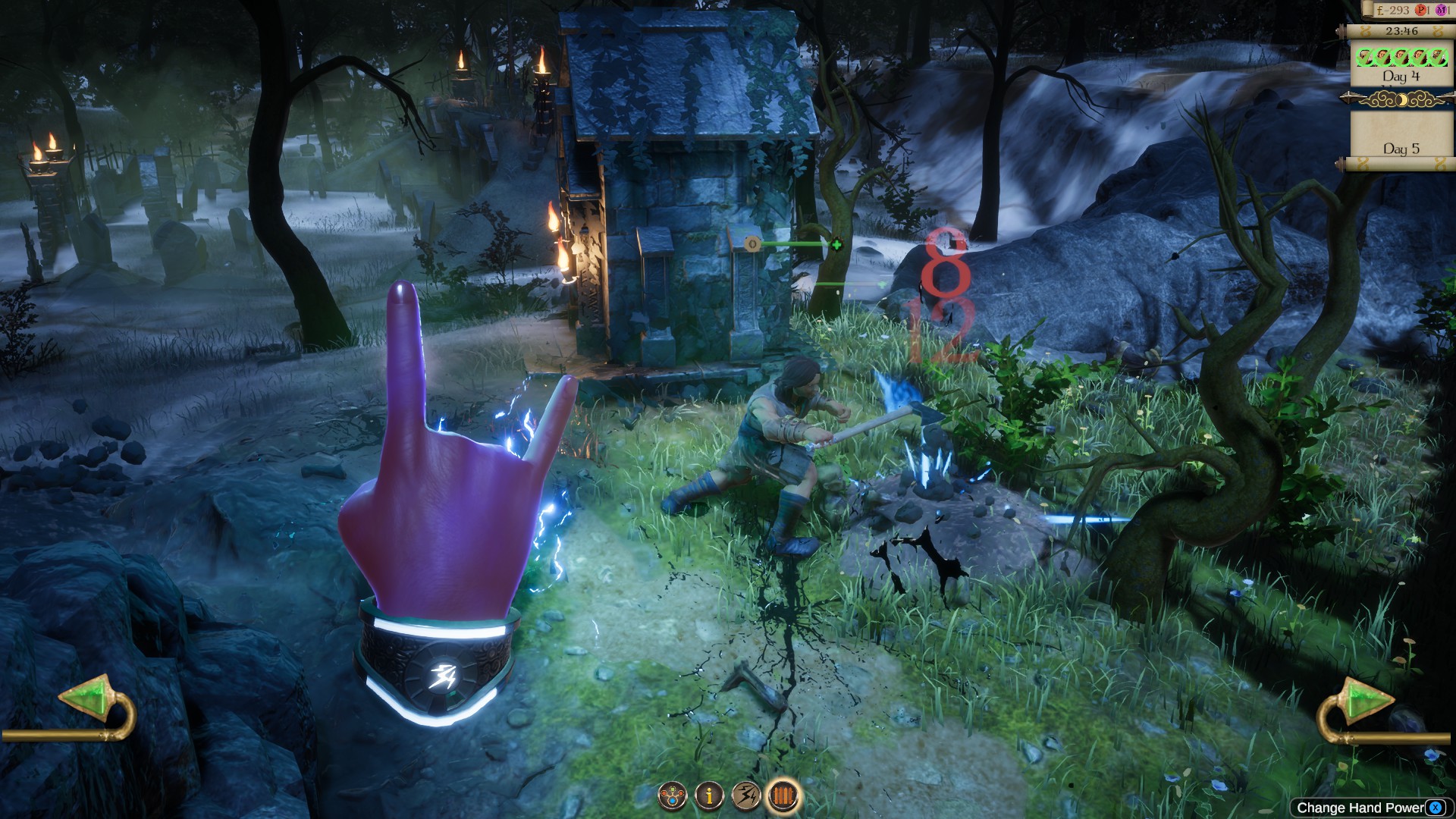
I really love this aspect of the game. My heroes automatically fight zombies by night and I can even help out from the firmament, at first with lightning rods but later with fire. I can also inhabit my heroes and wander the world as them, effectively turning Masters of Albion into a third-person action RPG (you can inhabit workers as well, but no thanks).
Not a very good action RPG though, or at least, not yet: this being early access, my heroes traverse the terrain awkwardly, and the land is rife with weird invisible walls. But inhabiting one of my heroes means I can explore chunks of Albion that my godly hands have yet to win dominion over, and it also falls to them to reconstruct towers that can extend my divine reach, all the better for me to take control over more of Albion. Each of my heroes levels up independently and, eventually, once I've built an armory and weaponsmith, can be kitted out with better gear.
Rat sandwich
The management elements are fine but a little tedious at times. At one point, hundreds of pounds in debt, I needed to build a bunch of new worksites and homes for incoming workers. The only way I knew how to get out of debt was to manufacture 28 "balanced" sandwiches, the problem being that my wheat field was depleted and I needed more than a grand to irrigate purified water to the plot. Thankfully my mill was stocked up with plenty of flour already, but once my supply was depleted I still needed to make 15 pies with only 37 pounds at my disposal.
Manufacturing is slow too: needlessly so, because Masters of Albion doesn't pit you against any clock. Days will run forever until you choose to end them, the idea being that you should be well-equipped to take on the night's zombie incursion. It's possible to speed up production on my farms, mills and factories by double clicking on them—think of it like a foreman's stern tap on the shoulder—but this is still pretty slow as well.
Anyway, I ran out of money and wheat before I could fulfil this task and felt at a loss until I realised I could go adventuring for coins. Sidequesting as one of my heroes is actually a pretty effective way of making money, or at least it is until all sidequests are done. Manufacturing sandwiches is pretty lucrative, but so is bashing hornet nests from trees, and kicking chooks back into their run (it wouldn't be Molyneux without fowl cruelty).
Once I got the money I bought my stupid water purifier, only to struggle endlessly with its placement, which raises the problem of building in general: it's awkward. I want my town to look nice, but it's usually more expedient to just stack required blocks one on top of the other until I have a veritable skyscraper of, say, farmer workshops, all the better to employ workers and boost production. It's also annoying how willing new blocks in hand are to snap to buildings I don't want to be a part of.
The UI, in general, is a bit of a mess. And performance is pretty woeful: my laptop sits pretty much exactly on the recommended specs, but even on minimum settings the game would often lurch, especially when on foot as one of my denizens. 22Cans also writes that the game is Steam Deck ready, and it kinda is, but you're going to need to be comfortable with frame rates that hover around the 22 fps mark on the lowest possible settings.
Yep, it's an early access project alright. But through the mid-development murk I can see huge potential. It's full of fun touches, like the ability to pick my subjects up and drop them into the ocean, though maybe that stands out because there aren't a heap of other ways to assert my divinity. The writing is often superb, and despite the ropey performance it looks really nice on high settings.
I enjoyed my time with Masters of Albion despite its myriad problems, though for anyone less than fanatic about Molyneux' work or the god genre in general, I'd probably advise to wait for further updates. Of course, this being a Molyneux project, you're justified in worrying whether it'll ever be completed. Assuming that it is—22cans predicts a 12 month dev cycle—it's shaping up to be the best Molyneux game since the Fable years. Is that a high bar to cross? Not really, but I'll definitely be coming back.
Схожі новини

Просто й стильно: Юлія Свириденко зачарувала елегантним образом на зустрічі з принцом Гаррі

Шанс є: за яких умов відновиться видобуток нафти на Близькому Сході

Українська капуста повертається на ринок і одразу обвалює ціни на імпорт
