Paying in sweat! How Debbie Allen went from stardom in Fame to conquer Hollywood

She played the world’s coolest dance teacher and has had big success as an actor, director and choreographer, winning a Golden Globe, Emmys and an Olivier. Now, she is back on Broadway. She discusses Trump, the Kennedy Center and where the US goes next
Debbie Allen once found herself judging the Miss America pageant in Atlantic City alongside a charismatic property developer named Donald Trump. He had just bought an 86-metre superyacht named Nabila and rebranded it the Trump Princess. Eager to flaunt his prize, he invited Allen, a dancer, choreographer, actor and director, and her sister, the actor Phylicia Rashad, aboard for a private tour.
The opulence of the vessel was astonishing, Allen recalls: there was a bathroom carved from lapis lazuli, a fully equipped nightclub and fine paintings hanging on the walls. “It was incredible. I remember him telling me: ‘Debbie, you can have a party on this.’ I said: ‘If I do it, honey, it’s going to be all Black people.’”
Four decades later, the Trump that Allen once knew as a “showman” is now the architect of a deeply polarised US. She struggles to reconcile the affable pageant judge of her past with the authoritarian figure of the present. “He was a fun guy back then,” she muses. “I don’t know what happened.”
Did she ever think of him as racist or sexist? “No!” Allen says. “I didn’t think it then and I wonder about it now. I wonder if that’s really him or is it people that are encouraging him to act like this. It’s hard to know, but we’re living in a time where it’s like we’re in an earthquake every day here in America. We don’t know what is going to happen next.”
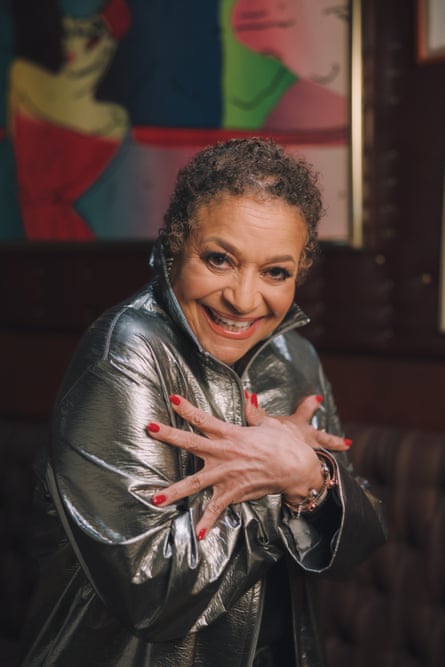
Her voice is vibrating with a mixture of defiance and sorrow. Allen, a 76-year-old grandmother who is married to the former NBA basketball player Norm Nixon, has exceptional grace. Sitting in an Italian restaurant in midtown Manhattan, she is wearing a shiny silver jacket and a glittering cross around her neck. Warm and genial, she talks for an hour about the meaning of high art and popular entertainment in this time of Trumpian discord without missing a beat.
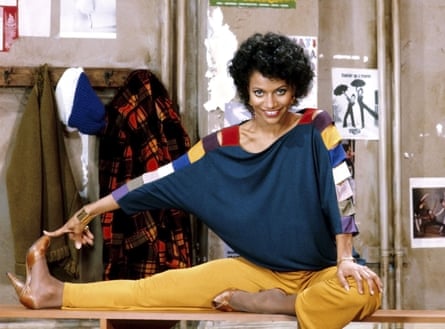
Allen’s best known roles include Anita in the 1980 Broadway revival of West Side Story and the dance instructor Lydia Grant in the film and TV series Fame. She has choreographed the Oscars a record 10 times, founded the nonprofit Debbie Allen Dance Academy in Los Angeles and was appointed a US cultural ambassador of dance by George W Bush in 2001. She is also a prolific TV director, notably on the medical drama Grey’s Anatomy, while her London production of Cat on a Hot Tin Roof won an Olivier award in 2010.
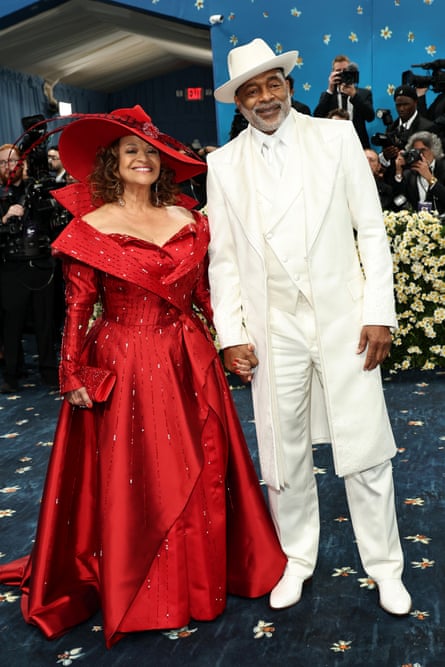
Now, she is returning to directing on Broadway with Joe Turner’s Come and Gone, a haunting Chekhovian masterpiece by August Wilson set in an African American community in Pittsburgh, Pennsylvania, in 1911. At a recent performance, a cheer erupted in the balcony at the Barrymore theatre. Audience members in the stalls turned to look, muttering: “Is it the Obamas?” But it was Allen, making a splendid entrance and giving a regal wave.
Denzel Washington, who has made it his personal mission to memorialise Wilson’s series of 10 plays, American Century Cycle, on film, selected Allen for the project. Washington suggested she direct the stage version first to “exercise those muscles and get those creative juices going”, an offer she enthusiastically accepted.
Preparing for the production, Allen wrote a 40-page study guide for her team, diving deep into Wilson’s historical context and his artistic inspirations. “It speaks to me because it is so intergenerational,” she says. “There are young people, young adults and older people.
“The play itself is so full; it is all of August Wilson. The greatest humour, the greatest dramatic journey for the characters, the real experience of spiritualism … This particular play attracts me because it’s where memory and the past collide, where religion and spirituality collide, and it makes for a real experience in theatre.”
The play is set half a century after the emancipation of African Americans, but its protagonist, Herald Loomis, is a victim of peonage, a brutal, state-sanctioned system of forced labour that effectively extended slavery well into the 20th century. His trauma is passed down the generations – and resonates anew in Trump’s US.
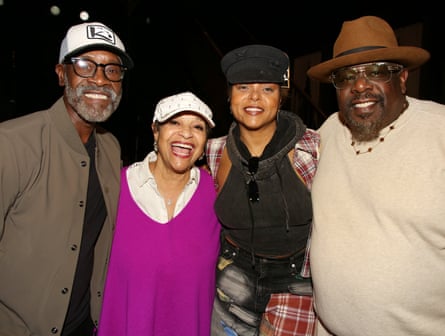
“Herald Loomis’s search for his identity begs the question of America: who are we?” says Allen. “What is our identity? Because everything that’s happening right now is beyond explanation, beyond reason, beyond understanding. There are these leaders all over the world who are vilifying their people by their actions of unwarranted aggression.
“It’s very difficult for the American people, who are suffering at the gas station, at the grocery store, paying their bills, paying for their kids. I don’t know what happened to ‘Make America great again’. That was an idea that sounded good, but I don’t know if we’re great right now if we are the cause of so much chaos and destruction.”
Born in Houston, Texas, to Vivian Ayers Allen, a poet, playwright and cultural activist, and Andrew Allen, an orthodontist, she fell in love with dance as a child. “I was always the entertainment for the family,” she says, recalling days spent dancing to the radio and watching musical films with her sister, dreaming of replacing Shirley Temple or dancing alongside Bill Robinson, the Nicholas Brothers and Gene Kelly.
The main ballet schools in segregated Houston flatly refused to accept Black children, so Allen’s mother found a man who was retired from the Mariinsky Ballet to teach her daughter privately, putting Allen “way ahead of everybody”.
At 16, Allen flew alone to audition for the North Carolina School of the Arts. Despite a flawless performance – the instructors used her to demonstrate moves for the rest of the class – she was rejected. Allen was told, she says, “my body wasn’t right for it and I should do something different”. Her voice tightens at the memory, even after 60 years. “It was terrible.”
The return journey was heartbreaking. When her mother met her at the airport gate, she offered no comfort. “She said: ‘You failed.’ I said: ‘Mom, I was good in the audition.’ ‘You failed.’
“Wow. That was tough, because, honest to God, she was not letting me wallow in any self-pity. I had to take responsibility. It took me a while to understand why she did that. It was hard, but it was a much‑needed truth and she was loving me by being tough like that.”
Allen studied at Howard University in Washington DC – “the Black Harvard” – where she found a culturally rich, empowering environment. “It was a better school for me, because it was right in the middle of ‘Say it loud, I’m Black and I’m proud’,” she says, referring to the James Brown song that became an anthem of the Black Power movement.
Allen’s career began its ascent, leading to an audition for the 1980 Broadway revival of West Side Story. She found herself alone in a theatre with the composer Leonard Bernstein. Brimming with confidence, the young Allen asked the maestro: “Would you like me to sing for you? Would you like me to dance for you? Or do you want a little of both?” Bernstein wanted to see everything.
Soon, the choreographer Jerome Robbins was brought in. Allen says: “He was like: ‘Oh, wow.’ Then he made me go and learn [the song] America, just the beginning of the choreography. So I sang a little bit of it and danced it. He ran up: ‘Anita, Anita!’ He was calling me Anita.”
Then, after a small part in Fame, the film, came the TV adaptation. As the fierce, demanding dance teacher Lydia, Allen delivered the memorable lines: “You’ve got big dreams? You want fame? Well, fame costs. And right here is where you start paying … in sweat.” She won a Golden Globe for the role, along with two Emmys for choreography.
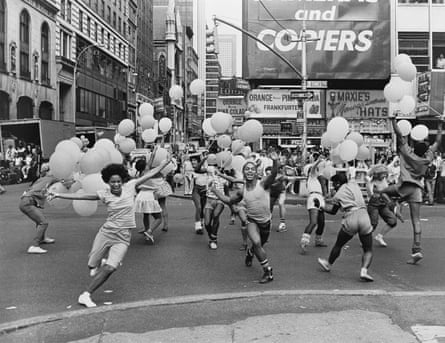
When the cast visited the UK for a concert tour, the reception was staggering. “We didn’t realise how popular we were until we got off the plane and there were just hundreds of people out there screaming for us at the airport,” she says. They performed at the Royal Albert Hall in London and met Diana, Princess of Wales.
Allen was the glue holding the young, diverse cast together: “We went everywhere and so much was going on on that bus. I was like their mamma, their daddy, their psychiatrist, their director, their choreographer. I was everything for them and they were everything to me.”
Allen directed 10 episodes of Fame and has since directed several other TV shows, including the producer Shonda Rhimes’s political drama Scandal and her legal thriller How to Get Away With Murder. Rhimes also invited her to direct an episode of Grey’s Anatomy. “What a wonderful experience, that very first episode, because they were all such fans of Fame,” Allen says. “Patrick Dempsey can stand in perfect fifth position. He studied ballet somewhere!”
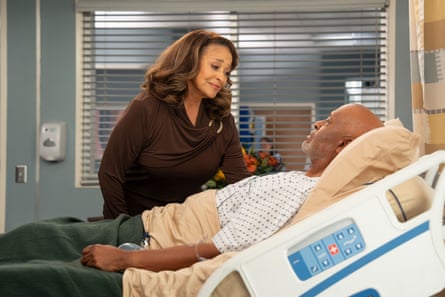
Allen has directed many more episodes and also plays the recurring character Dr Catherine Fox. Allen says: “I came on to the show doing the first penis transplant. I couldn’t believe it. Shonda said to me: ‘I hope you like penises.’ I’m like: ‘What?’”
Grey’s Anatomy, now in its 22nd season, is the longest-running primetime medical drama in US TV history. Allen, who is also the executive producing director, says with evident pride: “The millions of people who are fans learn about their medical situation; they learn things that have saved lives.
“When Covid happened, we did a whole year of Covid, which allowed people to grieve. It was incredible what we did and how we were able to be in the living room with those audiences who could now not go anywhere and could experience, in this way, what was happening in their lives.”
Allen’s producing credits are equally formidable, not least her work on Steven Spielberg’s Oscar-nominated historical epic Amistad. The film tells the story of a group of enslaved Mende people from Sierra Leone who rebelled against their captors in 1839 before being arrested and imprisoned, prompting a legal battle. Citing international bans on transatlantic slave trading, the US supreme court ruled in the Africans’ favour in 1841, freeing them to return home.
“That was one of the most incredible legal cases to go before the supreme court. I want the supreme court to look at the movie right now and remember that it can make a decision that may not be popular, but is just, right, fair. That movie was incredible. Steven Spielberg, I love him so much. I call him my brother for real.”
The court is far from the only US institution under siege today. Soon after his return to power, Trump seized control of the John F Kennedy Center for the Performing Arts in Washington, had his name added to its marble walls, purged many of its staff and then announced that it will close for two years of “renovations”. Allen had been an artist in residence at the Kennedy Center for more than 15 years.
“I went there when people said: ‘Debbie, you shouldn’t go.’ I said: ‘I am going to go, because that’s my house, too.’ I raised so many hundreds of young people at the Kennedy Center. I did no less than six standing-room-only productions there and I knew everyone. I knew the guards, I knew the people in the cafeteria, the people in the prop shop. I knew all of them.
“But then everything changed and we can’t go back now. Nobody can. The pre-eminent performing arts centre in America; how does it get shut down? How does this happen? The world is looking to us to help them know where to go. How does this happen? This is a question. It’s one of our crown jewels, so hopefully it will come back.”
Indeed, while Trump’s cultural vandalism has directly affected the institutions that Allen helped build and sustain, the Kennedy Center may yet endure and thrive again. She refuses to succumb to despair. She believes that the US’s resilience, creativity and refusal to be silenced or intimidated will save it from its authoritarian descent.
“We cannot raise a country to be powerful if we’re raised on fear,” says Allen. “It will not prevail.” Where some see insurmountable racial division, Allen sees a multiracial coalition fighting for the soul of the country. “You see predominantly white America standing up, saying: ‘This is not our country. We want to be free.’”
When asked what advice she would give to her younger self – the girl who arrived in New York to start her career literally barefoot, having arrived by car and accidentally packed away all her shoes – her answer is simple. “I would say: Debbie Allen, keep that positive spirit of joy in what you do, and inquiry of what you want to know, and dedicate it to the craft,” she says with a warm, resilient smile. “Stay there. Stay on that path.”
Joe Turner’s Come and Gone is at the Barrymore theatre, New York, until 26 July
Explore more on these topicsShareReuse this contentСхожі новини

Новий комедійний мінісеріал на Netflix, який допоможе розслабитися, коли все йде шкереберть

Моторошний збіг: "Сімпсони" та Мадонна "передбачили" трагедію на круїзному лайнері
