Paris museum confronts Nazi-looted art with new gallery for orphaned masterpieces
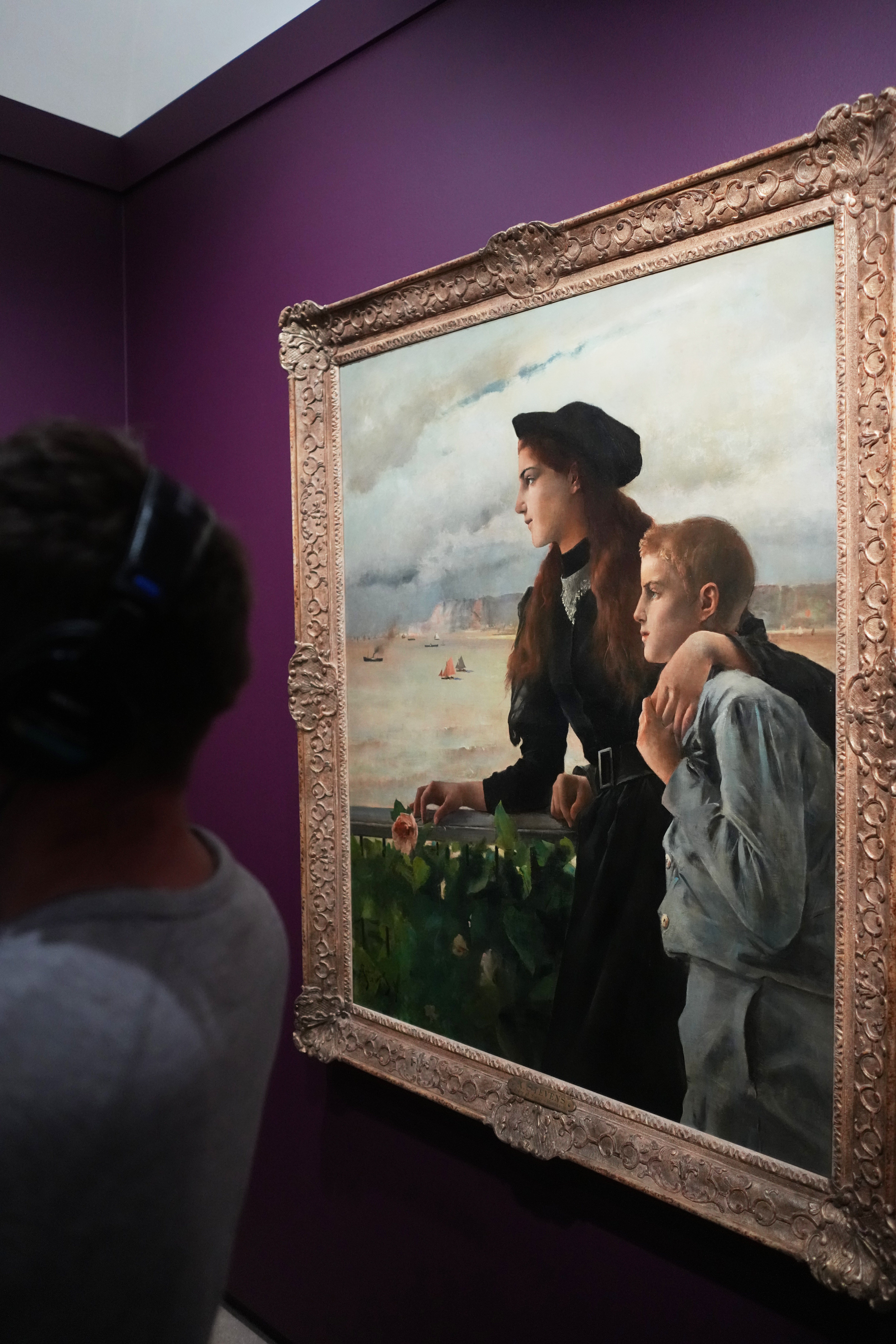
A poignant painting depicting a girl in a bonnet and her younger brother gazing across the Normandy coast towards an unknown horizon has found a permanent home at Paris’s Musée d’Orsay, marking a significant step in France’s long-overdue reckoning with Nazi-era art plunder. The artwork itself faced an uncertain fate in 1942 when it was acquired in Paris for Adolf Hitler, one of countless pieces swept up in the systematic looting of European Jews.
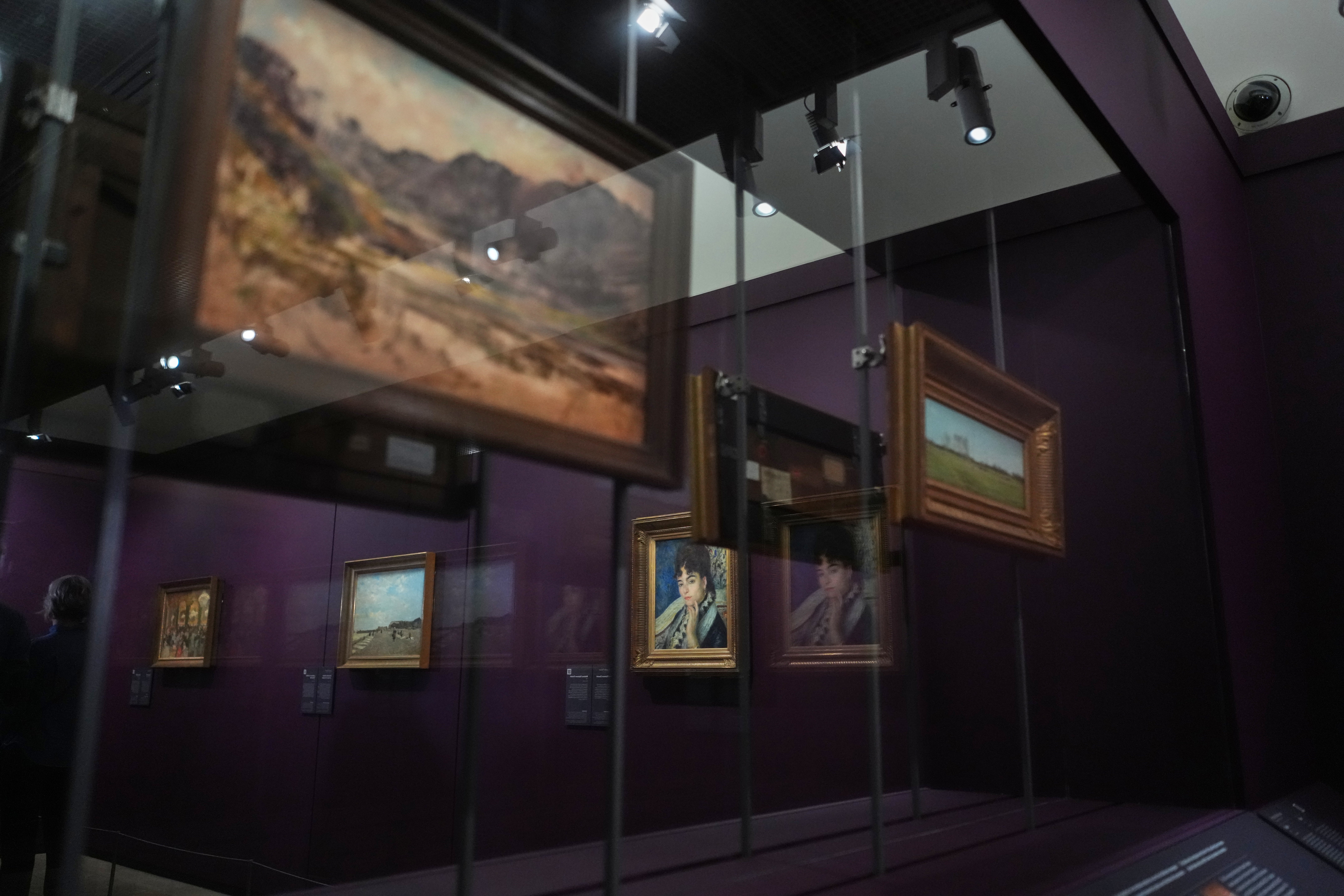
The Belgian artist Alfred Stevens’ 1891 work is now a centrepiece in a new gallery, the first in the museum’s history dedicated to the "orphaned masterpieces" of the Nazi era. Uniquely, the paintings are displayed so visitors can examine their reverse sides, revealing the stamps, labels, and inventory marks that trace their journey from private homes into Nazi hands. Originally intended for Hitler’s planned museum in Linz, Austria, the painting was later reassigned to his Bavarian mountain retreat before being recovered by Allied teams, the "Monuments Men," after the war. No heir has ever come forward, and its pre-1942 ownership remains unknown.
This Stevens painting is one of 2,200 such "artistic orphans" in France, known as MNR (Musées Nationaux Récupération), retrieved from Germany and Austria post-1945 and entrusted to French national museums. These works are not state property but are held in trust for potential heirs. The Musée d’Orsay alone holds 225. Marie Duboisse, a retired schoolteacher, reflected on seeing the painting: "I have seen those three letters — M, N, R — at the Louvre. I never knew what they meant. I thought it was a donor."
Last month, the museum launched its first research unit, comprising six Franco-German researchers, dedicated to tracing the rightful heirs of these pieces, file by file. The new gallery currently showcases 13 such works.
 open image in gallery
France is now openly confronting one of the longest silences in its post-war memory: the art looted, sold, and lost during the Nazi era, and the complicity of French individuals. From the late 1960s, historians began to expose the actions of the Vichy government, which collaborated with the Nazis, facilitating the deportation of 80,000 Jews to their deaths and overseeing a Parisian art market that profited from the property of the deceased.
In July 1995, President Jacques Chirac acknowledged the French state’s responsibility for the first time. A national inquiry into the plundering of Jewish artwork followed in 1997. Of approximately 100,000 cultural objects looted from France, around 60,000 were recovered, with 45,000 returned to their owners. The 2,200 MNR artworks were selected from the 15,000 pieces with no identified owner. For four decades, these files remained largely dormant, with only four returns between 1954 and 1993. Chirac’s apology and the country’s slow reckoning spurred change, with the Orsay returning 15 pieces since 1994.
Recent returns include works by Alfred Sisley and Auguste Renoir to the heirs of Grégoire Schusterman in 2024. Within the new gallery, the histories of other pieces are starkly presented. An Edward Degas copy of a Berlin ballroom scene, bought by Jewish collector Fernand Ochsé in 1919, is displayed; Ochsé was later killed in Auschwitz. Another Renoir, a portrait of Alphonse Daudet’s wife, was sold to a Cologne museum in 1941, with no record of the seller. A Paul Cézanne painting, once dismissed as a fake by a Louvre curator, is now believed to be authentic. Daniel Lévy, a software engineer, observed the Cézanne’s reverse: "You walk past these labels your whole life and you do not read them. Now I will read them. My grandmother lost some of her family in the camps. Some of these paintings were probably hanging in homes like hers."
Paris was Western Europe’s richest art hub in the early 20th century. The Hôtel Drouot, the city’s main auction house, reopened in autumn 1940 and thrived throughout the Nazi occupation, with French dealers acting as conduits. German museums sent buyers, and Hitler’s agents seized the most valuable pieces. Ines Rotermund-Reynard, the Orsay’s head of provenance research, noted: "The most important art market in Europe was concentrated in Paris. The moment the Nazis arrived in occupied territory, they had enormous buying power. They threw themselves at the market."
 open image in gallery
Almost every museum in Nazi Germany dispatched buyers to Paris to expand their collections, drawing on a market saturated with looted and forced-sale property. Rotermund-Reynard explained Hitler’s ambition to build the world’s largest museum in Linz, his hometown. Hermann Göring, Hitler’s deputy, made 21 trips to Paris during the occupation to appropriate works from Jewish collectors. "There was an enormous thirst," Rotermund-Reynard stated, "both for the possessions of Jewish collectors, and for acquisitions to expand the German museums."
For Rotermund-Reynard, these artworks are inextricably linked to the genocide. "All of this is part of the history of the Shoah," she said, using the Hebrew term for the Holocaust. "When you try to understand this drive to take from Jewish families, it is part of the terrifying Nazi ideology to erase Jewish life." Antisemitic acts in France, home to Europe’s largest Jewish community, reached 1,320 in 2025, following a sharp increase after the 7 October 2023 Hamas attack on Israel. François Blanchetière, the Orsay’s chief sculpture curator and co-curator of the gallery, affirmed that while the gallery was not built to combat antisemitism, the consequences of the Holocaust demand redress. "There is no statute of limitations on these crimes," he declared.
Схожі новини

На биеннале представят проект Невидимый павильон, который напомнит об убитых Россией украинских художников