Oooooh, Scary Electric Cars Are Everywhere In America!
 May 10, 20262 hours
Steve Hanley
0 Comments
Support CleanTechnica's work through a Substack subscription or on Stripe.
May 10, 20262 hours
Steve Hanley
0 Comments
Support CleanTechnica's work through a Substack subscription or on Stripe.
There have been a lot of news reports lately about how high gas prices are getting people to consider the purchase of an electric car. Some of that good news has even leaked into our coverage of the EV scene lately. In a recent article, one of our regular readers posted in a comment that the cost of filling the tank of a Ram 1500 these days can be $140 — or more in California, where gas prices are near $6.00 a gallon. The cost of driving that beast would be right around 40 cents per mile. Ouch!
EV Attitudes
However, Autoweek is reporting today that a new survey of 2,228 people conducted between April 3 and 6 by Bumper.com shows that two-thirds of respondents said that owning electric cars would not save them money in fuel costs. In that survey, more than two-thirds of respondents said there was no difference between the cost of operating a conventional car and an electric one. Today, the average price of a gallon of gas in America is $4.55 — $1.40 more than at this time last year.
Other people who took the survey thought they might save some money, but not a lot. Most said the difference would be less than $500 per year. The actual number is closer to $1,000, Autoweek says, although it depends on how far you drive annually, electricity rates in your area, which gas car you’re switching from, and what happens with gas prices. Speaking of which, on May 8, the national average was $4.55 per gallon. Californians pay more than $6. Prices are up approximately $1.40 from a year ago.
Assume you drive 10,000 miles a year (the average for all US drivers is 12,000 miles a year). At current rates, when switching from a typical sedan, the savings might be around $750 per year. But not that many Americans drive “typical sedans.” In fact, sedans are hard to find at Ford, GM, or Jeep dealers these days, because those companies won’t make them. SUVs and light-duty pickup trucks are all the rage in America today.
The Jeep Grand Cherokee with a 5.7-liter V-8 engine gets a paltry 14 mpg in the city and 22 on the highway. If a typical driver switches from one of those to an EV, the result is at least $970 in annual savings. Yet only nine percent of respondents said they expected to save that much.
More than 80 percent said they are “not more curious about EVs” because of high gas prices. Only 14.8 percent admitted they are “more curious,” and the other 4.5 percent say they already own an EV. 87.3 percent said they “will not buy an EV to avoid gas prices.”
There has been a concerted anti-EV animus flowing from every department of the US government since the current administration seized power, but a poll by Hill Research Consultants found that negative attitudes about EVs may be softening somewhat. It found that, “Republicans’ antipathy for electric vehicles may be easing as the 2024 election retreats into the rear view mirror.”
Whose Afraid Of High Gas Prices?
In the Bumper.com survey, 80.7 percent say they are “not more curious about EVs” because of high gas prices, but that contradicts the remarkable rise in online searches for EVs since the war on Iran began. Cars.com found there was a 25 percent surge in EV search interest on its site from late February to late March. Meanwhile, searches for gas or diesel vehicles were down 9 percent. Edmunds.com also saw an increase in EV consideration. How much of that interest translates into actual sales remains to be seen.
Bumper.com explains the apparent difference as basically a lack of consumer awareness. “The answer, it turns out, is not reluctance to change, it is a fundamental misunderstanding of EV economics,” it said. For instance, 70.5 percent in the survey said they have “no easy access to a charger,” despite the fact that most manufacturers have enabled their vehicles to charge on the ubiquitous Tesla network.
In fact, in 2024, the Pew Research Center reported that “64 percent of Americans live within two miles of a public charging station.” At that time, there were 61,000 public chargers in the US. Now there are 79,500, with more than 245,000 individual ports. The number of stations has more than doubled since 2020.
Asked what their budget was for an EV, the most common answer was “$10,000 or less.” Yeah, good luck with that. The last car that sold for that price in the US might have been the 1993 Saturn SL, a car with no A/C, crank windows, and a 5-speed manual transmission. The side view mirror on the passenger’s door was an extra cost option. With the average price of a new car in the US today hovering around $50,000 — and the average price of a used car more than half that number — one wonders where these under-$10,000 cars are to be found?
Scary Chinese Cars!
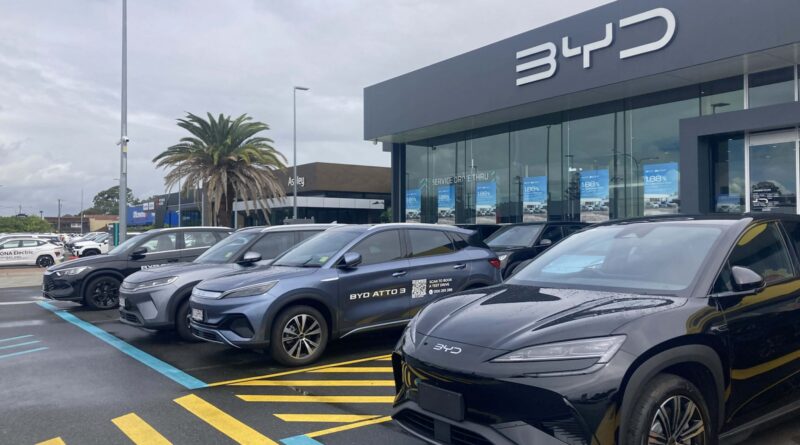
One possible answer is in China, where fully functional (if small) electric cars can be had for $7,000 or less. Now it seems some of those Chinese cars are appearing on US roads, thanks to a little known provision known as “temporary visitor rules.” US Customs and Border Protection allows foreign-registered vehicles to enter the US under that provision, which means that Mexican nationals, who can purchase many Chinese made cars in Mexico for around $20,000, can drive them across the border and into the US to get to work or for while on vacation.
The agency told The California Post that it permits “non-resident visitors to the United States to drive non-compliant vehicles across the Canadian or Mexican borders for legitimate, temporary purposes such as work or vacation,” because those vehicles are not being officially imported into US commerce.
The National Highway Traffic Safety Administration said in a statement that these vehicles fall under CBP’s temporary admission framework because they are not being formally imported for sale or permanent use in the United States, but instead handled as visitor vehicles under border admissibility rules.
A CBP spokesperson further clarified the scope, saying foreign drivers, including Mexican citizens, are generally allowed to cross into the United States with their own vehicles if they have “all proper and required documentation,” and that entry is permitted for “strictly personal use,” depending on purpose, duration, and paperwork. The California Department of Motor Vehicles said it does not regulate what vehicles are allowed on US roads and does not maintain records about them, directing inquiries to federal agencies.
That situation may not last much longer. Just wait until Sean Duffy hears about this! Yahoo! reports that Congress is now looking more closely at the issue and may ban Chinese-made vehicles from US roads completely.
“Every vehicle on American roads is a rolling data collection device, capturing information on location, movement, people, and infrastructure in real time, and we cannot allow Chinese vehicles or components to be a part of that system,” some lawmakers have said. “The legislation we introduce will show bipartisan support for doing what must be done to protect the manufacturing sector, jobs, and the American people from China’s predatory trade practices and manipulative attacks on American industry.”
Fear
I was in Key West last week and visited the Little White House where Harry Truman liked to conduct business while on vacation. Being a tourist, I naturally had to buy a T-shirt in the gift shop. Truman’s words from 80 years ago may resonate with some of you today.

CleanTechnica's Comment Policy
Share this story!
Схожі новини

Двоє юнаків на смерть розбилися на мотоциклі на Волині: подробиці та фото
Ціни на пальне: скільки коштують бензин та дизель після вихідних

The First Alpina In The BMW Era Is A Large Luxury Coupe