Only we have the power to stop vulture funds taking the world’s poorest countries to court
Increasing global inequality and the climate crisis. The Covid-19 pandemic and war in Ukraine. Now, fresh conflict in the Middle East. These headline news items are exacerbating a silent crisis that is paralysing developing nations – and the government has unique power to act.
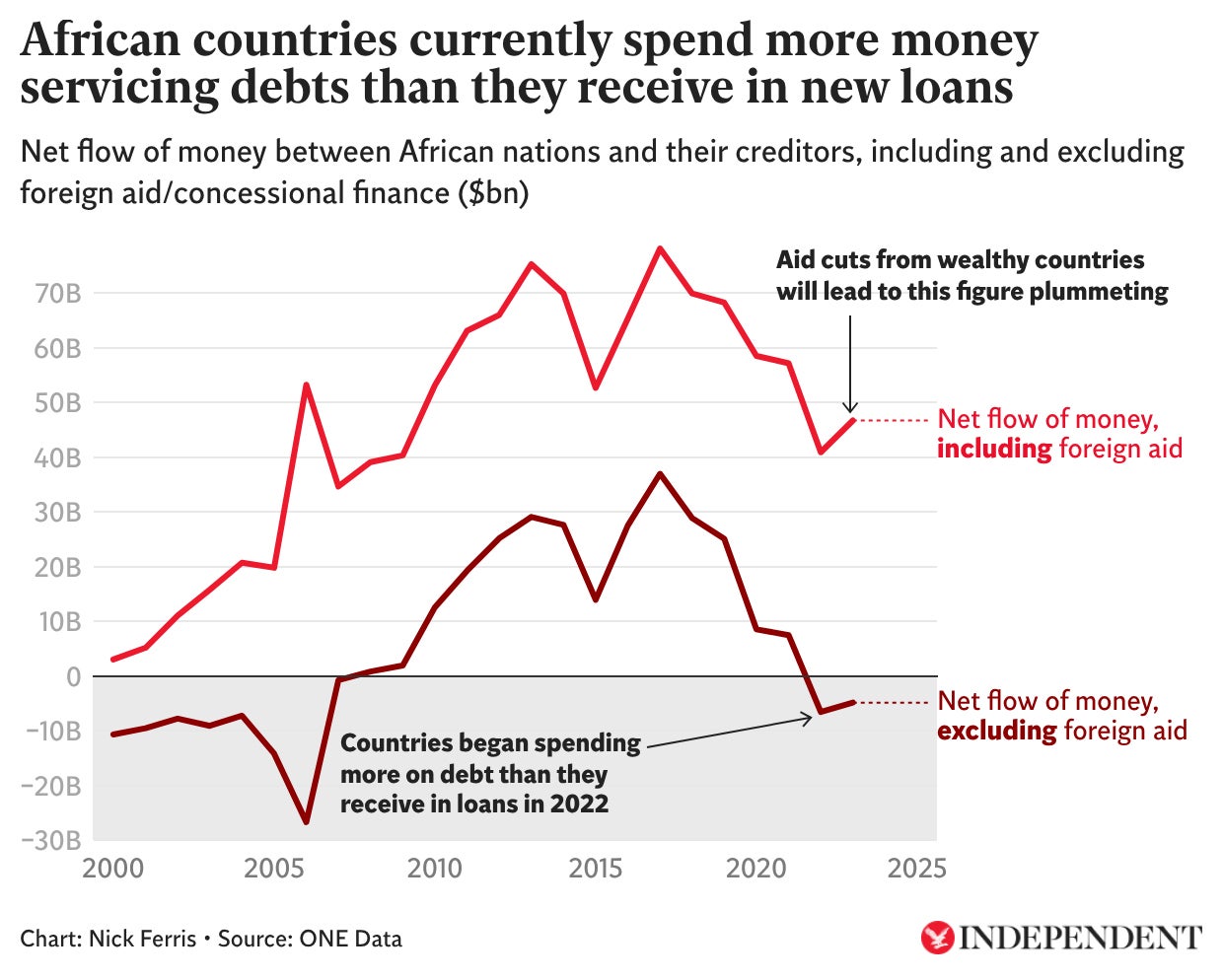
From the prime minister to the pope, everyone agrees that the Global South debt crisis requires urgent action – and this action becomes more urgent each day. Over 50 of the world’s poorest countries are facing the biggest debt crisis in history, which swallows up swathes of public funding. For example, 25 African countries are spending more on the interest they owe on foreign debts than they are on education: corporate profits prevailing over teaching the next generation.
One of the predominant enablers of this is UK law, which currently allows profitable private lenders to sue debt-distressed nations in UK courts at the expense of hospitals staffed and schools built in those countries.
The cancellation of country-to-country debt in the early 2000s brought about huge change for the developing nations affected. There was an increase from 45 per cent to 66 per cent of children completing primary school in the countries that benefited, as the money saved from making debt payments went into public services. This debt relief was a lifeline for many, but sadly we didn’t fix the system, and a new debt crisis has developed.
Now private creditors, such as banks, asset managers and hedge funds, many based in the UK, are the largest lenders to developing nations. The private creditors can impose harsher terms than other lenders, including huge interest rates, and crucially – unlike other lenders – often hold out from restructuring debts on terms comparable to official lenders such as the UK government. Eye-watering profits are being made every day off the backs of the world’s poorest countries, even as they are stricken with conflict, extreme weather events, and global economic shocks.
This crisis persists as there’s no robust process to ensure private creditors come to the table to negotiate on debt relief, on similar terms as governments and other lenders.
Regulation exists to protect individuals against pay day loan sharks in the UK. Similarly, there is a process for debt renegotiation for UK businesses, including a bankruptcy court to make impartial rulings. But when it comes to developing nations, there isn’t a process that works. Indermit Gill, Chief Economist at the World Bank, puts it clearly: “Sovereign borrowers deserve at least some of the protections that are routinely afforded to debt-strapped businesses and individuals under national bankruptcy laws.”
In November 2024, I introduced draft legislation to parliament to do just that – to ensure a cap on the amount that creditors (who hold out on negotiations with debt-stricken countries) can claim, and to ensure such countries can’t be sued during the restructuring processes. This is the great opportunity we have, as 90 per cent of debts between private creditors and countries facing debt crisis are governed by English Law. Sadly, since I first introduced this bill, the situation has worsened.
In 2024, detractors argued that my Bill was unnecessary because no countries had recently been sued in UK courts. This has now changed. In February this year, a group of bondholders announced their intention to bring legal action against Ethiopia in UK courts, after official creditors (including China and France), rejected a deal they describe as a “very low restructuring effort.” Analysis of the offer on the table showed bondholders would have been paid 28 per cent more than government lenders – at the expense of taxpayers in official creditor countries like the UK.
Other contexts, such as war-torn Ukraine, persisted under the threat of legal action from private creditors, as bondholders seek better terms on their deals. The threat of suing in UK courts is used as leverage for private profit.
Recommended Millions facing hunger and water crisis in Somalia as world focuses on war in Middle East
 How debt relief for developing countries could help reverse the devastating consequences of UK aid cuts
 Can tax help Malawi out of a health funding crisis deepened by Trump’s aid cuts?
The voices calling for action continue to grow; the African Union via the Lome Declaration on debt management, high commissioners, faith leaders and expert economists and academics all point to legislation in the UK as a method of alleviating the new sovereign debt crisis. For example, The Vatican Commission “Jubilee Report” recommends a “legislated cap on recoveries by private creditors” to ensure comparable treatment.
The UK government are keeping potential legislation under review. But the longer we wait, the further countries like South Sudan, spiral into crisis, at the expense of services like health and education for their citizens. At a time when global aid budgets are being slashed, my government must seize the opportunity – at no cost to the UK taxpayer – and adopt legislation to support communities in crisis.
Bambos Charalambous is the Labour MP for Southgate and Wood Green
This article has been produced as part of The Independent’s Rethinking Global Aid project
Join our commenting forum
Join thought-provoking conversations, follow other Independent readers and see their replies
CommentsСхожі новини
Trump administration fires entire National Science Board
Ukraine's Zelenskyy rebukes Israel for buying grain 'stolen' by Russia
Tinubu wrestles with insecurity, political storms in Nigeria