Octopus Energy boss: some people would accept occasional blackouts if bills cut
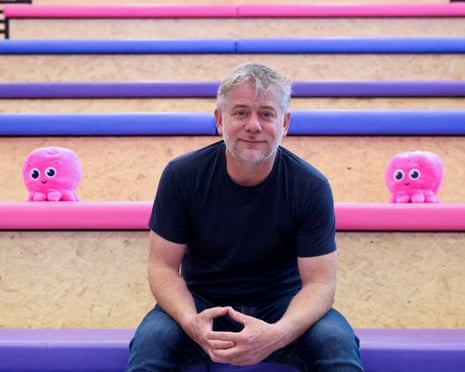
Greg Jackson argues against costly investments in UK’s power grid that are adding to household bills
The boss of the UK’s biggest energy supplier has suggested that some households would accept an occasional electricity blackout in exchange for much lower energy bills.
A year on from Europe’s largest power outage – which left tens of millions of people in Spain and Portugal without trains, metros, traffic lights, ATMs, phone connections and internet access – the chief executive of Octopus Energy argued against costly investments in the UK’s power grid that are adding to household bills.
Greg Jackson told an industry conference that many households in Spain, which has a growing business, would say they were happy to accept “the odd blackout” in return for electricity costs that are 25% lower.
“To be really clear, I’m not advocating for blackouts, but if you asked Spanish consumers ‘would you accept the odd blackout in return for electricity costs that are 25% lower, or don’t have spikes, or a more reliable economy?’ enough of them would say yes,” he said.
People would be “far less bothered” about a blackout now than they might have been in the past, Jackson added, because they could continue watching things on their laptop during a power outage.
“They’ve got a battery in there that gives them a couple of hours,” Jackson said. He added that home batteries, which are sold by Octopus Energy, are “so cheap now” that even people who need reliable electricity to run medical equipment would be able to tolerate a blackout.
Jackson made the comments, which were first reported in Utility Week, on the anniversary of the Iberian blackout in response to an audience question about the challenges of running a renewables-heavy energy system such as the one in Spain.
The widespread power outage claimed the lives of at least six people across Spain and Portugal, including two people with medical difficulties who died after they were unable to run breathing equipment.
Jackson told conference delegates that the greater challenge in running a clean power system was in controlling the cost of network investments. Octopus Energy has been outspoken in warning against grid investments that might prove to be unnecessarily expensive as new technologies emerge.
A spokesperson for Octopus Energy said: “Countries that have embraced cheap renewables and built in flexibility – like Spain – are seeing dramatically lower energy prices and far less exposure to spikes. Meanwhile, the UK risks doing the opposite: hardwiring in high costs with tens of billions of grid and network spending, without enough transparency on whether all of it is really needed.”
“Build flexibility, and bills go down. Ignore it, and we risk overbuilding for decades,” the spokesperson said.
Renewable energy critics initially blamed Spain’s reliance on wind and solar power for the outage, but the official report attributed “multiple interacting factors”, involving conventional power plants, renewables and the power network for playing a role in Europe’s largest power outage.
Speaking at the same event, Fintan Slye, the chief executive of the National Energy System Operator, which is responsible for keeping Great Britain’s lights on, said that while there is expected to be a “step change” in the way households use electricity that “doesn’t go as far as blackouts”.
Slye said added that significant investments in the power grid were still needed to enable electricity to be transmitted from where it is generated to areas where people are located.
Explore more on these topicsShareReuse this contentСхожі новини
UK: Hindu group bids against Christian-Muslim group for same piece of faith land

Chirayu Rana left new job before accusing JPMorgan exe. Lorna Hajdini of sex harassment
Quote of the day by Sigmund Freud: “People do not really want freedom, because freedom involves responsibility and most people are frightened of responsibility.”