Numbers of Tibetan exiles plummet as China tightens grip
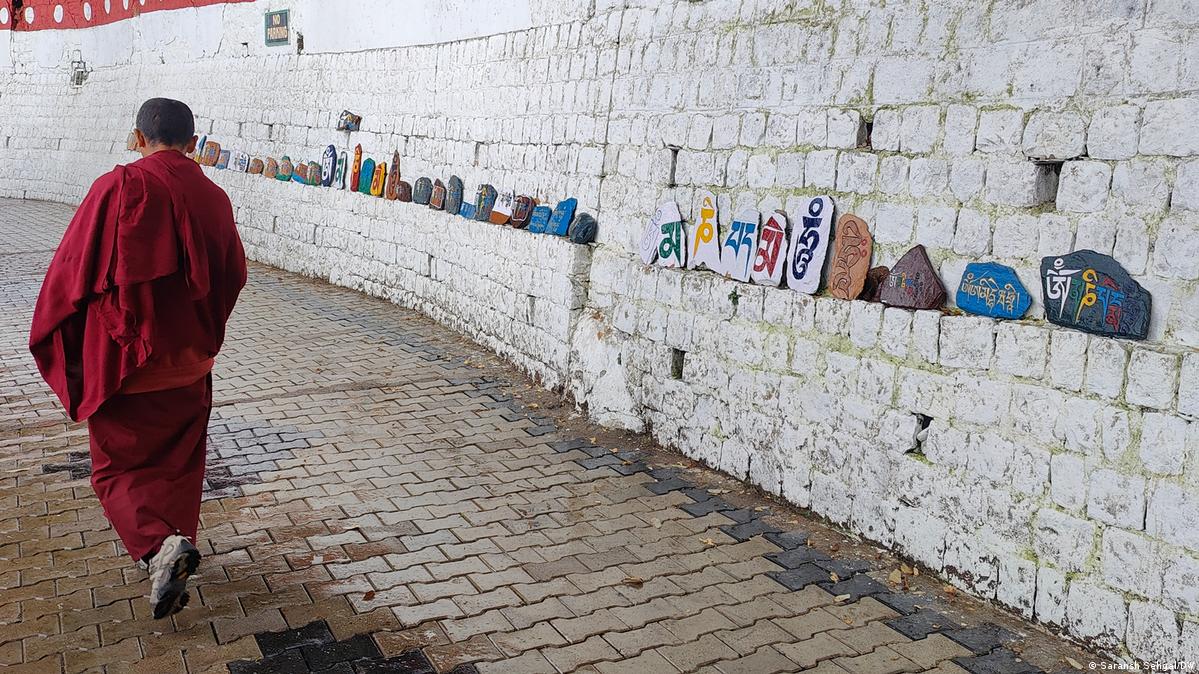
For decades, the steady flow of Tibetans escaping across the Himalayas into India and Nepal served as a barometer of conditions inside Tibet.
From the late 1990s through the mid‑2000s, several thousand Tibetans sought exile every year, bringing firsthand accounts of political restrictions, cultural pressures and daily life under Chinese rule.
But data from the Central Tibetan Administration in Dharamsala, the de facto capital of Tibetans in exile where the 14th Dalai Lama also resides, has revealed a collapse in the number of newly arrived Tibetans
Between 1995 and 1999, more than 12,000 Tibetans successfully sought exile. In the past five years, that number has plummeted to just 81.
With fewer Tibetans able to leave, independent information is becoming scarcer, making Beijing's policies, like religious regulation, language reforms, or rural relocation, more opaque to the outside world.
This comes as Beijing increasingly promotes its own narratives on development and stability in Tibet.
Lobsang, a middle-aged man who left Tibet in 2010, said the drop in the number of exiles comes as China has tightened its grip.
"Since 2008, the security architecture within Tibet has undergone a total transformation," he told DW.
"What we see now is a high-tech surveillance web where every village, every monastery, and every household is monitored. Reaching the border is now nearly impossible for the average Tibetan," he added.
China's development and control
The data suggests that the steepest drop in exiles began after large-scale protests in 2008 that spread across Tibet ahead of the Beijing Olympics, prompting a heavy security response from Chinese authorities.
In the years that followed, Beijing expanded policing, digital surveillance and border enforcement across the Tibetan Plateau.
Chinese authorities say their policies in Tibet have improved living standards, expanded infrastructure and reduced poverty, leading to fewer people leaving.
The Chinese government has invested heavily in infrastructure, urban development and public services across Tibetan regions. In the eyes of Beijing, the porous border was a liability.
"The young Tibetan population … is increasingly migrating to larger [Chinese] cities and seeking to benefit from the growing Chinese economy," said Atul Kumar, a fellow with the strategic studies programme at the Delhi-based Observer Research Foundation (ORF) think tank.
Observers admit that socioeconomic conditions in many Tibetan areas have changed significantly over the past two decades, even as political controls have tightened in Tibet and Xinjiang.
Despite recent developments, human rights organizations, including Amnesty International and Human Rights Watch, have regularly documented increased restrictions on movement, religious activity and communication in Tibetan regions alongside Beijing-backed development.
Nepal aligns more with China
Along with changes within Tibet, the geopolitical calculations of neighboring Nepal have also had an effect on the number of exiles, said ORF's Kumar.
The Himalayan mountain crossings in the Tibet-Nepal border were once a key transit route for Tibetans heading to India. Under an informal agreement mediated by the UN Refugee Agency (UNHCR), Nepal allowed Tibetans safe passage to India.
However, as China's economic and geopolitical influence over Nepal has grown through the Belt and Road Initiative (BRI), Nepal has increasingly aligned its border policies with Beijing's preferences.
Nepalese authorities have repeatedly stated that they respect a "One China” policy and do not allow "anti-China" political activity on their territory.
"Crossing the border today is fundamentally different and harder from what it was 20 years ago. Since 2008, Beijing has exerted heavy diplomatic pressure on Kathmandu. Consequently, since then, surveillance activity on China Nepal border has increased significantly," Kumar said.
Nepal's border police forces and security agencies "are closely cooperating and drones, CCTV cameras and other electronic methods for tracking Tibetans intending to exile have gained increased momentum," he said, adding that the effect of these measures is seen in the data after 2008
Nepal has repeatedly denied accusations of mistreating Tibetans, but rights groups and exiled Tibetan organizations say Nepal has increasingly restricted the movement of Tibetans and tightened enforcement along the Himalayan frontier.
One newly arrived Tibetan woman, who requested anonymity, told DW she managed to escape a few years ago. She said the "cost of escape has shifted from a physical risk to a total social and familial erasure."
Beijing has also strengthened border enforcement along the Tibet-Nepal frontier, where joint patrols and closer security cooperation with Kathmandu have made it harder for new Tibetans to enter India.
Tibetans who managed to escape have said that access to safe routes through the Himalayas is declining.
The future of Tibetan culture
New arrivals have long played a central role in sustaining Tibetan schools, monasteries, community networks and the political legitimacy of the de facto Tibetan government-in-exile based in India's Himalayan city of Dharamsala.
"The exile community was sustained not only by memory, but by continuous human contact with Tibet," a Tibetan academic based in India told DW under condition of anonymity.
The drop in arrivals coincides with growing urgency around the Dalai Lama's age and ongoing discussions about succession, leadership and the Tibetan movement's long‑term direction.
The dearth of new arrivals, who traditionally carried cultural authority and firsthand experience, could influence how the exile community navigates this transition.
"Our challenge is to remain relevant to a generation inside Tibet that we can no longer reach physically, and who are being raised in an entirely different social and economic reality than their parents," said Yonten, who went into exile in 2004 and now runs a small business.
Kumar said that the movement's future will depend on political leadership and the ability to maintain relevance with younger generations of Tibetans who have grown up entirely in exile.
"The movement remains peaceful but strong as ever. But uncertainty in international politics is affecting everything these days," said Kumar.
Despite these challenges, the Tibetan community in exile continues to adapt.
Cultural institutions, schools, and political organizations in Dharamsala and elsewhere are working to preserve language, traditions, and identity among younger generations.
"For us, our Dalai Lama is still the bridge between Tibetans inside Tibet and those of us living outside," said Tenzin Pema, a 20-year-old Tibetan born in Dharamsala. "As long as he is with us, there is a sense of unity and shared purpose that continues across borders," she told DW.
Dalai Lama: Who will choose Tibet's next spiritual leader?
To view this video please enable JavaScript, and consider upgrading to a web browser that supports HTML5 video
Edited by: Wesley Rahn
AdvertisementСхожі новини

Reward on absconding husband raised in Twisha Sharma death case

Iran builds new system of control in Hormuz with island checkpoints, fees: Report

Hardik Pandya rues fielding collapse behind MI's disastrous IPL 2026 season