Russian Drone Strike on Odesa Leaves 13 People Injured in Overnight Attack
Russian Drone Strike on Odesa Leaves 13 People Injured in Overnight Attack
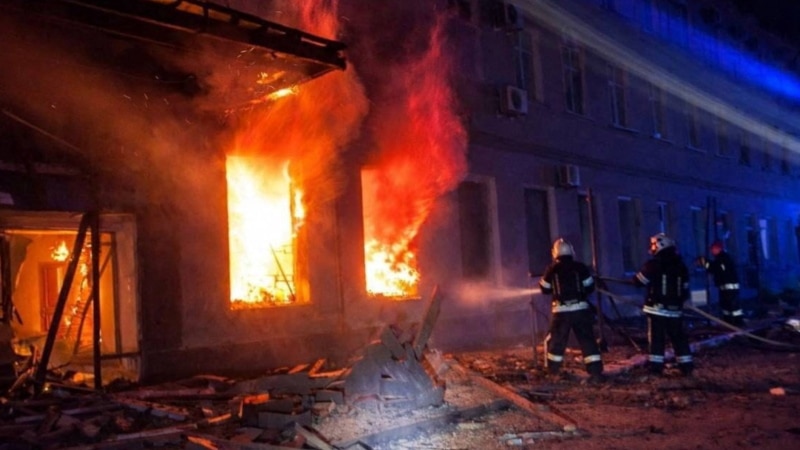
Russian forces conducted a large-scale assault on the city of Odesa using unmanned aerial vehicles during the night of April 27, according to local authorities. The attack resulted in damage to residential buildings and civilian infrastructure across multiple districts of the city.
Serhiy Lysak, head of the Odesa Military Administration, reported that preliminary information indicated 13 people were injured in the strikes. "In addition to residential buildings, a hotel building and vehicles nearby sustained damage," Lysak stated. He added that emergency services and medical personnel are operating at the scene, with operational command centers being deployed.
Oleh Kiper, head of the Odesa region, confirmed that the attack damaged two residential buildings, a hotel, warehouse facilities, and multiple vehicles.
Ongoing Pattern of Attacks
Russian military forces regularly target Ukrainian cities and civilian infrastructure across all regions using various weapons systems, including strike drones, missiles, guided aerial bombs, and multiple rocket launchers. Ukrainian authorities and international organizations classify these attacks as war crimes committed by the Russian Federation, emphasizing their deliberate targeting character.
Strikes against vital civilian infrastructure systems and healthcare facilities—aimed at depriving residents of electricity, heating, water supply, communications, and medical assistance—are considered indicators of genocidal actions according to Ukrainian legal experts and human rights defenders.
Genocide Allegations
Legal professionals, genocide researchers, and human rights advocates contend that Russia has committed all forms of crimes that may constitute genocide against Ukrainian citizens during the full-scale war, including:
- Public declarations of intent to destroy Ukrainians as an ethnic group, with Russian leadership repeatedly claiming Ukrainians "do not exist" as a people and that Ukrainian statehood should be eliminated
- Public incitement to the destruction of Ukrainians
- Deliberate attacks on civilian life-support systems and healthcare institutions to deprive populations of essential services
- Persecution and elimination of pro-Ukrainian individuals in occupied territories
- Targeted destruction of the intelligentsia, including teachers, artists, and cultural bearers
- Implementation of education systems in occupied areas designed to alter children's national identity
- Deportation of children without parents to Russia to change their identity
- Removal and destruction of Ukrainian books from libraries and systematic theft of cultural artifacts documenting Ukrainian history
The Convention on the Prevention and Punishment of the Crime of Genocide was adopted by the UN General Assembly in 1948. Currently, 149 signatory nations are obligated to prevent and punish acts of genocide during both wartime and peacetime.
The Convention defines genocide as acts committed with intent to destroy, in whole or in part, a national, ethnic, racial, or religious group as such.
Russian leadership denies that its military conducts deliberate strikes against civilian infrastructure in Ukrainian cities and villages, claiming no involvement in civilian deaths or the destruction of hospitals, schools, kindergartens, and energy and water supply facilities.
Схожі новини
Tsunami survivor battles wildfire to protect hometown in Iwate Prefecture

«Написали на дроні»: як військові врятували 77-річну жінку на Донеччині за допомогою робота

28 квітня 2026: День пам'яті апостолів, охорони праці та екстреної медицини