New York City is at major risk of flooding that could leave 4.4 million people exposed to extreme damage, study finds
Get the world’s most fascinating discoveries delivered straight to your inbox.
By submitting your information you agree to the Terms & Conditions and Privacy Policy and are aged 16 or over.You are now subscribed
Your newsletter sign-up was successful
Want to add more newsletters?
Join the club
Get full access to premium articles, exclusive features and a growing list of member rewards.
Explore An account already exists for this email address, please log in. Subscribe to our newsletterEight U.S. East Coast cities are at high or very high risk of "extreme" flood damage based on current scenarios, with New York and New Orleans facing some of the greatest dangers, a new study finds.
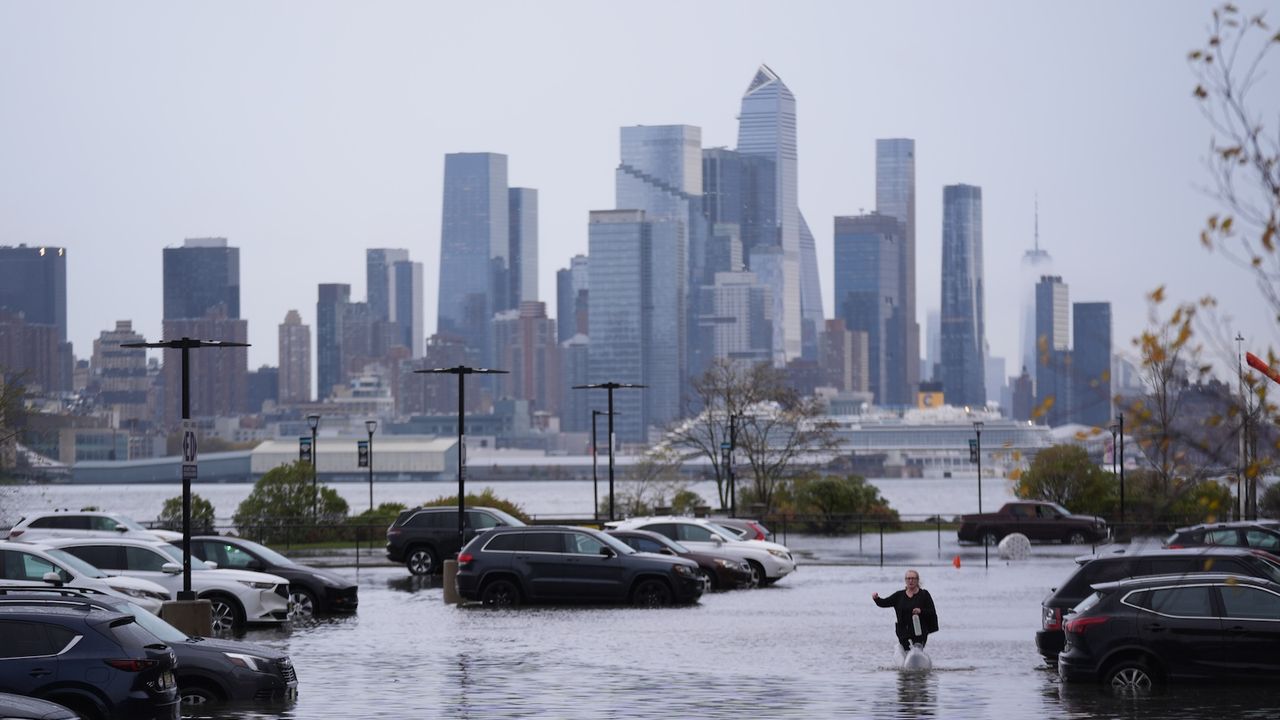
New York could see the highest number of people affected by flooding: 50% of New York City's population — around 4.4 million people — and 47% of its buildings are currently at high risk of exposure to extreme flood damage if a major flood occurs, according to a flood risk assessment published Wednesday (April 22) in the journal Science Advances.
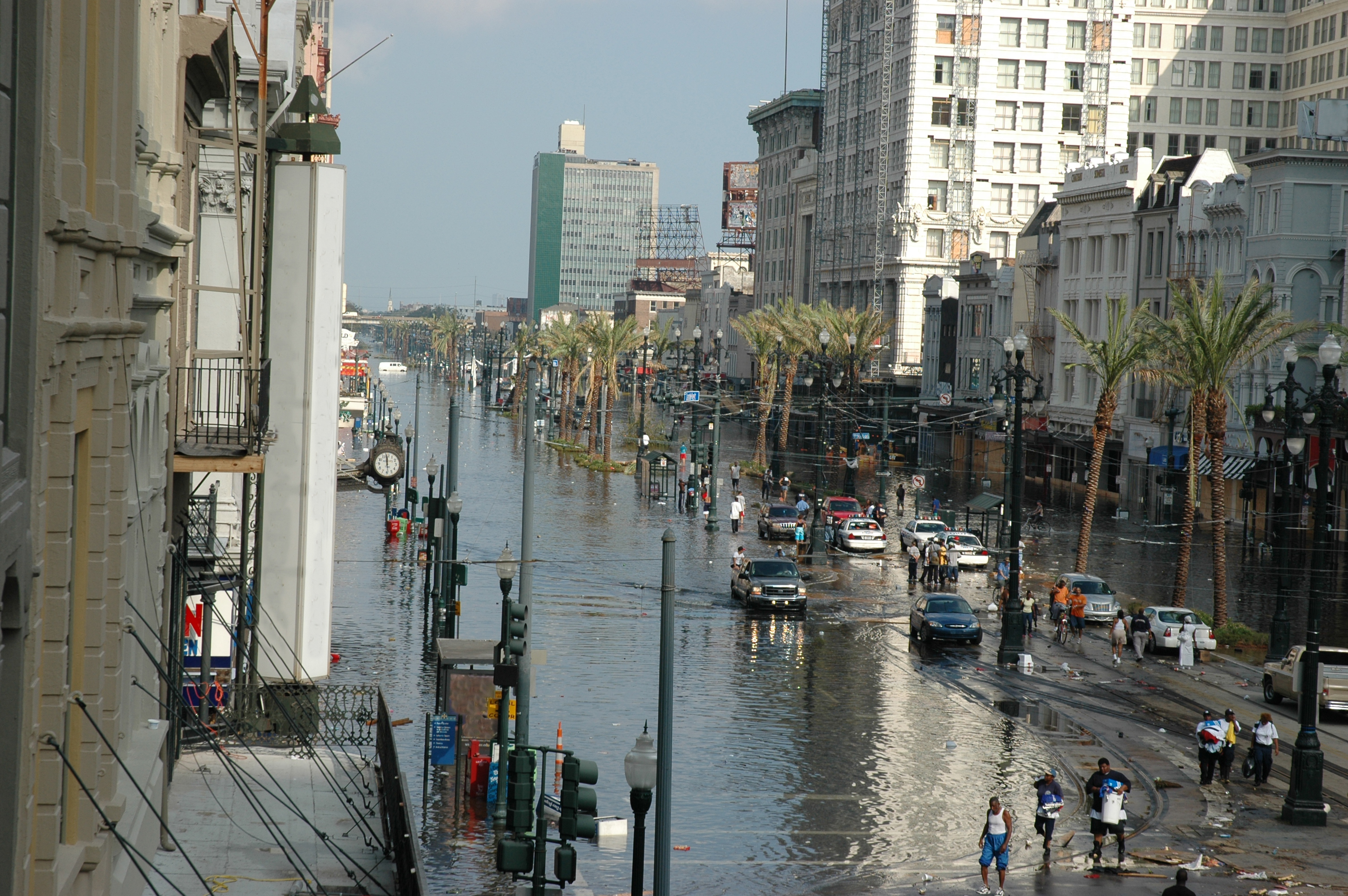
New Orleans faces the greatest relative risk, with 98% of its population — about 375,000 people — and 99% of its infrastructure at high risk of being exposed to extreme damage, according to the study.
The other six cities mentioned in the report are Houston; Miami; Norfolk, Virginia; Charleston, South Carolina; Jacksonville, Florida; and Mobile, Alabama.
The heightened threat and damage levels these cities face result from their low elevation, high population density, poor drainage, building height, rainfall and proximity to water. The study authors urged policymakers to work with local stakeholders to mitigate flood risk using nature-based solutions alongside structures like floodgates, levees and dikes.
"Such policies should restrict further urban development in high-risk zones while promoting the systematic incorporation of nature-based solutions," the authors wrote.
Flood risk
Flooding is the most expensive natural disaster in the U.S., costing billions a year. By 2050, sea levels along the contiguous U.S. coastline are projected to rise by up to 1 foot (0.3 meters), and flooding following hurricanes is also increasing along the East Coast due to climate change.
Sign up for the Live Science daily newsletter nowWith around 30% of counties along the U.S. Gulf and Atlantic coasts at high flood risk, it's essential to understand which measures will prevent flood damage most effectively, the authors wrote in the study.
The researchers used machine learning to assess flood risk along the U.S. East Coast, using historical flood damage data from the Federal Emergency Management Agency. This data is of visual, bird's-eye-view damage to properties associated with recent major flooding events, including Hurricane Isaac in 2012 and Hurricane Irma in 2017. The study classified properties that were fully destroyed as "extreme flood damage."
The team then compiled data on 16 flood risk factors and developed a flood risk map, using these risk factors to predict exposure to flood damage The flood risk factors included natural hazards, such as distance from the water and elevation; exposure factors, such as population density; and the vulnerability of the population, such as the percentage of people living in poverty.
Based on these factors, the model produced a "flood risk index" of probability scores ranging from "very low" to "very high" risk. The coastal cities at the highest risk of floods leading to extreme flood damage could then be estimated. The team calculated the number of people and buildings that would be exposed to this damage.
RELATED STORIES- Once-in-a-century floods set to become annual events in northeastern US in the next 75 years, study finds
- In disasters like the Texas floods, warning people of danger isn't so simple
- The decline of key Atlantic currents is underway, and it's been flooding parts of the US for 20 years
The results showed that New York City and New Orleans share the "grim reality" of being "major flood-risk cities," the authors wrote in the study. Almost 4.4 million people in New York City and over 215,000 buildings could face extreme flood damage. Over 98% of New Orleans' population and buildings face similar damage.
Houston and Mobile, Alabama, are also at high risk of extreme flood damage, so, along with New York and New Orleans, these cities demand "prioritized attention from policy-makers," the authors wrote in the study.
The authors noted several ways to potentially reduce flood damage. For example, parking lots built with impermeable concrete should be replaced with grass tiles to allow the soil to soak up the water, and wetlands and river floodplains should be restored and linked to drainage systems like gutters to support the fast removal of water from cities.
Article SourcesDey, H., & Shao, W. (2026). A tale of two coasts: Unveiling US Gulf and Atlantic coastal cities at high flood risk. Science Advances, 12. http://doi.org/10.1126/sciadv.aec2079
Sophie is a U.K.-based staff writer at Live Science. She covers a wide range of topics, having previously reported on research spanning from bonobo communication to the first water in the universe. Her work has also appeared in outlets including New Scientist, The Observer and BBC Wildlife, and she was shortlisted for the Association of British Science Writers' 2025 "Newcomer of the Year" award for her freelance work at New Scientist. Before becoming a science journalist, she completed a doctorate in evolutionary anthropology from the University of Oxford, where she spent four years looking at why some chimps are better at using tools than others.
View MoreYou must confirm your public display name before commenting
Please logout and then login again, you will then be prompted to enter your display name.
Logout LATEST ARTICLES 1Claude Mythos explained: Is Anthropic's most powerful AI model really too dangerous to release to the public?
 - 2DNA study of nearly 200 Indigenous genomes reveals unknown Asian 'ghost' population contributed to American ancestry
- 3Planning to stargaze in May 2026? Here's all the gear you'll need
- 4'A landmark moment for the field': FDA approves first-ever gene therapy for inherited deafness
- 5'Strong, undeniable public examples of something positive': Astronaut Chris Hadfield on why Artemis II hit him hard, and why we need to send a guitar to the moon
Схожі новини
Inside the evidence revolution — how decision-making became data driven
Cosmic-ray detection heralds era of mega-observatories for neutrinos
Fossil-Fuel Funded GOP Leaders Claim a Renowned Scientific Institution Has ‘Potential Conflicts of Interest’
