New laws expected to be in the King's Speech

 Parliament
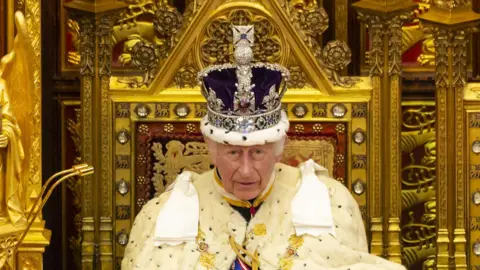
On Wednesday, Charles III will deliver the King's Speech, setting out the government's planned new laws for the next Parliamentary session and beyond.
The speech will be scrutinised even more intensely than usual as Sir Keir Starmer attempts to relaunch his premiership after a disastrous set of election results for Labour.
Here is what we think will be in the speech - and a few things that won't.
Economy and money
EU alignment - Sir Keir Starmer has made much of his efforts to reset post-Brexit relations and forge closer economic ties with the EU without committing to rejoin the single market or customs union. The prime minister is planning legislation to allow the UK to adopt EU single market rules in certain areas such as food standards.
Cost of living: Following criticism from some Labour MPs, the prime minister may introduce some bills which intend to target the cost of living crisis
Welfare cuts - The government is expected to make a fresh attempt to reduce the amount spent on welfare, after it was forced by its own MPs to water down a package of cuts. This bill would restrict some benefits, including banning under 22s from claiming incapacity benefits. Further changes to disability benefits are due to come later following the conclusion of the Timms Review.
National Wealth Fund Bill - In October 2024, Chancellor Rachel Reeves rebranded the previous government's National Infrastructure Bank as the National Wealth Fund, with the aim of stimulating private sector investment in infrastructure projects. The government will now seek to legally establish the fund in statute, giving it clearer, legally defined powers and purpose.
Financial Services Bill - The government is planning a major shake-up of City of London financial regulation. The plans include merging the Payment Systems Regulator into the Financial Conduct Authority and reforming the Financial Ombudsman Service, according to The Financial Times.
Tourist tax - Local Government Secretary Steve Reed launched a consultation in November on allowing English regional mayors to charge tourists a tax for staying overnight in their towns and cities.
Public Procurement (British Goods and Services) Bill - This legislation - which was first debated in 2024 - is aimed at forcing public bodies to buy more supplies and services from small and medium sized UK companies.
Late payment - In July last year, the government announced plans for a crackdown on large companies that persistently fail to pay their suppliers on time, with fines for those who fail to pay money owed to small companies within 60 days.
Asylum and immigration
Legislation is expected on restricting the way article 8 of the European Convention on Human Rights (ECHR), which protects the right to family life, is applied in some asylum cases.
Environment
 PA
PAEnergy Independence Bill - Rising energy bills and security of supply are major issues for the government and Energy Secretary Ed Miliband is expected to push ahead with the new Energy Independence Act promised in Labour's 2024 election manifesto.
The government has already set out plans to increase the windfall tax on electricity companies' profits from 45% to 55% and is likely to legislate to make it easier to install electric vehicle chargers and remove the need for planning permission.
Some aspects of energy policy are devolved and it is unclear at this stage how much of the bill will apply to Scotland, Wales and Northern Ireland.
Water bill - Legislation to replace Ofwat with a new single regulator responsible for tackling pollution and capping household bills across the water system in England.
The new body would take responsibility for water from Ofwat, the Environment Agency, Natural England and the Drinking Water Inspectorate, which the government says will end the complexity that gets in the way of delivering for customers.
What is the King's Speech and what happens during the State Opening of Parliament?
King's Speech 2024 - key points at a glance
Health
Legislation is needed to deliver Health Secretary Wes Streeting's commitment to abolish NHS England, and to implement some of the commitments in his 10 Year Health Plan.
Housing
 PA Media
Leasehold and Commonhold Reform Bill - This legislation, which has already started its journey into law, would increase leaseholders' rights to extend their lease and buy their freehold in England and Wales.
It would also cap ground rents at £250 a year, changing to a peppercorn after 40 years. The government published draft legislation in January, setting out how it would work and it is likely to pass later this year.
Building Safety Remediation Bill - Aimed at improving building safety in England further in the wake of the 2017 Grenfell fire, implementing changes outlined in the government's policy plan.
Transport
Railways Bill - Labour's flagship plan to nationalise the railways under the Great British Railways banner, which will manage passenger train services, infrastructure and operational decisions has already started its journey into law and is likely to be passed in the coming year.
The legislation will apply in England, Wales and Scotland - but transport is a devolved issue and the UK government will have to reach an agreement with Scottish and Welsh ministers on how it will be implemented.
High Speed Rail (Crewe - Manchester) Bill - A bill that was first proposed in January 2022, under the previous Conservative government, which would establish the powers needed to construct part of phase 2b of the HS2 high speed rail link.
It involves the construction of a railway line from Crewe to Manchester, stopping at Manchester Airport and Manchester Piccadilly. Carried over from the previous session and likely to become law later this year.
Crime

Courts and Tribunals Bill - Contains controversial plans to abolish jury trials for some cases in England and Wales in an effort to reduce court backlogs. The legislation, which is being carried from the previous Parliamentary session, would also reform procedures in sexual offences prosecutions.
Policing reform - In January, Home Secretary Shabana Mahmood announced plans to cut the number of police forces in England and Wales through mergers and abolish police and crime commissioners, replacing them with mayoral authorities and crime and policing boards.
Terrorism - Following the Southport Attack 2024, concerns have been raised about tackling extreme violence where there is no clear underlying ideology. The government has acknowledged this gap and said it will address it through terrorism legislation.
Governance
 Getty Images
'Hillsborough Law' Public Office (Accountability) Bill - The "Hillsborough Law" will introduce a legal obligation for public authorities to tell the truth and cooperate with inquiries.
The bill, which has already started its passage into law, has been criticised by campaigners over the extent to which the law would apply to intelligence officers.
The prime minister is expected to scrap plans to grant security services an exemption and the government may add new amendments to address concerns.
Public officials duty of candour and assistance in investigations will apply across the UK but several provisions, including the new offence of "misleading the public" will only apply to England and Wales.
Representation of the People Bill - The government is expected to complete the passage of this law, which will reduce the voting age to 16 at general elections, introducing automatic voters registration and allowing bank cards to be used as ID at polling stations.
Companies making political donations will be required to prove a genuine connection to the UK and the Electoral Commission will be given new powers to impose fines of up to £500,000, on parties who breach political finance rules.
Since the bill was tabled, the government has announced a temporary ban on political donations in cryptocurrency, which minister Steve Reed has said will stay in place until there are robust regulations stopping anonymous donations.
Reed also announced plans to cap donations from British citizens living overseas at £100,000 annually.
'Disgraced peers' - The King's Speech will include legislation to strip disgraced members of the House of Lords of their titles in the wake of the Lord Mandelson scandal, according The Observer.
Other things to watch out for Reuters
Digital ID - After the government's retreat from a mandatory scheme, new legislation would outline how voluntary digital ID would be implemented and allow access to public services.
Road safety - The government launched a string of consultations at the start of this year on improving road safety, including a minimum tuition period for learner drivers and mandatory eyesight tests for older drivers.
Armed forces - Completing the passage of a bill to increase the maximum age for armed forces reservists to be recalled from 55 to 65. It will also create a new Defence Housing Service to improve the standard of accommodation for serving personnel and give the armed forces new powers to destroy drones threatening military sites.
Cyber security - Originally announced in Labour's first King's Speech, in July 2024, this much delayed piece of legislation is designed to toughen up protections for critical infrastructure and supply chains.
Draft Equality (Race and Disability) Bill - This bill would require employers with 250 or more staff members to publish six key pay-gap metrics, in an effort to address race and disability inequalities. Following a consultation, which concluded in March this year, the government published draft legislation but it's unlikely to become law in the next Parliamentary session.
Draft Conversion Practices Bill - This bill was announced in Labour's first King's speech, in July 2024, but has not yet been published. It would ban practices which intend to change someone's sexual orientation or gender identity. Earlier this year, equalities minister Olivia Bailey, reiterated the government's intention to stop conversion practices.
Ticket touting - This draft legislation would cap the service fees charged by resale platforms to stop price limits being undermined by the addition of hidden costs. It is unlikely to become law until the 2027/28 session of parliament, according to The Financial Times. Major artists, including Dua Lipa, Coldplay and Radiohead, have backed proposals to change the law.
Bills that won't be in the King's Speech
 Reuters
Assisted dying - MPs voted in favour of legalising assisted dying in England and Wales in June last year - but the bill ran out of time and fell in the House of Lords after peers tabled more than 1,200 amendments.
The Terminally Ill Adults (End of Life) Bill was not a government bill - and the government will not be including legislation on it in the King's Speech.
Supporters of assisted dying are hoping another backbench MP will take up the cause when the next private members bill ballot is held and have another go at getting it into law.
Chagos Islands - A bill to hand over sovereignty of the British territory to Mauritius was in its final stages - but it has now been shelved amid opposition from US President Donald Trump.
The UK government says it will continue to push for an agreement to secure the long-term future of the joint US-UK base on Diego Garcia, the largest of the Chagos Islands, but plans to carry over the legislation in the King's Speech were dropped.

Sign up for our Politics Essential newsletter to keep up with the inner workings of Westminster and beyond.
UK ParliamentKing Charles III