‘Nemtsov’s Story Is Russia’s Story’: Mikhail Fishman on ‘The Successor’ and the Russia That Never Was
 By Mack Tubridy
May 5, 2026
By Mack Tubridy
May 5, 2026

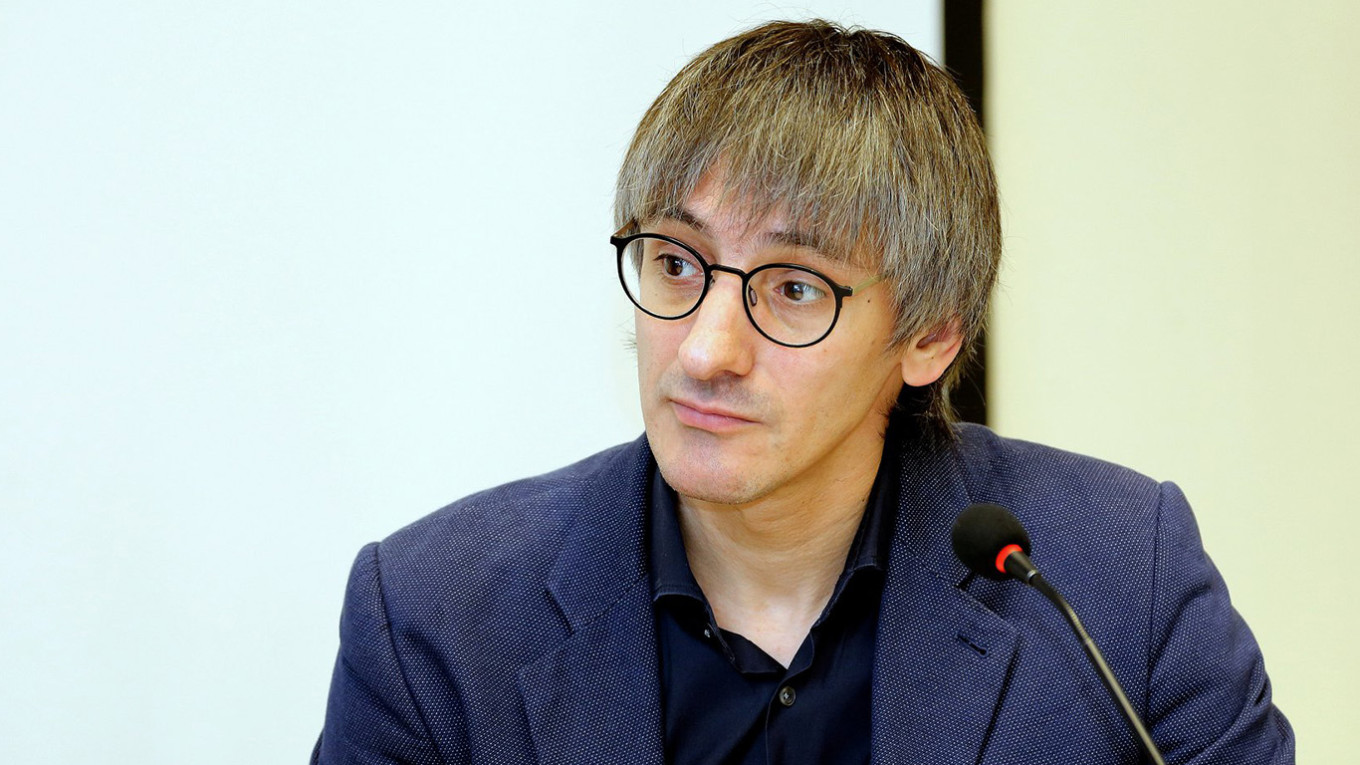
Mikhail Fishman, one of Russia’s most prominent independent journalists and a longtime anchor for the now-exiled broadcaster TV Rain, did not set out to write a wartime epitaph when he started working on his book, “The Successor.”
But when he submitted the final manuscript for the Russian edition in mid-February 2022, the political world he had documented was about to take a dark turn.
By the time “The Successor” hit Russian shelves in April 2022, less than two months after the full-scale invasion of Ukraine, Fishman had already fled the country amid the Kremlin’s crackdown on independent media, and the war had transformed his meticulous historical account into a poignant post-mortem.
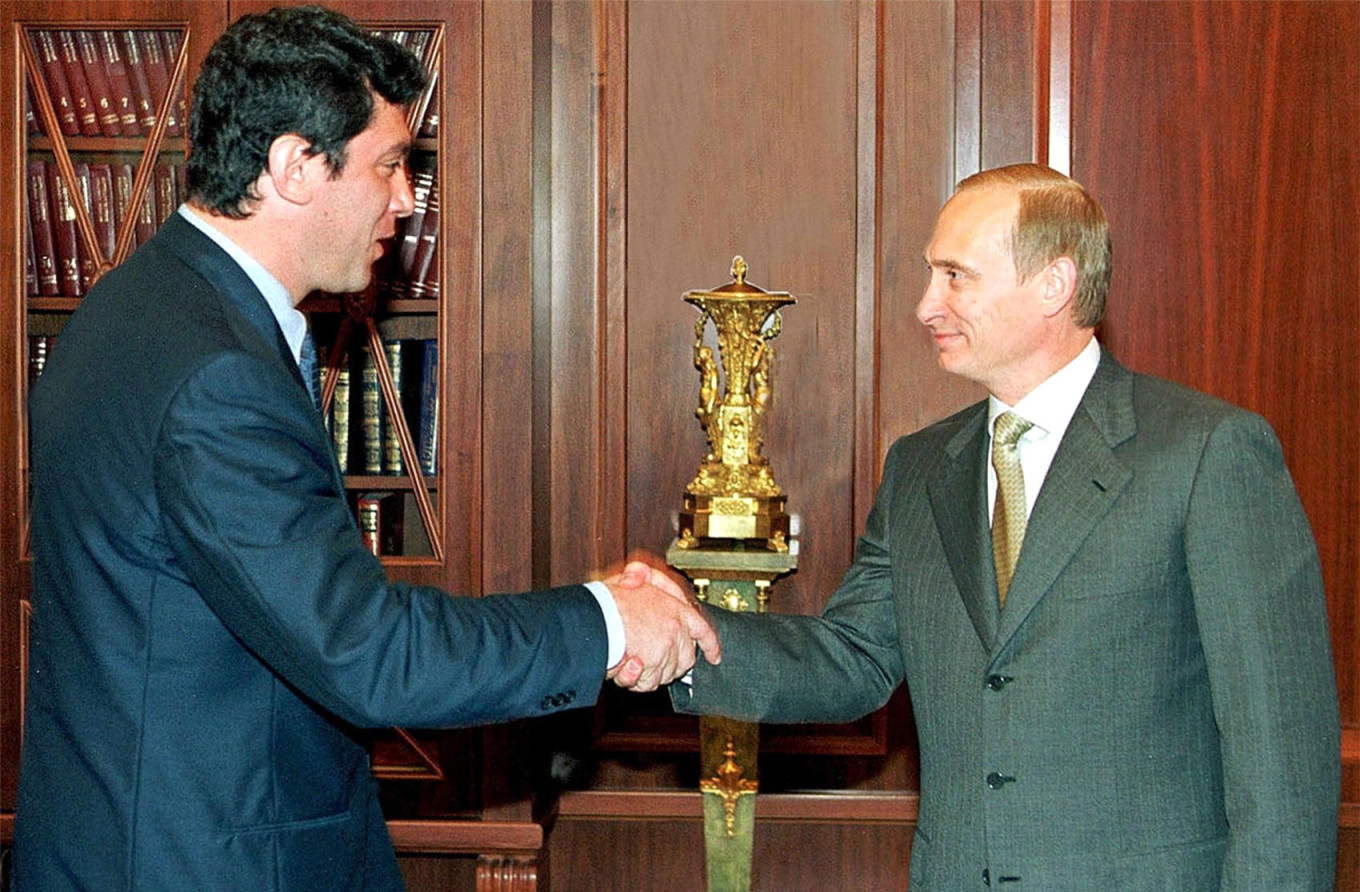
The book centers on Boris Nemtsov, the charismatic “golden boy” of the 1990s who was once seen as Boris Yeltsin’s chosen successor but later became one of Vladimir Putin’s most formidable opponents. He was assassinated near the Kremlin in 2015.
While the Russian edition saw three successful printings, the state’s tightening grip eventually caught up with it. Designated a “foreign agent” in late 2022, Fishman saw his work slowly disappear from sale in Russia as bookstores grew wary of running afoul of tightening censorship laws. Today, “The Successor” is nearly impossible to find in the country.
Now out in the U.S., this hefty 800-page book is equal parts biography of Nemtsov and history of modern Russia.
In a conversation with The Moscow Times, Fishman reflects on why Nemtsov’s story remains essential to understanding the trajectory of Putin’s rule, culminating in the war against Ukraine, and the fragile possibility of the democratic path that Russia did not take.
This interview has been edited for length and clarity.
The Moscow Times: When did you get the idea to translate your book into English? Can you talk a little bit about that process?
Fishman: Actually, the idea to publish it in English came about even before I wrote it in Russian.
MT: Really? That’s interesting. As a Russian journalist, why would you first think to write a book for publication in English rather than in Russian?
MF: There was mutual interest from me and Pushkin Press in London. We met, discussed it and signed a contract. They waited a long time for me to finish the Russian version. The translation took a while too — not as long as the writing, but a comparable amount of time.
MT: So was your book originally intended for an English-speaking audience?
MF: No, it’s definitely a book for a Russian audience. The idea is that Boris Nemtsov’s political biography is, in essence, the biography of the country. That’s why the Russian title is ‘The Successor: The Story of Boris Nemtsov and the Country Where He Didn’t Become President.’ The English version is a bit different because it’s for a different audience.
The idea actually grew out of a documentary film I made with director Vera Krichevskaya after Nemtsov was murdered. The film became very popular in Russia. It was released in late 2016 and even played in cinemas — something that was still imaginable in Russia back then. Today, that would be unthinkable. After the film, we thought, ‘Why not put this on paper?’ I sat down during the May holidays in 2017, thinking it would take me two months. It took five years.
MT: What happened during those five years? Why did it end up taking much longer than you had planned?
MF: I realized how much I didn’t actually understand. The book is much deeper and more detailed than the film. My method was to look at the ‘canvas’ of Russian history — we all remember the turning points: the 1991 coup, the 1993 shelling of the White House, the start of the First Chechen War. I remembered them, but I didn’t know why they happened. Why did the tanks come out in 1993? What did the 1996 election change? How did Putin emerge?
In the book, I ‘rewind’ everything and try to understand these events alongside Nemtsov, who was involved in most of them. It was a way to help myself and the reader understand how Russia reached the point where Nemtsov was killed in 2015 and the war began in 2022.
For the English version, I added an update. The Russian version came out before the war, but the history of Ukraine and Putin’s relationship with it occupies a big space in the book. Nemtsov was actively involved in that narrative.
To me, the 2022 invasion wasn’t a surprise because it fit perfectly into the history I had studied while writing. Nemtsov’s story is Russia’s story. Nemtsov was killed in 2015, but for Russia, it was a ‘delayed death’ that finally arrived in February 2022. Ukraine is the primary victim, but Russia itself is the second victim. The story feels complete now.
MT: Why should an English-speaking audience read about Boris Nemtsov in 2026?
MF: I personally understand how my country came to start the war much better now, and I’ve put that on paper. But also, Boris Nemtsov deserves to be known globally. His life, his convictions, his career and his struggle are worth knowing about in themselves.
MT: With so many Putin-centric books on the market, a deep dive into an opposition figure is a welcome change. Do you think your book can help readers in the West look past Putin and gain a more nuanced, holistic understanding of Russia through the stories of others like Nemtsov?
MF: I don’t strictly divide the audience into West and Russia. Putin is an obvious point of interest because he turned Russia into a dictatorship. But to understand what Putinism is, you have to understand how it was made. It wasn’t a case of ‘democracy existed, then Putin arrived and ruined everything.’ It was a complex process involving the elites, society and the opposition.
Nemtsov was at the very gates of the Kremlin in the late 1990s. He was Yeltsin’s successor. Then he was in the opposition, and eventually, he was killed. The first half of the book helps explain where a promising proto-democracy went wrong and turned into one of the most brutal dictatorships of modern times — a semi-Stalinist, semi-fascist state that is in some ways more brutal than the Soviet Union it replaced.
MT: You’re arguing that it’s more brutal than in the period of Stalinism?
MF: No, not Stalinism, of course. But certainly more so than the Brezhnev era of the 1970s and 1980s. There is no single day when everything changed. It was a path. I studied that path with Nemtsov, almost day by day.
MT: Your book also seems to beg the question of alternative histories. For example, what would have happened had Nemtsov become president instead of Putin?
MF: While writing, these questions always came up. Was it a mistake for Yeltsin to declare a state of emergency in 1993? Probably. But that conflict between Yeltsin and the Supreme Court was likely inevitable.
However, there were other mistakes — purely voluntary ones — that didn’t have to happen. Like firing Prime Minister [Viktor] Chernomyrdin in 1998, which directly led to Putin’s rise. When I study these errors, it’s painful. They weren’t inevitable.
If Yeltsin had chosen Nemtsov, would Russia be a flowering democracy? Probably not. Nemtsov would have had to deal with the same anti-democratic historical winds. But the rotation of power would have been established. The tragedy of Russian politics since the 1990s is that the stakes are too high — if you lose an election, you don’t just lose your job, you lose your wealth, your freedom or your life. Nemtsov could have broken that cycle. Even if he had lost the next election to a conservative, it wouldn’t have been Putin. It wouldn’t have been this war.
MT: Some people outside of Russia may look at the fate of Boris Nemtsov or Alexei Navalny and think: ‘What’s the point of resisting the Kremlin?’ It seems everyone who does ends up either dead, in prison or in exile. Is there a point to any of it?
MF: Putinism didn’t become Stalinism-lite overnight. I worked in Russia for 22 years under Putin. It got harder, but I only had to leave when the war started. When Nemtsov began his struggle, he didn’t assume he would be killed. The risks of prison appeared after 2012, and things got much worse after the annexation of Crimea.
But if you are a politician, you are inside the struggle. You don’t just sit and wait. Navalny’s return to Russia was an act of biblical proportions. He knew the regime was ready to kill, yet he went back. That is heroism of the highest order.
The Soviet Union looked much stronger than modern Russia. It lasted 70 years, it was institutionalized, it had the Communist Party. And yet, it collapsed very quickly. Putinism uses fear, but we don’t know what tomorrow holds. Even a month ago, the situation in Russia felt different than it does today. It seems now there is a visible ‘awakening’ about the political situation in the country.
For more information about Mikhail Fishman and “The Successor,” see the publisher’s website here.
Read more about: Journalists , Books , Nemtsov , OppositionSign up for our free weekly newsletter
Our weekly newsletter contains a hand-picked selection of news, features, analysis and more from The Moscow Times. You will receive it in your mailbox every Friday. Never miss the latest news from Russia. Preview Subscribe Subscribers agree to the Privacy Policy We sent a confirmation to your email. Please confirm your subscription.A Message from The Moscow Times:
Dear readers,
We are facing unprecedented challenges. Russia's Prosecutor General's Office has designated The Moscow Times as an "undesirable" organization, criminalizing our work and putting our staff at risk of prosecution. This follows our earlier unjust labeling as a "foreign agent."
These actions are direct attempts to silence independent journalism in Russia. The authorities claim our work "discredits the decisions of the Russian leadership." We see things differently: we strive to provide accurate, unbiased reporting on Russia.
We, the journalists of The Moscow Times, refuse to be silenced. But to continue our work, we need your help.
Your support, no matter how small, makes a world of difference. If you can, please support us monthly starting from just $2. It's quick to set up, and every contribution makes a significant impact.
By supporting The Moscow Times, you're defending open, independent journalism in the face of repression. Thank you for standing with us.
Once Monthly Annual Continue Not ready to support today?
 Remind me later. ×
Remind me next month
Схожі новини
Marla Mindelle on ‘Titanique’ as the “Gay Super Bowl” and Tony Nomination for Céline Dion Role
All correct book locations in Librarian: Tidy Up the Arcane Library
