Nationwide pressed to address ‘emerging governance issues’ as AGM looms

Labour MP writes to chair amid concerns building societies are overusing quick votes and failing to add members to boards
Nationwide is under pressure to address “emerging governance issues” across the building society sector, amid concerns bosses are bundling voting options and failing to allocate board seats for members.
The Stockport Labour MP Navendu Mishra has sent a formal letter to the chair of Nationwide, Kevin Parry, outlining growing unease over the way executives, including at Nationwide, have been engaging with members who ultimately own their building societies. A letter raising similar concerns was sent to the chancellor, Rachel Reeves, in recent weeks.
Although the Labour government has been pushing ahead with reforms meant to deliver a manifesto pledge to double the size of the mutual sector, critics have raised concerns that some building societies including Nationwide have been letting their democratic values slip.
“Their growth is exponential, which is fantastic”, Mishra said, as Nationwide confirmed it was holding £382bn worth of assets after its £2.9bn takeover of Virgin Money. “But obviously, we need to make sure that if Nationwide are always going on and on about how they are mutually owned … then we need to see that democracy,” Mishra added.
The letter was sent weeks before Nationwide’s own annual general meeting (AGM), which will feature its first member-nominated candidate up for boardroom election this century. Mishra said that despite being member-owned, direct representation was still uncommon across the sector.
“There is a wider question as to whether building societies should allocate seats on boards to member-nominated directors in order to strengthen direct member representation,” the MP’s letter said. “Where members are the owners, it is reasonable to ask why direct member voice in the boardroom remains the exception rather than the norm.”
Mishra, who is a Nationwide member, also pushed Parry on the use of “quick vote” options, which critics say nudges members to simply back all board recommendations with one click at annual general meetings (AGMs). He said that while it was “convenient” – admitting to having opted for quick vote use as a Nationwide member in the past – there were concerns it could “reduce scrutiny and advantage incumbents”.
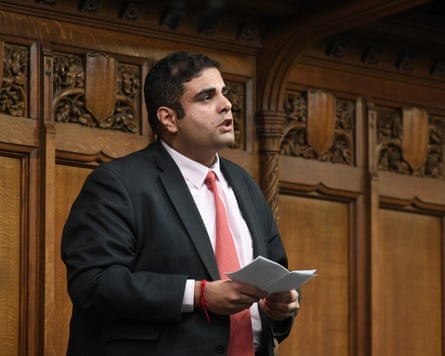
“That’s not allowed for trade unions, which are member-led organisations. So I don’t see why that should be allowed for building societies,” he said. James Sherwin-Smith – a Nationwide member up for board election – has formally asked Nationwide to suspend its use of quick vote at the upcoming AGM. The Nationwide chief executive, Debbie Crosbie, said during a media call on Thursday that the board “haven’t made a final decision on that yet.”
The letter also took aim at the growing adoption of online-only AGMs – which may exclude members who struggle to use the internet and has raised concern about question-filtering – as well as refusing to hold binding member votes on executive pay.
It comes a year after Nationwide came under fire for failing to hold a binding vote over a 43% pay rise for chief executive Debbie Crosbie’s maximum pay package, allowing her to earn up to £7m. That is despite shareholders having binding votes at listed banks such as Barclays, NatWest and Lloyds.
In a statement, a Nationwide spokesperson said that while pay votes were non-binding, 95% of votes cast were in support of the remuneration policy. They added that online-only AGMs have reversed declining attendance, and was the fairest way to get millions of members to participate.
They also defended the longtime use of the quick vote tool, saying most of the feedback from members was that it was “clear and easy to use. All building societies and listed companies use similar quick vote or proxy voting systems.”
“The chair will make these and other points in writing back to the MP in the next few days,” the spokesperson said.
Explore more on these topicsShareReuse this contentСхожі новини

Meghan Markle now 'breadwinner' of the Sussex household? What report claims

iPhone 15 price drops below Rs 55,000

iPhone 17 Pro Max gets huge discount in India, details here