NASA Sets September Launch Target for Nancy Grace Roman Space Telescope
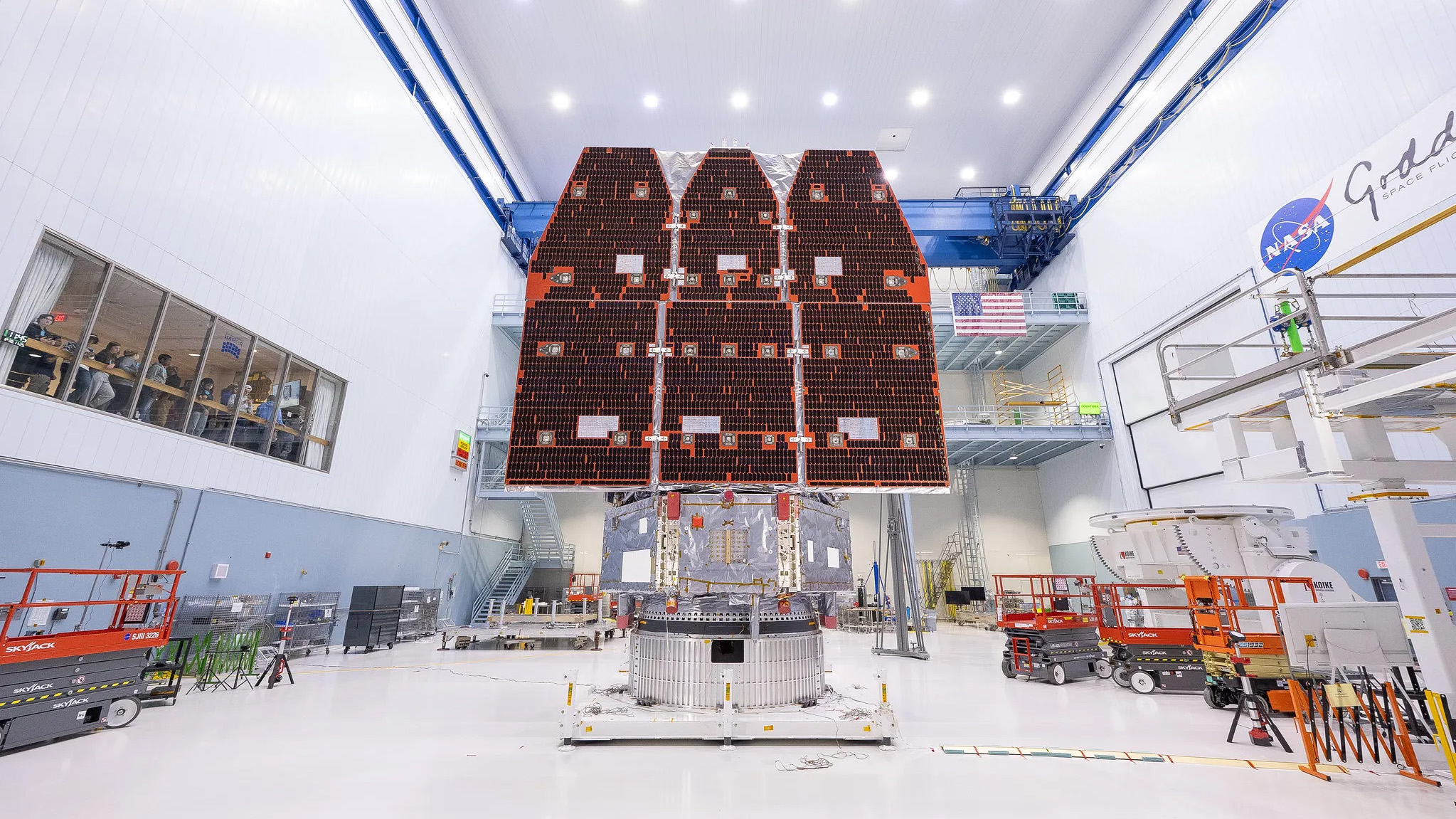
NASA is preparing to send its most advanced cosmic observatory into space this year, with the agency announcing an early September launch window for the Nancy Grace Roman Space Telescope. The ambitious mission will employ a SpaceX Falcon Heavy rocket, with the agency maintaining a contingency launch date no later than May 2027 should delays occur.
The Nancy Grace Roman Space Telescope represents a significant leap forward in observational astronomy. Named after NASA's pioneering first chief astronomer and the driving force behind the Hubble Space Telescope, the instrument was initially introduced to the public in 2016 under its working designation, the Wide Field Infrared Survey Telescope (WFIRST).
Revolutionary Observational Capabilities
While Roman's primary mirror matches Hubble's in size, the telescope possesses a vastly superior field of view—capable of capturing sky sections at least 100 times larger than its illustrious predecessor. This enhanced capability will position Roman as a complementary tool to existing NASA observatories including the James Webb Space Telescope and Chandra X-ray Observatory.
"Roman will work in tandem with NASA observatories such as the James Webb Space Telescope and Chandra X-ray Observatory, which are designed to zoom in on rare transient objects once they've been identified, but seldom if ever discover them," explained Julie McEnery, Roman's senior project scientist, in 2023. "Roman's much larger field of view will reveal many such objects that were previously unknown. And since we've never had an observatory like this scanning the cosmos before, we could even find entirely new classes of objects and events."
Mission Location and Technical Specifications
Once Roman departs Earth's atmosphere, it will travel to a vantage point approximately 1 million miles from our planet. The observatory will be equipped with two primary instruments for deep-space investigation. The first comprises a 300.8-megapixel camera system designed to capture light across the visible and near-infrared spectrum. Additionally, Roman will feature a sophisticated high-contrast coronagraph enabling the detection of exoplanets that would ordinarily remain obscured by stellar radiation.
Scientific Objectives
The mission's overarching purpose centers on addressing fundamental questions regarding dark energy, exoplanets, and astrophysics. Despite centuries of astronomical investigation, dark energy—comprising approximately 68 percent of the universe's mass-energy content—remains poorly understood by the scientific community. Beyond its research objectives, Roman is expected to capture unprecedented imagery of the cosmos for public appreciation.
Схожі новини
Учені виявили приховану мережу мозку з клітин-помічників

Дайвер зафіксував дивовижне явище: риби-хірурги змінюють колір на рифі