NASA rover uncovers rock with 7 new organic molecules on Mars — the 'most diverse collection' ever seen
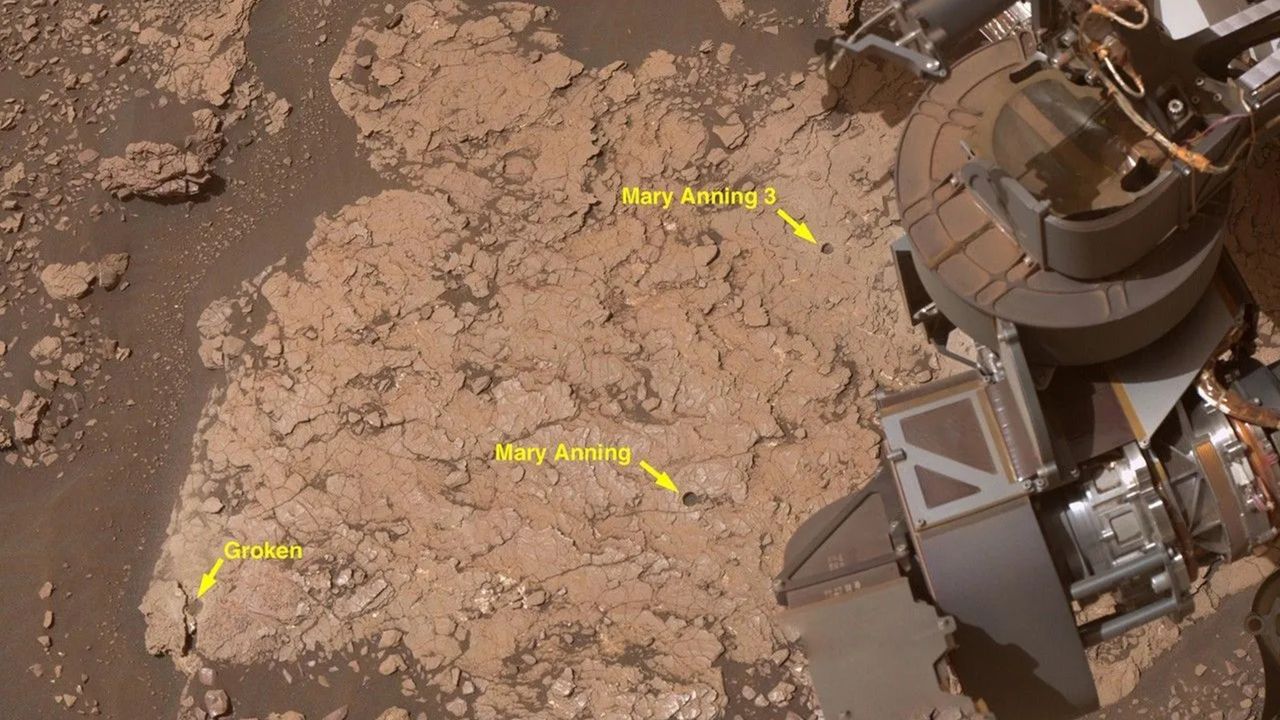
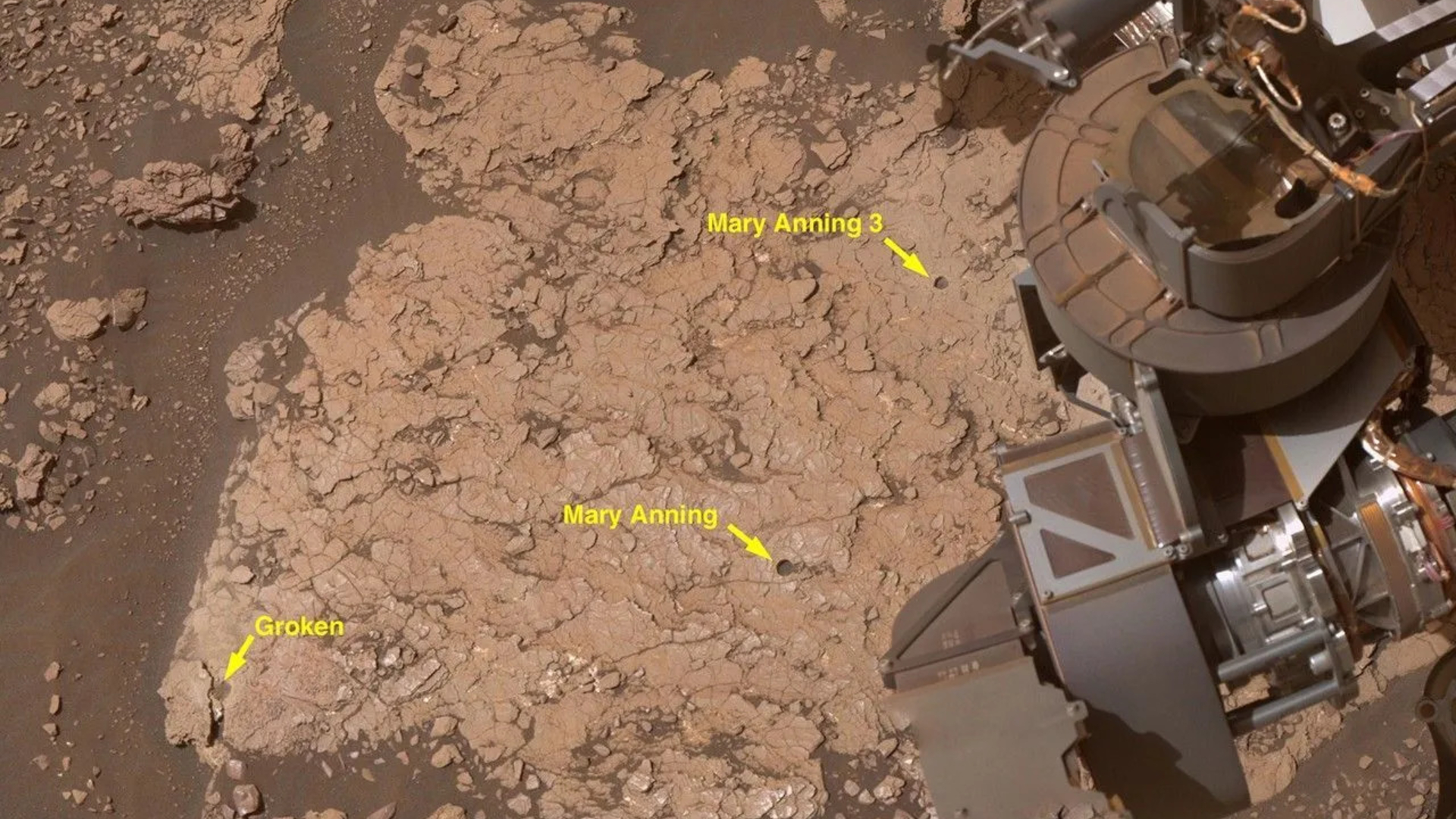
A rock discovered by NASA's Curiosity Mars rover contains "the most diverse collection" of the building blocks of life ever seen on the Red Planet, including seven never found there before, new research confirms.
In 2020, Curiosity discovered and drilled into the rock, which has now been confirmed to contain organic molecules that bear the life-friendly element carbon. While scientists can't yet prove if the molecules formed due to biological or geologic processes, their findings add new evidence to the theory that ancient Mars was hospitable to life.
By the Martian seashore
The new analysis, published April 21 in the journal Nature Communications, shows that the rock sample included 21 carbon-containing molecules, including seven never seen before on the Red Planet. The newly found molecules included nitrogen heterocycle (a predecessor to RNA and DNA) as well as benzothiophene, which may have been key to bringing life-friendly chemistry to solar system planets aboard meteorites, the authors wrote.
The sample was nicknamed "Mary Anning 3," after the English paleontologist famous for discovering the first fossil ichthyosaur and plesiosaur. Much like the aquatic fossil environments Anning sought out, the Martian organics were found in an area of Mars that was teeming with lakes and streams before the planet dried out billions of years ago.
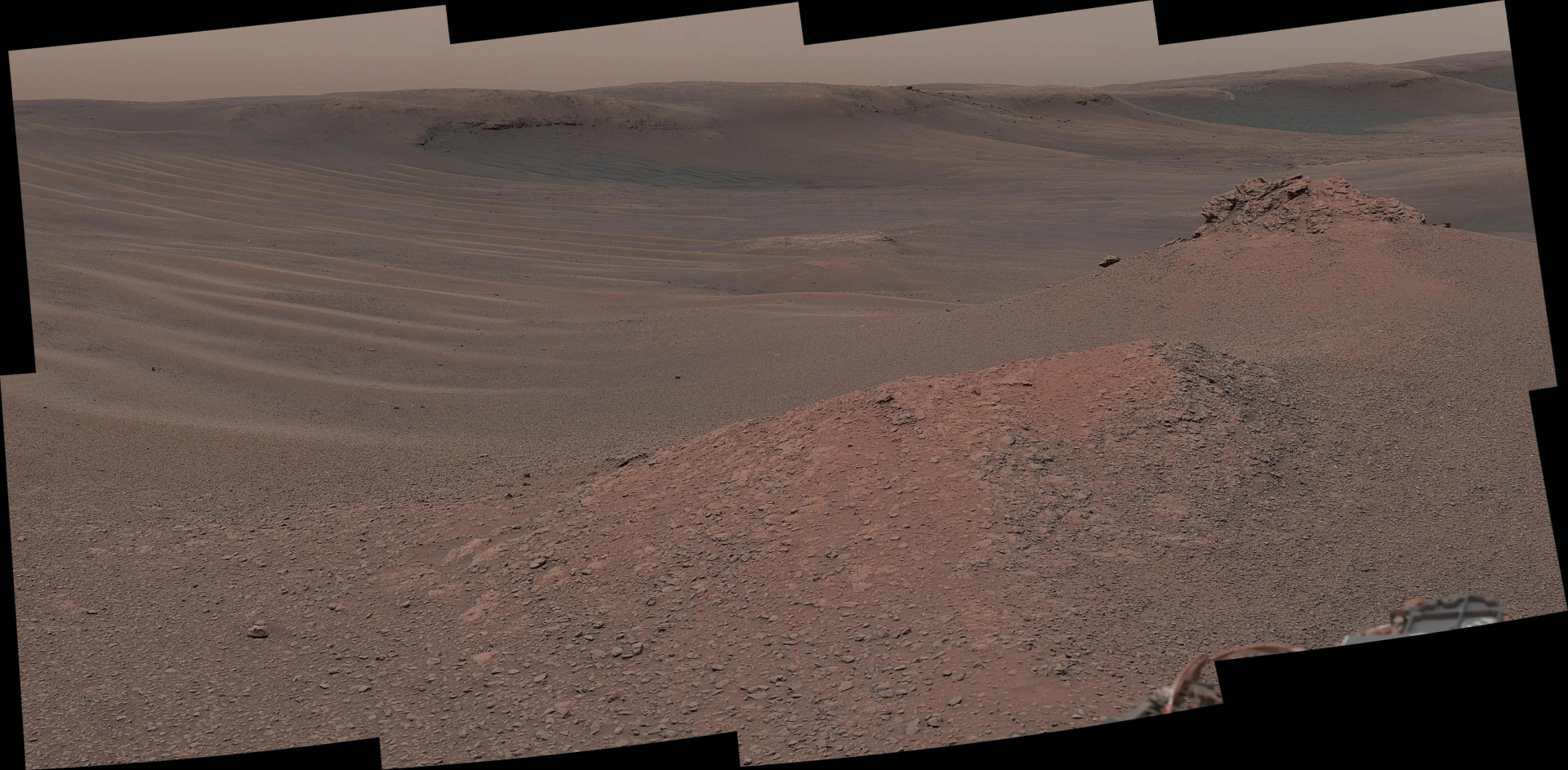
"This oasis surged and dried up multiple times in the planet's ancient past, eventually enriching the area with clay minerals, which are especially good at preserving organic compounds," JPL officials wrote.
Drilling for life
Last year, Curiosity also found the largest-ever organic molecules on Mars. These were "long-chain" hydrocarbons, including decane, undecane and dodecane.
Sign up for the Live Science daily newsletter nowThese organic finds in 2020 and 2025 used an instrument on Curiosity called Sample Analysis at Mars (SAM). Curiosity first drills rocks using its robotic arm. Then, it turns the rocks into powder samples and lets the powder fall into SAM. The instrument contains a high-temperature oven that heats up the powder, allowing the compositions of the gases inside the rover to be measured.
SAM also contains small cups of solvent that can perform "wet chemistry." The Mary Anning 3 sample was the first to use tetramethylammonium hydroxide (TMAH) — a substance that breaks apart organic molecules, of which Curiosity only carries two cups — because the sample was considered of the highest value.
Related Stories- Curiosity rover finds largest carbon chains on Mars from 3.7 billion-year-old rock
- Giant string of organic molecules on Mars may be one of the best signs of life yet
- Curiosity rover finds 'tantalizing' signs of ancient Mars life
Curiosity's findings were verified on Earth using a space rock that's well known to science, the Murchison meteorite, which is 4 billion years old and includes organic molecules.
"A Murchison sample exposed to TMAH was found to break much larger molecules into some of the ones seen in Mary Anning 3, including benzothiophene," JPL officials wrote. "That result verifies that the Martian molecules found in Mary Anning 3 could have been generated from the breakdown of even more complex compounds relevant to life."
Curiosity, which has been on Mars since 2012, recently used its last TMAH cup on "weblike boxwork ridges, which were formed by ancient groundwater," according to JPL. The results will be written up in a future study.
Article SourcesWilliams, A. J., Eigenbrode, J. L., Millan, M., Williams, R. H., Mcintosh, O. M., Teinturier, S., Roach, J., Malespin, C., McAdam, A. C., Mahaffy, P., Bryk, A. B., Buch, A., Boulesteix, D., Chou, L., Dworkin, J. P., Fox, V., Franz, H. B., Freissinet, C., Glavin, D. P., . . . Vasavada, A. R. (2026). Diverse organic molecules on Mars revealed by the first SAM TMAH experiment. Nature Communications, 17(1). https://doi.org/10.1038/s41467-026-70656-0
What do you know about the Red Planet? Test your knowledge with our Mars quiz!

Elizabeth Howell was staff reporter at Space.com between 2022 and 2024 and a regular contributor to Live Science and Space.com between 2012 and 2022. Elizabeth's reporting includes multiple exclusives with the White House, speaking several times with the International Space Station, witnessing five human spaceflight launches on two continents, flying parabolic, working inside a spacesuit, and participating in a simulated Mars mission. Her latest book, "Why Am I Taller?" (ECW Press, 2022) is co-written with astronaut Dave Williams.
View MoreYou must confirm your public display name before commenting
Please logout and then login again, you will then be prompted to enter your display name.
Logout LATEST ARTICLES 1Neanderthals' brains weren't to blame for their demise, new study suggests
- 2Amazfit Active 3 Premium review: A great budget smartwatch for running beginners
- 3How everything you do is being monitored in an AI-fuelled 'surveillance capitalism system' that's ramping up aggressively
- 4Mystery of golden orb found in depths of ocean off Alaska finally solved: 'Everyone was like, What the heck? What is that?'
- 5Some fungi can influence the weather — and now we know how they do it
Схожі новини
Telomere-to-Telomere Assembly Using HERRO-Corrected Simplex Nanopore Reads
Mitochondria can spawn new ‘organelles’ — hinting at how modern cells evolved
Походження людини переглянули: нове дослідження ДНК змінило теорію