NASA exoplanet-hunting spacecraft TESS reveals its most complete look at the night sky yet
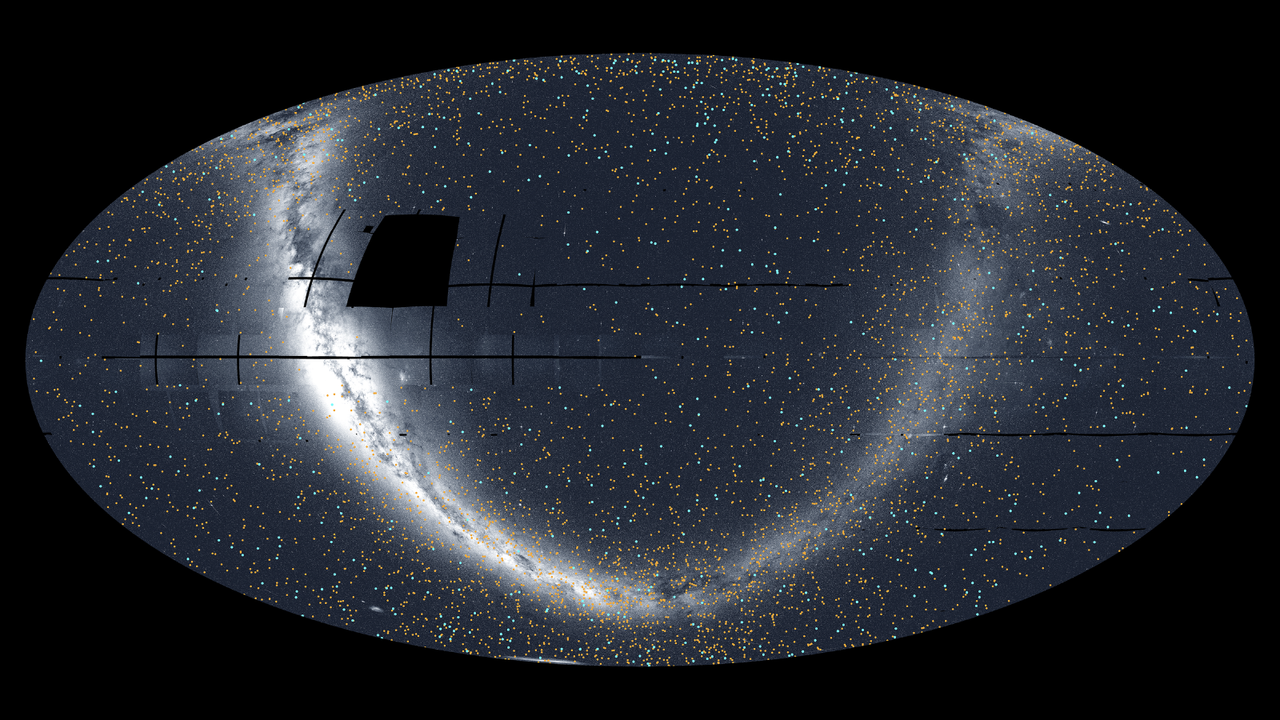
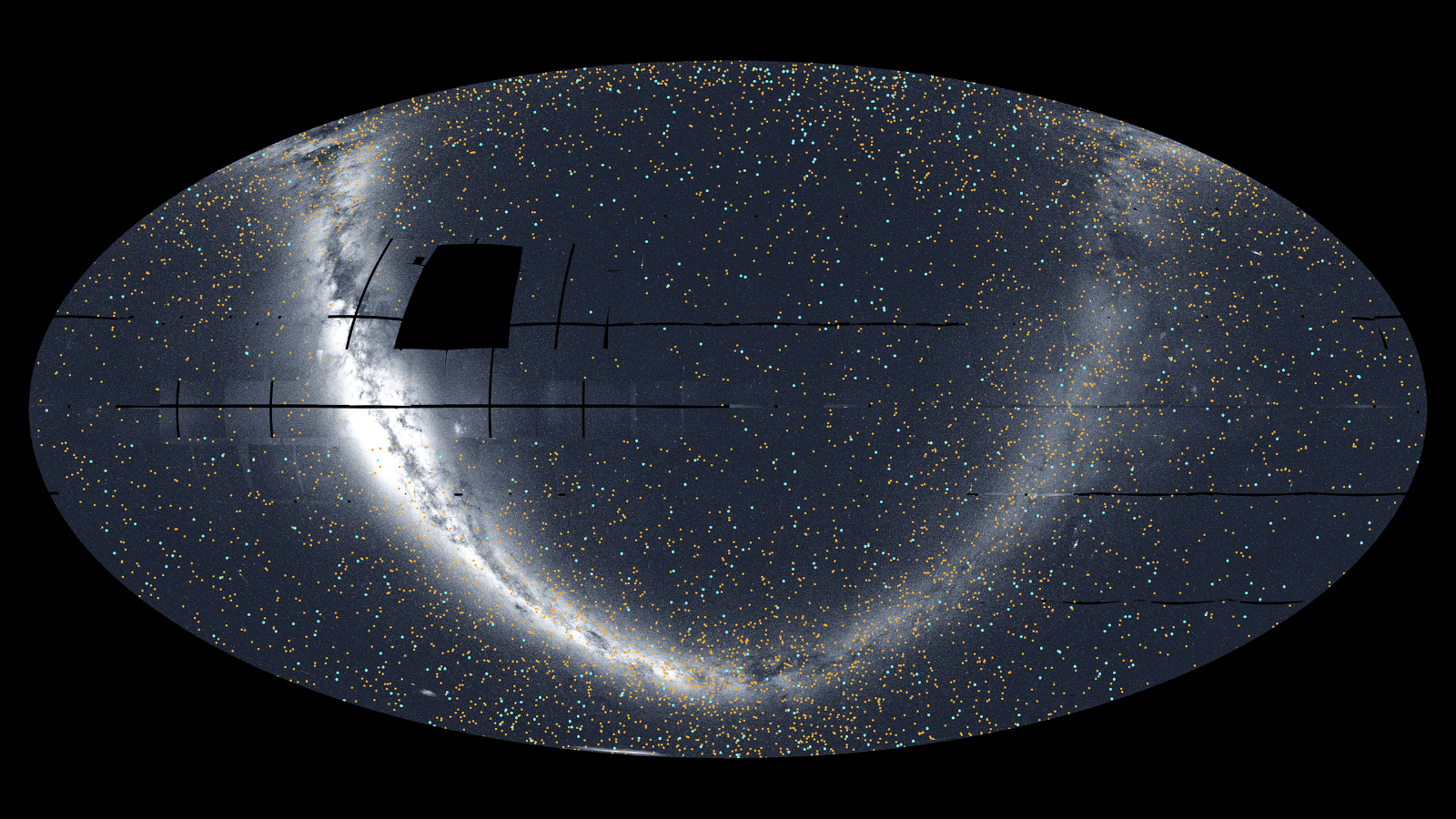
NASA's exoplanet-hunting spacecraft TESS, or Transiting Exoplanet Survey Satellite, has released its most complete view of the sky over Earth — the map reveals the location of 6,000 potential worlds beyond the solar system.
The mix of possible and confirmed extra-solar planets, or exoplanets, were identified by the mission prior to Sept. 2025. That's the month that marked the conclusion of TESS's second mission extension. (The exoplanet-hunting spacecraft launched from Space Launch Complex 40 at Cape Canaveral in April 2018.)
"Over the last eight years, TESS has become a fire hose of exoplanet science," Rebekah Hounsell, a TESS associate project scientist at NASA’s Goddard Space Flight Center in Greenbelt, Maryland, said in a statement. "It's helped us find planets of all different sizes, from tiny Mercury-like ones to those larger than Jupiter. Some of them are even in the habitable zone, where liquid water might be possible on the surface, an important factor in our search for life beyond Earth."
TESS searches for exoplanets using the tiny dips in brightness they cause as they cross, or "transit," the face of their parent star and block starlight. The total area of sky the mission searches is broken down into sectors, containing tens of thousands of stars. TESS uses its four cameras to observe each sector for around a month, looking for minuscule brightness dips before moving on.
The new TESS all-sky mosaic is made up of 96 sectors seen between April 2018 and Sept. 2025. The blue dots represent around 700 confirmed exoplanets, including exotic objects like planets being destroyed by their own host stars to worlds ravaged by global volcanoes. The orange dots represent candidate exoplanets detected by TESS that are yet to be confirmed.
And these extraordinary discoveries continue with discoveries not yet worked into this new mosaic. Just this year, TESS discovered a planetary system unlike any seen before, consisting of a super-Earth and a companion planet that possesses a highly elliptical and tilted orbit. Also this year, TESS discovered evidence of two planets smashing together, leaving a cloud of debris in front of their parent star; studying that cataclysmic collision could help us investigate a possible smash-up between Earth and a planetary body billions of years ago. It is such a smash-up that scientists believe may have birthed the moon.
"The more we dig into the large TESS dataset, especially using automated algorithms, the more surprises we find," Allison Youngblood, the TESS project scientist at NASA Goddard, said. "In addition to planets, TESS has helped us study rivers of young stars, observe dynamic galactic behavior, and monitor asteroids near Earth.
"As TESS fills in more of the night sky, there's no knowing what it might see next."
View MoreYou must confirm your public display name before commenting
Please logout and then login again, you will then be prompted to enter your display name.
Logout
Robert Lea is a science journalist in the U.K. whose articles have been published in Physics World, New Scientist, Astronomy Magazine, All About Space, Newsweek and ZME Science. He also writes about science communication for Elsevier and the European Journal of Physics. Rob holds a bachelor of science degree in physics and astronomy from the U.K.’s Open University. Follow him on Twitter @sciencef1rst.
Схожі новини
В Україні створюють Національну систему дослідників для персональної підтримки науковців
Документальний фільм про вплив війни на природу України здобув приз на фестивалі у Парижі
Ebola outbreak spirals out of control: how might it have started?