Four Diverse Visions Compete for Prestigious Turner Prize: From Industrial Poetry to Oil Politics
The shortlist for one of contemporary art's most celebrated awards features works ranging from spoken-word performance to politically charged sculptural installations, with winners to be announced in December.
This year's Turner Prize competition showcases an eclectic array of artistic approaches, with four finalists presenting their visions across performance, sculpture, and immersive installation formats. The selected artworks will be exhibited at the Middlesbrough Institute of Modern Art at Teesside University before the prize winner is revealed on 10 December.
The Shortlisted Artists
The four contenders—Simeon Barclay, Kira Freije, Marguerite Humeau, and Tanoa Sasraku—each receive £10,000, with the ultimate victor claiming an additional £25,000 prize. According to jury chair Alex Farquharson, the selected works represent "a compelling reflection of the breadth and vitality of contemporary British art" and offer "a rich and diverse range of work" that "present distinct perspectives through which to explore the world around us."
About the Turner Prize
Established in 1984 and named after painter JMW Turner, this annually awarded honour has become one of visual arts' most prestigious recognitions. The prize celebrates British artists for exceptional exhibitions or presentations of their work, consistently driving public conversation about innovations in contemporary British art.
Meet the Contenders
The Ruin by Simeon Barclay
Barclay presents an hour-long spoken-word performance drawing from his Huddersfield roots and observations of northern England's industrial heritage, accompanied by live percussion and horn. The jury commended his "exploration of Britishness, class, race and masculine identity, through an evocative, experimental use of language and a psychologically immersive soundscape." As the sole performance-based entry among this year's nominees, Barclay could make history as the first spoken-word artist to claim the prize since 2019.
Unspeak the Chorus by Kira Freije
Freije constructs sculptures from metal, fabric, and salvaged materials to investigate fundamental human emotions, presenting stone-cast faces and life-sized metal-armature figures. Jurors highlighted the "emotional depth" and "unique sculptural vocabulary of materials and forms" alongside "the haunting and expressive way she transformed the space through her arrangement of figures." The artist's anonymous and ambiguous figures invite interpretation while maintaining striking visual impact.
Torches by Marguerite Humeau
Humeau's installation investigates planetary history and speculative futures through sculptures referencing distinct natural species, accompanied by synchronized light and sound sequences. The jury praised her "engagement with ecological and existential themes through inventive forms, speculative scenarios and dynamic shifts in scale." Rather than adopting a human-centred viewpoint, Humeau's mythical and science-fictional forms offer a distinctive curatorial perspective.
Morale Patch by Tanoa Sasraku
Sasraku's installation engages geopolitical concepts through object-like sculptures, concentrating on contemporary and historical dimensions of petroleum's political significance. Jurors commended the work's "precision and sophistication," noting it "addresses complex historical issues with strong contemporary resonance, and its use of a clinical, minimalist display that conveys both irony and seriousness." Given current global attention to oil-related conflicts and energy markets, Sasraku's work arguably addresses the most immediate contemporary issues on the shortlist.
Схожі новини

Каннський фестиваль поповнив офіційну програму новими картинами із зірковим складом
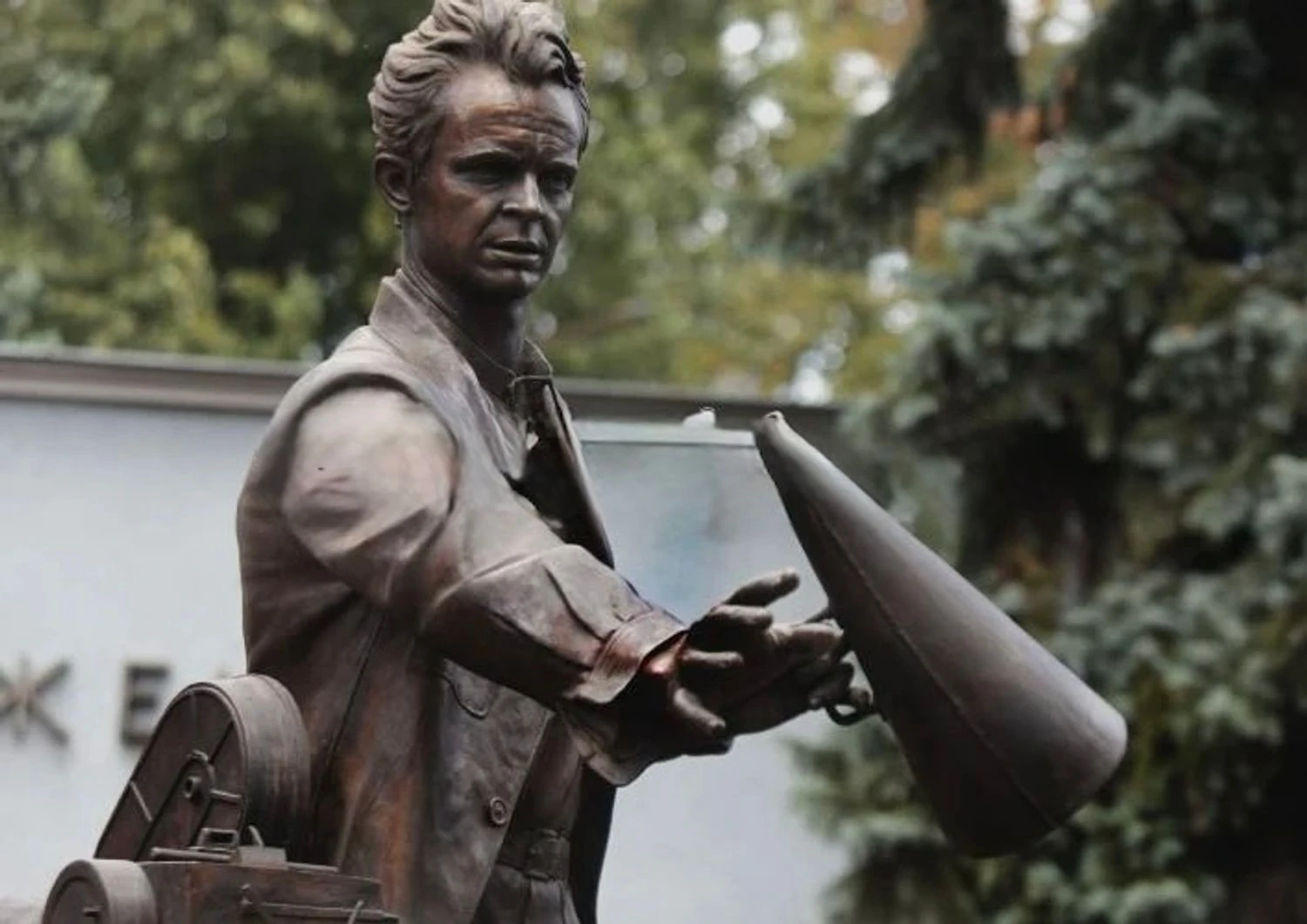
Кіностудія Довженка отримала статус європейської культурної спадщини
Ruth Slenczynska, Last Pupil of Rachmaninoff, Dies at 101 After Remarkable Nine-Decade Career
