Mystery of golden orb found in depths of ocean off Alaska finally solved: 'Everyone was like, What the heck? What is that?'
Get the world’s most fascinating discoveries delivered straight to your inbox.
By submitting your information you agree to the Terms & Conditions and Privacy Policy and are aged 16 or over.You are now subscribed
Your newsletter sign-up was successful
Want to add more newsletters?
Join the club
Get full access to premium articles, exclusive features and a growing list of member rewards.
Explore An account already exists for this email address, please log in. Subscribe to our newsletter Mysterious Golden Orb Identified! - YouTube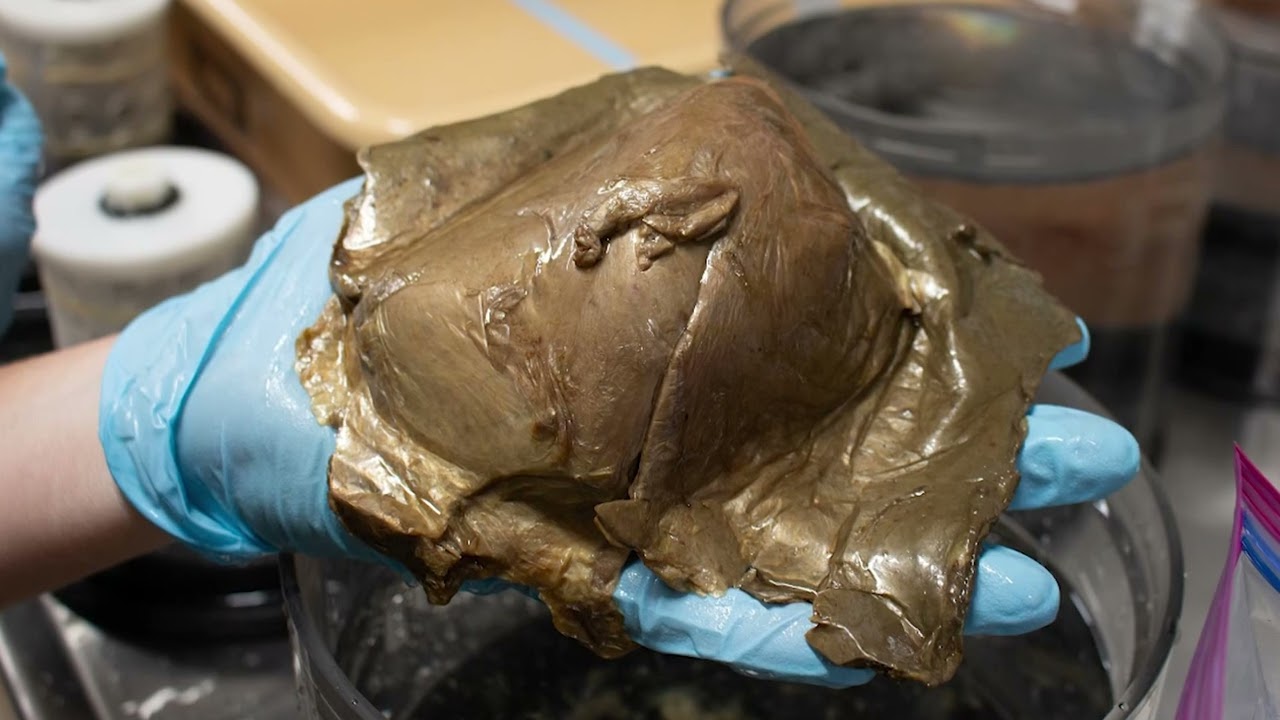 Watch On
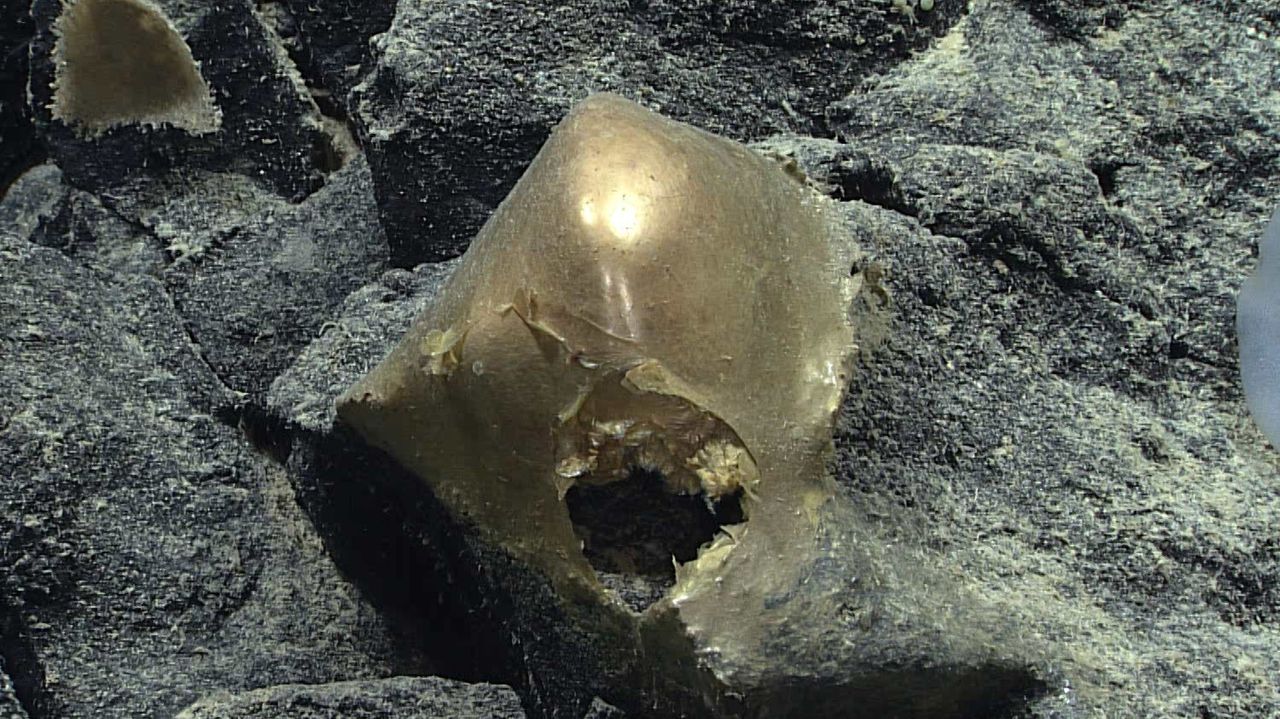
A years-long mystery about a shiny blob found at the bottom of the ocean has finally been solved.
There were many theories about what it could be. Perhaps it was an egg, a sponge or a mat of microbes.
"Everyone was like, 'What the heck? What is that?,'" Allen Collins, a zoologist at the Smithsonian National Museum of Natural History in Washington, D.C., told Live Science.
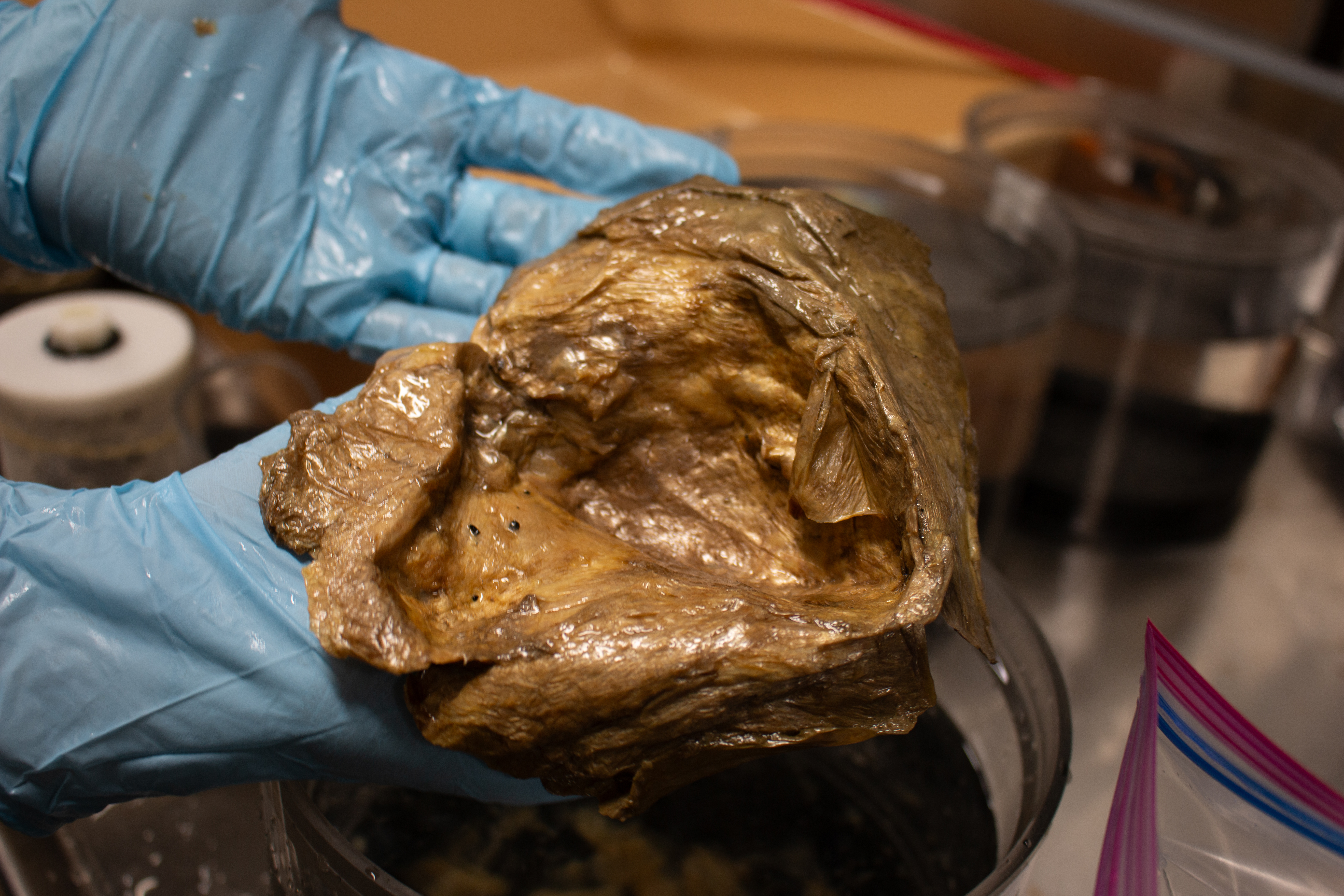
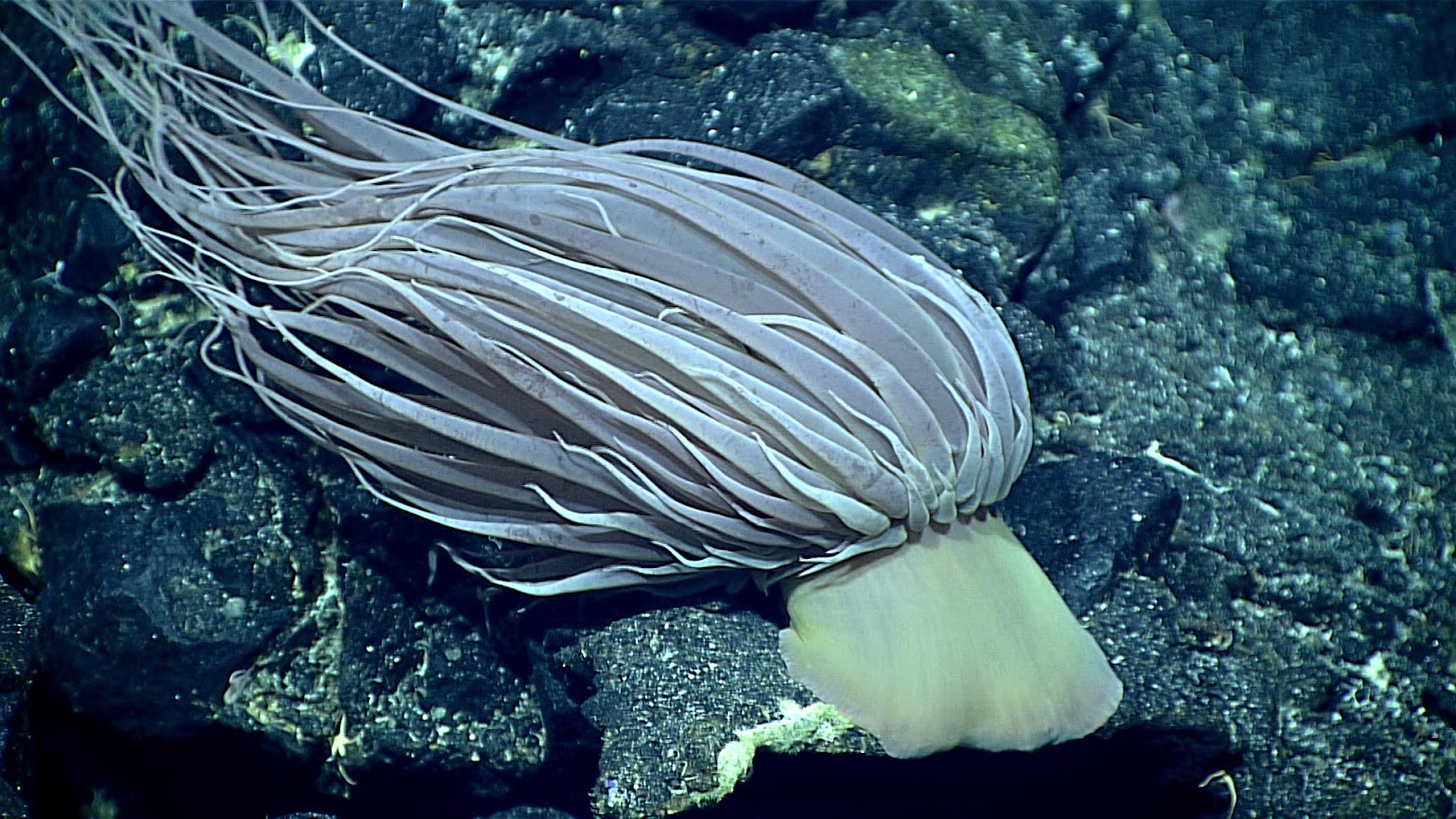
Now, he's led an analysis that has finally revealed what the orb is — and it turns out that it's something secreted by a mysterious deep-sea creature called Relicanthus daphneae.
"The first thing we were looking for was gross anatomy," he said. "Is there a mouth somewhere? Can we find muscles? The sort of thing that would tell us that it's some particular kind of an animal. And we didn't find any of that.”
The next step was to put it under a microscope. This inspection revealed that the tissue contained nematocysts — the stinging cells that define the Cnidaria phylum, which includes more than 11,000 species of aquatic invertebrates, such as jellyfish, hydroids, sea anemones and corals.
Sign up for the Live Science daily newsletter nowThese stinging cells were spirocysts, which Collins said are unique to the Hexacorallia class. That cut it down to 4,000 or so species.
Next, the team tried genetic tests and detected DNA from lots of microbes, as well as from an anemone-like organism — R. daphneae.
This is when co-author Estefanía Rodríguez, curator of marine invertebrates at the American Museum of Natural History in New York, who had been studying R. daphneae specimens for many years, got involved. She recognized the tissue as a cuticle, which means the golden orb is the structure that an anemone secretes beneath it to cement itself to rock. The work is posted on the bioRxiv preprint server and hasn't been peer-reviewed yet.
"It is wonderful that the authors were able to gather enough evidence from the sample to identify it, even though it was actually a remnant not a whole specimen," Tammy Horton, a deep-sea taxonomist at the National Oceanography Centre in Southampton, U.K., told Live Science in an email.
She said the work demonstrates the importance of both DNA identification and obtaining specimens, because physical samples are needed to confirm the identity of little-known marine species.
"It's great to have an answer to what the 'golden orb' is, and as is often the case in the deep sea, it's a surprise," said Jon Copley, a marine ecologist at the University of Southampton in the U.K. "From its looks alone, we didn't guess it would be the remnants of an anemone-like animal."
Scientists haven't agreed on which group R. daphneae fits into yet. Genetic data from a 2019 study indicates it doesn't sit in current taxonomic groups and is in a sister group to true anemones, so it should be called "anemone-like," Copley said.
However, Rodríguez, who was part of the 2019 study's team, is still convinced it is an anemone, she told Live Science. "Morphologically it is an anemone, and I do believe it's an anemone," Rodríguez said. "We just don't have enough samples to show that yet." She suspects it might be from an ancient line of anemones, which is why it is hard to place.
related stories- Mysterious 'blue goo' at the bottom of the sea stumps scientists
- 'Mind-blowing' deep sea expedition uncovers more than 100 new species and a gigantic underwater mountain
- 32 truly bizarre deep-sea creatures
Regardless of which group it fits into, R. daphneae probably secretes a cuticle to attach to rock but can detach from it to move to a better location and then attach in the new place by creating a new cuticle, Collins explained. That is why the golden orb was left there.
"In some videos, you can see cuticle on the rock adjacent to where the anemone is," he said, adding that in one case, you can spot a long trail along a rock where the anemone appears to have repeatedly started secreting a cuticle before moving on.
R. daphneae has mainly been seen near hydrothermal vents in the Pacific, Southern and Indian oceans, but that may be because scientists visit vents more often than other deep-ocean habitats, Copley said. He suspects the bizarre creatures may be more widespread, and now that we know they leave behind golden orbs, we may get a better idea of how far they spread.
Article SourcesAuscavitch, S. R., Reft, A., Collens, A. B., Mah, C., Best, M., Benedict, C., Rodríguez, E., Daly, M., & Collins, A. G. (2026). The Curious Case of the Golden Orb – Relict of Relicanthus daphneae (Cnidaria, Anthozoa, Hexacorallia), a deep sea anemone. bioRxiv (Cold Spring Harbor Laboratory). https://doi.org/10.64898/2026.04.17.719276

Chris Simms is a freelance journalist who previously worked at New Scientist for more than 10 years, in roles including chief subeditor and assistant news editor. He was also a senior subeditor at Nature and has a degree in zoology from Queen Mary University of London. In recent years, he has written numerous articles for New Scientist and in 2018 was shortlisted for Best Newcomer at the Association of British Science Writers awards.
View MoreYou must confirm your public display name before commenting
Please logout and then login again, you will then be prompted to enter your display name.
Logout LATEST ARTICLES 1Miniature camelid effigy: A silver llama with a wry smile that the Inca crafted 600 years ago
- 2Antarctica's sea ice suddenly started shrinking a decade ago — and deep-diving robots are revealing why
- 3How likely are you to find a message in a bottle?
- 4Astronomers just mapped one of the largest structures in the universe, long hidden behind the Milky Way's 'Zone of Avoidance'
- 5Hubble revisits stunning Trifid Nebula after 30 years, and spots a growing jet of energy — Space photo of the week
Схожі новини

Їжа, що обманює мозок: які продукти провокують переїдання та постійний голод
#ScientistAtWork 2026: <i>Nature</i> seeks striking photographs that capture researchers at work

Вчені виявили, що рослини вміють "кричати": просто ми досі їх не чули
