Music has scales / raagas. What about storytelling in movies and prestige shows?
15 structural archetypes derived from 405 films. Each archetype is defined by five parameters borrowed from Hindustani classical music, a system built on the idea that melody is not just sound but emotional territory. We extended this logic to narrative structure: screen time replaces note duration, dramatic registers replace musical registers, and the characteristic phrase of a raaga becomes the beat trajectory of a story. The result is a structural grammar for film that is precise enough to classify and legible enough to write from.
In music: In Hindustani classical music, the vadi is the most important note of a raaga, the one the melody keeps returning to, the note that gives the raaga its fundamental character.
In story: The emotional register with the most screen time. The vadi tells you what a story is fundamentally about: whether it is a story of pursuit, reversal, crisis, incitement, or revelation.
In music: The samvadi is the vadi's consonant partner, always a fourth or fifth away. It complements and supports without displacing the dominant note.
In story: The secondary structural engine. The samvadi provides contrast and complicates the vadi, often determining the specific character of a story within its family. Two stories can share the same vadi but feel very different because of their samvadi.
In music: The graha is the note on which a classical composition begins, the first structural commitment, setting the register from which everything unfolds.
In story: The register of the first beat. Whether a story opens in stability (Sa), disruption (Ri), or crisis (Pa) sets a structural contract with the audience about what kind of world they are entering and what has already happened before the frame.
In music: The nyasa is the note on which a melodic phrase comes to rest, not necessarily the final note of the piece, but the note that signals a phrase is complete. In a raaga, the nyasa determines whether a phrase feels resolved or suspended.
In story: The register of the final beat. The nyasa determines resolution level: full resolution (Sa'/Ni), mid-register tension (Pa/Dha/Ma), or irresolution (Ri/Ga/Sa). It is the structural decision that most determines how an audience leaves the cinema.
In music: The pakad is the short melodic phrase that fingerprints a raaga. A trained listener hears the pakad and immediately knows which raaga is being played, even before the full composition unfolds. It is the raaga's signature movement through its own scale.
In story: The trajectory modifier: the beat movement pattern that distinguishes stories within the same archetype family. Two films can share the same vadi, samvadi, graha, and nyasa, yet feel structurally different because one Dwells in a single register while another Rebounds or Returns. The pakad is what separates variants of the same archetype.
Stories in the Ga-Dominant family live in the act of doing. The process of pursuit, not the reversals or crises along the way, is the primary narrative substance.
A story that lives in the act of doing. Pursuit dominates, crisis is light, and the resolution is earned through sustained effort rather than revelation or reversal.
Pursuit without closure. The story is about the doing, not the arriving, and it ends in ongoing tension rather than resolution.
Stories in the Ma-Dominant family are driven by plot machinery. Reversals, twists, and shifting ground are the story's primary language. Whether triumphant or tragic, Ma-Dominant films are about the experience of the ground shifting beneath the protagonist.
The most structurally complete archetype in the library. Reversal is the engine, crisis is the fuel, and the story reaches full resolution at Sa'. Complex machinery, triumphant landing.
A story that keeps changing the game. High pursuit, heavy reversal, and a protagonist who adapts faster than their opponents can plan. Nimble, kinetic, and clever.
A story built on disruption that keeps returning. The inciting event and the reversal share the structural weight, the story is about what happens to a protagonist who cannot quite escape where they started.
A story where the reversal defines everything but resolution never fully arrives. The story rests in mid-register: Pa or Ma, not Sa'.
A story of costly victory or ironic fall. The protagonist achieves something, but what they pay, or what they become, is the real subject.
Stories in the Pa-Dominant family are defined by sustained darkness. Crisis is not a single beat but a condition the protagonist inhabits for an extended period.
A story shaped by endurance. Crisis dominates the screen time, and the protagonist is defined by what they refuse to surrender under sustained pressure.
Courage under fire. The crisis builds systematically and the protagonist advances through it by step rather than enduring in place. The story earns its resolution through disciplined escalation.
A story where crisis is the condition of life rather than a solvable problem, and the ending acknowledges this without surrendering to it.
Stories in the Ri-Dominant family are defined by a disruption that never fully leaves the room. The inciting event, the wound, the mystery, the displacement, retains structural weight throughout the story rather than receding after Act 1.
A story built on a mystery that the audience wants answered as much as the protagonist does. The disruption never fully yields, it is the subject.
Disruption as fuel. The protagonist is launched by an inciting event and converts its energy into forward momentum, a story about what it means to not just survive disruption but be propelled by it.
A story of displacement that does not fully heal. The protagonist is removed from their world, by choice, by force, by circumstance, and the disruption of that removal sustains structural weight throughout.
A story that ends in unresolved disruption. The incitement never converts into completion, the story rests in Ri or Ma, mid-process, and asks the audience to sit with irresolution.
There is only one Dha-Dominant archetype in the library, a reflection of how rare it is for revelation to structurally dominate a story rather than serve as a single scene.
A story in which knowing changes everything. Revelation is not the climax's unlock, it IS the climax. The story is about the experience of coming to understand.
This classification framework was developed by the Quanten Arc research team through structural analysis of 405 films across Drama, Thriller, Action, Horror, Comedy, Romance, Adventure, Mystery, Science Fiction, and Fantasy. Each film was manually segmented into narrative beats and scored on the five Hindustani classical music parameters.
The rule-based classifier was derived from the most statistically significant parameter combinations observed across the corpus. The framework is descriptive, not prescriptive: it identifies structural patterns in completed works and does not claim that all strong films follow these patterns.
Film counts and IMDb averages are derived from the 405-film Quanten Arc library. Browse all titles to explore individual narrative analyses.
Схожі новини
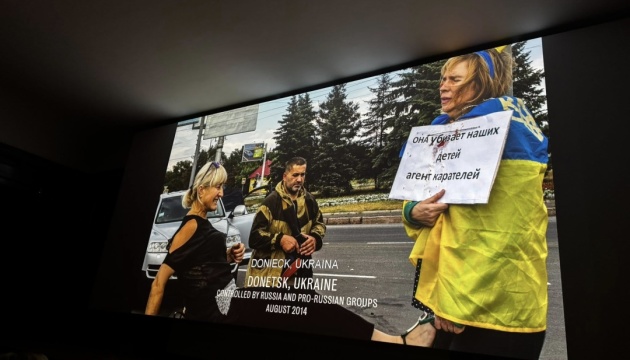
У Варшаві показали документальний фільм «Сліди» про сексуальні злочини росіян в Україні
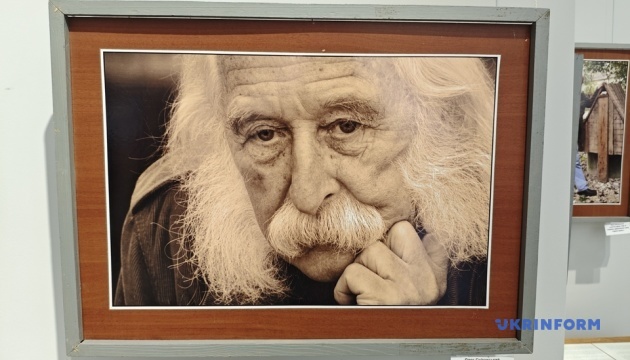
У Тернополі відкрили виставку до 90-річчя Івана Марчука
Commission fees for <i>furusato nōzei</i> portal sites exceed 10% of donated funds