MSI MPG 322UR X24 review
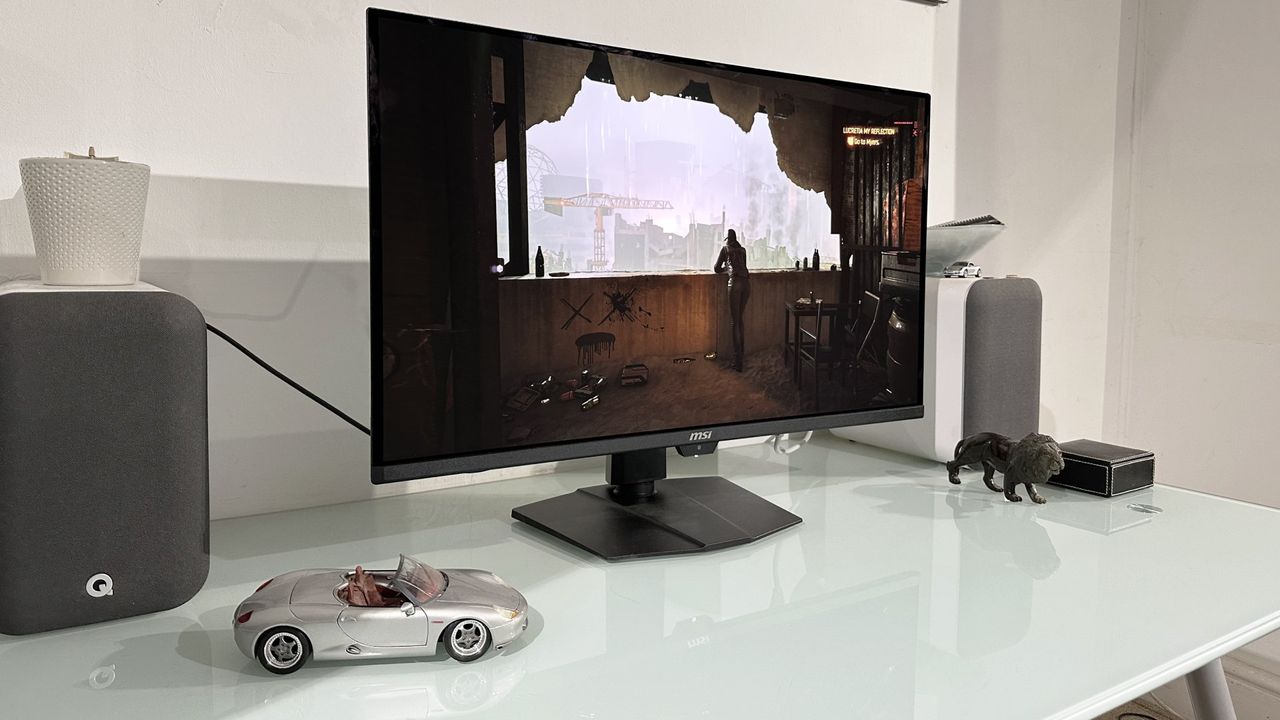
Is this it? Does this 32-inch 4K OLED panel represent the end game in 2D displays, the challenge of PC gaming monitor tech basically solved? Not quite, but with the new MSI MPG 322UR X24 you do get a sense of the monitor industry closing in on something resembling the ultimate flat-panel display tech.
Okay, Okay, 10 years from now or whatever, when we've all got seared retinas from our fancy new microLED monitors, I'm going to regret those words. But what this MSI monitor definitely does, in close co-operation with Samsung it has to be said, is directly address the key weaknesses of existing QD-OLED gaming monitors and leave me struggling to land a really telling critique.
While the MSI MPG 322UR X24 doesn't entirely solve all of those QD-OLED issues, it does deliver an experience that comes with perhaps just one significant caveat. Forgive me for being a tease, but I'll leave that distracting thought dangling tantalisingly out of reach while we dig into the details.
Screen size | 32-inch |
Resolution | 3,840 x 2,160 |
Brightness | 300 nits full-screen, 1,000 nits peak HDR |
Response time | 0.03 ms |
Refresh rate | 240 Hz |
HDR | DisplayHDR TrueBlack 500 |
Features | Samsung QD-OLED panel, adaptive sync, 2x HDMI 2.1, DisplayPort 2.1, USB-C with 98 W PD, 2x USB-A |
Price |
✅ You want the latest OLED tech: This updated 4K QD-OLED panel really rocks, it's super bright, ultra fast and free from serious flaws.
Don't buy if...❌ You want an absolute bargain: The launch price of the MSI MPG 322UR X24 isn't horrendous. Though a similar but cheaper model will likely arrive soon.
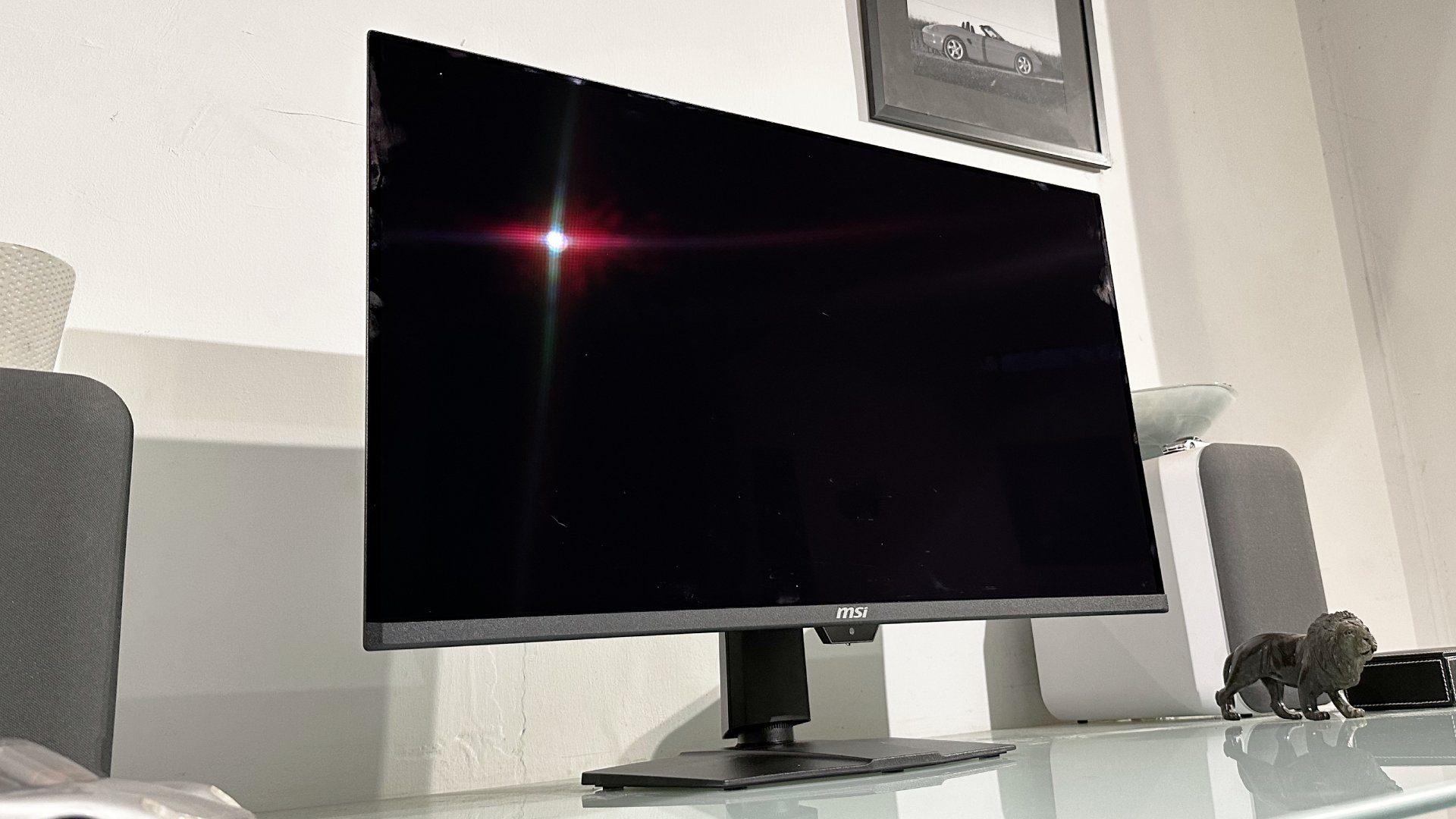
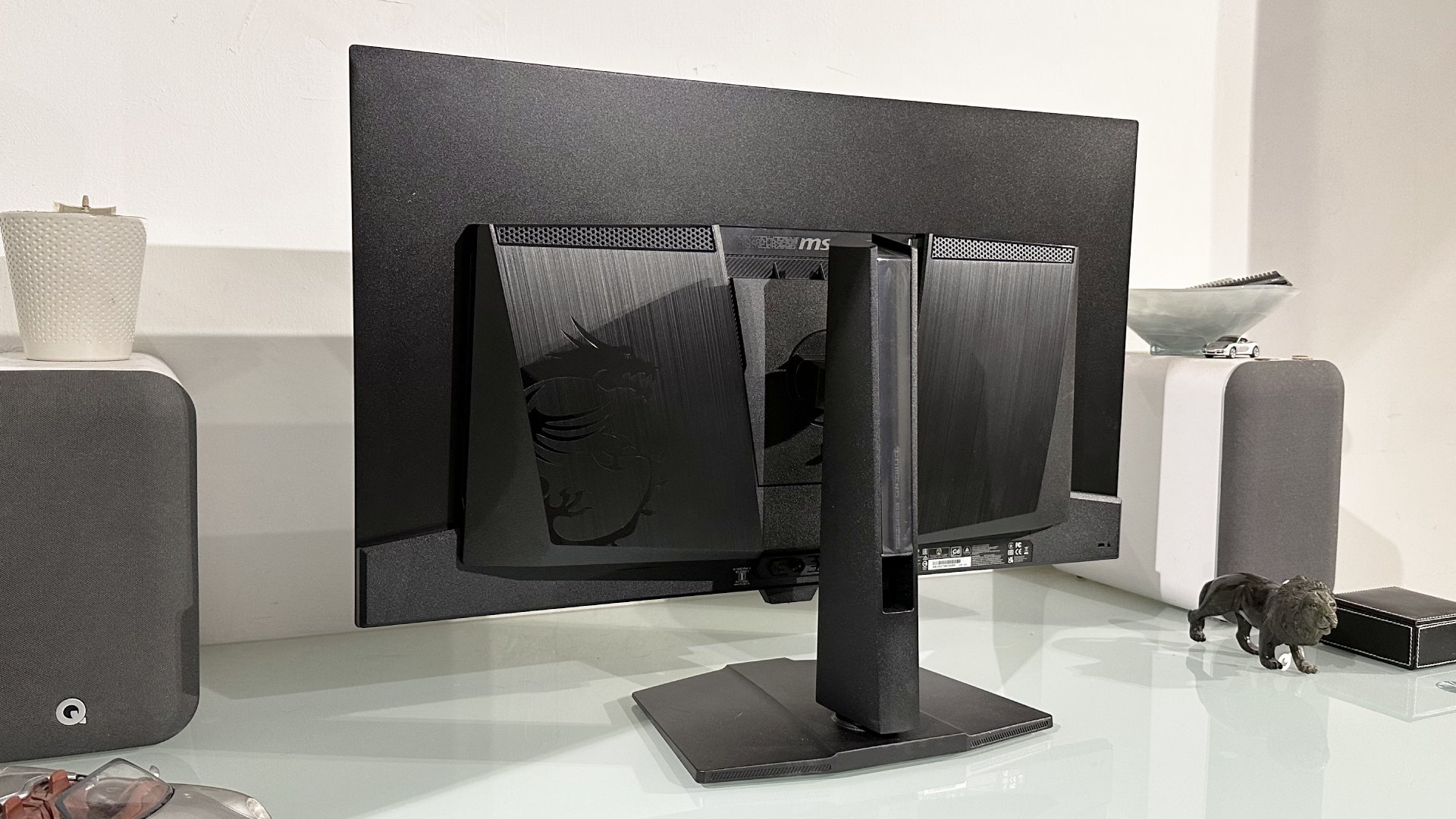
At first glance, this new model looks just like all of MSI's previous 32-inch 4K OLED monitors. It's got exactly the same design, the same chassis. So, it's the QD-OLED panel itself that's changed. Indeed, it's the first actual upgrade that Samsung Display—the arm of the sprawling South Korean ultra-corp that actually makes QD-OLED panels—has released in this form factor since the first 32-inch 4K QD-OLEDs appeared almost exactly two years ago.
As it happens, MSI's own MPG 321URX was our first taste of a 4K OLED of any kind, so it's fitting that MSI is also first to this updated panel. But what, exactly, has changed? Let's start with brightness. This panel is rated at 300 nits full screen, up from 250 nits on the previous generation.
Peak HDR brightness in a small window (probably 2%, but MSI isn't quoting specifics) remains at 1,000 nits, albeit the VESA certification has had a bump from HDR True Black 400 to HDR True Black 500. But as we'll see, arguably none of those metrics map terribly well to the subjective experience.
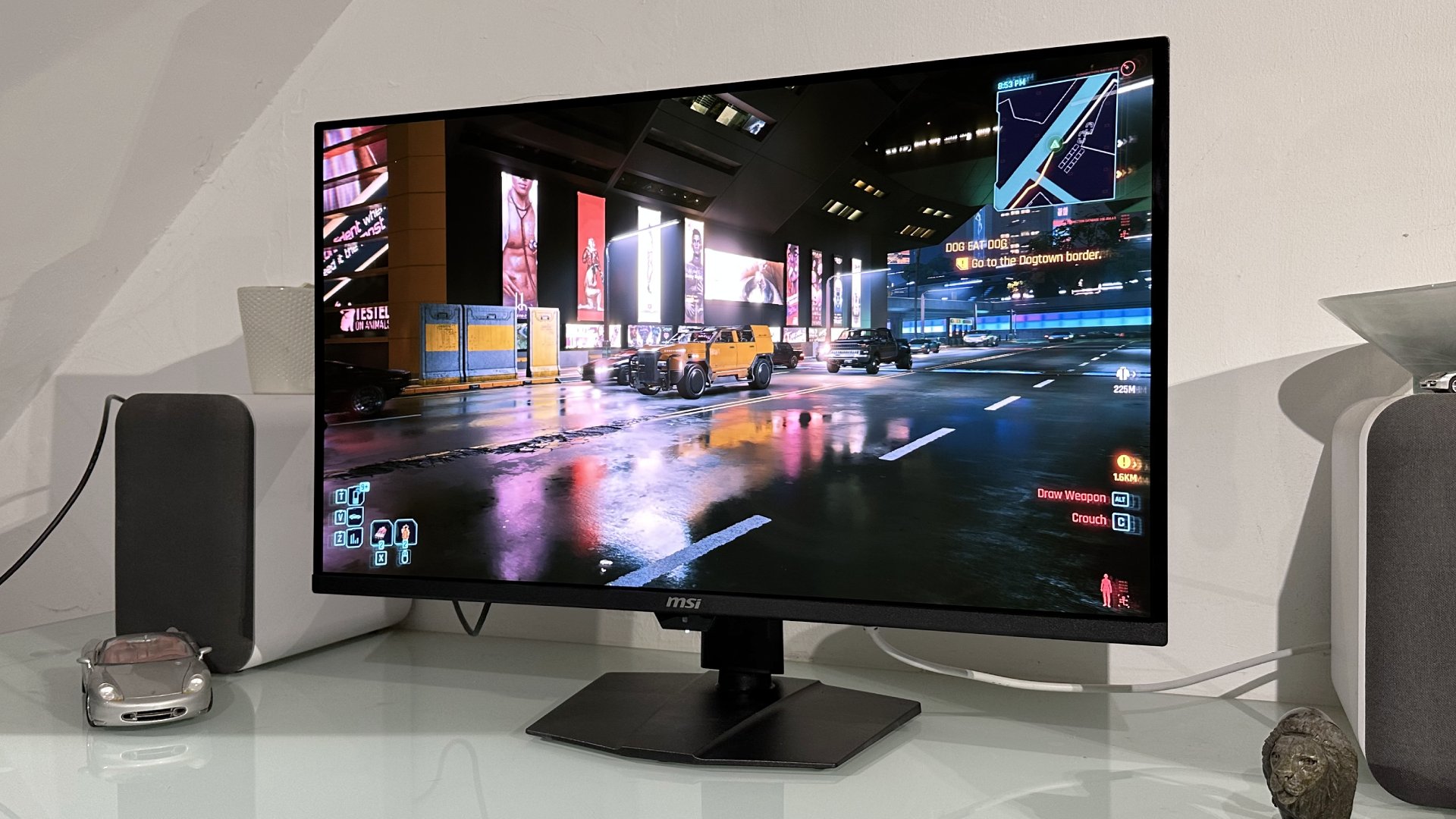
Next up is a new filtering layer that reduces the characteristic purple tint of QD-OLED panels in bright ambient light, a problem that has afflicted all QD-OLED panels from day one. Underneath it all is a new version of the electroluminescent material that actually generates the light in QD-OLED panels, known as HyperEfficient EL 3.0.
It's what enables the increased brightness, but Samsung also claims it's twice as durable as the previous generation, which in turn is said to be twice as durable as the original EL material from around 2022. It's basically impossible to test those claims in short order, but the bottom line is this display ought to be even more resistant to burn-in than previous 4K QD-OLED monitors, and those have thus far proven pretty good.
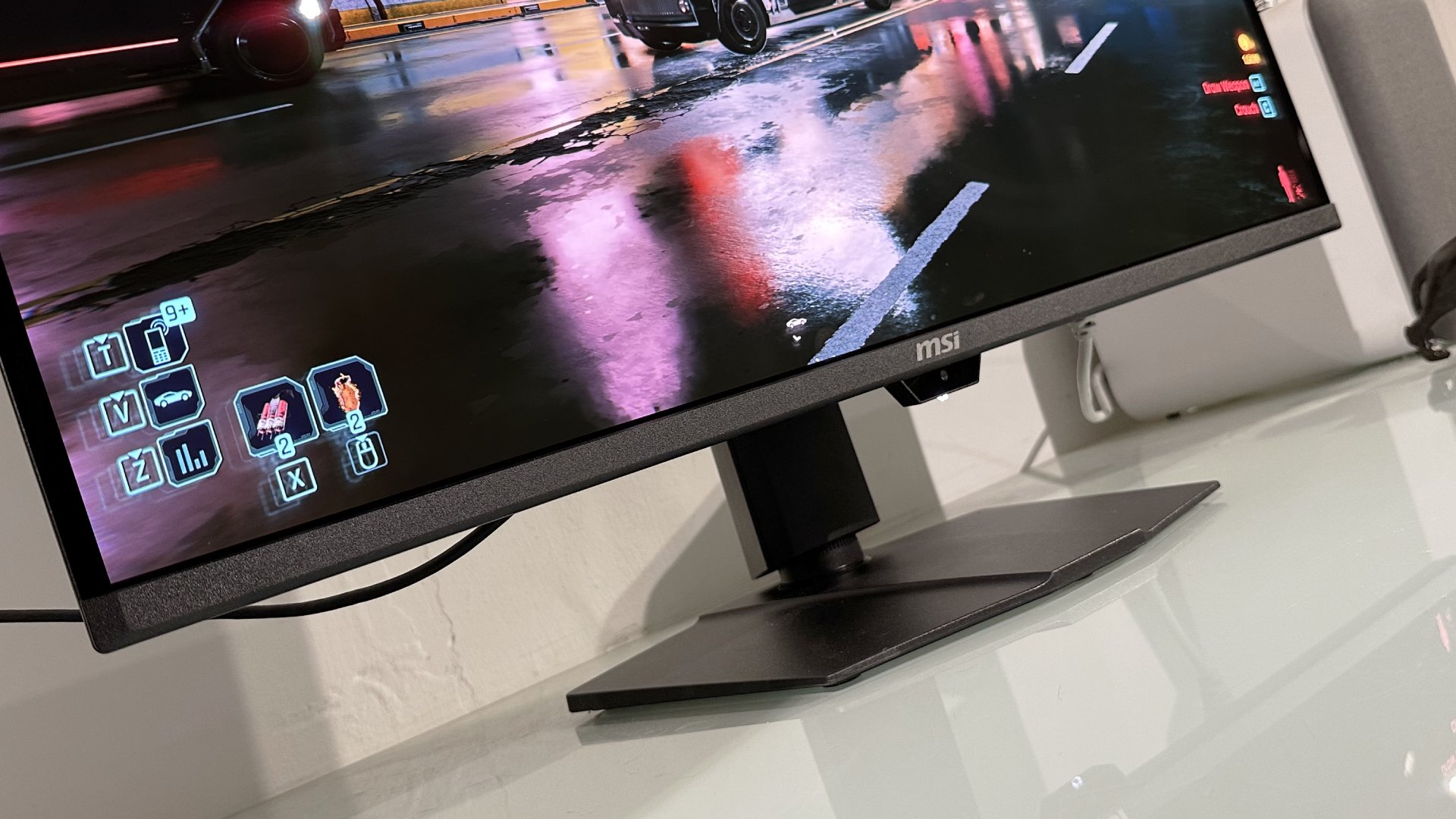
If this all sounds familiar, it's because it's almost the same set of panel upgrades we saw in 34-inch ultrawide format with another recent MSI monitor, the MSI MPG 341CQR QD-OLED X36. However, that 34-inch ultrawide panel has one feature that this 4K model lacks, namely true vertical RGB-stripe subpixel structure. This 32-inch panel sticks with Samsung's previous triangular RGB subpixel structure.
The vertical stripe setup is better in particular for font rendering. However, at the pixel density of a 32-inch 4K panel like this, having true RGB-stripe subpixels is not terribly critical. Put it this way: This triangular RGB 4K panel produces much nicer fonts thanks to its greater pixel density than the vertical RGB-stripe but lower density 34-inch ultrawide.
Pixel density trumps pixel structure, basically.
Those upgrades aside, we're talking 3,840 by 2,160 pixels and 240 Hz refresh, both of which are unchanged, as are the colour coverage ratings including 99% of the DCI-P3 gamut and the 0.03 ms pixel response. Similarly, connectivity is largely carried over. Detail changes include an upgrade to DisplayPort 2.1 UHBR20, but a very slight downgrade for the USB-C power delivery from 98 W to 90 W. But, essentially, we're talking two HDMI ports, DisplayPort, USB-C and a two-port USB-A hub, just as before.
All of which brings us to what really matters, the viewing experience. Out of the box, the immediate impression is that the characteristic overly warm colour temperature of QD-OLED panels has largely been fixed. It looks significantly more neutral.
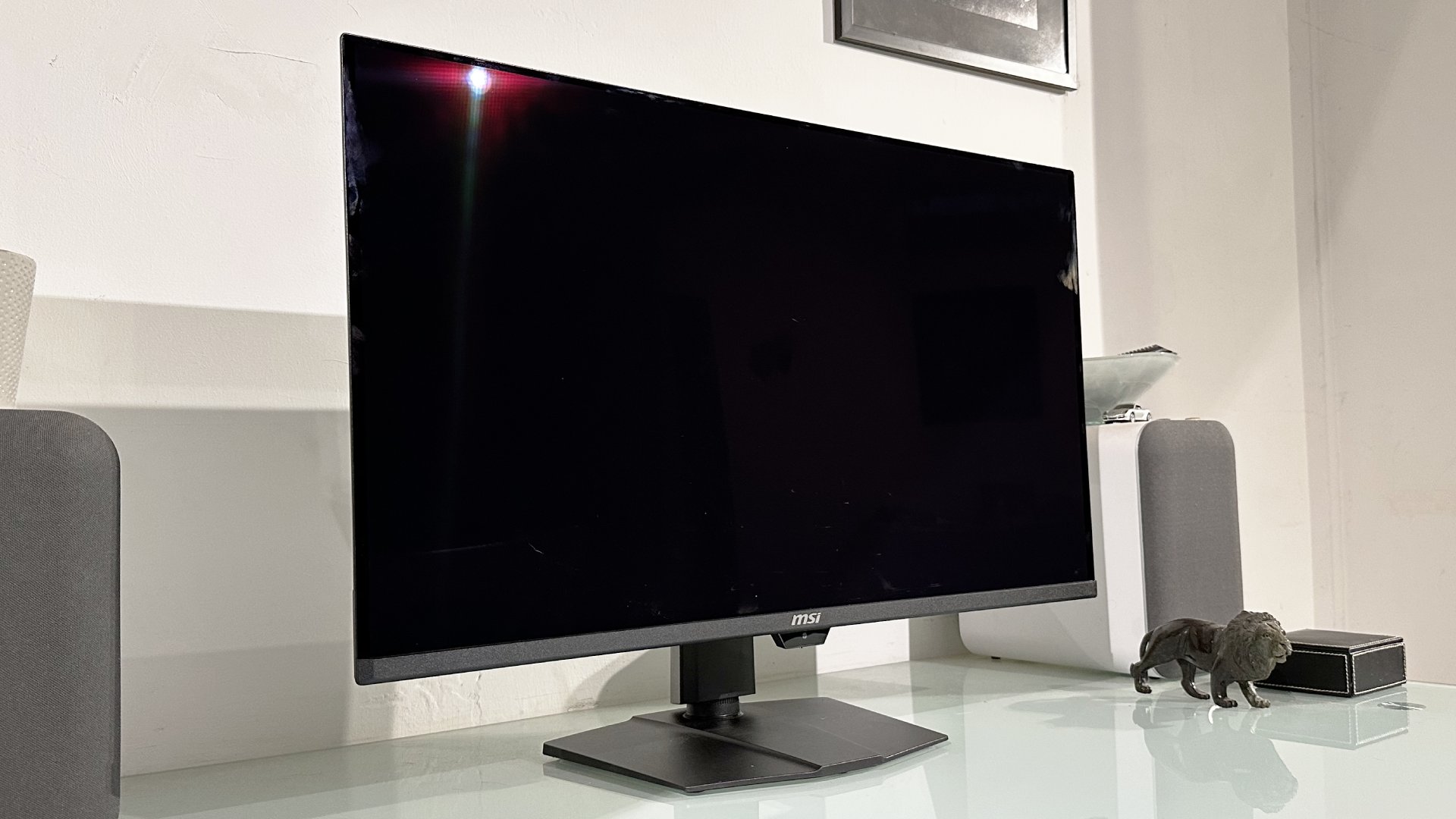
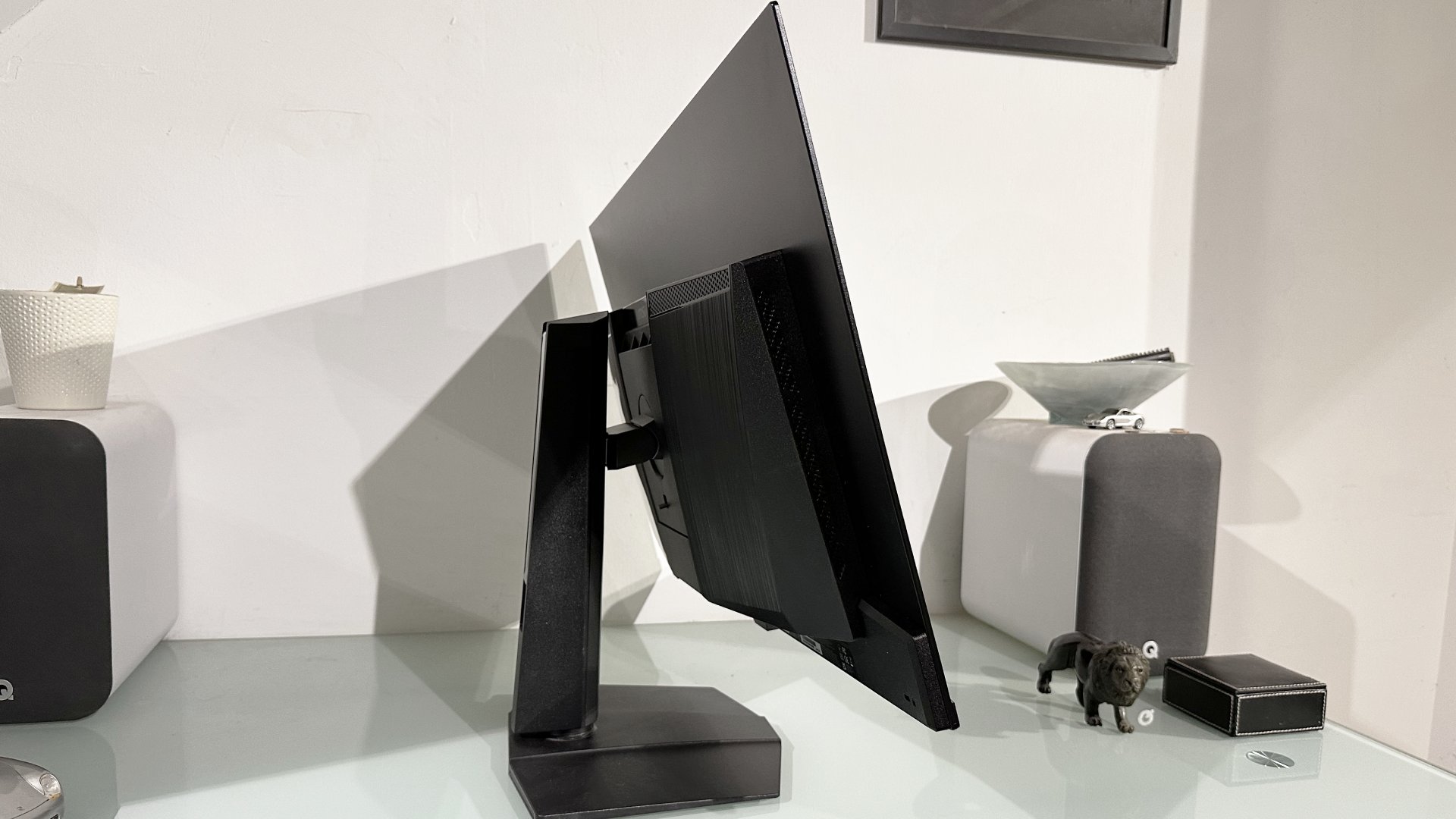
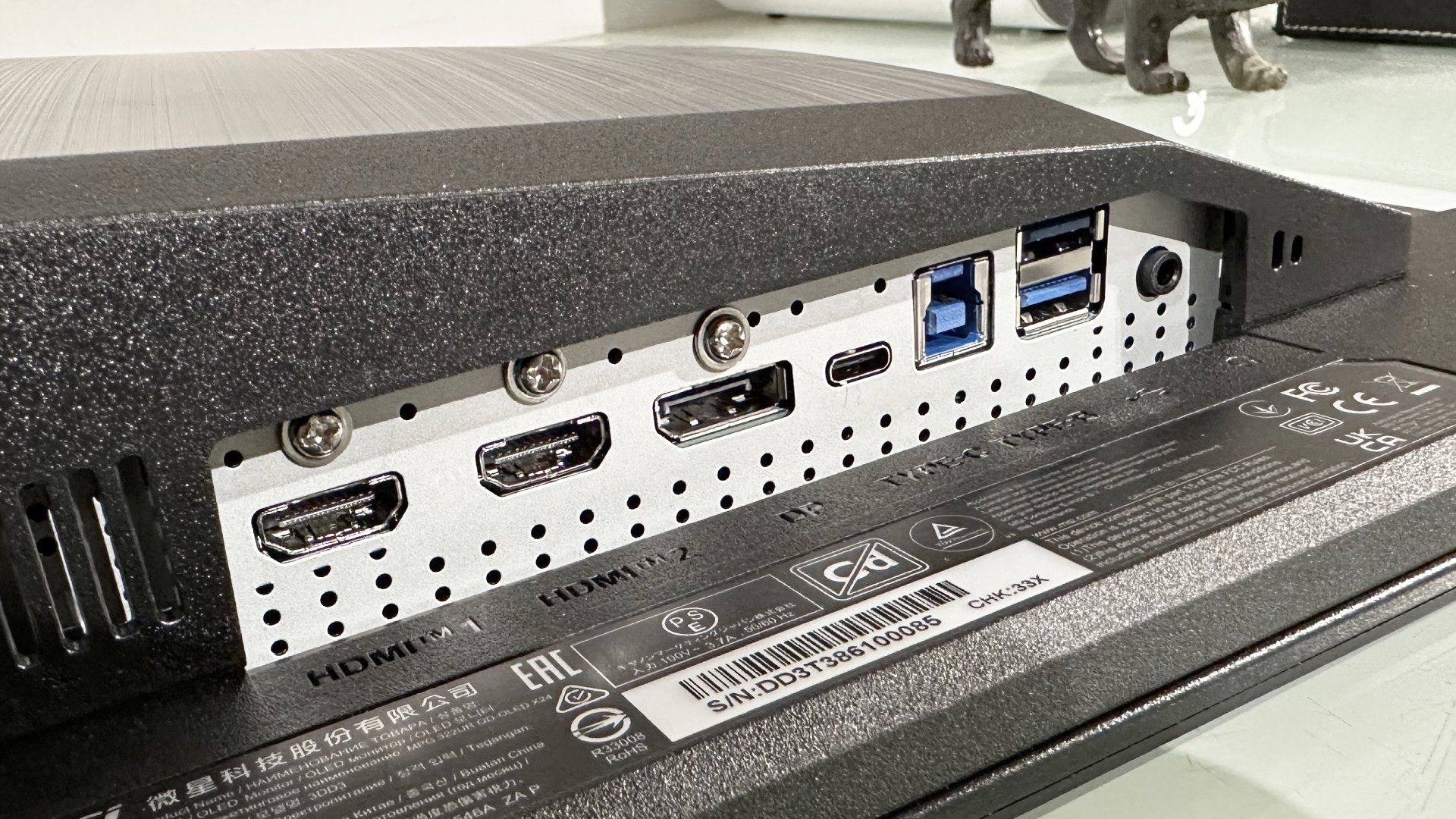
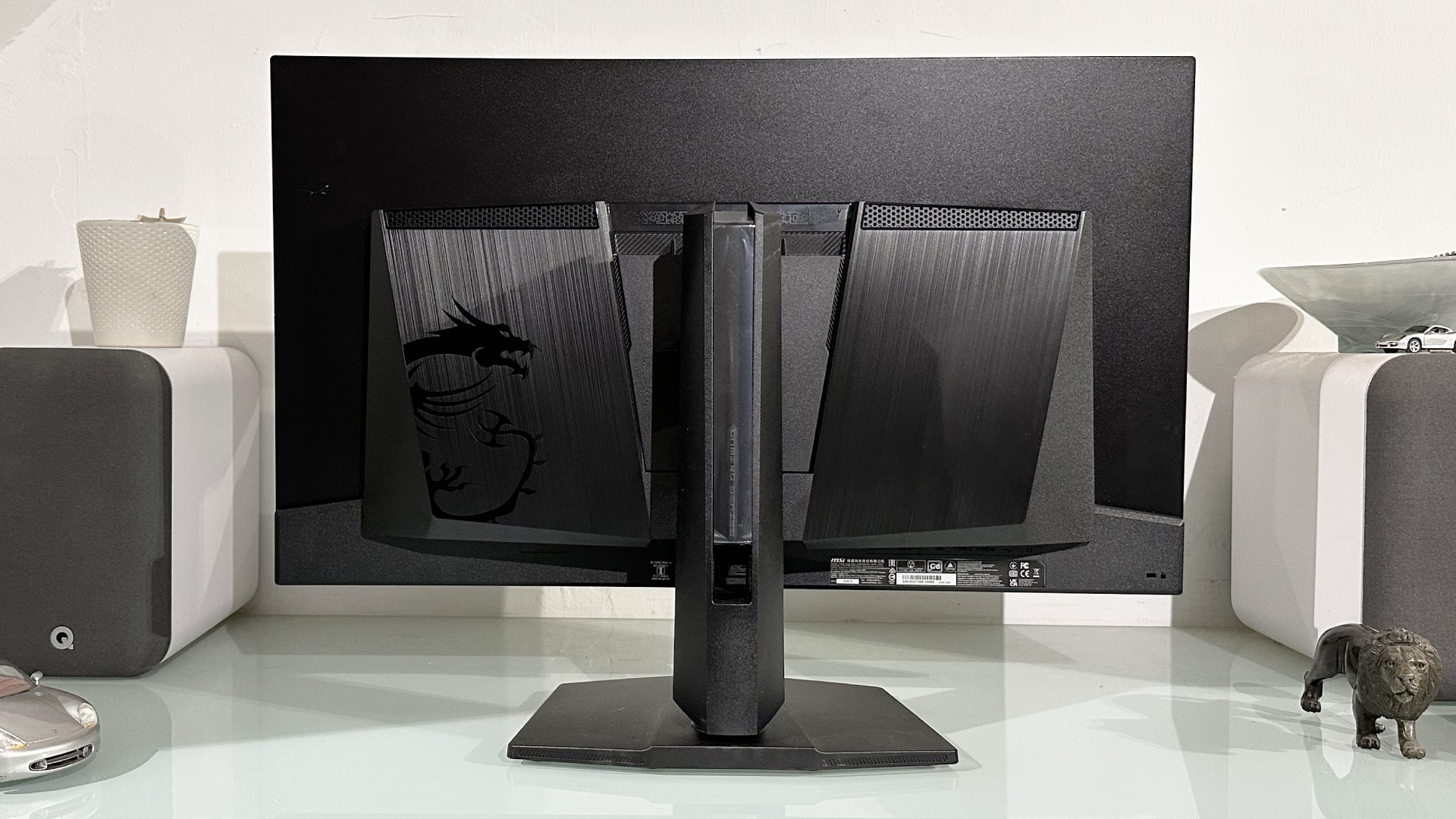
In reality, if you run this display next to a well calibrated IPS panel, it's still apparent that the panel tilts a little warm, but in isolation, the white tones look pretty clean. Related to this is the general purple tint to black tones in bright ambient light of QD-OLED panels. As with the aforementioned MSI MPG 341CQR QD-OLED X36, which also uses the latest gen panel tech, that's reduced here but not quite eradicated.
Personally, I think it's been reduced to a point where it's not going to be an issue in most scenarios, but that is a somewhat subjective call. As for brightness, with this new MSI MPG 322UR X24 and its latest-gen QD-OLED panel, it's a problem very, very nearly solved. On the desktop, this thing really is very punchy when maxed out. In fact, it's questionable if you'd want to have it at full brightness to look at mainly white apps or web pages.
There are caveats. Light up the whole panel in mostly white and there is some noticeable brightness fall off. But at worst, you're getting 300 nits-plus, which isn't too shabby. In practice, of course, you are rarely, if ever, driving the entire panel at full white. Indeed, if like me, you use dark mode for as many apps and websites as possible, this panel is, if anything, too bright for daily comfort at maximum brightness. It's got some serious visual fizz.
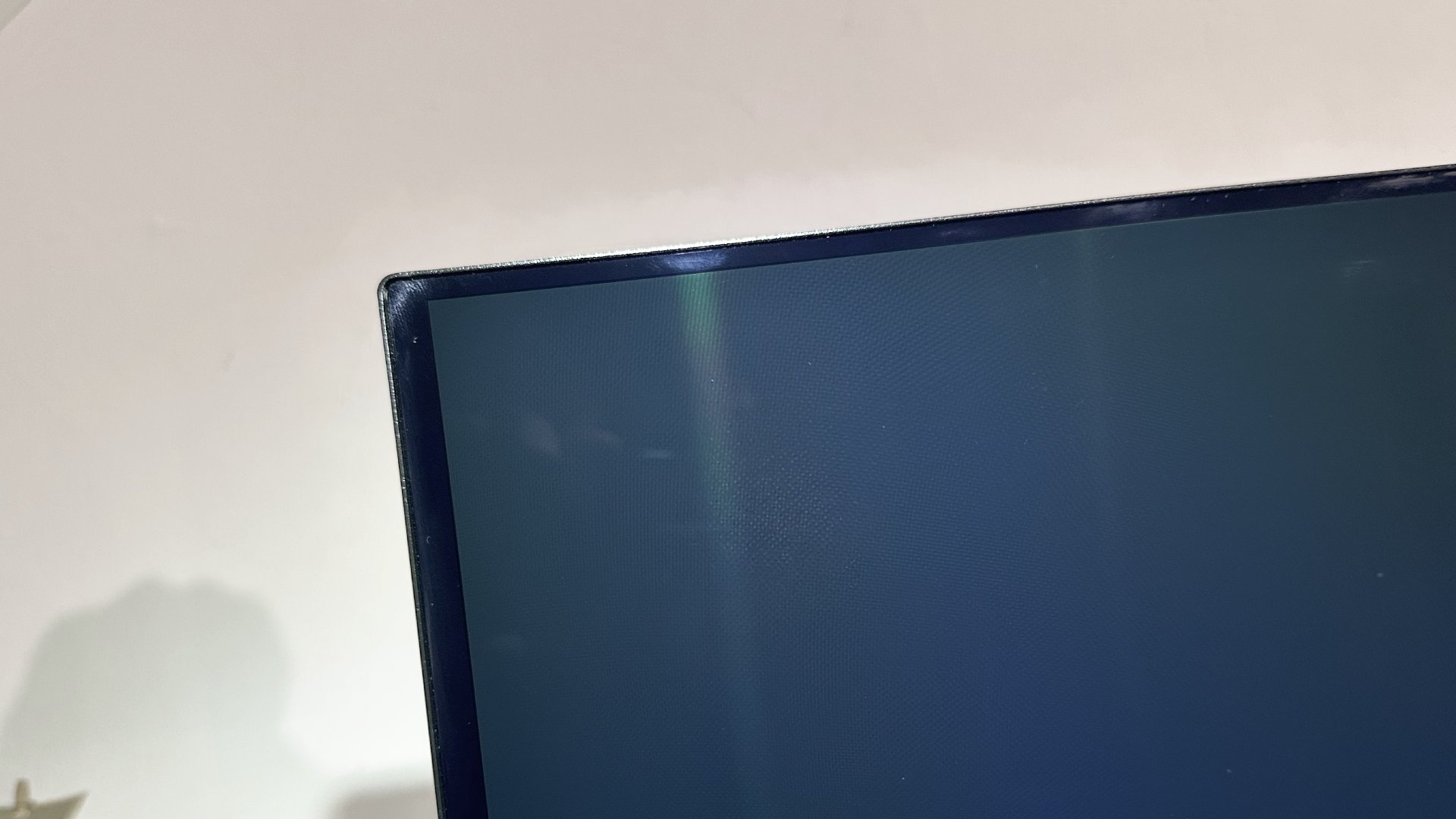
So far, I've been talking about the desktop experience. In game, this panel absolutely sizzles. As I've mentioned in some previous reviews, the outright brightness ratings for QD-OLED panels are a little misleading, particularly in comparison to equivalent monitors using LG's WOLED technology.
That's because LG's WOLED tech has an additional white subpixel for boosting outright brightness. The thing is, most content is a mix of colours as opposed to pure white and, in that context, the extra white subpixel doesn't always help. It either won't boost colour brightness at all, or can wash colours out. Either way, QD-OLED simply has better true colour brightness. And, in practice, that means the subjective experience with this latest QD-OLED panel is pretty eye-popping.
In game, this panel absolutely sizzles.
For SDR content, this monitor subjectively feels like at least equivalent to a 400 nit IPS panel, for instance. And for HDR? It's pretty stupendous. There's a particular scene I discovered in CyberPunk 2077, which is my go-to for testing HDR performance, where you're in a basement nightclub scene full of neon lights and lasers and stuff.
That looks awesome enough as it is thanks to the perfect per-pixel lighting control. No LCD monitor, even one with fully-array dimming comes close. But then, off at the end of a room, a door opens revealing a sunny daytime street vista, flooding a corner of the nightclub with warm, outdoor light. It's a real wow moment and perfectly demonstrates both what HDR is all about and how OLED does it so much better than any LCD panel.
Incidentally, for this monitor MSI has once again implemented its EOTF boost mode. I've covered this in multiple previous reviews, but the short version is that it aims to combine the best aspects of both the VESA HDR 400 mode with the Peak 1000 nits mode and give the highest brightness for both darker and brighter gaming scenes. And it works pretty well. In short, you can use EOTF boost mode for all HDR content and be confident you're getting a good experience.
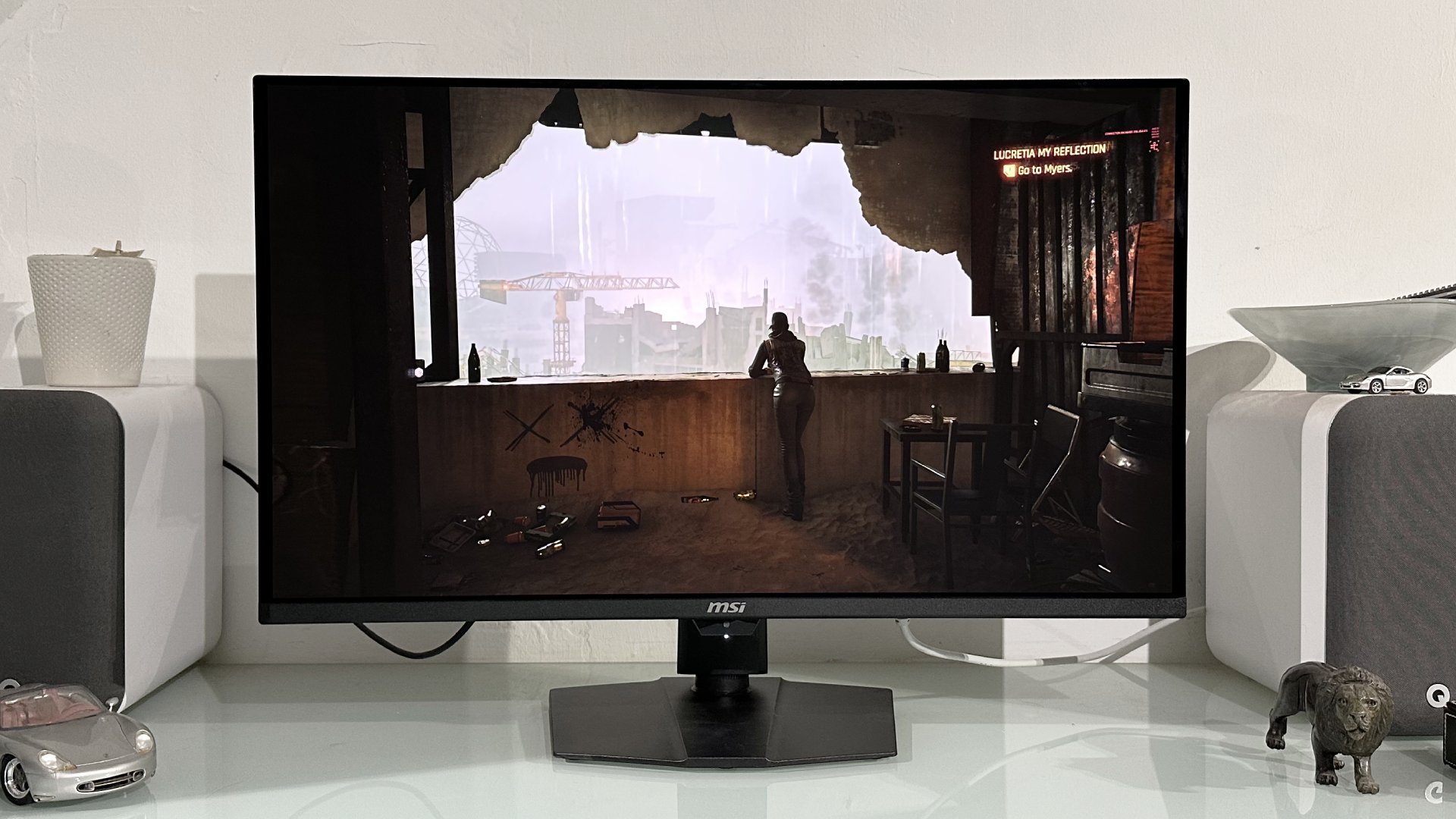
What else can I say? Well, all of the above is mostly enhanced by the glossy screen coating, albeit some don't like the increased reflectivity that comes with it. The basic colour calibration, meanwhile, is pretty good for both SDR and HDR content and, of course, the speed is darn nifty, what with QD-OLED's fairly bananas 0.03 ms response times. Okay, 240 Hz is nothing terribly special these days, but in a 4K context, good luck hitting more than 240 fps in most modern games.
Of course, as a reviewer looking at these kinds of screens, it's all too easy to be blase about how fast QD-OLED is, how precise the lighting and contrast is, how good the viewing angles are, and on and on. But make absolutely no mistake, this monitor is dramatically better than any LCD by so many metrics.
Make absolutely no mistake, this monitor is dramatically better than any LCD by so many metrics.
More to the point, where OLED panels used to have a clear weakness, most obviously full-screen brightness, this latest QD-OLED generation essentially solves that problem. It also mostly fixes the purple-tint thing in bright ambient light, too.
And that, folks, brings us to the one remaining caveat I mentioned up front. It is, entirely predictably, OLED burn-in. My previous OLED reviews are testament to the fact that I'm far from a catastrophist when it comes to OLED burn-in. It's a real problem, but something the evidence shows takes a long time to become really apparent.
What's more, this latest panel generation ought to be even more durable. The independent test I linked above of the previous-gen QD-OLED 4K panel showed that burn-in was only just becoming an issue after two years of the most brutal, worst case usage. So, you'd expect to get longer than that from this new panel. And for more gaming-centric use, which is less likely to cause burn-in, you might expect four, five or even more years of essentially burn-in free viewing. MSI's warranty at the very least gives you a three-year backstop.
But a sliver of doubt remains and, ironically, it's the fact that this monitor is so good that makes any chance of burn-in that much more problematic. Earlier generations of OLED monitor had some pretty obvious shortcomings such that the assumption, arguably, was that most gamers who could afford this class of display would probably want to upgrade to something better after a few years. But this monitor is so good, I'm not sure the next generation or two is going to offer a compelling enough upgrade. That means you want to be sure that it really lasts. And you can't be, not entirely.
So, that's it. That's my caveat. Would it stop me buying the MSI MPG 322UR X24? Ultimately, no. But it is the one issue that prevents me from screaming, "buy, buy, buy." Well, that and the very likely fact that MSI will be doing a cheaper, very slightly de-featured, version of this monitor, maybe with reduced USB-C power delivery, that kind of thing.
It wouldn't surprise me if that model could be had for $800 or less within six months or so. In other words, I like the new MSI MPG 322UR X24 an awful lot for $1,099. But I'd love essentially the same monitor, with the same panel but fewer features for several hundred dollars less, even more.
Схожі новини
New Bodycam Revenge Shooter Feels Like Something You Shouldn’t Share Online
Where To Find All Of Simms' Recordings In Directive 8020

Singleplayer simulated MMO Erenshor is getting raids this summer
