'Monitoring the situation': why young men are drawn to prediction markets

 Mitchell LabiakBusiness reporter
 BBC
BBCCameron George is living the dream. Back in 2019, he was stacking shelves in Walmart, but the 26-year-old has since become a full-time crypto trader and content creator.
His social media presence is filled with pictures of him standing next to his lime green McLaren 600 LT and smiling with his wife and five children. He wants between 10 and 20. In his many videos on trading, Cameron is confident and charismatic – he's been making them since he was 13.
One topic that comes up a lot in his videos is prediction markets, online platforms where you can bet on anything from a football game to when the Strait of Hormuz will re-open to who Taylor Swift will choose as her bridesmaids. Like many young men, Cameron is a fan, and mostly uses them to track the price of cryptocurrencies and get a better understanding of the news.
"Everyone's always had an opinion, but this is the first time in history you can literally have an opinion with your money on everything," he says. "I'm really excited to see how much better and bigger the industry will get... It's such a crazy time to be alive."
 Cameron George/Instagram
Crazy is one word for it. Prediction markets are a fast-growing, multi-billion-dollar industry. Bets on prediction markets – the main two being Polymarket and Kalshi – have soared in response to a surging demand for betting in the US. Kalshi has recently been valued at $22bn and Polymarket at $9bn.
Prediction market users are disproportionately under the age of 45 and 71% are men, according to a recent study from analytics firm Morning Consult. Just over a quarter of American men aged 18-24 say they have used at least one prediction market or gambling app in the past six months compared to 14% of the general public, according to a poll by the American Institute for Boys and Men (AIBM) and Ipsos.
So, to what extent is their popularity a reflection of broader questions around men and their sense of self-worth?
Pure vibes
Prediction markets hit a lot of key male interests. "[They] seem to sit at the intersection of several already male-dominated online cultures such as sports betting, crypto speculation, 'finance bro' culture, streamer and influencer fandoms, meme investing, and competitive online prediction communities," Professor Elvira Bolat from Bournemouth University says.
"The vibes are young male vibes," Jonathan Cohen, head of sports betting policy at the AIBM, says. For him, there's a strong neurological factor – young men's attitude to sports, money, and prediction markets is down to what he describes as "an underdeveloped pre-frontal cortex and a high appetite for risk".
 Getty Images
Gambling is restricted across many US states, but prediction markets are not classified as gambling in the US, allowing people to place bets across all 50 states. Instead, they are commodity futures trading – the same bracket as buying or selling oil or metal on markets. Just like the stock or commodities markets, prediction markets make money through charging a small fee on any bet.
Supporters say prediction markets are a smart, modern way to make money. This is because the odds change based on how other people are betting rather than a bookmaker's judgement. They argue this gives users better odds and real-time insights into public opinion on anything from sports to politics. They say those insights are more reliable than traditional polls because people are backing their opinions with their money.
Opponents paint a darker picture and say the design and marketing of these platforms underplays risk and normalises gambling. Experts say that young men in particular are being lured into losing money by websites and apps that look and feel like traditional places to trade stocks and shares, rather than gamble.
 NurPhoto via Getty Images
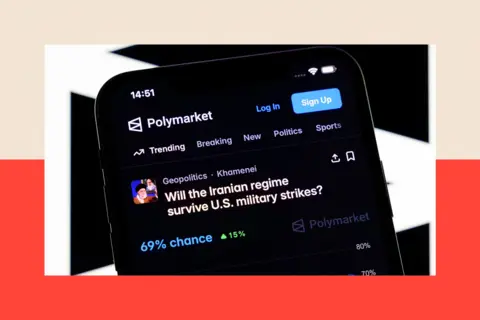
And as the young men taken in by the appeal of prediction markets lose money, mounting evidence shows informed and insider traders are making millions from bets on gruesome world events, such as what might happen in the Iran war.
'Monitoring the situation'
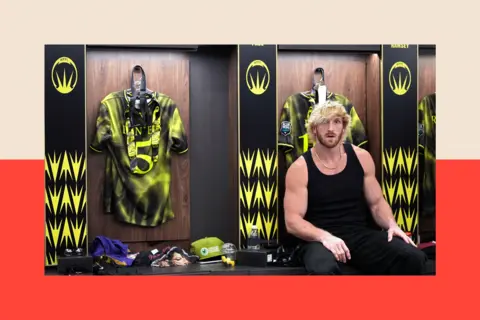
The clues to why these markets skew male are all over social media. Logan Paul, the world-famous YouTuber-turned-wrestler, has had his show sponsored by Polymarket. Forums popular with men explain how to get around internet restrictions in certain countries to use the apps. Young men jokingly refer to "monitoring the situation" – learning about the news and potential investment opportunities by scrolling social media and prediction market homepages.
One origin story for the meme comes from a viral photo of Amazon founder Jeff Bezos standing in an office, muscular in a black t-shirt and headset, gazing into the distance, captioned: "the masculine urge to monitor the situation". Polymarket took the meme further still by opening a bar called The Situation Room in Washington DC in March. Videos from the launch showed mostly men.
 Getty Images
Yet, despite the hype, like many other users of prediction markets, Cameron has lost money on them. "I've never really messed with any of them until recently," he says. Like many other users, he got an artificial intelligence (AI) bot to make bets for him, hearing on social media it can be an easy way to make a lot of money.
"I haven't made any money so far, my AI agent's not been doing good," he says, laughing. "I'm down a couple of grand."
He's not alone. Almost twice as many Polymarket accounts betting over $1,000 have lost than have won since the beginning of 2025 and the end of April this year, according to Bloomberg News analysis.
A Wall Street Journal analysis found that 67% of profits on Polymarket go to 0.1% of accounts. Nearly half a billion dollars went to fewer than 2,000 accounts, according to the newspaper. It found that the accounts that tend to do the best on these platforms are often owned by firms with staffers, who pay for access to live data feeds, servers, and AI bots.
Bournemouth University's Bolat has studied online gambling as part of her research into social media. She worries about the losses from uninformed traders and about how prediction markets "normalise" betting. She is particularly critical of how influencers "totally dismiss risk" when talking about the website.
To fans, publicity stunts like the opening of The Situation Room bar might seem harmless. However, for Bolat, it speaks to the problem with how Polymarket and its rivals present themselves.
 The Washington Post via Getty Images
"Prediction markets are increasingly being framed not simply as gambling, but as a form of intelligence, strategy, forecasting, or participation in internet culture itself," she argues.
The platform homepages resemble the Bloomberg terminals used by people who work in finance, and they are integrated into some investment apps.
"In many cases, platforms present themselves more as information markets or trading environments than betting products, even though behaviourally they can resemble gambling quite closely."
She says there are questions around whether operators and influencers are properly explaining the risks involved in using these platforms.
The prediction markets capitalise on the vulnerability of young men who are suffering from "economic nihilism", Cohen says, and men might think: "If I have $20,000 – which feels like it's worth nothing – and put it in the S&P 500 then it'll be worth more in 20 years, but if I invest it in one of these prediction markets now I'll be rich quick."
The idea that it feels like you are outsmarting other men could be part of the appeal, too. "The lottery is not interesting [to young people] because it's picking random numbers," Cohen says. "But a bet makes you feel smart because you picked the game or the politician. It's like 'identify the alpha because he beat them all at the prediction markets'."
He adds that many regular people on the platforms aren't really gambling peer-to-peer but "against a load of hedge funds who are going to eat their lunch."
Both experts say that more detailed data is needed on who exactly is using prediction markets.
Kalshi and Polymarket, both of which are primarily taken up with sports betting, do seem aware that there is a perception that prediction markets are typically male places. Both look like they're trying to attract more women to their platforms with female influencers sharing friendly videos about the platforms, or official accounts posting memes from the films such as Mean Girls and Clueless.
Kalshi told the BBC that the proportion of women users on its platform had gone from 13% to 26% over the last year. It said that it partners with organisations to tackle problem gambling and that it promotes responsible trading.
It added that, under commodities futures trading regulation in the US, the influencers it pays are not required to talk about risk when advertising its website or app.
Polymarket told the BBC: "When a conflict breaks out, people turn to the news for commentary and they come to Polymarket for information."
Inside insider trading
Most of the people who are convinced to join the markets by the manosphere are likely to make a loss - but people with intimate knowledge of the events being bet on are making very good money.
Large, suspiciously timed bets on events during the Iran war and the capture of Venezuelan President Nicolas Maduro have raised serious questions about insider trading from within the administration of US President Donald Trump. These have highlighted concerns about the uneven playing field that amateur investors are losing money on.
Gannon Ken Van Dyke, US special forces soldier involved in the capture of Maduro, won more than $409,000 through an alleged bet on Polymarket about the removal of Venezuela's leader before the information was publicly available. He pleaded not guilty to charges including unlawful use of confidential government information for personal gain, and Polymarket said at the time that "insider trading has no place" on the platform.
 Getty Images
Meanwhile, in the run up to the Iran war, some Polymarket users bet millions on when it would start and then won. "It's insane this is legal," US Senator Chris Murphy wrote on social media at the time.
The legality is complex. Though both Polymarket and Kalshi ban insider trading, experts say it might not be considered illegal if the insider were to make a bet using information that was not considered stolen or misused. Two hypothetical examples might be if Taylor Swift placed a bet on when she might get married or if Trump's administration gave information away willingly to colleagues or friends about future policy. Of course, insider trading happens on all markets.
Whatever the legality of insider trading, a crackdown has begun. Van Dyke's arrest was seen as a success by Polymarket and it has also previously announced steps to more formally police suspicious activity. And in February, an editor for the YouTube streamer MrBeast and a former California gubernatorial candidate were the first two people to face disciplinary action for insider trading on Kalshi. Meanwhile, US Democrats have introduced legislation to tackle both what they see as insider trading issues and gruesome markets on these websites.
 EPA/Shutterstock
In addition, Kalshi has removed some of its more controversial markets. It told the BBC that it does not run markets on war, terrorism, or assassination.
Polymarket told the BBC it does not charge users to make bets on geopolitical events and that removing those markets "does not end a conflict but makes the most accurate information less accessible to the people who need it most".
Kalshi and Polymarket both told the BBC they have taken serious steps to tackle insider trading.
A White House spokesperson told the BBC: "President Trump has been crystal clear: while he seeks a strong and profitable stock market for everyone, members of Congress and other government officials should be prohibited from using non-public information for financial benefit."
A moral panic?
Worries about prediction markets spread beyond the US. Bolat says there are many places online explaining how to access the markets even in territories where they are restricted. She adds there is "very little" that stops people using technology to get around location-specific bans, with enforcement largely the responsibility of the platforms themselves rather than regulators.
In the UK, the Smarkets prediction market has been running – with a gambling licence – since 2008. Founder Jason Trost believes the critics are missing the bigger picture and that there are a lot of "emotions and moralising" with prediction markets.
"Whether this is gambling or investing, to me the answer is 'yes'. Because it's both," he says.
He believes regulated prediction markets are ultimately a good thing because they deliver a better price than traditional bookmakers, arguing that the unfairness of pricing is what causes a lot of the issues with gambling. He says the Gambling Commission has a "framework for handling" issues such as risk and addiction.
Polymarket and Kalshi do not operate in the UK – to do so they would need to accept being classified as gambling. But that doesn't mean people in the UK aren't using them via virtual private networks (VPNs).
 The Washington Post via Getty Images
The Gambling Commission, which regulates gambling in Great Britain and which Northern Ireland sometimes bases its own independent regulation on, told the BBC it was aware that technology blocking users' access to prediction markets "can be circumvented".
Kalshi told the BBC that it tracks users trying to access the platform from countries in which it doesn't operate and kick them off it.
A spokesperson for the Betting and Gaming Council, which represents the industry in the UK, said: "The suggestion that prediction markets are automatically fairer than traditional bookmakers misses the point. What matters is not how a product is priced, but whether it operates in a properly regulated market with strong consumer protections, safer gambling safeguards and accountability."
More from InDepthWhy illegal children's homes are being paid up to £2m per child by councils
What really holds China and Russia together
Am I part of the luckiest generation in history?
Back in Utah, Cameron says he plans on carrying on with prediction markets despite his losses. "The idea does intrigue me," he says, though he is not blind to the many criticisms of predictions markets either.
"If I had to take a stance on this I'd say… it's kind of wrong," he says. "I feel like some of these people [betting] definitely right now don't have any business throwing a bunch of [expletive] money at these dumbass bets. It's too big to stop. I guess I'm kind of numb to it."
Additional reporting: Helen Nianias
Top image credit: Getty Images

BBC InDepth is the home on the website and app for the best analysis, with fresh perspectives that challenge assumptions and deep reporting on the biggest issues of the day. Emma Barnett and John Simpson bring their pick of the most thought-provoking deep reads and analysis, every Saturday. Sign up for the newsletter here
Sports bettingIran warGamblingInternational business