Military dolphins are a real thing. Here’s what to know about them
A Pentagon press briefing took a strange turn Tuesday when Defense Secretary Pete Hegseth was asked about rumors of Iranian “kamikaze dolphins” in the Strait of Hormuz.
Though Hegseth said that Iran did not have dolphins strapped with explosives at their disposal, he also “[could not] confirm or deny” whether [the U.S.] has them.
While America’s military strategy in Project Freedom might not include kamikaze dolphins, experts have said the marine mammals are highly capable and dolphins have been used by the U.S. military for decades.
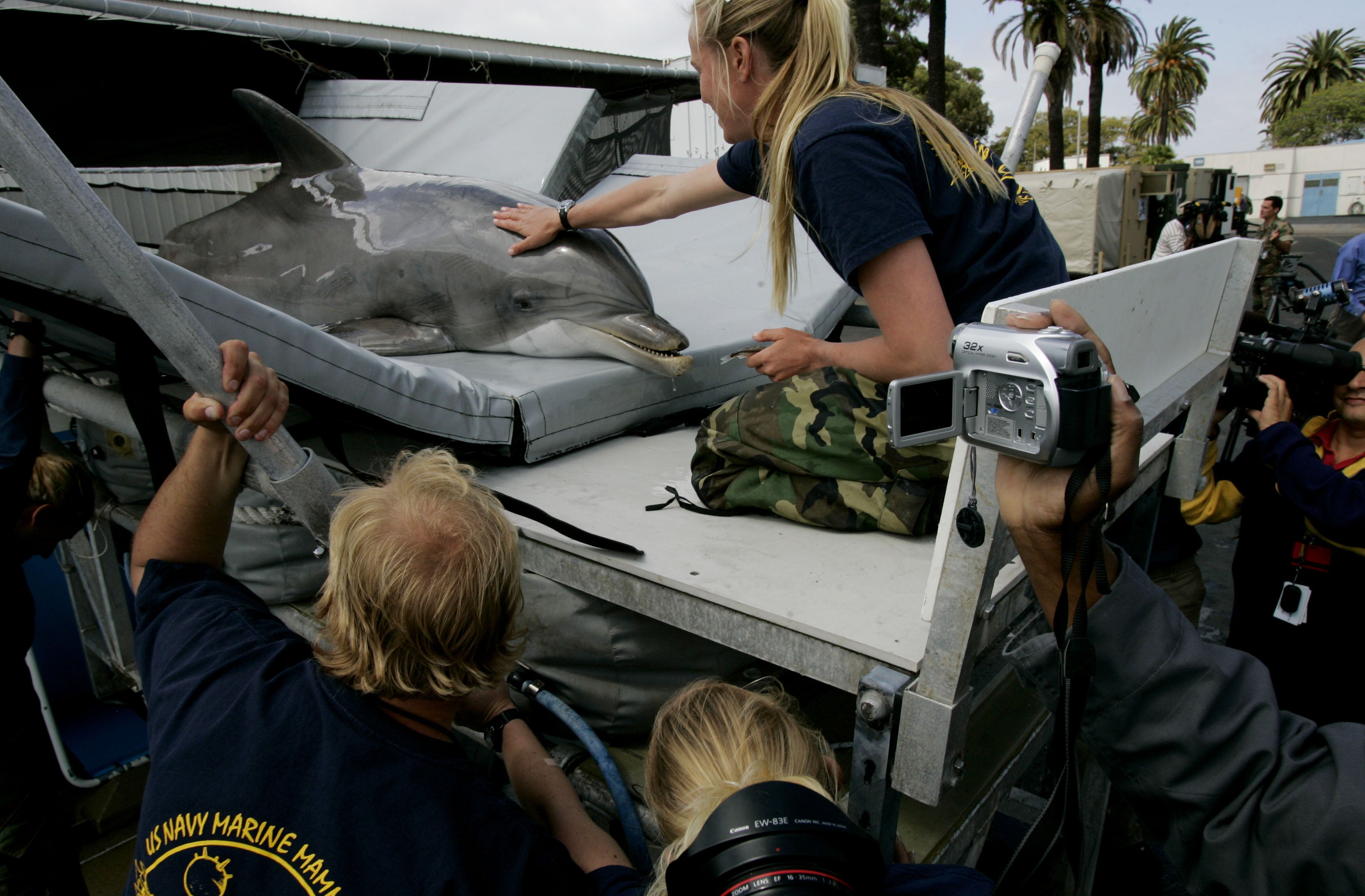
The marine mammals have been trained by the Navy to help detect mines - like those Iran has deployed in the Strait of Hormuz.
"They can not only locate objects, but differentiate them with a greater degree of facility than the machines that we've been able to develop for this purpose," Scott Savitz, a senior engineer at the RAND Corporation who previously worked with the now-dismantled Navy mine warfare command, told Mint.
 open image in gallery
The Navy has worked to train dozens of bottlenose dolphins and California sea lions to guard against underwater threats since 1959, the branch’s San Diego research center says on its website.
Researchers first used dolphins in studies to make torpedoes that could better travel underwater, the non-profit U.S. Naval Institute says.
Then, the Navy started to study the animal’s other capabilities, deploying them in Vietnam in 1970 and in Iraq in 2003.
The most sophisticated sonar on Earth
Dolphins are uniquely qualified for the program that is currently conducted up and down the West Coast.
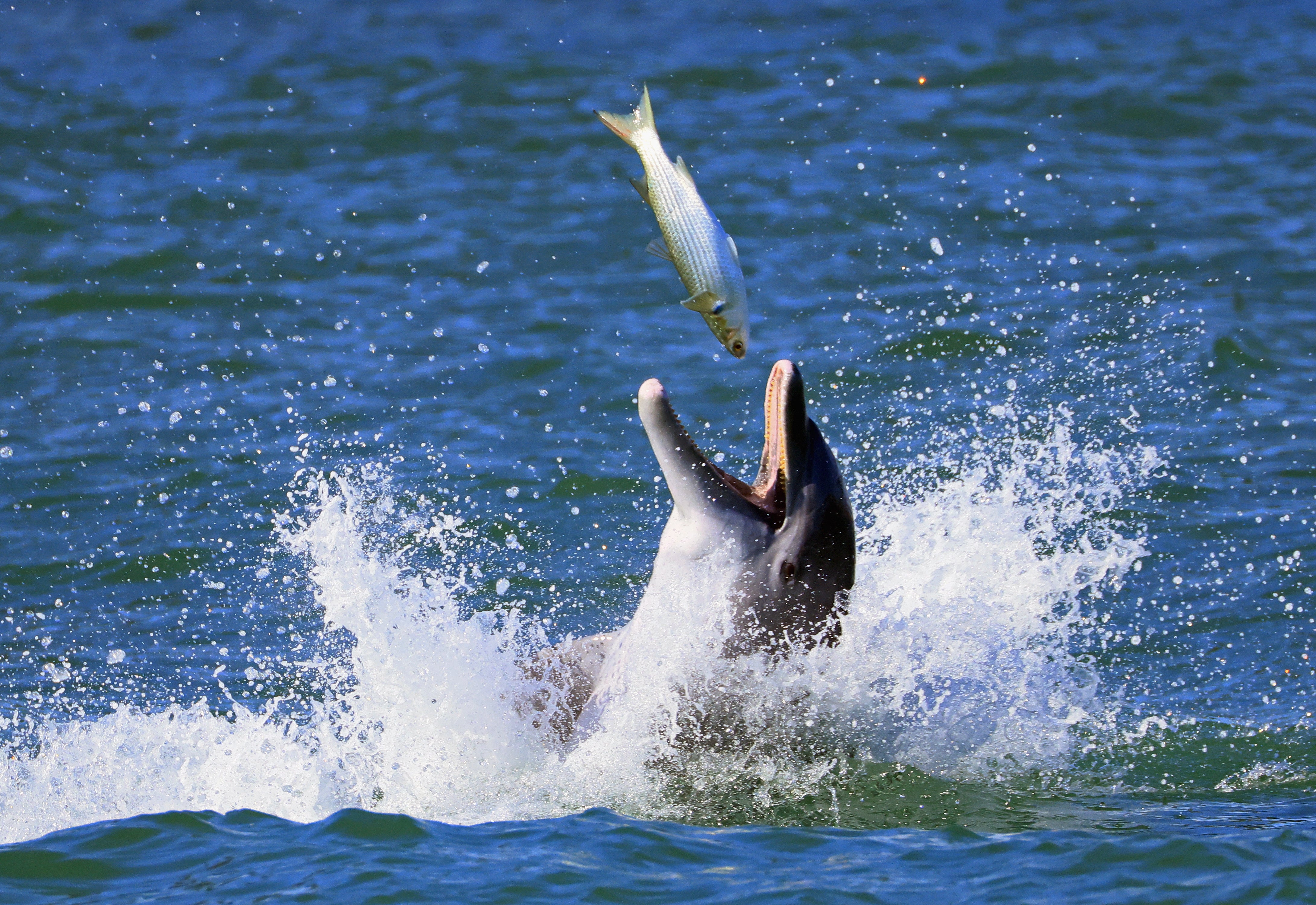
That’s largely because of their ability to see in low-light conditions, underwater directional hearing and sonar, which enable them to use sound waves to detect objects on the ocean floor.
“Dolphins naturally possess the most sophisticated sonar known to science. Mines and other potentially dangerous objects on the ocean floor that are difficult to detect with electronic sonar, especially in coastal shallows or cluttered harbors, are easily found by the dolphins,” the Navy says.
 open image in gallery
They can also dive hundreds of feet below the surface without illness - unlike human divers.
And dolphins are some of the smartest animals on Earth. Research shows that bottlenose dolphins are able to recognize themselves in a mirror, use names, work together in teams and have bigger brains than humans.
They share some of our personality traits, too, U.K. researchers say.
"We've known for some time that dolphins are similar to us in other respects - for instance, you can just watch dolphins on television and see they're very obviously smart and social,” Dr. Blake Morton, a psychology lecturer at England’s University of Hull, previously told the BBC.
The Day of the Dolphin
 open image in gallery
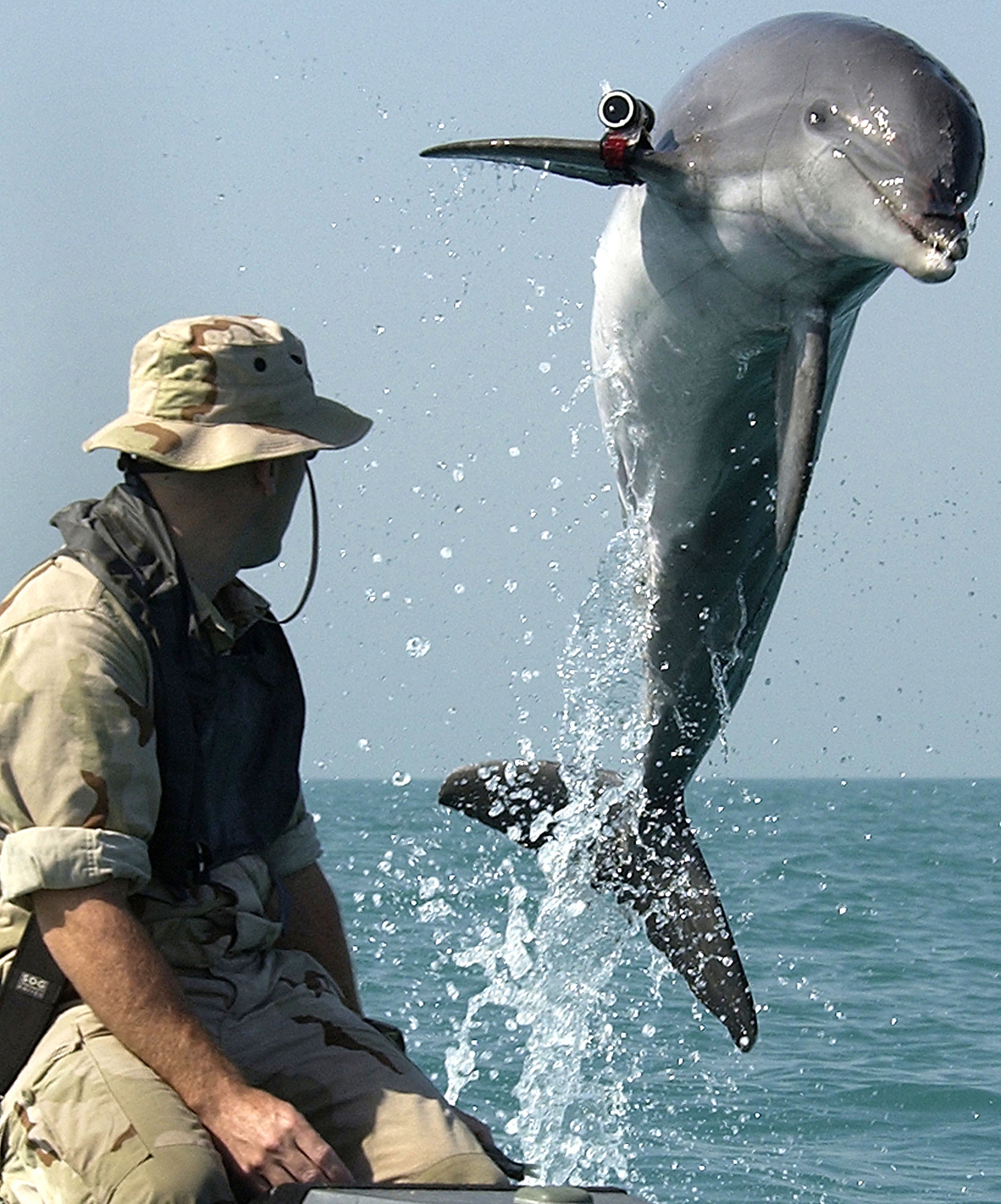
The Navy says past speculation led to animal activist charges that dolphins were used as offensive weapons. But those claims “could not be countered” because the work was classified.
A movie from 1973 called “The Day of the Dolphin” reinforced these ideas, the Navy alleged. In the movie, dolphins are used to detonate explosives underneath a yacht.
“Since declassification of the program in the early 1990s, the Navy has repeatedly and openly shared the story of its marine mammals and their missions in the media, but rumors are not easily forgotten, and there are those few who continue to actively promote them,” it said.
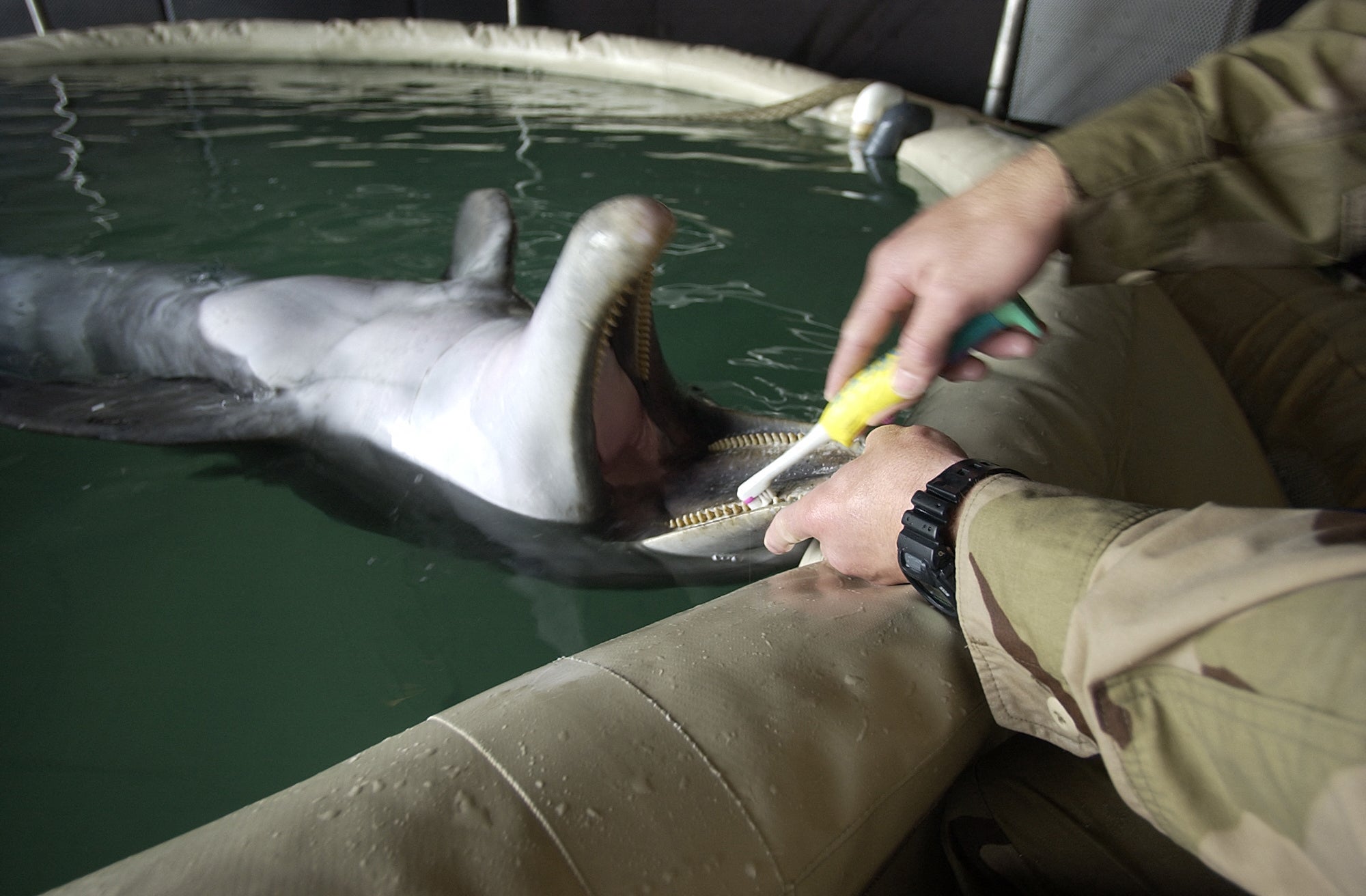
While the program works to ensure Navy animals receive top-notch health care, many disagree with its methods, believing no marine mammals should be kept in captivity or used to conduct research – especially in military service.
“The military dolphin program of the U.S. Navy should have been shut down long ago – even the Navy itself is skeptical of the value of the animals in national defense and has proposed shutting down the program several times,” the non-profit International Marine Mammal Project said in 2024.
 open image in gallery
Some Navy dolphins have reportedly died after training, including during a 2011 exercise that used underwater explosives near the San Diego coast, according to The Los Angeles Times.
A 2018 warning from the non-profit Center for Biological Diversity said Navy training could kill, injure or harass wild marine mammals there 12.5 million times over the next five years.
None have ever died in combat, Mark Xitco, the director of the Navy Marine Mammal Program, told The New York Times in 2023, and the program complies with the Marine Mammal Protection Act.
“I guess in theory there could be some other program around the corner that I’m not going to show you, where we’re doing things that you wouldn’t be comfortable with or others wouldn’t be comfortable with,” he said. “That’s not the case.”
Bottlenose dolphins can live for decades and Navy dolphins live twice as long as wild dolphins, the biologist explained in a video. The same can be said for many animals in captivity.
Some day, the work of these marine mammals will be replaced by technology, including underwater drones. But, for now, the dolphins continue to work.
“They will continue to serve the nation as that population of federal marine mammals that can be a resource for science,” Xitco told The New York Times. He added, “Until, someday, we’re gone.”
Join our commenting forum
Join thought-provoking conversations, follow other Independent readers and see their replies
CommentsСхожі новини
Israel strikes Beirut for first time since Lebanon ceasefire

Умєров вирушить до США на зустріч із Віткоффом — Bloomberg

РФ перенесла в Польшу методы гибридной войны, которые отработала против Украины – отчет разведки