McIlroy recovers as problem solvers flourish at testing US PGA
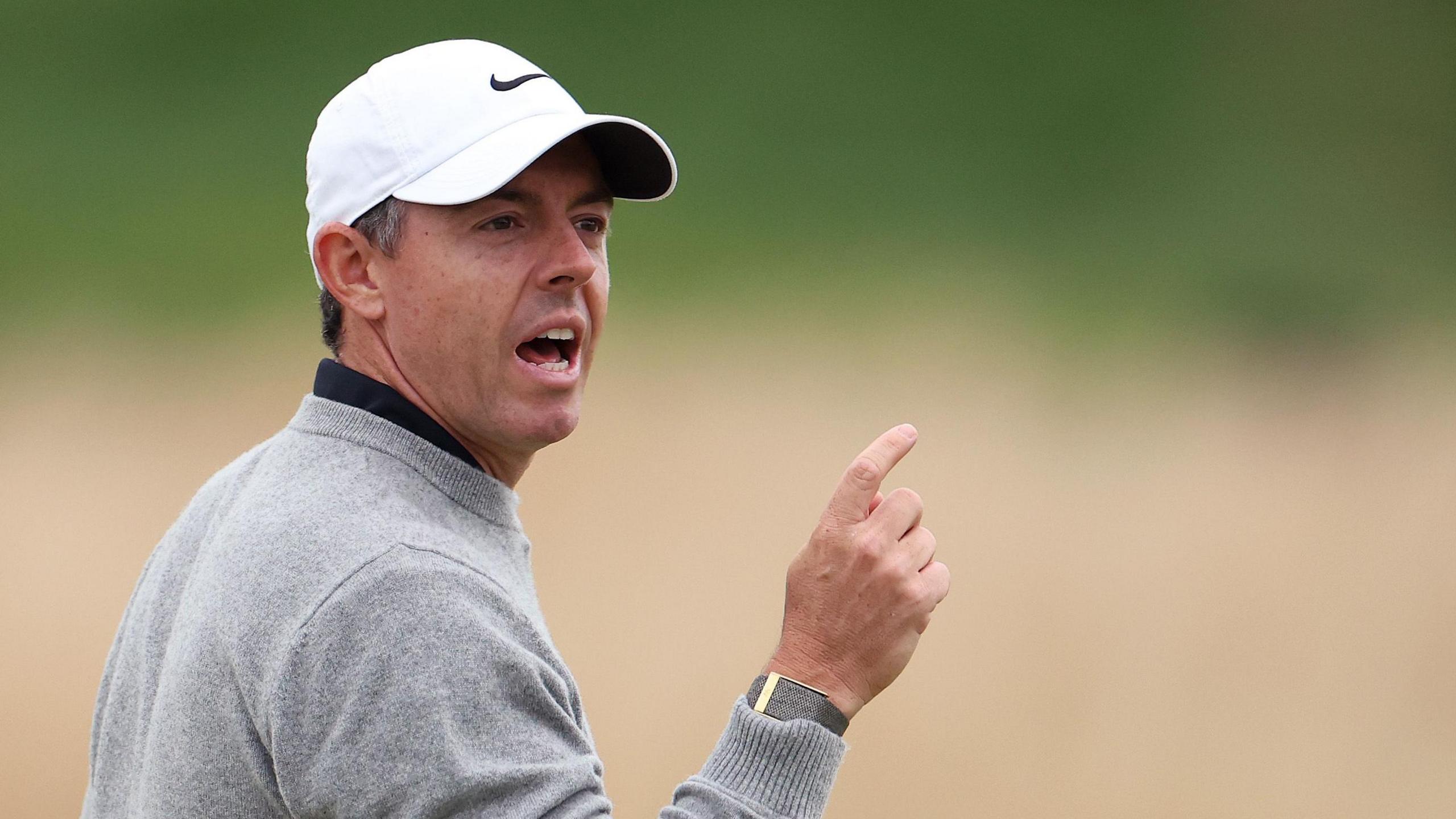 Image source, Getty Images
Rory McIlroy, who won the PGA Championship in 2012 and 2014, is aiming for his seventh major title
- Published3 hours ago
US PGA Championship second round
-4 M McNealy (US), A Smalley (US); -3 H Matsuyama (Jpn), C Gotterup (US), A Potgieter (SA), S Jaeger (Ger), MW Lee (Aus), M Greyserman (US)
Selected: -2 S Scheffler (US), C Young (US), JJ Thomas (US), L Aberg (Swe); -1 J Rahm (Spa), A Rai (Eng); +1 R McIlroy (NI), X Schauffele (US), J Spieth (US); +2 M Wallace (Eng), M Fitzpatrick (Eng)
The second day of the US PGA Championship crystallised what was already becoming clear: Aronimink is a course for the smartest-thinking golfers who adapt quickly.
Maybe there should be little surprise that Maverick McNealy, an intelligent but unheralded American who once considered snubbing golf for a business career, is leading the way.
Just like on day one, the majority of the world's leading players were again left befuddled and bemused by a punishing course set-up.
Those who were able to think strategically and problem solve were rewarded.
The later starters in round two, including McNealy and Rory McIlroy, also had chance to take advantage of slightly more benign conditions in the late evening sun.
McIlroy's pre-tournament prediction of being able to take the sting out of the Pennsylvania course by smashing his driver as far as he could proved wide of the mark in a disappointing opening round.
On Friday, the Masters champion demonstrated his ability to reconfigure and recover. He bounced back with one of only two bogey-free rounds - a three-under 67 which left him one over par and five shots behind the leaders with two rounds to play.
Given the volatile nature of this tournament, McIlroy knows the value of his unflustered round.
"It was a day to get back into the tournament and that's what I managed to do," McIlroy said.
US PGA Championship round two: McIlroy back in contention as Smalley and McNealy lead - reaction
US PGA Championship round three tee-times
- Published4 hours ago
McNealy, the son of a Silicon Valley billionaire, sits alongside fellow American Alex Smalley atop a bunched leaderboard which continues to feature some surprising names.
The pair are a shot ahead of compatriot Max Greyserman, Germany's Stephan Jaeger - who had an unusual round of 18 pars - and South Africa's rising star Aldrich Potgieter, although the presence of American Chris Gotterup, Japan's former Masters champion Hideki Matsuyama and Australia's Min Woo Lee - all in form on the PGA Tour this year - is far from leftfield.
Lurking below the frontrunners are a host of superstars eager to pounce at the weekend.
World number one Scottie Scheffler, fellow American Cameron Young and Sweden's Ludvig Aberg are in a group on two under par, while Spain's Jon Rahm is one under.
Three-time major champion Jordan Spieth - aiming to finally end a nine-year wait to complete the career Grand Slam - is alongside McIlroy at one over.
Fifteen players are within two strokes of the lead - the third-highest total after two rounds in major championship history.
Only six shots separate 58 players - mearning the second men's major of the season remains impossible to call.
"Anybody who makes the cut will feel they're right in this golf tournament," added McIlroy.
Differing approaches by McIlroy & McNealy pay dividends
To play this video you need to enable JavaScript in your browser.
This video can not be played
'I don't feel like I'm that far away'
Going into the tournament there was a lot of talk centering on how Aronimink could prove too easy for the world's best.
The last men's tournament held here, a PGA Tour event in 2018, was won by Keegan Bradley who defeated Justin Rose in a play-off after they finished on 20 under par - although rain helped soften the greens and contribute to low scoring.
And this week, even if bombed drives missed wide fairways, the belief was that players would be able to gouge wedges out of the thick rough onto greens and lead to a putt-off.
The PGA of America has responded by setting up the course in a manner which aimed to disprove that.
The rough has largely been penal for those who have been unable to keep the ball on the fairways, while the severity of the slopes on the greens have generally caused havoc, with more three-putts after two rounds than during the whole of the Masters.
McIlroy suffered on Thursday when his wayward driving was heavily punished, but spending extra time on the range after his opening round to "find feeling" paid off on Friday.
Hitting more fairways set up more birdie chances and eliminated mistakes in one of only two bogey-free rounds.
"I saw that no-one was really getting away so I thought if I could get back to even par for the tournament I'd be right in there," McIlroy told BBC Sport NI.
"I didn't quite get there but I still think at one over I've got a great chance over the last couple days."
Missing fairways did not hamper McNealy too much, however.
The 30-year-old former world number one amateur ranks tied 143rd - out of a 156-man field - with his driving accuracy - but has used his short irons superbly to launch a challenge.
"I think this is one of the few courses I can compete on without hitting enough fairways, I think the missed fairways penalty isn't as bad as other places," he said.
"Fairways are definitely easier to control the ball and I hope to hit more this weekend."
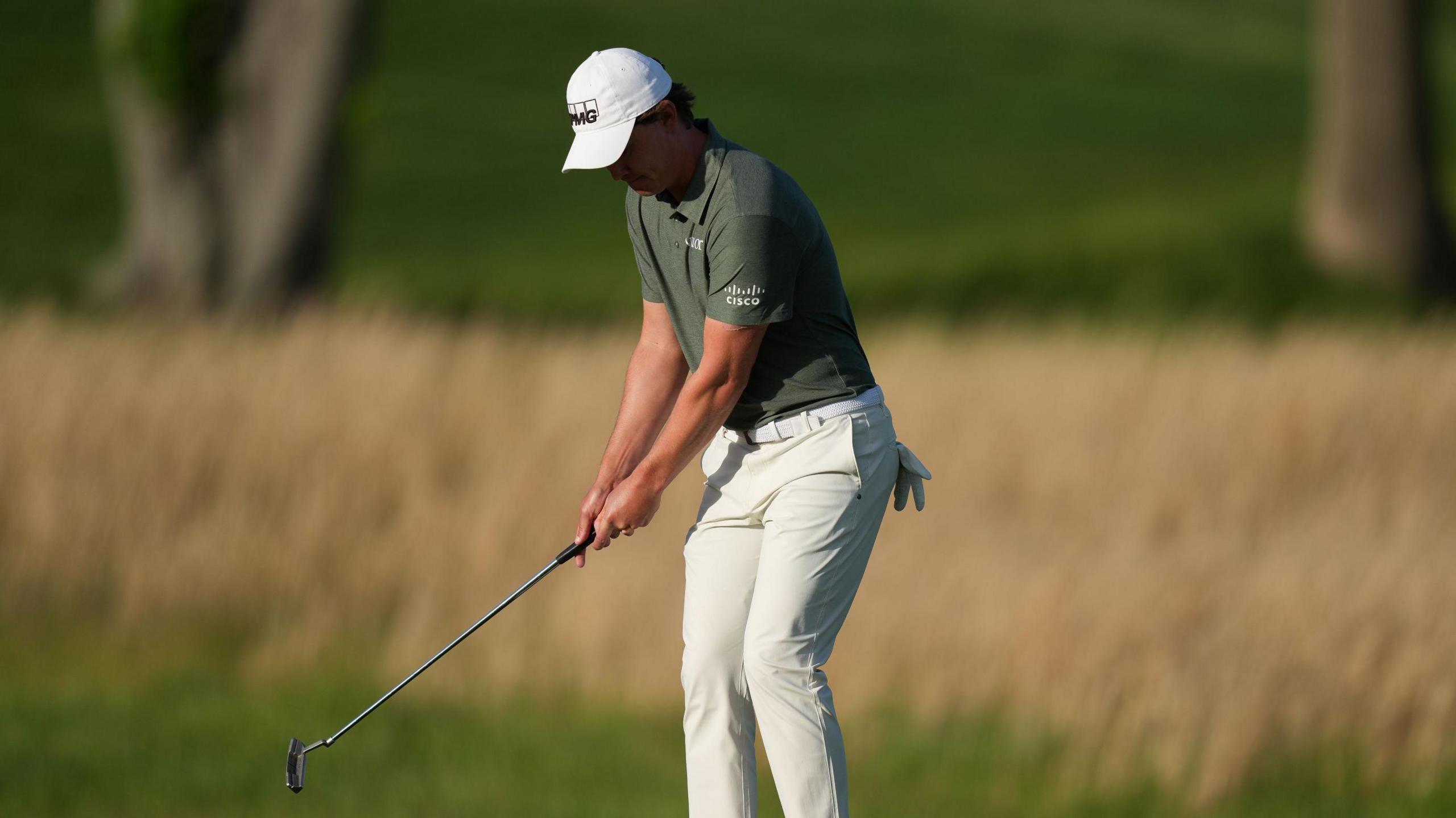 Image source, Getty Images
McNealy, who has never been in the top 25 at the halfway stage in 13 previous majors, also showed his creativity - using the toe of his putter to knock his ball onto a green when hampered by the thick fringe grass
How 'absurd' pins are creating intrigue
The putting surfaces have always been considered as Aronimink's best defence and the placement of the holes - particularly given the tricky, windy conditions - have been incredibly punishing.
Following his second round, defending champion Scheffler described Friday's pin positions as "absurd".
"They are the hardest I've ever seen," said the 29-year-old American.
"They were just so far into the areas where we thought the pins were going to be. It's just challenging."
Sympathy might well be in short supply for Scheffler.
Purists will enjoy seeing the top players have to patiently plot their way around as they rely on strategy.
Gotterup managed the conditions better than anyone else in a five-under 65 which was the round of the day, but he still described the pin locations as "extreme".
"A lot of the holes feel like, with the wind, you have no margin for error," he added.
Former world number one Justin Thomas fared better than most with a second round of one-under 69, but conceded the testing wind made carding birdies difficult.
"You have to hit the right shots, or the shots that are being asked," he said.
"Just because you have a wedge in your hand doesn't necessarily mean that you're trying to make birdie."
Slow play & six-hour rounds cause frustration
More casual fans, however, may counter that the punishing conditions have ruined the tournament as a spectacle.
The expressions of some players as they trudged around Aronimink indicated they tended to agree.
American player Sahith Theegala was seething when his ball vanished on the 10th hole following a shot from a fairway bunker, meaning he had to take a penalty drop in the sand as he posted a triple-bogey seven.
England's Tyrrell Hatton is rarely able to contain his displeasure at what he perceives to being wronged by the course and his patience snapped when his ball did not do as he expected on one green.
The sluggish nature of the rounds - some taking almost six hours - added to the sense of frustration.
Thomas and playing partner Keegan Bradley remonstrated with officials after they were put on the clock for falling out of position.
"We were behind," said Thomas. "But we weren't holding up the group behind us.
"It's so hard out there and the last thing I'm going to do is make a mistake because I feel like I'm rushing."
As well as the tough conditions, the congestion was fuelled by several shared tees and greens in close proximity.
McIlroy closed his eyes - seemingly meditating rather than napping - as he sat propped against an advertising board while waiting for several minutes on the 10th tee.
After also being forced to wait on the fairway, McIlroy stuck his approach to the green well below the hole and exasperatedly moaned about how long he was having to wait between shots.
"For someone like me that likes to play fast, it's hard when you're waiting and standing on a tee box for 10, 15 minutes," he told BBC Sport NI.
"It gets you out of your rhythm a little bit but fortunately it'll be quicker for the weekend."
Related topics
Схожі новини
Збірна Бельгії оголосила склад на ЧС-2026, запросивши гравця без ігрової практики
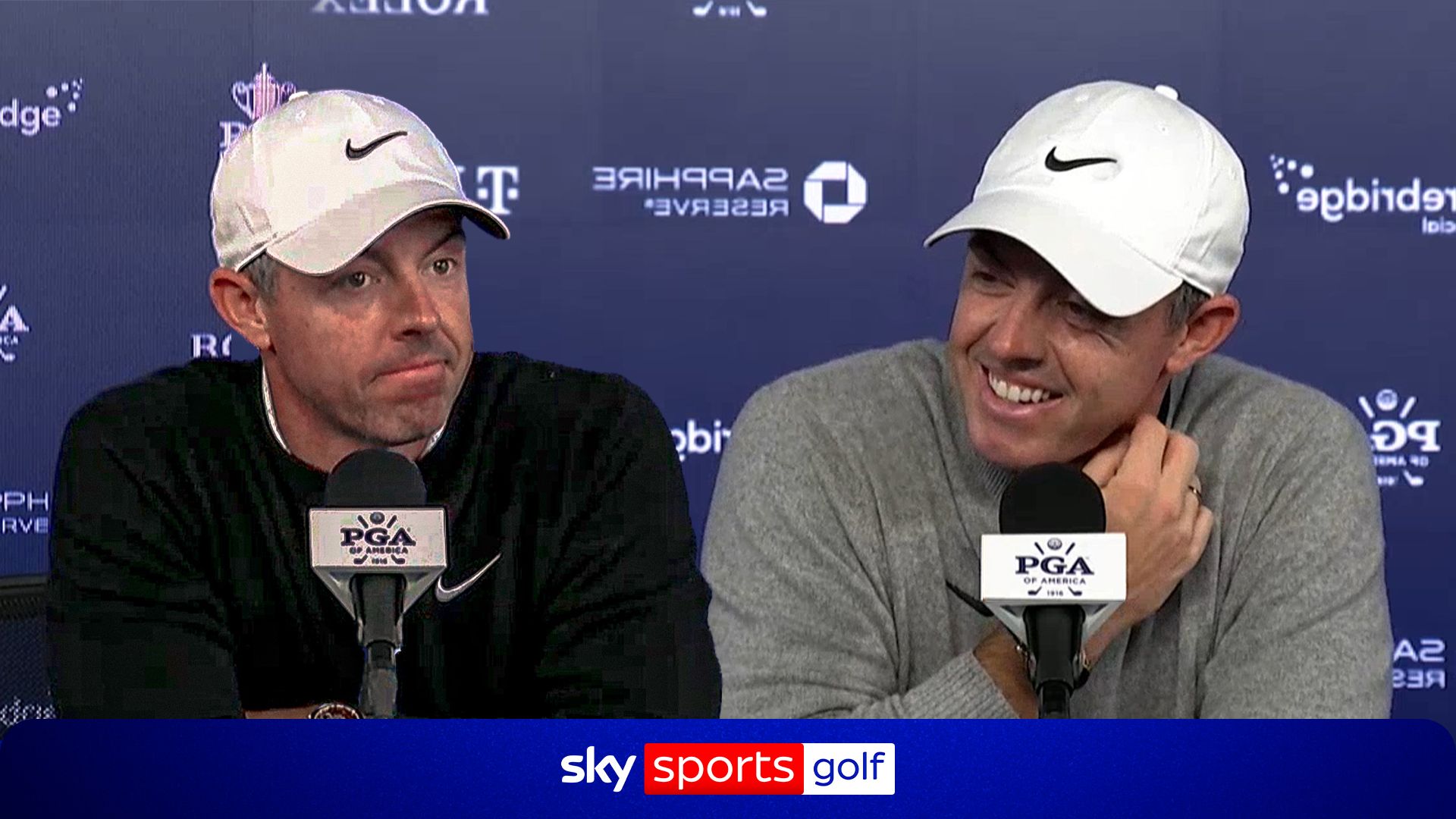
What a difference a day makes! | McIlroy's hilarious response to viral 's***!' answer
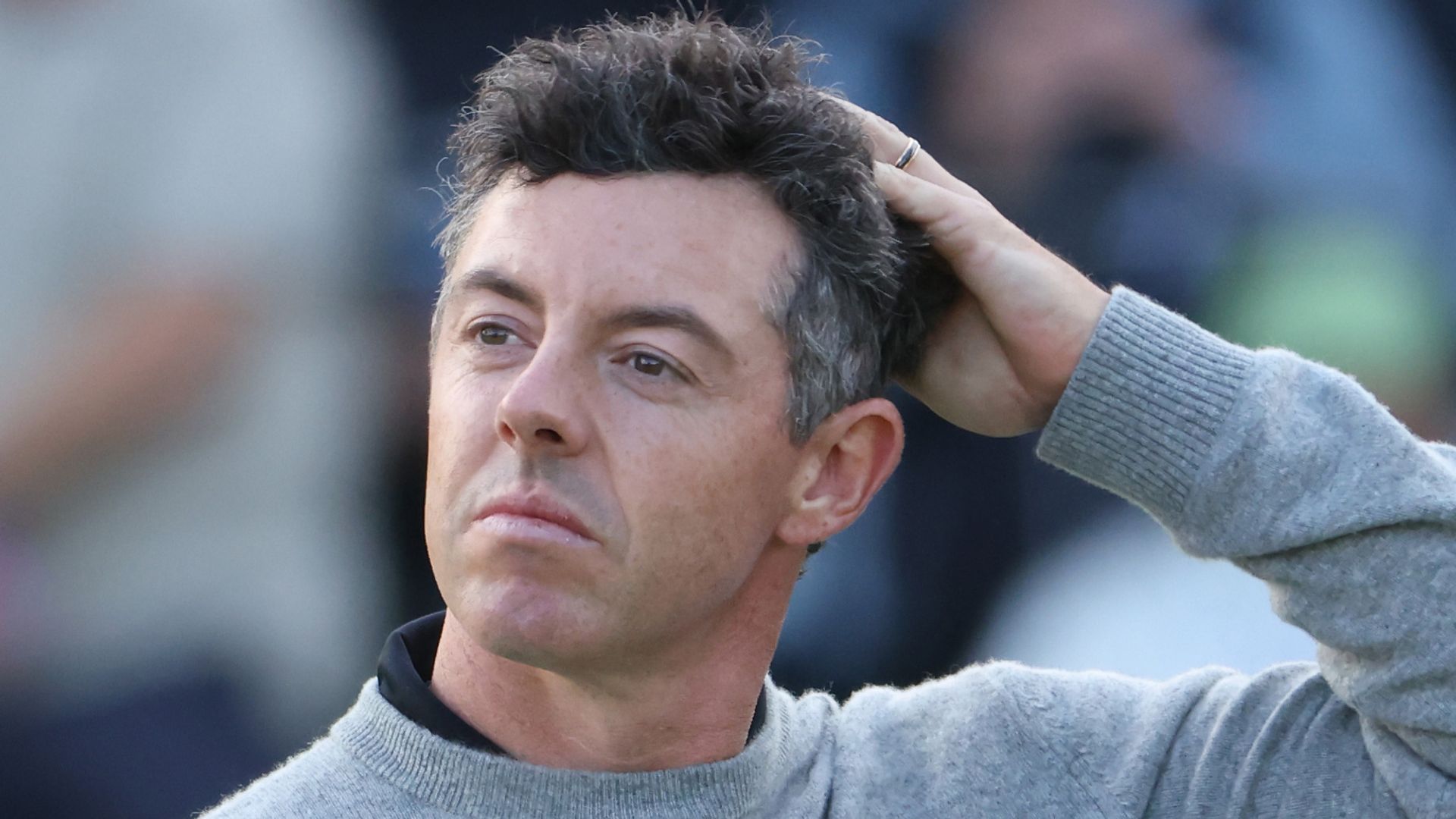
McIlroy questions 'not great' course set-up after boosting major hopes