Magic, mastery and magisterial power: 10 of Sonny Rollins’ greatest recordings
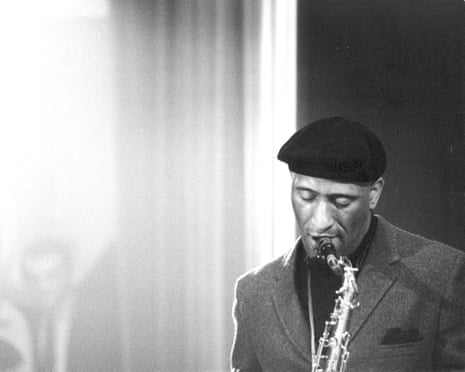
After his death aged 95, we look back at a remarkable catalogue of work that stretches from vivacious mid-50s sets to his evocative performance after 9/11
News: Sonny Rollins, colossus of jazz saxophone, dies aged 95
Tenor Madness (released on Craft/OJC, 1956)
A 30-year-old Sonny Rollins had already made his unique mark with Miles Davis and Thelonious Monk by the time this 1956 session was cut, just a year after bebop sax revolutionary Charlie Parker’s death – but hooking up with his contemporary and admirer John Coltrane happened by chance on the two-tenor blues chase of this album’s title. In a vivacious set with the Miles Davis rhythm section of the time (Red Garland on piano, Paul Chambers on bass, Philly Joe Jones on drums), the leader’s already unquenchable inventiveness is in full flow on Paul’s Pal, and The Most Beautiful Girl in the World.
Saxophone Colossus (Prestige, 1957)
This writer’s first connection with Sonny Rollins’ music was occasioned not by music but words: poetic New Yorker writer Whitney Balliett’s evocative review of Sonny Rollins’ 1957 Saxophone Colossus, in which he referred to the saxophonist’s guffawing, haranguing improvisational style as springing from a jazz imagination to equal Charlie Parker’s. Rollins was partnered on this classic set by pianist Tommy Flanagan, bassist Doug Watkins and bebop-pioneering drummer Max Roach. The calypso St Thomas became a Rollins staple throughout his career, but the long improvisation Blue Seven sketched new parameters for how in-the-moment variations on simple theme-fragments could redefine generations of jazz-making to come.
Way Out West (Contemporary, 1957)
When UK jazz musician Courtney Pine was blossoming as a teenage saxophonist in the early 80s, he would recall that Sonny Rollins’ 1957 recording Way Out West was a key inspiration. The format was a Rollins favourite in his own early years – the demanding setup of a sax improviser with just bass and drums in support, and with unfamiliar west coast partners here. Rollins foregrounded his quirky fondness for cheesy showtunes that could be turned inside out (notably I’m an Old Cowhand), and with bass great Ray Brown and “cool school” drummer Shelly Manne, he produced an improv classic – notably on Come, Gone, which rivalled Saxophone Colossus’s Blue Seven for invention.
A Night at the Village Vanguard (Blue Note, 1957)
Rollins’ live recordings are not as abundant as his genius in open situations deserves, but this music from New York’s Village Vanguard makes up a lot of the ground. Freed from the march of chords by the absence of a pianist, he’s in storming form in the company of rock-solid bassist Wilbur Ware and soon to be legendary Coltrane drummer Elvin Jones, whose rhythmic latitude matches Rollins’ own impetuous phrasing. Standouts are a punchy Old Devil Moon, two versions of Softly, as in a Morning Sunrise, and the saxophonist’s much-covered blues original Sonnymoon for Two.
Freedom Suite (Riverside, 1958)
Rollins was never a natural composer – like Miles Davis, he preferred tunes that could be sketched on the back of envelopes. But Freedom Suite was an interesting departure for him, occasioned by the political climate of US race relations and civil rights in the late 1950s, and the impact they were having on African American music. Rollins is partnered here by the A-list rhythm section of bassist Oscar Pettiford and drummer Max Roach. The saxophonist is magisterially powerful on the 19-minute title track, revealing his sense of how structured and telling an improvisation from minimal materials can be.
The Bridge (RCA, 1962)
Rollins took a creative break between 1959 and 1961, and his return came with The Bridge, named after the eccentric refuge he found: practising alone on New York’s Williamsburg Bridge with only passing trains for company. He returned to the studio in 1962 in another sparse setting – but a different one, with his dominant melody lines now shadowed by subtle guitarist Jim Hall, an original moving with ease between rhythmic, harmonic and melodic roles, well suited to a wider jazz soundscape unlocked by Ornette Coleman. Rollins is often quiet on this set, but gripping all the same, especially on a haunting account of God Bless the Child.
Live at Ronnie Scott’s (Gearbox Records; recorded January 1965)
Rollins’ visits as a solo performer to London’s Ronnie Scott’s club in the late 50s and early 60s introduced his mesmerising magic to UK audiences, and also helped to galvanise the local scene’s confidence at a time when European jazz became increasingly emancipated from the US. On these trips, Rollins formed a close relationship with London pianist Stan Tracey, an artist of comparably whimsical inclinations to drop an unexpectedly crunching chord or lopsided counterpoint out of nowhere. With Tracey, bassist Rick Laird and drummer Ronnie Stephenson, this is a fascinatingly intimate example of what Rollins gigs, far from any concert halls, sounded like back then.
Sunny Days, Starry Nights (Milestone, 1984)
From the 1980s onwards, Rollins settled into a concert groove that was predictable – by his exacting improvisational standards – and frequently dazzling for audiences new to him. Sunny Days, Starry Nights showcased him with partners who would regularly join him on stage for the rest of his life, including empathic trombonist Clifton Anderson, and pianist Mark Soskin. On these late-career gigs, Rollins was more usually genial than startling, but he could always take off into his own soundworld, as he fitfully does here on I’ll See You Again, Kilauea and the headlong calypso Mava Mava.
This Is What I Do (Milestone, 2000)
The best and most affectionately closeup manifestation of Sonny Rollins’ genius as he hit his 70s. The saxophonist’s later-life partners are present, and so is one of contemporary jazz’s greatest drums pioneers in Jack DeJohnette, who understood so much of the rhythmic innovation ignited by the music across more than five decades. DeJohnette plays on four of the six tracks here, but the rapturously assertive voice of Rollins alone is this 2000 album’s inescapably personal signature – in a characteristic but ever-arresting mix of calypso, blues, almost-gospel and a devoted bow to Billie Holiday on A Nightingale Sang in Berkeley Square.
Without a Song: The 9/11 Concert (Milestone; recorded 2001)
Sonny Rollins and his wife, Lucille, lived close to the World Trade Center, witnessed the buildings’ collapse on 9/11, and had to evacuate their apartment shortly afterwards. Four days later, the saxophonist performed and recorded this evocative session with his regular sidemen at the Berklee School of Music in Boston, notably including a beautiful performance of Why Was I Born? The performance won a 2006 Grammy award for jazz instrumental solo.
Explore more on these topicsShareReuse this contentСхожі новини
Billy Joel’s Madison Square Garden Concert Film Sets Blu-ray Release

The 4 trilateral frameworks defining northeast Asia’s future
Doc Talk Podcast: ‘Everybody To Kenmure Street’ Director Felipe Bustos Sierra Tells Riveting Protest Story, With Help From Emma Thompson