Lubinets: Russia using 695 forms of torture against Ukrainian POWs
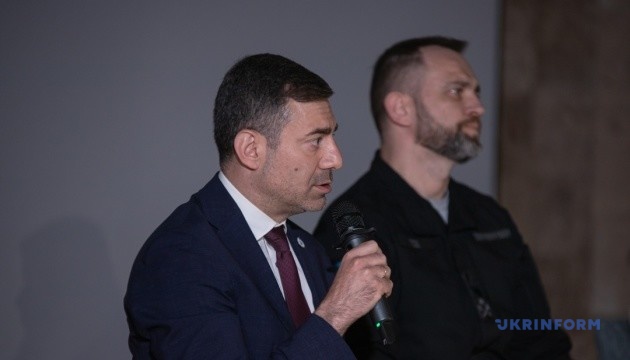
According to an Ukrinform correspondent, he made the statement during the presentation of the project “Made in Russia. Delivered to Captivity.”
“Today, within this project (‘Made in Russia’ — ed.), we officially document that, according to our data, the Russian Federation uses 695 forms of torture, including physical and psychological abuse and sexual violence. Prisoners of war are strangled, beaten, subjected to electric shocks, attacked by dogs, and sometimes forced to stand in one place for up to 18 hours. As soon as a person begins to crouch, they are immediately beaten again,” he said.
The Ombudsman stressed that poor detention conditions and torture are systematic practices against Ukrainian POWs. These include unsanitary conditions and starvation used as a method of coercion. Authorities have also documented 860 cases of improper detention conditions.
“One form of torture is the so-called ‘barber,’ when during shaving they deliberately cut not only hair but also pieces of skin from the head. If a person starts screaming, they are immediately beaten again and subjected to electric shocks,” Lubinets said.
The Ombudsman reported that data from international partners identify 29 detention sites – 18 located on the territory of the Russian Federation and 11 in temporarily occupied areas of Ukraine. At the same time, according to him, Ukrainian intelligence agencies have verified 186 locations where Ukrainian prisoners of war and civilian hostages are being held, covering the entire territory of Russia and the temporarily occupied territories. In addition, detention facilities for prisoners also exist in Siberia.
According to Lubinets, detention conditions at these sites are nearly identical and unfit for the civilized detention of prisoners.
The Commissioner stressed that the weak international response to documented systematic torture sends Russia a signal that it can continue these practices with impunity.
“As Ukraine’s Ombudsman, I once again publicly state: there is no international human rights protection system for a country that tortures prisoners of war, civilian hostages, and deports Ukrainian children – and that country is called the Russian Federation. It simply does not exist. None of the international mechanisms are functioning there. We must speak about this today and seek additional ways to influence the Russian Federation,” he said.
Read also: Lubinets says technical talks underway on major 1,000-for-1,000 POW exchangeLubinets also criticized the work of the International Committee of the Red Cross.
“Are there representatives of the International Committee of the Red Cross here? We sent them a separate invitation. They are not in the hall. Once again, they do not want to hear that there is a problem with fulfilling their mandate. There is. We understand that first and foremost this is the position of the Russian Federation. But what additional actions are you taking to change this position? What? Simply negotiations? Perhaps they may bring some results, but certainly not the results we expect.
“As for the prisoners of war among the defenders of Mariupol. Olenivka – everyone knows the Russians did it. Fifty-three men, verified by the ICRC as prisoners of war, were killed, and more than 130 were injured. Where is the reaction? There is none. And there will not be one unless we all understand that we must now apply pressure, demand accountability, and do everything possible to ensure that every representative of the Russian Federation is brought to justice,” he said.
As reported by Ukrinform, Dmytro Lubinets presented the project “Made in Russia. Delivered to Captivity,” which focuses on what it describes as Russia’s main export product – war crimes.
Схожі новини
На Вінниччині розвивають українське виробництво: до 150 млн грн передбачено на індустріальні парки – Свириденко
Уряд оновив правила бронювання для «критичних» підприємств — кого торкнуться зміни

НКЕК пропонує впровадити регуляторний збір до 1,5% від доходу операторів