Lotus Sent Its First Batch Of 18 EVs To Canada. Is It Paving The Way For Geely?
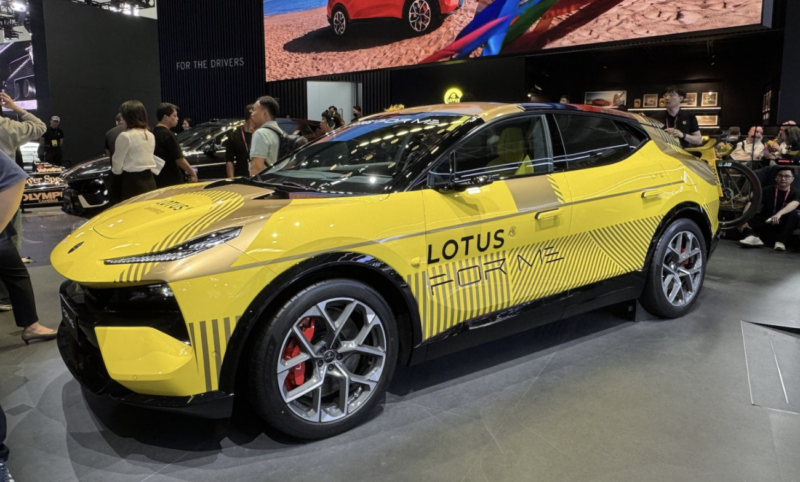 Lotus Eletre at the 2026 Beijing Auto Show. (Photo by author)
May 10, 202651 minutes
Raymond Tribdino
0 Comments
Support CleanTechnica's work through a Substack subscription or on Stripe.
Lotus Eletre at the 2026 Beijing Auto Show. (Photo by author)
May 10, 202651 minutes
Raymond Tribdino
0 Comments
Support CleanTechnica's work through a Substack subscription or on Stripe.
Geely may have quietly secured a strategic opening into the Canadian market long before its own badge officially arrives there.
Through its ownership of the British performance marque Lotus Cars and its Nasdaq-listed technology arm Lotus Technology, the Chinese automotive giant has now physically delivered the first Chinese-made electric vehicles into Canada under Ottawa’s newly revised trade framework with Beijing.
The milestone came this week after Lotus shipped 18 units of the all-electric Eletre SUV from Shanghai to Canada, marking the first confirmed export delivery under the Canada–China agreement that replaced Canada’s punitive 100 percent surtax on Chinese-made EVs with a reduced 6.1 percent tariff under a quota system covering up to 49,000 vehicles annually.
On Chinese social media platform Weibo, Lotus described the shipment as “establishing a new record for Chinese electric vehicle exports,” while highlighting that the vehicles were built at the company’s Wuhan manufacturing facility before being loaded for shipment to Canada.
The development positions Geely in a uniquely advantageous place among Chinese automakers eyeing North America. While brands such as BYD, Chery Automobile, and XPeng continue to face political and regulatory barriers across the United States and Canada, Geely already possesses a functioning premium channel through Lotus, a globally recognized British sports car brand with existing dealer infrastructure and brand equity in Western markets.
The shipment also demonstrates how Chinese automakers are increasingly using acquired legacy brands to penetrate markets that remain politically cautious about direct Chinese automotive expansion. Although the Eletre carries the Lotus badge and British engineering heritage, the SUV itself is manufactured entirely in China using Geely-backed supply chains and advanced EV platforms.
At Auto China 2026, Lotus Technology formally confirmed the Canadian launch of the Eletre, pricing the high-performance electric SUV from CAD$119,900. The company said the move introduces Lotus into the high-end luxury SUV category in North America while expanding its footprint across key Canadian urban centers.
The Eletre itself represents a dramatic transformation for Lotus. Traditionally known for lightweight sports cars and analog driving purity, the brand has now pivoted aggressively toward electrification and intelligent mobility under Geely ownership. The SUV utilizes an 800-volt electrical architecture and combines high-performance dynamics with software-heavy luxury features aimed directly at premium EV rivals including Tesla, Porsche, and Lucid Motors.
Lotus also used the Beijing show to unveil the Eletre X Black & Gold Limited Edition, restricted to 78 units in celebration of the brand’s 78th anniversary. Known in China as the “For Me” edition, the vehicle blends Lotus’ motorsport heritage with modern electrified performance and was developed jointly by engineering teams in the United Kingdom and China.
“We are seeing growing demand from customers who are looking for something more distinctive in this segment — products that combine performance with a clear sense of character,” said Feng Qingfeng, chief executive officer of Lotus Tech at the Beijing Auto Show. “Eletre and Eletre X reflect our confidence in that demand. They bring Lotus engineering into a new category while maintaining the qualities that define the brand — precision, control and a focused driving experience.”
The significance of the shipment extends beyond Lotus itself. It may serve as a test case for how Chinese automakers can re-enter Western markets despite escalating trade tensions. Canada’s revised EV framework effectively creates a controlled pathway for Chinese-made vehicles to enter the country again, albeit under quota restrictions and political scrutiny.
Reports have already emerged that Canada is considering additional safeguards or caps on automakers participating under the agreement, reflecting growing concerns about the rapid rise of Chinese EV exports and the potential impact on domestic manufacturing.
Still, Geely’s position appears unusually strong or at least advanced. Chery already landed earlier than Lotus (if shipping records were to be the basis) and BYD has announced 20 dealerships as soon as the EVs arrive. Nonetheless, unlike many Chinese rivals that must build consumer trust from scratch, Geely controls globally recognized automotive assets including Lotus, Volvo Cars, Polestar, and Zeekr. That portfolio gives Geely multiple pathways into international markets even as geopolitical barriers intensify.
For Canada, the arrival of the Chinese-built Eletre and Eletre X may signal the beginning of a more complicated EV era — one where the distinction between “Chinese car” and “global brand” becomes increasingly blurred.
Sign up for CleanTechnica's Weekly Substack for Zach and Scott's in-depth analyses and high level summaries, sign up for our daily newsletter, and follow us on Google News! Advertisement Have a tip for CleanTechnica? Want to advertise? Want to suggest a guest for our CleanTech Talk podcast? Contact us here. Sign up for our daily newsletter for 15 new cleantech stories a day. Or sign up for our weekly one on top stories of the week if daily is too frequent. CleanTechnica uses affiliate links. See our policy here.CleanTechnica's Comment Policy
Share this story!
Схожі новини
People are being warned off Trump’s Gold Card immigration plan – and even Melania’s ex-lawyer hates it, report says

Армія США розгорнула в Литві мобільні групи для боротьби з дронами за зразком України
Через атаку російського дрона постраждав 74-річний чоловік на Харківщині. ФОТОрепортаж