‘Live is the new status symbol’: can New York’s C2C beat festival burnout by embracing the niche?

With performers Arca, Los Thuthanaka and YHWH Nailgun, New York’s C2C proved the thrills – and limits – of staying independent amid a festival boom
Growling, flailing, kicking, screaming, the experimental British musician Aya clutched a microphone and ranted about her hormones. “If anything, the progesterone is doing wonders right now,” she cackled in her Yorkshire accent as she triggered an unpredictable minefield of bone-rattling bass and clattering breakbeats. The crowd in New York City’s Knockdown Center on Friday whooped as their bodies moved without thought. “The British party just elected a bunch of fascists today,” she added, before lamenting about the state of the NHS. It was part of the performance: Aya’s chaotic music rebels against formal structure, becoming a sonic vehicle for exploding the limitations of gender.
Equal parts artistic subversion and cathartic release, Aya’s set epitomized the best of C2C NYC, a sold-out, one-day edition of an independent music festival originally held in Torino, Italy, which will celebrate its 25th anniversary this fall. With its affinity for innovative pop-auteurs and critical darlings, the Torino edition has become a global destination for experimental music fans; 53% of its audience now comes from outside Italy. “New York became an obvious choice” to expand into, says the festival’s artistic director, Guido Savini, over email. It’s “a chance to place the festival’s curatorial language within what is probably the most complex and definitely the most competitive cultural ecosystem in the world”.
Now in its second year, C2C NYC has made its foray as the city’s music landscape has undergone what some may call a “festivalization” – an exploding market for festivals that echoes the national trend. Live music has boomed post-pandemic, with specifically electronic music seeing more revenue growth and getting more billings in some of the US’s biggest multi-genre fests. It’s not just Knockdown Center, but nearby Queens venue Nowadays has boasted takeovers from electronic music meccas such as Dekmantel and Sustain-Release. For these venues, it’s likely a no-brainer to team up with an already established name, especially if it connotes a type of European coolness.
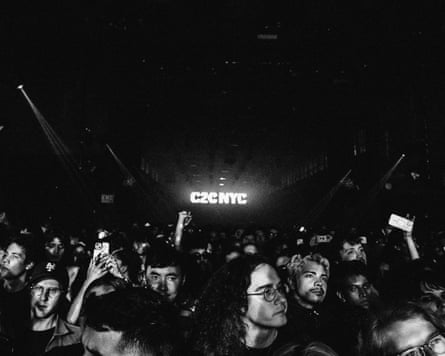
Music festivals have naturally accrued more value as in-person experiences feel more special and scarce in the streaming age, says Tatiana Cirisano, the vice-president of music strategy at Midia Research, which analyzes music industry trends. “People want more in-person connection in their lives,” she says, leading to a “rebellion against the hyper-digital existence that a lot of us lead” through attending events.
C2C, short for “club to club”, insists that it’s not an electronic music festival. Savini says the festival likes to call its focus “avant-pop”, as it “operates in that very interesting space between avant-garde experimentation and contemporary pop culture”. It’s this specificity in ethos that linked sounds as disparate as the deconstructed Andean drone of Los Thuthanaka and the spasmodic noise-punk of YHWH Nailgun on Friday. Indeed, the Queens venue was filled with the sort of people who know who Anthony Fantano is (that’s not a mistake – C2C paid the Needle Drop critic to make a promotional post for the fest).
“When promoters can connect multiple niche acts into a cohesive scene, atmosphere or cultural moment, the audience often becomes more intentional and engaged than a broader mainstream lineup,” says Geoff Robins, the vice-president of product and marketing at the fan data analysis firm Tradable Bits. “In those cases, fans aren’t just buying tickets for one artist. They’re buying into a point of view.”
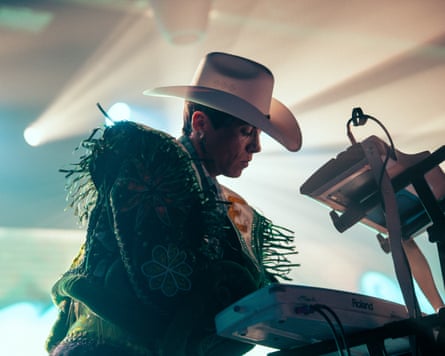
Despite its intentionality, C2C could not fully escape the downsides of “festivalization”: larger crowds can lead to sets that are more predictable or people-pleasing. At the end of the evening, the headliner Arca took the stage not to present the boundary-breaking performance art she was once known for (I once saw her sing and ride a mechanical bull while wearing futuristic stilts). Instead, she did her best big-room techno DJ impression. “I want to party with you!” she exclaimed, as she spun ear-numbing hardcore edits, yelled at people to start moving and gave her best vampy pout. The ethereal atmosphere that had filled the room during Nourished By Time, courtesy of his gauzy sing-alongs about late-capitalist dread, jarringly shifted into a mood of vacuity.
After more than a decade of making trailblazing electronic productions and operatic fugues, it’s reasonable for Arca to want to have fun. Yet her turn into commercial dance territory felt at odds with the festival’s careful curation; this wasn’t the experience I craved after waiting in anticipation on sore feet. Still, others stayed and relished in the hedonistic atmosphere. “People are going to the festivals for a lot of reasons,” Cristiano says. “It’s not just to see your favorite band or artist play, it’s also to be in that environment with your friends. You might have five friends that all have completely different music tastes, but you can all go and have a good time.”
At C2C, I had the most fun at the more intimate sets, like when DJs Doula and 8ulentina, fixtures of New York’s underground scene, blended everything from evil baile funk and Arab pop stompers with a touch of pure wizardry. Despite not relishing every single act (I also didn’t love Avalon Emerson and the Charm’s indie-pop that was neither twee, funky nor post-punk enough to make me feel anything), I felt like I got a lot of bang for my buck across the full day – another draw of the festival model.
As the price of live events go up, Cristiano predicts “there’s going to be this continued trend of live being almost the new status symbol, like as a sign of luxury”, contributing to the mass of social media posts and influencer activations that help sustain the festival economy.
Savini, the C2C director, says he’s not focused on selling tickets or optics. “Festivals are living organisms and they need to remain deeply loyal to their communities – audiences, artists, local scenes and the ecosystems around them,” he says. “Rapid growth should never come at the cost of losing those connections.” Regardless, there was no stopping the relentless TikToks and Instagram Reels circulating of Arca the day after the fest, compressing a textural eight-hour experience into a 15-second spectacle.
Explore more on these topicsShareReuse this contentСхожі новини
Where To Find The Brick Fish, Insects, And Birds In Heartopia
Amazon MGM Studios’ Head of Business Affairs Dan Scharf to Exit
Вони вийшли у 2000-му році й отримали статус культових: 4 фільми, які не розчарують