‘Like whale bones’: South Korea’s war memorial sparks conflict over symbolism
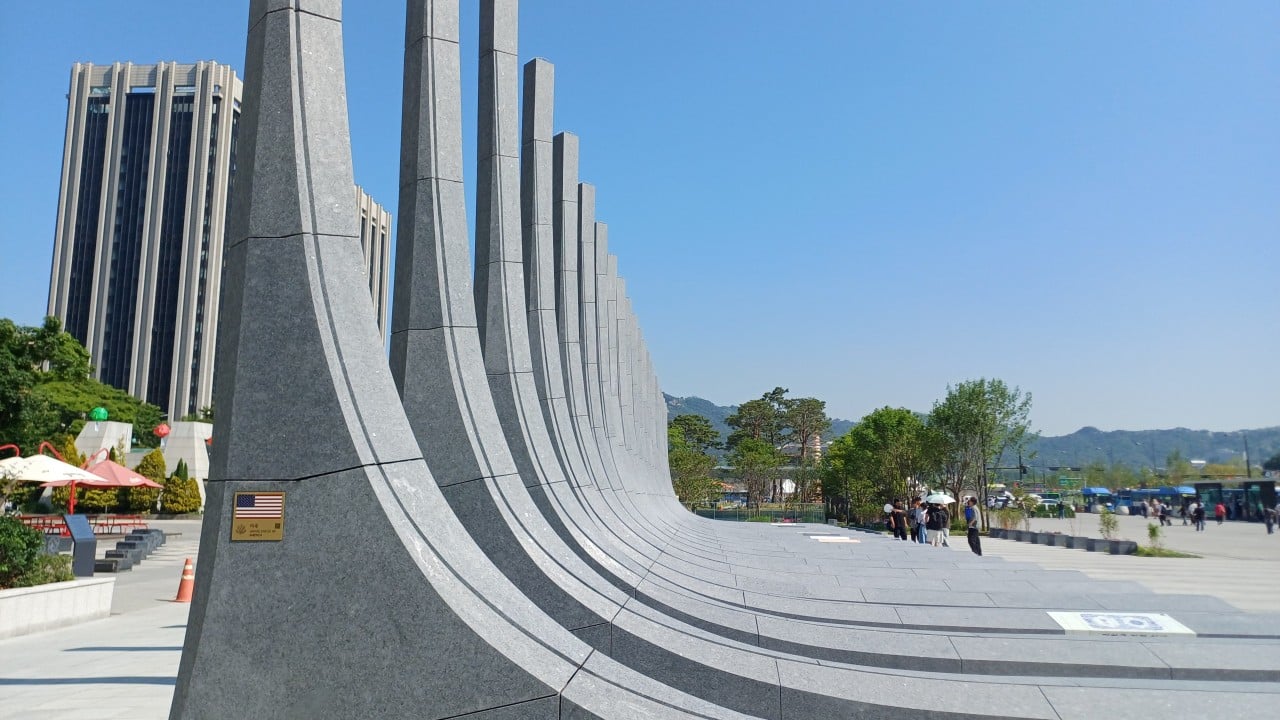
Critics argue the Korean war memorial should not be in a space in Seoul long associated with pro-democracy protests and its imperial past
4-MIN READ4-MIN1 Listen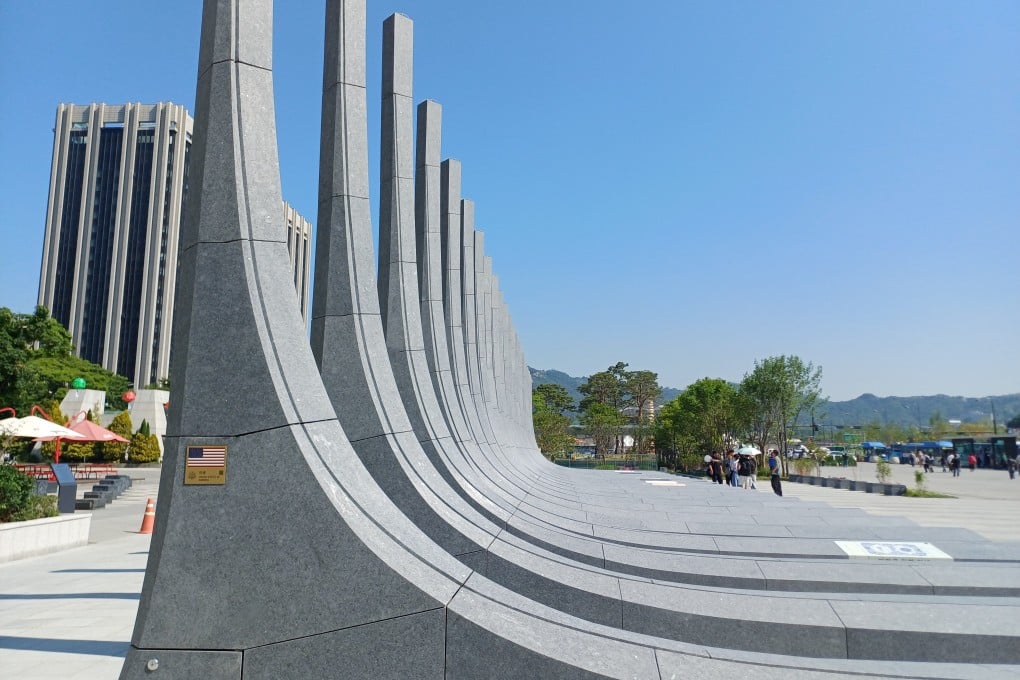
Located across from the US embassy, the monuments feature honour guards in “present arms” military posture, prompting criticism that they are a symbol of militarism in the city’s most iconic location. Each monument stands at 6.25 metres (20.5 feet), symbolising the start of the war on June 25, 1950.
AdvertisementThe square already contains several monuments to Korean national identity, including statues of King Sejong, the 15th century monarch credited with creating the Korean alphabet, and Admiral Yi Sun-sin, the revered naval commander who repelled Japanese invasions in the 16th century.
Critics argue that the new installation disrupts a space traditionally used for public gatherings, protests and leisure.
AdvertisementMany tourists who were interviewed recently appeared indifferent to the sculptures clustered along one side of the square, as they took photographs in the vicinity while dressed in hanbok, the traditional Korean attire.
AdvertisementSelect VoiceSelect Speed0.8x0.9x1.0x1.1x1.2x1.5x1.75x00:0000:001.00xСхожі новини
Mexico City’s underground secret world: Ancient temples, ritual skulls and a lost civilisation still hidden beneath modern streets
The $1.8 billion pivot: How Michael Bloomberg’s historic gift rewrote the rules of college access

Archaeologists found a hidden 1800s whisky distillery deep in the Scottish Highlands