Lib0xc: A set of C standard library-adjacent APIs for safer systems programming
A set of C standard library-adjacent APIs for safer systems programming. While C cannot be made completely type- and bounds-safe at the language level, its prevailing uses can be made much safer than they are today.
Goals
"Make C safer" is a nebulous and amorphous goal, and it is more apt as a programming language design statement than a modest set of utilities. With that in mind, lib0xc has the following concrete goals.
-Wall -Wextra -Werror -Weverywhere
That last one isn't real, but still, lib0xc's goal is to make it possible for projects to turn on as many warnings as possible and to fail to build if code introduces new warnings. Often, certain high-value warnings are disabled because a project wants to, e.g.
- build with -Werror, and
- avoid clumsy workarounds for things like portability
Concerns like this are frontmost in lib0xc's API design.
Familiar, Easy to Adopt
lib0xc's APIs are deliberately named and designed to look like functions they'd replace from the standard library and be drop-in replacements where appropriate.
Embrace Static Bounds
None of lib0xc's APIs assume that an allocator is available (with the exception of APIs which provide utility specifically for allocations). Many of lib0xc's APIs are designed to be used with fixed-sized data structures (e.g. structs or array types) and assert that size information for a particular argument is available at compile-time.
To achieve this, lib0xc leans heavily on the C preprocessor to expose its API surface. Many of its APIs are macros. While not a panacea, restricting code to using fixed-size objects (and avoiding dynamic allocations) makes C generally much safer.
Support -fbounds-safety
lib0xc's API surface fully embraces the clang bounds safety extensions, which leverage macros that can safely expand to nothing to indicate the bounds of memory referred to by pointers, making them source-compatible with existing C code.
Codify, Document, Test
Many of the APIs that lib0xc exposes have existed in various forms in the industry, perhaps for decades. lib0xc does not claim to have brilliantly conceived of the idea behind every API it exposes. Instead, it seeks to provide codified representations of these patterns which are well-documented and thoroughly-tested.
Embiggen C's Pit of Success
Related to the previous goal, the patterns encapsulated by lib0xc APIs should have a large "pit of success", that is, they are easier to use properly than they are to mis-use. Many of the C language's liabilities stem from poorly- designed API contracts, and where such APIs have lingered, lib0xc seeks to offer better thought-out replacements.
Components
Standard Library Extensions (0xc/std/)
| Module | Standard Library Analogue | Description |
|---|---|---|
| alloc.h | n/a | Typed allocation, automatic cleanup |
| call.h | n/a | Deferred function invocation |
| context.h | n/a | Bounds-checked context pointer |
| cursor.h | FILE * | Allocation-free, in-memory input/output stream |
| int.h | stdint.h | Safe integer conversions |
| io.h | stdio.h | Formatted output utilities |
| pointer.h | n/a | Useful macros for clang -fbounds-safety |
| string.h | string.h | Static variants of string functions |
| struct.h | n/a | Structure reflection and addressing |
| array.h | n/a | Utilities for array types |
| type.h | n/a | Type compatibility checks and compiler constant utilities |
| limits.h | limits.h | Min/max value utilities for integer types |
Systems Programming Utilities (0xc/sys/)
| Module | POSIX Analogue | Description |
|---|---|---|
| buff.h | n/a | Bounded buffer encapsulation |
| log.h | syslog.h | Object-oriented logging with simplified levels |
| hash.h | sys/queue.h | BSD queue.h macro-style hash table |
| digest.h | n/a | Digest object |
| fourcc.h | n/a | Four-character codes |
| errno.h | errno.h | POSIX error utilities |
| exit.h | sysexits.h | sysexits(3) mappings to errno codes |
| queue.h | n/a | BSD queue(3) macros with bounds-safety annotations |
| linker_set.h | n/a | Unified, bounds-safe linker set for ELF and Mach-O |
| check.h | n/a | Simple unit test check functions |
| unit.h | n/a | Test harness with auto-discovery via linker sets |
Examples
Bounds-tracked formatting with CURSOR
#include <0xc/std/cursor.h> char buf[256]; CURSOR cur; cbuffopen(&cur, buf, "w"); cprintf(&cur, "hello %s", "world"); // remaining space tracked automaticallyBounds-checked context pointers
#include <0xc/std/context.h> struct my_state state; context_t ctx = __context_export(struct my_state *, &state); // Size is verified on import — mismatched type sizes will trap: struct my_state *s = __context_import(struct my_state *, ctx);Safe integer conversions
#include <0xc/std/int.h> // Traps at runtime on overflow instead of silently truncating: size_t n = __cast_signed_unsigned(size_t, file_stat.st_size);Portable printf format specifiers
#include <0xc/std/io.h> uint32_t v32 = 42; uint64_t v64 = 100; printf("%u %lu\n", oxou(v32), oxolu(v64)); // no PRIu32/PRIu64 neededRequirements
- C11 with GNU extensions (-std=gnu11)
- clang or gcc (clang recommended for -fbounds-safety support)
- GNUMake >= 3.81
- Supported platforms: macOS (arm64, x86_64), Linux (arm64, x86_64)
Building
Build the POSIX static library:
make libThis produces build/public/lib0xc.a for the host platform.
Testing
Run the full test suite (POSIX platforms):
make testTests are organized per-module and use the sys/unit.h API for registration and the sys/check.h API for individual test case assertions.
Project Structure
src/ Portable source and headers (included by all targets) 0xc/std/ Standard library extension headers 0xc/std/call Call implementation 0xc/std/pointer Pointer tagging implementation 0xc/sys/ Systems programming utility headers 0xc/sys/buff Buffer object implementation and headers 0xc/sys/check Test case assertion implementation 0xc/sys/log Logging API implementation posix/ POSIX target (macOS, Linux) 0xtest/ Test suite unit/ Per-module unit testsEach target directory contains a mk/ directory with its build files and a 0xc/ directory with any target-specific headers. Generally speaking, the src directory's structure mirrors that of the final header hierarchy, with source files living alongside their corresponding headers.
New Platforms
lib0xc can be adopted to new runtime environments and is not strictly tied to a POSIX-like environment. In order to build a lib0xc library for a new target, you need to provide the following:
Allocation Implementation
std/alloc.h expects an implementation of __waiting_for_memory. Otherwise, lib0xc assumes that malloc is provided by the host, if it is present at all. If it is not present, then simply defined a stub for __waiting_for_memory and avoid using the std/alloc.h header entirely.
Panic Implementations
sys/panic.h expects the following implementations:
- panic: Panic with an associated integer value
- panicno: Panic with an error number
- panic0x: Panic with an associated integer value, expressed as hexadecimal
- panicx: Panic with only a message
Buffer Types
Buffer types specific for the target platform can be enumerated in a platform- specific header in sys/buff/type. For example, the BUFF_TYPE_MMAP type is specific to the POSIX library and encapsulates information for how to free the underlying memory.
Log Streams
sys/log.h expects its error streams to be implemented as log_stream_t objects. Error streams encapsulate the implementations for writing to the platform's output device. For example, in the POSIX library, the streams are mapped to the standard C standard output streams (standard input, output, error) and are written to via vdprintf.
Platform Header
The platform header is expected to be in 0xc/platform.h and installed within the public header hierarchy. This header contains publicly-visible configuration parameters, currently:
- ZX_WALLOC_LIMIT: The maximum limit at walloc will wait for memory
- ZX_LOG_LEVEL: The platform's log level; this can be different based on the build variant of the library (e.g. the debug variant may have a higher level than the release/production variant)
Contributing
This project welcomes contributions and suggestions. See CONTRIBUTING.md for details, including the Microsoft Contributor License Agreement (CLA) requirement.
This project has adopted the Microsoft Open Source Code of Conduct. For more information see the Code of Conduct FAQ or contact opencode@microsoft.com with any additional questions or comments.
Security
For instructions on reporting security vulnerabilities, see SECURITY.md. Please do not report security issues through public GitHub issues.
Trademarks
This project may contain trademarks or logos for projects, products, or services. Authorized use of Microsoft trademarks or logos is subject to and must follow Microsoft's Trademark & Brand Guidelines. Use of Microsoft trademarks or logos in modified versions of this project must not cause confusion or imply Microsoft sponsorship. Any use of third-party trademarks or logos is subject to those third-party's policies.
License
Copyright (c) Microsoft Corporation.
Licensed under the MIT License.
Схожі новини

В бюджете США на 2027 год не заложили финансирование программы военной помощи Украине

Apple за один квартал витратила на дослідження й розробки рекордні для компанії $11,4 мільярда
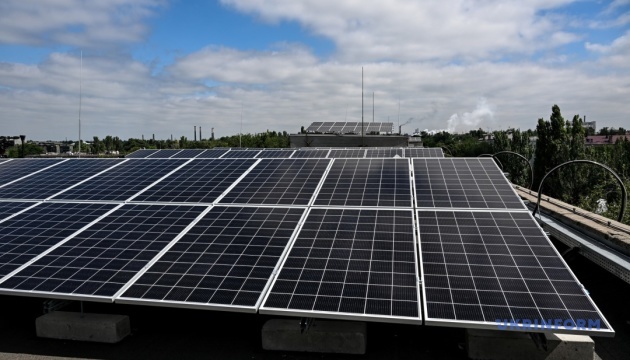
З початку року лікарні ввели у роботу 590 кВт сонячних панелей