Legacy Automakers Pivot On Their Legacies At Auto China
 Audi. Photo by Larry Evans
May 5, 202632 minutes
Larry Evans
0 Comments
Support CleanTechnica's work through a Substack subscription or on Stripe.
Audi. Photo by Larry Evans
May 5, 202632 minutes
Larry Evans
0 Comments
Support CleanTechnica's work through a Substack subscription or on Stripe.
Several trends emerged at Auto China, also known as the Beijing Auto Show. The number of new models and the speed that new technology was progressing was a bit overwhelming. However, one of the strongest and most interesting trends came from more established brands.
The trend came into focus for me at the Porsche stand. The new Cayenne Turbo Electric was showcased with trick active aero features at bumper level that would have a life expectancy of minutes if street parked in NYC. Overall, the vehicle is more competitive in the Chinese market, even if the styling is a bit chunkier than before. However, at a starting price of 1.118 million RMB ($164,000 USD), you wonder why anyone would buy the Porsche over the sleeker, more technologically advanced Xiaomi YU7 at a fraction of the price. A big part of the answer is seen in the racing cars displayed around it. People are not just buying a car. They are also buying a brand with a legacy of racing success.


Beyond the Porsche stand, the appeal to legacy became even more obvious. You get a feeling that automakers heard in focus groups that consumers choose their brands due to their histories and made it a core message of their marketing.
Mercedes showcased multiple historic cars going all the way back to their beginning, under the tagline 140 Years of Innovation. Their old cars dominated the stand and attracted so much attention that I had to ask if there was anything new. I was pointed to the electric GLC L. This car does not stray from the Mercedes brand and looks like a Mercedes. While most Mercedes cars on the road seem to be ICE in China, if a more traditional buyer wanted to go electric, they could feel comfortable with the new model. However, this is a China-specific model relying heavily on BAIC for development.


Honda had a few of its JV-produced EVs on display, but most of its models were still ICEVs. They also had an original Accord to celebrate the 50th anniversary of that car and a historic MacLaren Honda F1.


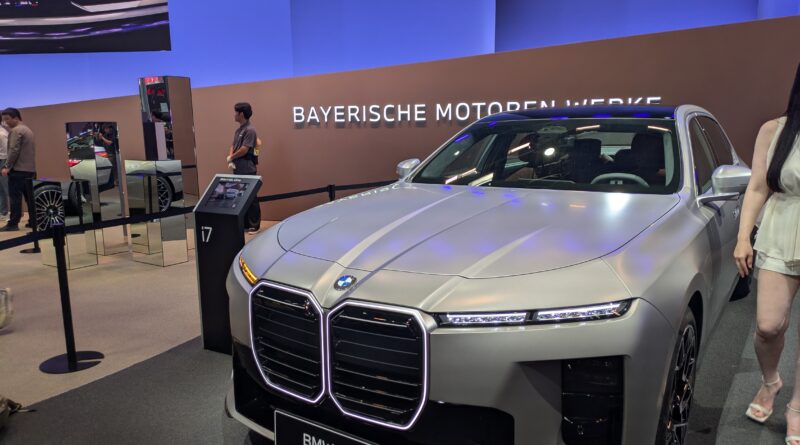
BMW had its Neue Klasse iX3 on hand and launched the massive i7. The Neue Klasse relies on global development, which lets BMW access technology without handing off R&D completely to partners or simply rebadging models from other brands. However, it also had a classic 2002 at the display to tie into its legacy. Many of its cars were still ICE, and its highlight concept vehicle was the Speedtop with a V8 engine.


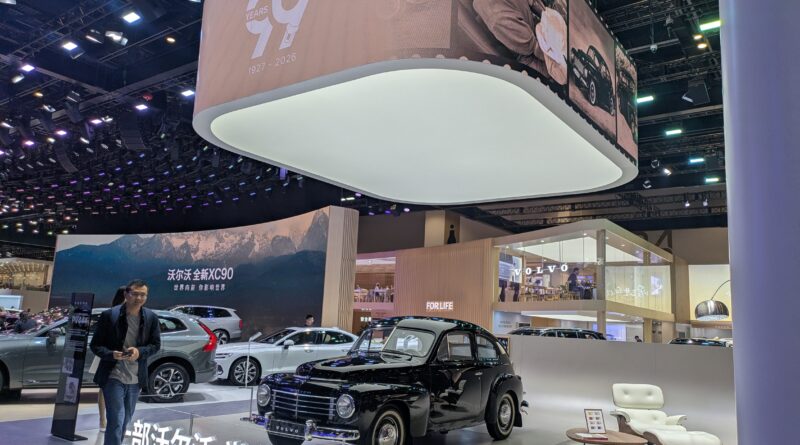
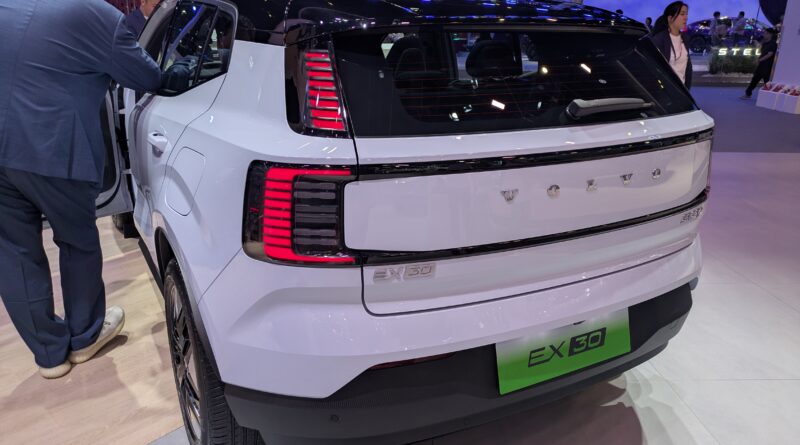
Even Volvo, part of Geely Group with an increasing EV lineup globally, maintained ICE vehicles and highlighted their history under the banner of 99 Years. The EV new product emphasis in the premium segment for Geely seems to have shifted more to its Zeekr and Lynk & Co. brands at the show.

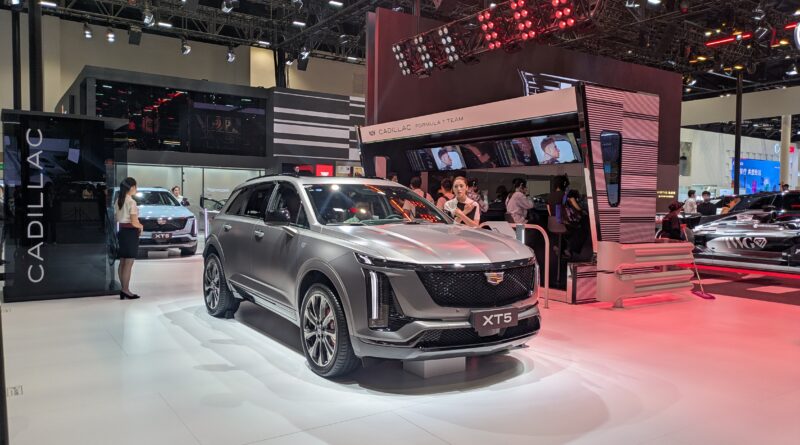
Cadillac had ICE vehicles center stage, with EVs on the side under the banner “A New Chapter Begins.” You get the feeling in China that the brand may be more electrified in the US than it is in the largest EV market. Odd. Meanwhile, Ford persisted with its retro-styling, including the Bronco Electric.


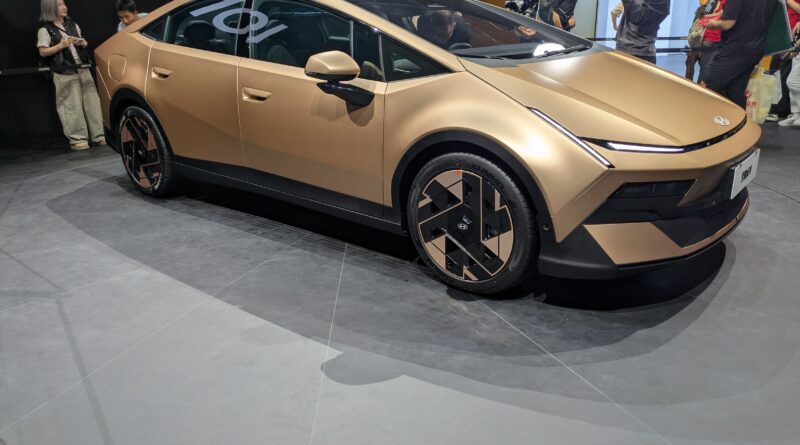
Hyundai is a younger brand, without as much legacy to hold it up or hold it back. As such, its stand was filled with new IONIQ EVs, co-developed with Chinese partners, including CATL and Momenta. While Hyundai’s strategy has shifted away from BEVs somewhat in the US, they are “tripling down” on EVs in China.


Volkswagen Group’s “In China, For China” Challenge
The challenge of pivoting on legacy is especially noticeable at Volkswagen, once the bestselling brand in China. Sitting in the back of the ID. UNYX 08, I had a conversation with a local journalist about why people wouldn’t choose this over a more traditional VW or even an Audi. The vehicle was larger, with more technology, better build quality, and better materials. Soft touch materials went to the bottom of the door, the seats felt soft and quality was obvious. There was plenty of room in the front, back, and cargo area. Beyond infotainment, the ID. UNYX 08 offers the class-leading VLA 2.0 intelligent driving system from XPENG, who partnered with VW to develop the vehicle. Overall, it just felt better inside than other vehicles from the German auto group. Design is a matter of taste, but I also think it looks better than most.
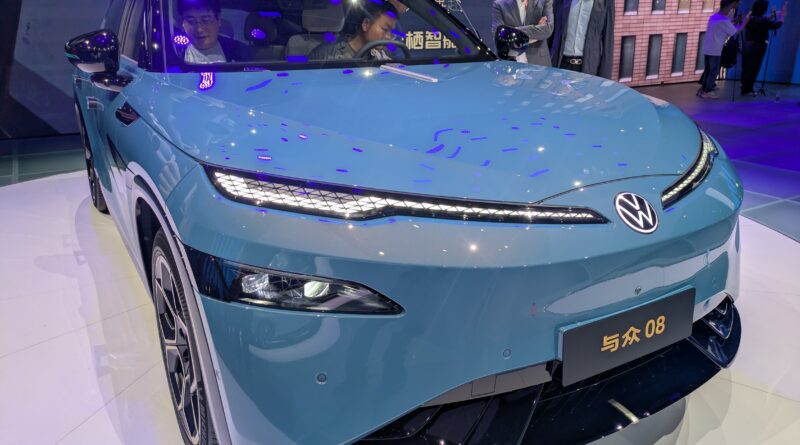


However, while the car may be fundamentally better, people also know that it is a Chinese car. Several new ID cars are part of VW’s “in China, for China” efforts. Knowing that the cars are made by Chinese companies removes some of the appeal of buying an established German brand. You have to ask: Why would you buy the ID. UNYX 08 over a similar XPENG G9?
Similarly, Volkswagen Group’s AUDI sub-brand (all-caps, no rings) felt superior and more advanced compared to the more traditional Audi models. Both were shown alongside landmark cars from Audi’s past. However, if you are buying a German premium brand, would you pay more for a car largely developed by a Chinese partner?


Volkswagen benefits from partnership to develop electric vehicles that live up to the elevated expectations of the Chinese market. As global electrification and competition spread, those superior EVs will be needed more in other markets as well. But Volkswagen will face a challenge to maintain the appeal of its past while embracing the technology and business models of the future.
Overall, a brand’s legacy is helpful in selling older technology. Sometimes, familiarity can help people try new things. But it can hold a company back during a transition to new technology.
The Blessing and Curse of “Legacy”
While we tend to use the term “legacy” in an almost dismissive way in EV circles, a brand’s legacy has an appeal to consumers. They are not just buying a car. They are also buying decades of cultural references and wins on a racetrack. They are buying a sense of status for themselves and their families. For an established brand, the history provides a level of reassurance for potential quality and future viability.
A new car is one of the largest purchases many people will ever make. Cars play a critical role in their daily lives and protect their occupants. Most people are risk-adverse when buying a car. In talking with several people on the ground in China, many feel overwhelmed and unfamiliar with the proliferation of new brands. In some ways, those of us who follow electrification closely from afar are more familiar than the average consumer. Compared to unfamiliar brands, legacy provides a feeling of certainty.
However, that mindset can also make people reluctant to change. The same legacy appeal that supports some brands also makes people reluctant to try new technologies. In the case of cars, this can lead consumers to continue to choose gasoline and diesel powertrains. On the show floor, most ICE vehicles were easily from Western and Japanese legacy brands.
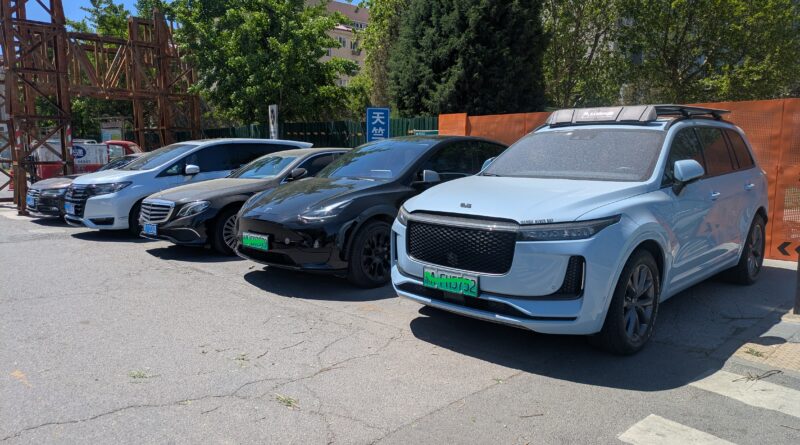


Beyond the show floor, when walking down the street, it is easy to assume that the blue plates are for foreign brands and green plates are for Chinese brands, with a special exemption for Tesla. Green plates (signifies NEV) are on almost all Chinese branded cars, with only the occasional outlier (often Chery). Meanwhile, the blue plates (signify ICE) are prolific across BBA, VW, Buicks, Toyotas, Hondas….
It is safe to assume that most ICE vehicles on the road in China are from legacy brands, mostly produced through joint ventures. The rise of Chinese brands, and especially the rise of private sector automakers, has been fueled by electrification. While we don’t track ICE in isolation here at CleanTechnica, legacy brands have likely increased their ICE market share in China as local brands shifted away from these powertrains. Legacy brands continue to be the top sellers in ICE. However, ICE vehicles are now less than half of new car sales in China, and the ICE market appears set to continue to shrink. Winning the ICE battle increasingly means losing the automotive war in the persistently competitive and increasingly electrified Chinese automobile market.
The Brand Challenge Isn’t New, But Electrification Changes the Game
We have seen similar brand challenges before. Chevrolet was challenged in the US to sell profitable small cars, so they turned to Japanese partners to develop vehicles. To prevent clouding the patriotic appeal of the Chevrolet brand, GM created the Geo brand. However, some consumers wondered why they would buy an imported Geo when they could simply buy directly from Suzuki, Isuzu, or Toyota. Marketers later thought that the presence of Geo vehicles at dealers was confusing the Chevy brand. GM brought the cars back under the Chevrolet banner and introduced the “Genuine Chevrolet” campaign to try to convince buyers that they were real Chevys and to tap into the legacy appeal. BTW, rebranding something as “genuine” tends to be about as believable to skeptical consumers as a used car salesman saying, “just trust me.” Then GM went bankrupt. Arguably, GM never figured it out. Luckily for GM, the US market shifted away from small, efficient cars post-bankruptcy, so their business never depended on them finding the answer.
However, the shift to electrification is far more certain long term, despite recent stumbles in the US. From premium SUVs to sports cars, EVs do not face many of the trade-offs associated with trying to make ICE more efficient. New EVs are simply better than ICE across categories. The EV product gap is larger now for US legacy brands than it was for small cars generations ago. The investment withdrawals of many companies will only expand that gap. Chinese automakers are accelerating in electrification while some markets stall. Brands will need to figure out how to balance their legacy with new technology to stay relevant in the decades to come.
Pivoting Toward the Future
To be brutally honest, from an adversarial, us-vs-them perspective, China has already won the vehicle electrification race. The West is behind on technology in isolation and is falling farther behind rapidly. Efforts to isolate our markets from the largest and most competitive EV market do not make companies more competitive. Efforts to isolate our people from the talents of 1.4 billion people, many with advanced engineering and science education, do not make us smarter. There are no winners in trade wars. Some just lose more than others. However, if we take a more cooperative and collaborative approach, multiple countries can benefit.
For a historical analogy, Japan lost WWII. If they fought harder when defeat was inevitable, they would have lost more. However, in the years that followed, Japan shifted from that combative mindset to a more collaborative and cooperative way of thinking. They took on new ideas and built upon them. Japan became far more successful working with other countries than it ever was trying to dominate and subjugate its neighbors. Its loss from one perspective led to its greatest success from another.
Reaching that success was not easy. A lot of work was needed to develop new technology. Vehicles needed to be adapted to customer needs and tastes that were dramatically different from those within Japan. It was likely even more difficult for people to swallow their pride, admit their failures and redirect their efforts toward the future, a future in foreign markets that had once been their enemies. However, history doesn’t stand still, and many Japanese companies now need to swallow their pride again, admit their mistakes, and prepare for a new electrified future. The same goes for legacy automakers around the world.
The ability to pivot on legacy will become critical to established automakers during the EV technological disruption. Taking what made them successful, adapting it, and building upon it. Working better with others and reaching new markets with new products. Those that succeed will need to admit their missteps, rather than doubling down on being wrong. Companies can help lead in a collaborative environment or fall behind in isolation. Creative destruction is alive and well, and some legacy brands will likely not make it. Some new companies will rise to replace the old. However, the automakers that can successfully pivot on their legacy have a long potential future ahead of them.
Sign up for CleanTechnica's Weekly Substack for Zach and Scott's in-depth analyses and high level summaries, sign up for our daily newsletter, and follow us on Google News! Advertisement Have a tip for CleanTechnica? Want to advertise? Want to suggest a guest for our CleanTech Talk podcast? Contact us here. Sign up for our daily newsletter for 15 new cleantech stories a day. Or sign up for our weekly one on top stories of the week if daily is too frequent. CleanTechnica uses affiliate links. See our policy here.CleanTechnica's Comment Policy
Share this story!
Схожі новини
