Kevin Warsh: Trump's man at the Fed or independent voice?
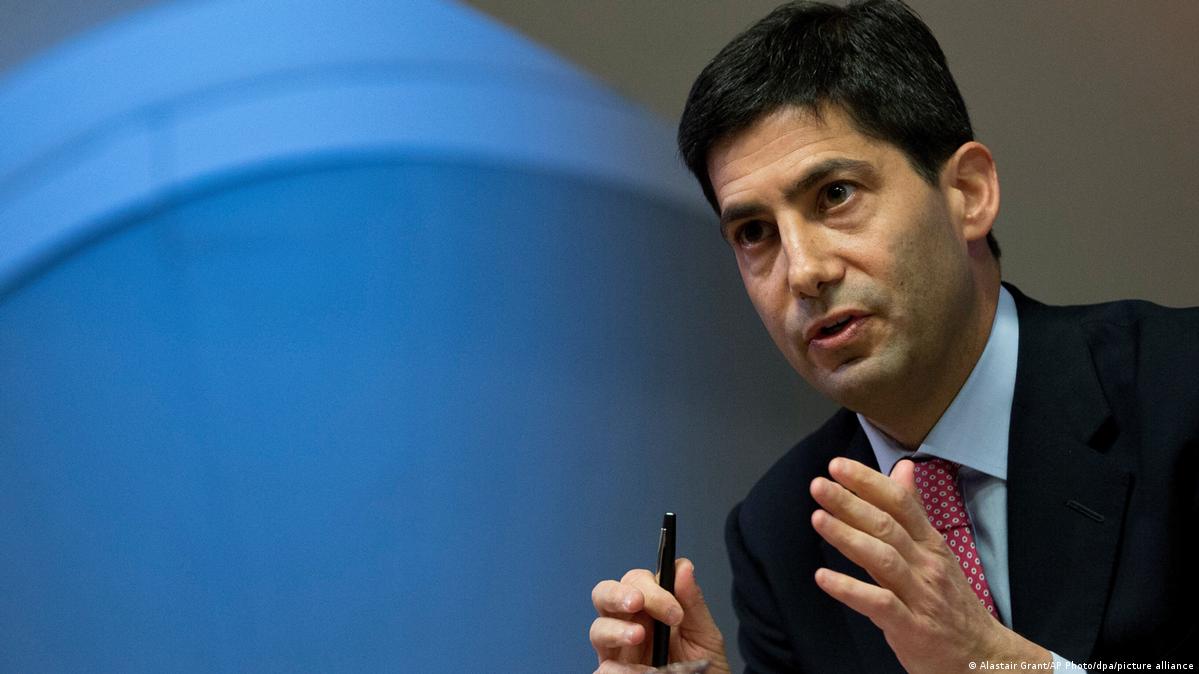
US President Donald Trump will hold a swearing‑in ceremony on Friday for the new Federal Reserve chair, Kevin Warsh — an unusual step, since Fed chairs are not normally sworn in at the White House, and presidents usually don't attend, given that the Fed is meant to be politically independent.
But some, particularly Democrats, question how independent Warsh will be as head of the world's most powerful central bank.
Among them is Democratic Senator Elizabeth Warren, who described Warsh as Trump's "sock puppet” during his Senate confirmation hearing in April. Stressing that independence requires courage, Warren asked Warsh: "Let's check out your independence and your courage. We'll start easy. Mr. Warsh, did Donald Trump lose the 2020 election?”
Warsh refused to answer directly, saying instead: "We try to keep politics, if I'm confirmed, out of the Federal Reserve.”
"The hearing failed to dispel doubts about his independence," Claudia Sahm, chief economist at New Century Advisors and former economist at the Federal Reserve, told DW.
This skepticism was then reflected in Warsh's confirmation vote — where only 54 senators voted in his favor while 45 voted against — "the narrowest majority by which a Fed chair has ever been confirmed," Sahm said.
Can the US Federal Reserve stay independent?
To view this video please enable JavaScript, and consider upgrading to a web browser that supports HTML5 video
A high-stakes appointment
The Fed chair is one of the most powerful people in the US, overseeing the central bank's decisions on interest rates, which influence not just the banking sector and the dollar's exchange rate but also whether goods and services in the world's largest economy become more or less expensive.
Those serving in that role are therefore expected to ensure price stability, maintain confidence in the financial system, and safeguard the stability of the global economy.
But Trump has made no secret of what he expects from Warsh, saying that he would be "disappointed” if Warsh didn't cut interest rates right away.
The president seems to have an eye on the midterm elections in November, hoping that lower rates will boost the US economy in the run-up to the key polls.
Warsh has publicly stated that Trump didn't pressure him on interest rates.
"The president never once asked me to commit to any particular interest rate decision, period," Warsh said during his confirmation hearing. "Nor would I ever agree to do so if he had," the 56-year-old asserted.
Trump is undermining the central bank's independence
Warsh's predecessor, Jerome Powell, knows firsthand what pressure from Trump would look like.
The US president repeatedly heaped insults on Powell for not lowering rates and even had the Justice Department launch an investigation targeting him.
The Fed is supposed to be politically independent, but if that were to change, it would have massive repercussions, said Kenneth Rogoff, an economist and professor at Harvard University.
"The Federal Reserve's independence is of unique importance in the global financial system. After all, the dollar is at the heart of the global financial system. If the US becomes unstable, it affects everyone," he told DW.
Trump's trade policies and the Iran war have already eroded international confidence in the US president, but "when I talk to investors and ask them what they really pay attention to, they say: the independence of the central bank," Rogoff pointed out.
Money and connections
Warsh, who was born in New York's state capital Albany, studied political science with a focus on economics and statistics at Stanford University. He then attended the prestigious Harvard Law School and earned a law degree in 1995.
Warsh afterward had a stint in investment banking at Morgan Stanley. In 2002, then-US President George W. Bush appointed him as his economic adviser. That same year, Warsh married Jane Lauder, the heiress to the Estee Lauder cosmetics empire.
In 2006, Warsh, then just 35 years old, was appointed to the Federal Reserve Board of Governors, becoming its youngest-ever member. There, he earned a reputation as a monetary policy "hawk" for publicly criticizing the policies of then-Fed Chair Ben Bernanke.
In response to the 2007-8 global financial crisis, Bernanke adopted an ultraloose monetary policy, cutting benchmark interest rates as low as possible while initiating large-scale purchases of government bonds.
Following disagreements with Bernanke, Warsh left the Fed in 2011 and subsequently worked in the investment banking sector and at universities.
Warsh boasts a substantial fortune, estimated at around $200 million (€173 million), according to the Office of Government Ethics, a government agency that investigates conflicts of interest involving government employees.
Added to this is his wife's fortune, which Forbes magazine estimates at some $2 billion.
Will Warsh stand up to Trump?
The new head of the Fed brings with him both experience within the central bank as well as an understanding of how Wall Street works and what it wants. It should, therefore, be clear to him that he must avoid creating any impression that the central bank's course is being dictated by Trump.
If that impression takes hold, the markets will react, Rogoff warned. "If you try to undermine the central bank's independence, the markets will ask: What are they up to? Are they trying to influence us? And they will immediately drive interest rates up — which, of course, is exactly the opposite of what the government wants."
Sahm, meanwhile, is of the view that, "up to this point, Warsh had to impress the president to get the job.”
But now, he must convince the financial markets and the Fed's Board of Governors that he will lead the central bank well, she said. "It is unlikely that he will be able to satisfy everyone."
Why US President Trump welcomes a weaker dollar
To view this video please enable JavaScript, and consider upgrading to a web browser that supports HTML5 video
What will happen to interest rates?
According to media reports, Warsh himself had recently spoken out in favor of lower interest rates — a position fully in line with Trump's views.
This is, however, perplexing, given that the economic environment would seem to suggest the opposite, as inflation is on the rise due to the war in Iran and higher energy prices.
If the Fed were to lower interest rates now, it would likely stimulate the economy, but would also further fuel inflation. Several members of the Fed's 12-member rate-setting committee have therefore already spoken out against interest rate cuts.
So, even if Warsh really wants to slash rates in accordance with Trump's agenda, he would have to convince the committee members to vote in favor of a cut.
Furthermore, outgoing chair Powell — who drew Trump's ire — took a rather unusual step, deciding to stay on at the Fed. At his final press conference as central bank chair, he announced that he would remain on the Board of Governors — a move that would give him an unusually influential voice on the body.
Powell's case also shows just how much things can change. Trump, who today calls him "incompetent," a "fool," or even "corrupt," was the one who nominated him for the position of Fed chair in 2017.
This article was originally written in German
AdvertisementСхожі новини
China’s Moon base plans are pushing ahead faster than NASA’s lunar ambitions
'At least 3 fewer Indians': Woman's post on Meta layoff affecting H-1B visa holder with wife and kid in Seattle draws flak

Who is Mohammed Omar, $90-million fraud suspect in Minnesota, who jumped from balcony to evade FBI arrest?