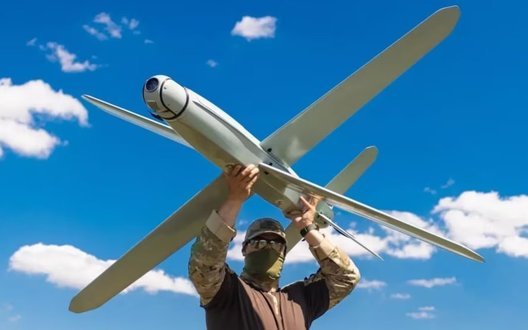
Keeping the Lebanese army weak: A hardened US military doctrine at Israel's service

As Lebanon marks a month since “Black Wednesday”, when massive Israeli strikes killed 361 people, the international community continues to call on the Lebanese army to disarm Hezbollah. But the US legal imperative to ensure Israel has a “qualitative military edge” (QME) has kept the Lebanese military under-funded, under-equipped and unable to perform its role.
Issued on: 07/05/2026 - 19:39
11 min Reading time Share By: Leela JACINTO
Exactly a month ago, Wissam Charaf was in Yarze, a picturesque town in the hills overlooking Beirut, when he suddenly heard the rumbling sound of an Israeli warplane just before it fired on a hill right across from where he was enjoying a break with his family from the Lebanese capital.
The warplane had struck Kayfoun, a town south of Beirut, which had been hit in the past during the waves of air strikes and bombardments Israel has conducted in Lebanon since October 2023. Charaf, like many Lebanese, had grown sickeningly accustomed to Israel’s frequent breaches of Lebanese sovereignty and airspace. So the 52-year-old filmmaker initially thought it would be more of the same in Lebanon’s new normal.
But this time, it was different. “Then there was another hit and then another hit. And then it went downwards towards Beirut, and then it was like baba-baba-baba-baba-baba-baba-baba,” he said, recounting the sound of incessant, quick-fire strikes. “Under our eyes, downhill, Beirut was being bombed. It was massive. It was gigantic. It was everywhere.”
It was April 8. Black Wednesday, as the Lebanese call it. Operation Eternal Darkness as the Israeli military called it.
In just 10 minutes, the Israeli military offloaded 100 bombs across Lebanon, from Hermel in the far north, across the eastern Bekaa Valley, to Beirut on the western coast and down to the towns and villages in the country’s already battered south. The death toll on one day mounted to 361, including women and children. In a matter of minutes, Israel had carried out one of its worst mass killings in Lebanon’s history.
Read more‘We’ve lost a lot’: Lebanese residents return to bombed-out homes in south Beirut
Amid an international outcry, diplomatic attempts to include Lebanon in the Iran ceasefire deal – which was announced by Pakistani mediators on April 8, before a US-Israeli rollback – went into high gear.
A week later, US President Donald Trump announced that the leaders of Israel and Lebanon had agreed to a 10-day truce. The US State Department brief on the ceasefire deal noted that, “All parties recognize Lebanon’s security forces as having exclusive responsibility for Lebanon’s sovereignty and national defense; no other country or group has claim to be the guarantor of Lebanon’s sovereignty.”
The long history of Israel’s entanglement with its northern neighbour has produced a diplomatic lexicon that is familiar to the Lebanese and the wider Middle Eastern public. Calls for the Lebanese security or armed forces – sometimes abbreviated to LAF – to defend Lebanon’s sovereignty dot realms of official agreements, briefings, notes and dispatches. Most bear a deceiving tone of resolution in a conflict that has defied diplomacy for decades.
Less well-known is another term, “qualitative military edge”, or QME, that has long been used in Washington policy circles. It was enshrined in US law in 2008, and guides US foreign policy to this day. QME pertains to Israel and is the underlying source, a growing number of experts say, to the bloodshed in the Middle East that shows no sign of abating.
In Lebanon, QME has a particular bearing as the country marks a month since Black Wednesday with Israel continuing to bombard Lebanon despite the shaky ceasefire, killing more than 2,700 people and displacing more than a million since the latest round of fighting re-erupted on March 2, following the outbreak of the US-Israeli war on Iran.
An Israeli military concept becomes US law
The concept to ensure Israel always has a qualitative military edge over its enemies traces its roots to the country’s first prime minister David Ben Gurion. Drawing from the lessons of the 1948 Arab-Israeli war, Ben Gurion’s 1953 defence doctrine concluded that since Israel “will continue to be quantitatively inferior vis a vis the Arab world”, the new nation “must develop a very strong qualitative edge”.
In the US, the concept did not take hold until two decades later, following the end of the 1967 war, when then-president Lyndon Johnson approved the sale of F-4 Phantom fighter jets to Israel, according to the pro-Israel think tank The Washington Institute for Near East Policy.
It was enshrined in US law in 2008 under George W. Bush’s presidency, when Congress passed the Naval Transfer Act, which requires the US to ensure that arms exports “to any country in the Middle East other than Israel shall include a determination that the sale or export… will not adversely affect Israel's qualitative military edge”.
The concept has continued to frame US legislation approving military aid to Israel through Republican and Democrat presidencies, including the 2012 US-Israeli Enhanced Security Cooperation Act, signed by Barack Obama, which mandates that the US must “help the Government of Israel preserve its qualitative military edge”.
It has ensured that Israel stands as the largest cumulative recipient of US military aid since its founding, receiving over $300 billion in assistance. Since the start of Israel’s Gaza war in October 2023, the US has enacted legislation providing at least $16.3 billion in direct military aid to Israel, according to the Washington DC-based Council on Foreign Relations.
“Initially, the idea [of QME] was simply to ensure that Israel always maintains technological and military superiority over any possible combination of regional adversaries,” explained Karim Emile Bitar, international relations professor at Beirut’s Saint Joseph University and a lecturer in Middle East studies at the Paris-based Sciences Po. “The fact that it's now embedded into US law affects arms sales and military assistance across the Middle East, including Lebanon.”
QME is “not a household concept” Bitar concedes, but it is important because “it’s one of the structural principles shaping US security architecture. It explains why some Arab states receive sophisticated weapons, those pro-US states that are very aligned with Israel, and others face major restrictions. And military aid to Lebanon has ceilings that have rarely been crossed”.
A national army weaker than a militia
In Lebanon, the flip side of Washington’s QME imperative to ensure Israel has the military edge is the enforced weakness of the Lebanese armed forces, according to many Middle East analysts.
“My critique of it [QME] is what it implies on the ground, which is this idea that we constantly hear that the Lebanese military needs to provide security in Lebanon and especially in southern Lebanon. But what we don't hear in this debate is that the Lebanese army is purposefully kept weak and under-prepared and under-equipped by the US and by Western countries that provide military aid and weapons,” said Mohamad Bazzi, director of the Hagop Kevorkian Center for Near Eastern Studies and a professor at New York University.
For more than two decades, Israel’s repeated attacks and encroachments on Lebanese territory have been aimed at fighting Hezbollah, the Shiite group with a military wing that is widely considered stronger than the Lebanese national army.
Hezbollah emerged from the 1980s Lebanese civil war – which ended with the 1990 Taif Agreement – stronger than the Lebanese national army, which had fractured along sectarian lines and dissolved during the brutal internecine conflict. At that time, Israel was still occupying southern Lebanon. Hezbollah’s supporters argued that it was the only force capable of resisting the Israeli occupation of southern Lebanon – which it did until the 2000 Israeli military withdrawal, giving the Arab world its first military victory against Israel.
Read moreShadow of failed 1983 agreement haunts new Israeli-Lebanon talks
While the rationale for Hezbollah retaining its weapons ended with the Israeli withdrawal, the militia group had, by then, amassed considerable firepower from its backers in Tehran. It had also made in-roads into Lebanese politics under the protection of Bashar al Assad, the strongman in neighbouring Syria. But during the Syrian civil war and Lebanon’s crippling economic crisis, the group’s popularity began to decline – including among Shiites in a deeply divided country where sectarian political parties often provide for their communities in the absence of state services.
But Hezbollah’s plummeting popularity, and the groundswell of Lebanese discontent over the extent of its state capture, has not translated into its disarmament, much less extinction.
Over the past two years, Israel has conducted massive campaigns against the group, assassinating its leader Hassan Nasrallah and top commanders. On Thursday, the Israeli military announced that it had killed a commander of Hezbollah’s elite Radwan force in an air strike on Beirut in the first Israeli attack on the Lebanese capital since the ceasefire agreed last month.
Israel today has carved out a self-declared buffer zone extending as deep as 10 km into southern Lebanon. The population that once lived in these areas has been displaced, and many Lebanese fear a strike at any time, anywhere as the buzz of Israeli surveillance drones offer an incessant soundtrack to their daily lives.
And yet, the Lebanese Shiite group has managed to keep up its fight against Israel. “Hezbollah still possesses capabilities, even though it has been weakened. It still possesses capabilities that in some domains surpass those of the Lebanese state. It has a large missile arsenal. It has extensive combat experience that it gained mostly in Syria when it was fighting alongside Bashar al-Assad, and it has highly motivated, ideological cadres,” said Bitar.

Hezbollah fights Israel, the Lebanese army polices
As it continues to battle the IDF in southern Lebanon and launch rockets into northern Israel, Hezbollah argues that it needs to retain its weapons since it’s the only force in Lebanon that can resist Israel.
Technically, Hezbollah has a point. “If the Lebanese military was better equipped and had the resources it needs, there would be a stronger argument for disarming Hezbollah. That's the crux of this issue. It would take away Hezbollah's argument that it needs to be the one that defends Lebanon because the military isn’t capable of doing it,” explained Bazzi.
The Lebanese army today is among the world’s weakest, ranking 118 in the 2026 Global Firepower index of 145 countries. The primarily US-funded military barely has a navy, with its patrol boats conducting mostly coastguard and anti-smuggling duties. Its “air force” has long been a source of Lebanese jokes, including on social media, where wags remark about its lowly Cessna helicopters hovering below Israel’s fighter jets combing the Lebanese airspace. Defence systems, vital for a country’s security in the modern age, are absent as Israel adds layers of shields to its Iron Dome system.
Despite the quips and barbs, the national army is a beloved institution in Lebanon. “The Lebanese army is widely respected by most Lebanese. The Lebanese people want to empower the army. They want the army to be in charge of security,” explained Bitar.
Bazzi agrees. “The Lebanese army has been hailed as this one institution that's cross-sectarian, that's been successful, that's been rebuilt in a way that preserves the power and the interests of the Lebanese state. We've heard a lot of that. But,” he added significantly, “it's never really confronted an external enemy.”
US envoy’s ‘wild interview’
Meanwhile the US and its European allies display all the signs that they want the Lebanese army to succeed, with statements proclaiming it the sole guarantor of Lebanon’s sovereignty amid frequent calls for the Lebanese army to disarm Hezbollah.
France, Lebanon’s former colonial power, also issues statements advocating the strengthening of the country’s security forces. In March, France repeated its call to “step up support to the Lebanese Armed Forces, whose mission in this difficult context is to continue disarming Hezbollah”. A Paris summit was set for April. But it was then cancelled due to the Iran crisis.
The gap between statements and reality spilled into the open last year, when Trump’s envoy for the region, Tom Barrack, publicly expressed what many Lebanese knew but never imagined they’d hear from a US diplomat.

In what came to be called Barrack’s “wild interview”, the US envoy called for the Lebanese state to disarm Hezbollah before confessing that Washington does not want to arm the Lebanese army. “We don’t want to arm them… so they can fight Israel? I don’t think so,” Barrack said.
The clincher however came when the US diplomat noted that the Lebanese army was not going to “go knock on the door of a Shia house… and say, 'Excuse me, ma’am, can I go and take the rockets and the AK-47s out of your basement?”
Barrack’s comments, Bitar noted, were “very significant because it was a sort of acknowledgement that pushing the Lebanese army to take on Hezbollah would potentially lead to civil strife.”
More than three decades after the end of the civil war, the US still fears an injection of arms into Lebanon could set the populace at each other’s throats. Meanwhile it continues to provide Israel a qualitative military edge while the Palestinian issue remains unresolved after nearly 80 years.
A month after he watched Israeli warplanes conduct its Operation Eternal Darkness from a hill overlooking Beirut, Charaf is clear-eyed about the dismal chances for peace in his homeland. “The Lebanese army is torn between an international community that is telling them, fight Hezbollah, disarm Hezbollah, and we'll give you aid later. And the Lebanese army is saying, guys, if you want us to disarm Hezbollah, well at least give us weapons to do it,” he noted with a sigh.
“They're asking the Lebanese army somehow to obey the decisions of the Israeli army,” he added. “And they're asking the Lebanese army to do something that I would say is mission impossible.”
Advertising Keywords for this articleСхожі новини
Засідання Ради НАТО-Україна: уроки війни будуть враховані для кращої оборони
Ігнат заявив про дефіцит ракет для ППО та напівпорожні пускові установки після масованих атак РФ

Бадрак назвав три ключові складові на шляху до завершення війни та деокупації