June full moon 2026: When, where and how to see the Strawberry Moon
- When to see the June full moon
- Why it's called the Strawberry Moon
- Cultural traditions and festivals
- What else to see in the sky around the full moon
- Observing tips
The June full moon occurs at 7:57 p.m. EDT (2357 GMT) on June 29. That's when the lunar disk will pass opposite the sun in Earth's sky, appearing fully lit by the sun's rays.
This month's full moon is also known as the "Strawberry Moon," reflecting the time of year when Native American tribes harvest the ripened fruit. It is also the first full moon of summer, following soon after the June 21 summer solstice, which marks the astronomical start of the season and the longest day of the year.
June's full moon tracks the lowest path of any full moon throughout the year, and that's thanks to its proximity to the summer solstice — when the sun is at its highest in the daytime sky.
Article continues belowWhen to see the June full moon
Look to the southeastern horizon at sunset on June 29 to see the Strawberry Moon climb into the early summer sky, embedded among the stars of the constellation Sagittarius. Seeing those stars may prove a challenge, in fact, due to the deluge of moonlight pouring from the lunar disk.
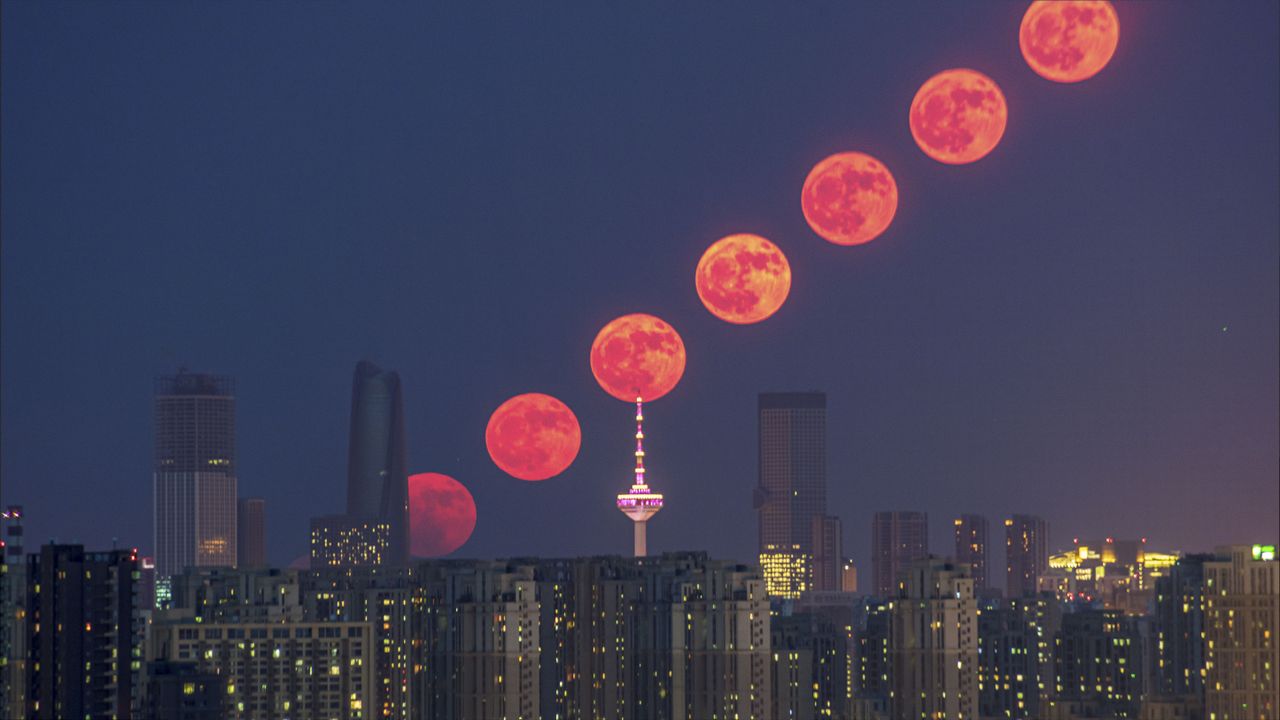
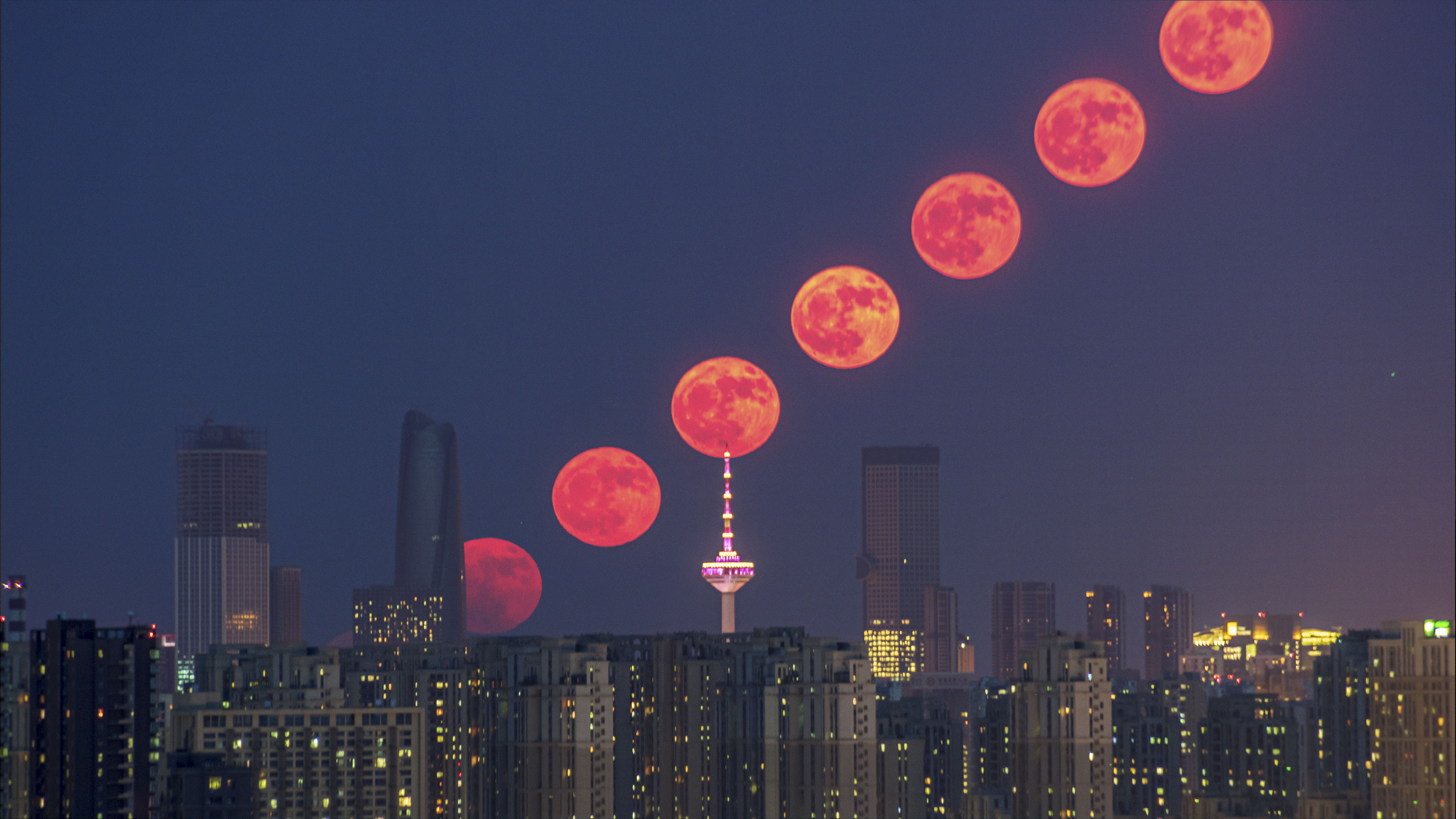
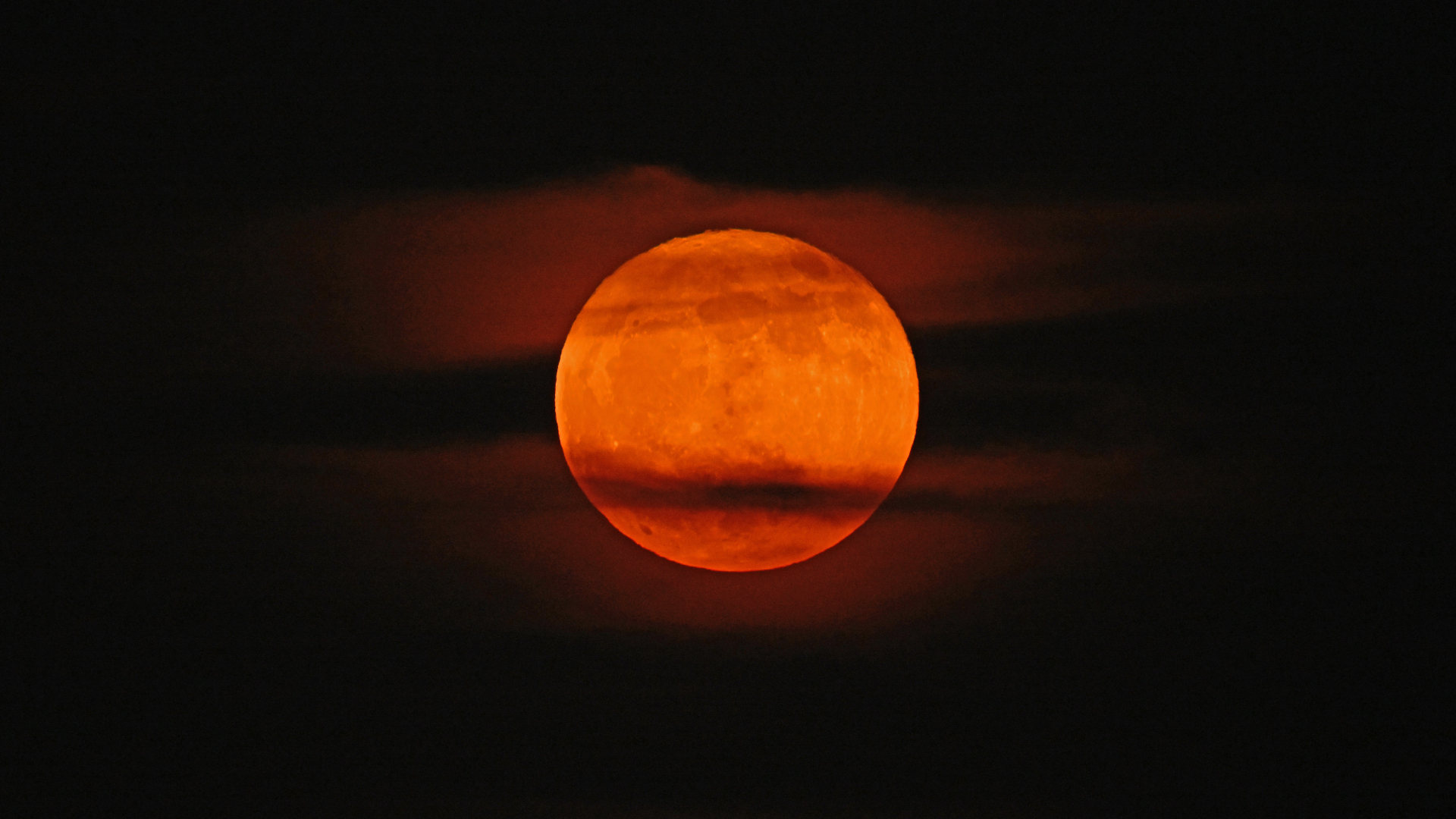
Beyond brightness, Earth's natural satellite will also appear particularly large to the unaided eye as it rests close to the horizon because of a phenomenon known as the moon illusion. You may also see the lunar disk adopt a yellow-orange glow in the period directly following moonrise, when its light will be scattered and filtered by the atmosphere.
Full moon timings for when the moon is 100% illuminated (note local moonrise and moonset times will vary depending on your location):
Swipe to scroll horizontallyCity | Local time |
|---|---|
New York | 19:56 EDT on June 29 |
London | 00:56 GMT on June 30 |
Beijing | 07:56 CST on June 30 |
Tokyo | 08:56 JST on June 30 |
Sydney | 09:56 AEST on June 30 |
Why it's called the Strawberry Moon
The most famous name for the June full moon is probably the "Strawberry Moon" in reference to the wild fruit that ripen and are harvested by Native American Algonquian tribes around the time it rises, per the Old Farmer's Almanac. However, it does have other titles.
It is, for instance, also known as the "Berries Ripen Moon" by the indigenous Haida people, the "Green Corn Moon" by the Cherokee and the "Birth Moon" by the Tlingit. The latter reflects the period when certain animals are born in the Pacific Northwest.
Europeans, meanwhile, traditionally call it the "Horse Moon," "Hot Moon" and the "Mead Moon," the final one owes itself to the Anglo-Saxons because its appearance in the sky coincides with the time that meadows are mown, according to Time and Date.
Cultural traditions and festivals
The June 29 full moon coincides with the Buddhist festival of Poson Poya, which celebrates the introduction of the religion to Sri Lanka over 2,000 years ago. Worshipers mark the day by visiting holy sites and temples, the giving of alms and practicing mindfulness and spiritual purity, as noted by the University of Colombo in Sri Lanka.
What else to see in the sky around the full moon
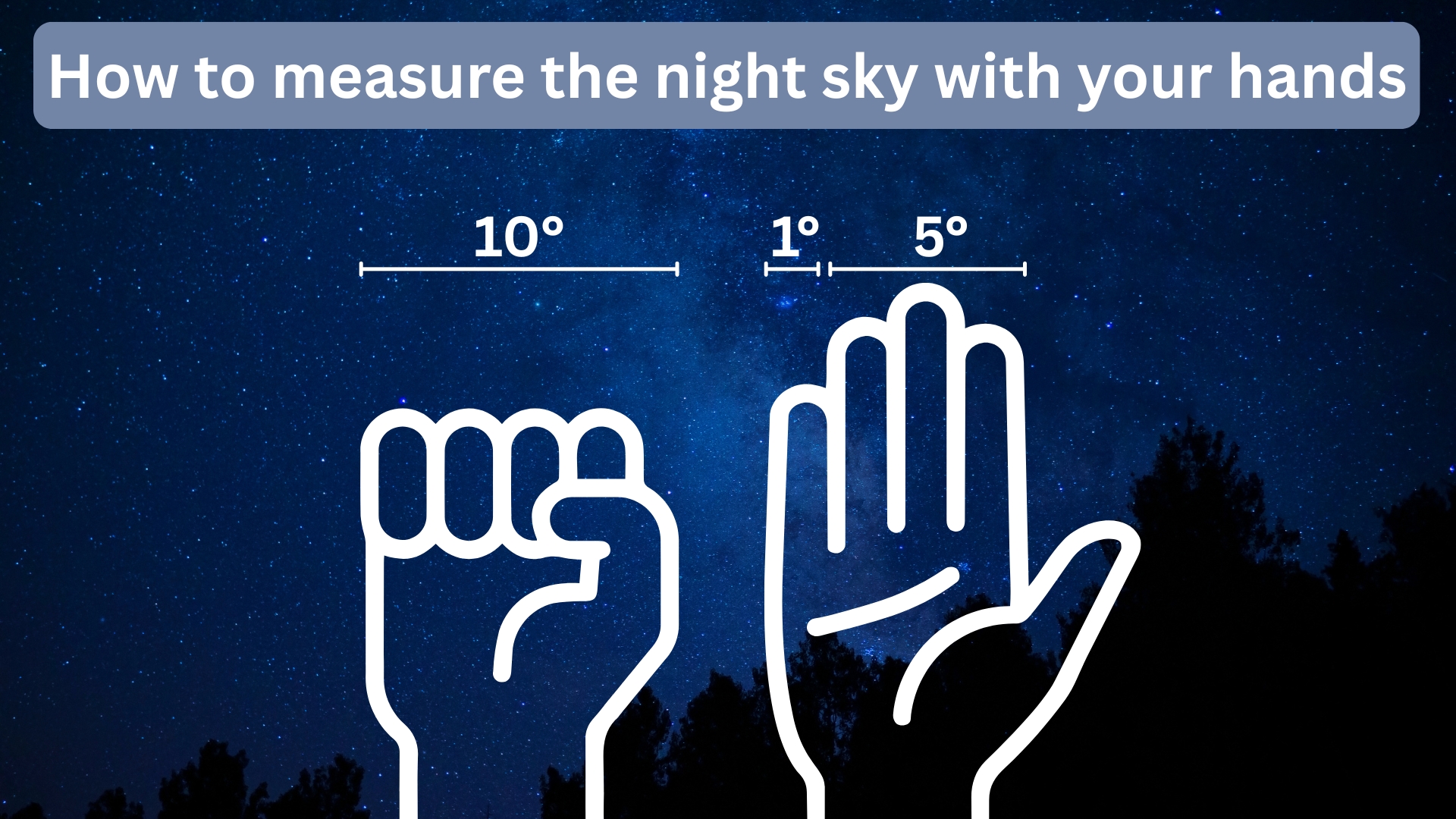
Look 10 degrees to the upper right of the Strawberry Moon at sunset on June 29 to find the red light of Antares — derived from Greek for "rival of Ares" — glowing at the heart of the constellation Scorpius. To its upper left will shine Altair — a bright star that lives about 16.8 light-years from Earth — marking the tail of the great eagle represented in the constellation Aquila.
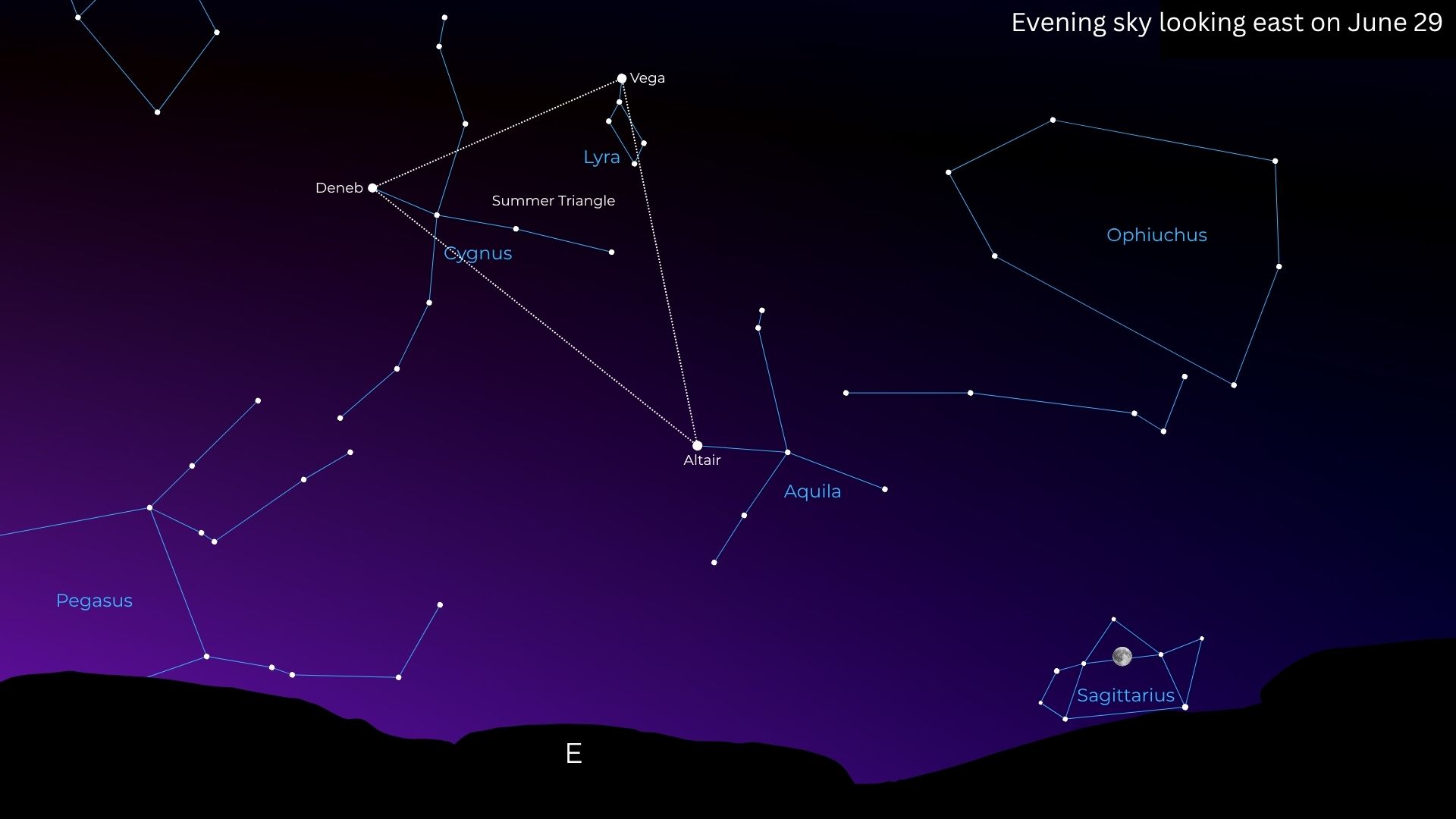
Next, look to the upper right of Altair to find Vega — the fifth brightest star in the night sky and a once and future north star. To its lower left will be the supergiant star Deneb. These three stars form a famous asterism known as the Summer Triangle, a staple of the summer night sky.
Steal your gaze away from the moon and look to the west to find Jupiter low on the western horizon, with Venus glowing brightly to its upper left in the golden glow of the setting sun. Mercury will also be present to the lower right of Jupiter, though you'd need a perfectly clear view to the west to stand a chance of spotting it.
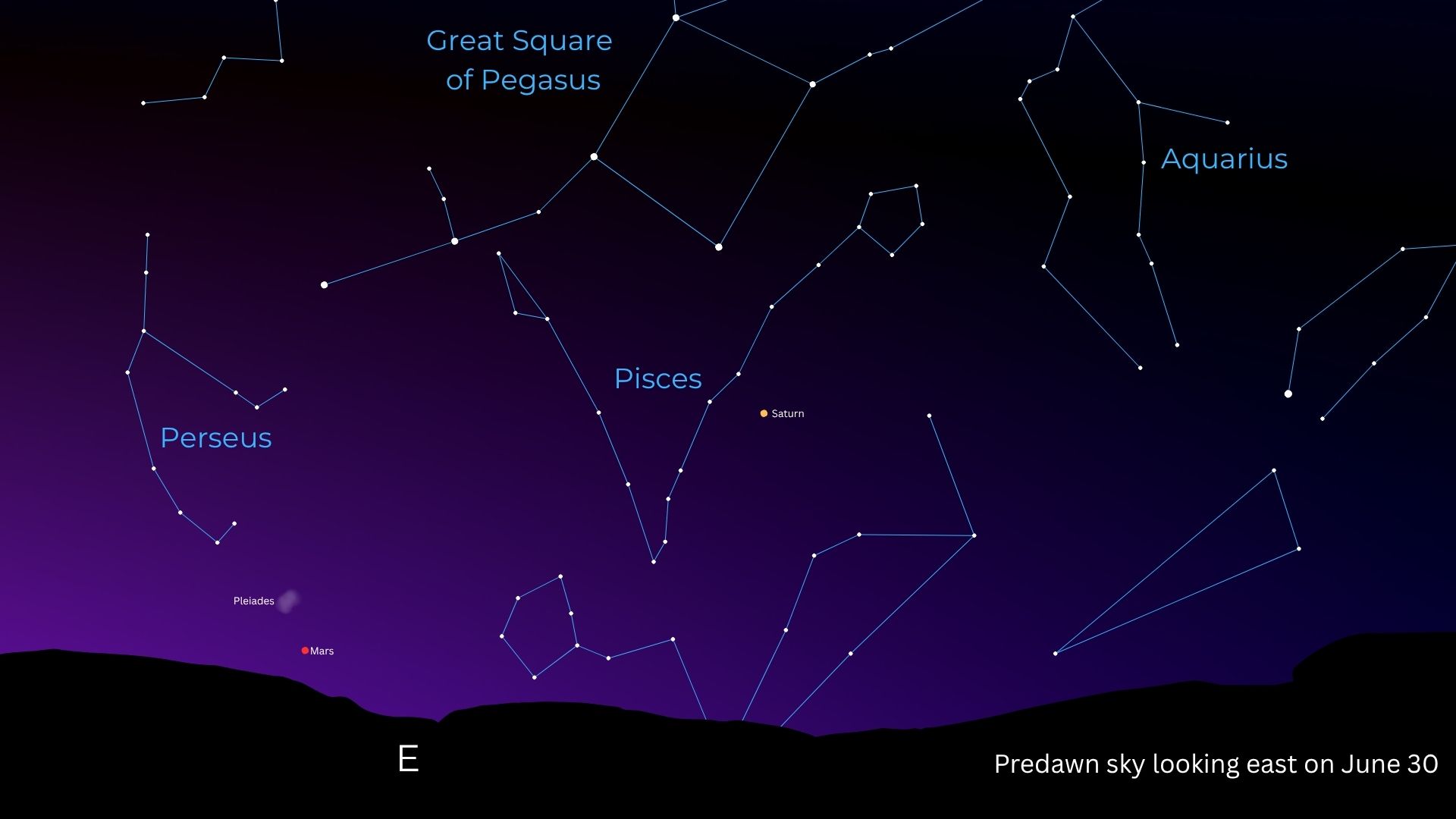
Early risers will have a chance to spot a different planetary grouping in the hours preceding dawn on June 30, as the lunar disk draws close to the southwestern horizon. The steady light of Saturn will shine below the Great Square of Pegasus with Mars lower still on the eastern horizon, close to the glow of the Pleiades open cluster.
Observing tips
The lunar disk is entirely bereft of shadows during the full moon phase, making this the perfect time to trace the outline of lunar maria — where lava flows filled colossal impact basins billions of years ago before hardening to form sweeping basaltic plains. This phase is also an ideal chance to spot the bright streaks of material cast out during violent impact events.
You can use a DSLR camera with a telephoto lens, or even a modern smartphone camera — particularly one with a bespoke astronomy function — to capture gorgeous images of the full moon. The following tips will help, but for best results, you should read our expert guide to imaging the moon, along with our roundups of the best cameras and lenses for astrophotography if you want to upgrade your equipment.
Top tips to photograph the moon
- Use a tripod to keep your camera as steady as possible.
- Use a remote shutter/timer to prevent camera wobble.
- A smartphone stargazing app can help you find the exact point of moonrise on your local horizon.
- A lens with a focal length of 12-50 mm is useful for landscape photography, while a focal length of at least 400 mm is advised for capturing more detailed views of the lunar surface.
- The moon can be made to appear particularly large while close to the horizon next to foreground objects, where it may take on an orange-yellow appearance thanks to Rayleigh scattering. A cleaner, more "classic" view can be captured as it soars high overhead.
Why not try and capture an image of the moon during each major phase (excluding the new moon) as the line separating night from day sweeps across the lunar surface throwing ancient craters, ravines and mountain ranges into relief. You can also find your way to the lunar south pole using our handy crater-hopping guide, which could well serve as the location of humanity's next landing site on the moon's surface.
Swipe to scroll horizontallyMonth | Full moon name | Date and time |
|---|---|---|
July | Buck moon | July 29, 10:36 a.m. EDT (1436 GMT) |
August | Sturgeon Moon | Aug. 28, 12:18 a.m. EDT (0418 GMT) |
September | Corn Moon | Sept. 26, 12:49 p.m. EDT (1649 GMT) |
These times mark the exact instant of full illumination. Your specific moonrise or moonset may be hours earlier or later, depending on your location. For the best viewing plan, use an app such as Stellarium or SkySafari 7 Pro to find your local moonrise time.
Editor's Note: Did you capture a beautiful picture of the moon and want to share it with Space.com's readers? Then please send your photo(s), comments, and your name and location to spacephotos@space.com.
View MoreYou must confirm your public display name before commenting
Please logout and then login again, you will then be prompted to enter your display name.
Logout
Anthony Wood joined Space.com in April 2025 after contributing articles to outlets including IGN, New Atlas and Gizmodo. He has a passion for the night sky, science, Hideo Kojima, and human space exploration, and can’t wait for the day when astronauts once again set foot on the moon.
Схожі новини
Briefing Chat: Stressed mitochondria spawn new 'organelles' in cells
European funder must increase capacity to meet the ambition of scientists
Prestigious European science funder scraps stricter rules after researcher backlash