‘It’s like stealing’: Palestinian family’s seized property listed on Booking.com

West Bank home described as ‘ideal for outdoor gatherings’ is among 41 listed rentals in illegal Israeli settlements
Some of Mohammad al-Sbeih’s fondest childhood memories are of his small farm in the hills south of Bethlehem, where three generations of his family grew wheat and barley.
“It was a hard plot to farm as it was on a hillside with terraces, but it was so beautiful,” Sbeih remembers.
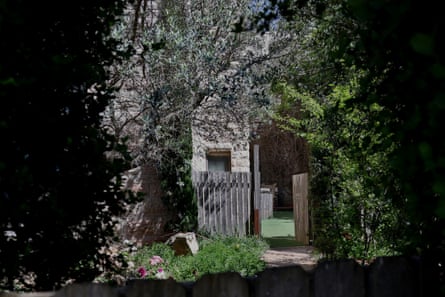
Now, however, the houses and roads of an Israeli settlement, Neve Daniel, are built where the Sbeih family once grew food, and the expansive view towards the sea is the chief selling point of a rental property being advertised on Booking.com.
The description on the global travel site says: “Guests can relax in the garden or on the terrace, enjoying the fresh air and scenic surroundings.” It adds the Neve Daniel house has a picnic area and is “ideal for outdoor gatherings”.

A new report by Ekō, a US-based advocacy group focused on corporate accountability, lists 41 Booking.com listings in 14 illegal Israeli settlements across the occupied West Bank in two main clusters, along the Jordan valley including the Dead Sea, and in the settlement ring that has been built around East Jerusalem, including two inside Jerusalem’s old city, on territory captured by Israel in 1967 and annexed in 1980.
The settlements involve the transfer of a civilian population into occupied territory, which is a violation of the fourth Geneva convention, and the Rome statute (the founding document of the international criminal court) which deems such colonisation a war crime.
The main operating arm of Booking.com is headquartered in the Netherlands, where a criminal complaint by the European Legal Support Center, a pressure group supporting Palestinian rights, is under review by Dutch prosecutors.
The complaint argues that settlement-linked bookings may constitute money laundering under Dutch law on the grounds that the underlying commercial activity is connected to illegal settlements.
The International court of justice (ICJ) issued an advisory opinion in July 2024, at the request of the UN general assembly, confirming the illegality of the settlement and stating that governments and organisations were obliged to not recognise the legality of Israeli settlement in occupied Palestinian territories.
Israel is a signatory to the Geneva conventions, but argues that they do not apply to the West Bank because they were not part of another sovereign territory before the 1967 war, which resulted in Israeli occupation, because Jordanian rule in the territory was not internationally recognised. Israel also argued that the ICJ did not have jurisdiction.
Airbnb, a US firm, also lists properties for rent in the settlements. A Guardian investigation in February 2025 found 760 rooms in hotels, apartments and houses listed by the two companies. Airbnb said it would stop advertising rentals in settlements in 2018, but reversed the decision a few months later after a legal challenge from hosts, potential hosts and guests.
In 2022, Booking.com introduced labelling for settlements which advises would-be guests to consult government advisories “to make an informed decision about your stay in this area, which may be considered conflict-affected”.
The warning is in small print and does not appear on the webpage for individual houses, but only in response to a search under the name of the settlement where they are located.
A Booking.com spokesperson said: “Our mission is to make it easier for everyone to experience the world and as such we believe it’s not our place to decide where someone can or cannot travel.
“We continue to monitor the situation closely, including the potential for changing laws and rigorously apply the principles and processes outlined in our human rights statement, as we do in all disputed or conflict-affected areas in the world.”
In its section on “conflict-affected areas”, the company’s human rights statement says: “Where we determine that we may be directly linked to negative human rights impacts through the activities of our listings, we will take appropriate action.”
Ekō has previously conducted a range of campaigns on corporate social responsibility, including highlighting the rule of online sites selling gelatin produced from slaughtered donkeys, and fundraising for initiatives to remove plastic waste from the oceans.
The Ekō report, titled “Booking.com: experience Israel’s illegal occupation” said: “Every day Booking.com fails to act is another day it profits from the theft of Palestinian land and props up a government implicated in atrocity crimes.”
Sbeih is not optimistic about the prospect of redress. His family have been losing legal battles in Israeli courts ever since its five hectares (12 acres) of farmland was seized in 1982.
Sbeih said: “We brought all our documents to the court, the title deeds and a certificate from an agricultural expert confirming that the land was being used,. The other side brought nothing, not a single paper.”

The land seizure was upheld on the grounds that the area was vital for national security, a common pattern in the land seizures in the West Bank over several decades.
The hillside stood empty and unused for two decades after that court decision. Each time the family tried to visit from their home in al-Khader on the outskirts of Bethlehem, the military turned them back.
Eventually, the family plot was swallowed by the Neve Daniel settlement, which spread from its original location on a Jewish-owned farm. Sbeih used to be able to take his children and grandchildren to a vantage point from where he could point out the family lands, but that is no longer possible under movement restrictions imposed at the outbreak of the Gaza war in October 2023.
Despite all the years of disappointments, he still cried when Ekō researchers first showed him the map of the Booking.com rental last month. “I thought it should be my children and grandchildren in that beautiful spot. It was meant to be theirs,” Sbeih said. “I know that this is a big company and, most probably, they have a lot of investments around the world, and this is a small thing. But when you steal $10, it’s like stealing a million dollars, and you have to be judged in the same way.”
Explore more on these topicsShareReuse this contentСхожі новини

Indian-origin former CEO sentenced to 5 years in prison over $212 million fraud in New Jersey, asked to pay $125 million
Quote of the day by psychoanalyst Erik Erikson: “Hope is both the earliest and the most indispensable virtue inherent in the state of being alive. If life is to be sustained hope must remain, even where confidence is wounded, trust impaired.”
Засідання Радбезу ООН через ескалацію атак РФ проти України відбудеться 19 травня – постпред