'It felt like the world was ending': One year after the Iberian blackout, is Portugal more cautious?

 Facebook
 Twitter
 Flipboard
 Send
Send
 Reddit
 Linkedin
 Messenger
 Telegram
 VK
VK
 Bluesky
 Threads
 Whatsapp
Copy/paste the article video embed link below:
Whatsapp
Copy/paste the article video embed link below:
 Copied
Portugal has proposed sweeping reforms following last year’s blackout, ranging from 72-hour power autonomy for key services to an independent alert system and an overhaul of SIRESP. Meanwhile, Euronews spoke to ordinary Portuguese about their country being swept up by darkness.
On this day last year, all of Portugal and Spain were plunged into darkness.
 ADVERTISEMENT
ADVERTISEMENT
ADVERTISEMENT
One year on, a Portuguese parliamentary working group has published its final report on the blackout, recommending sweeping changes to how the country handles power grid failures — and acknowledging that the government's response in the first minutes was guided by "intuition" rather than any established plan.
The report, presented on Tuesday, proposes that hospitals, health centres, nursing homes and emergency services be required to maintain a minimum of 72 hours of energy autonomy, with all other critical infrastructure required to sustain at least 24 hours.
It also calls for the fuel storage limit at such facilities to be raised from 500 litres to 3,000 litres — a ceiling already common in other European countries — and for food retailers and pharmacies to be formally classified as critical infrastructure.
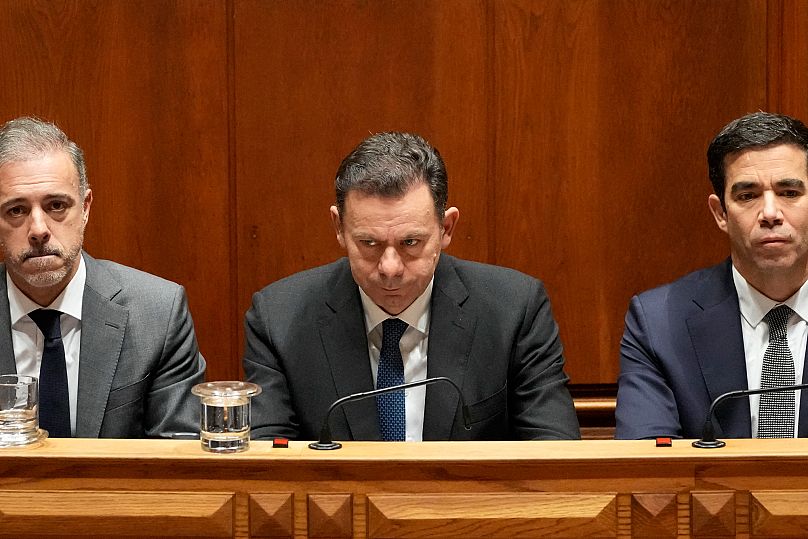
The parliamentary group further recommends a structural overhaul of SIRESP, the integrated emergency and security communications network, and the development of an emergency alert system independent of commercial mobile networks.
It also calls for faster activation of emergency procedures, citing delays during last year's outage, and for a review of the compensation framework for electricity supply interruptions.
The government operations centre, CORGOV, was created in November 2025 in direct response to the blackout, following the Minister for the Presidency, António Leitão Amaro, acknowledging that there had been no action plan for serious crises.
He told the working group's final hearing last Thursday that "the country needs to do more."
Series of faults as triggers
A technical report released in March concluded the blackout was not caused by a single fault but by a cascade of failures that compounded each other in under 90 seconds.
In the minute before the collapse, voltage rose across multiple nodes in the Spanish grid while output from large renewable energy plants fell by around 500 megawatts.
That drop in active power reduced the reactive power those generators absorbed from the grid, pushing voltage higher still.
A transformer at a substation in the Granada area then tripped its overvoltage protection, triggering the wider collapse. The full analysis runs to more than 400 pages.
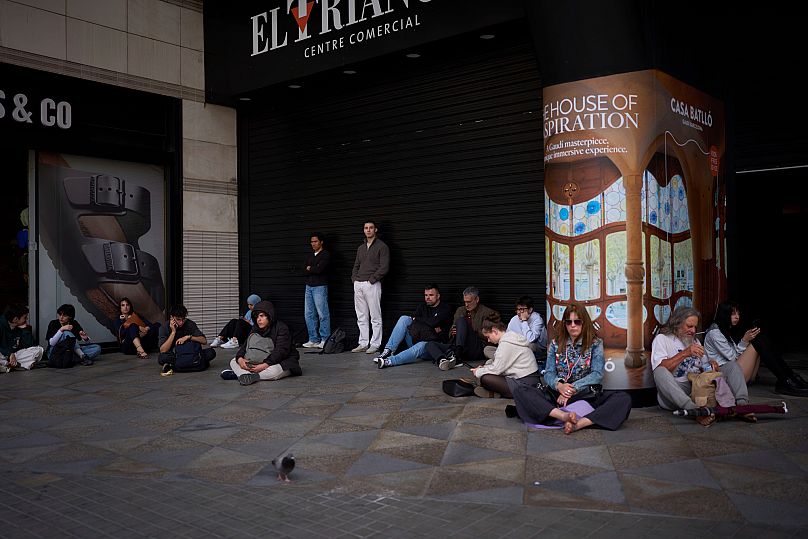
Following the technical report's publication in March, the Portuguese government referred the question of compensation to the national energy regulator, ERSE.
"Now is the time for the national regulator to make its assessment and indicate the way forward with regard to compensation," said Environment and Energy Minister Maria da Graça Carvalho.
'Without anything, people panic'
The European Commission responded to last year's outage by activating its resilience strategy and recommending that households prepare an emergency kit sufficient to last 72 hours, including drinking water, non-perishable food, a first-aid kit and a battery-operated radio or torch.
Euronews asked people in Lisbon whether they had acted on that advice. Responses were mixed.
Filomena Nobre, a pensioner, said she had bought a battery radio and spare batteries, and packed a rucksack with a blanket, a whistle and other supplies. "I also prepared for a possible earthquake," she added.
Manuel Oliveira, 77, said he already kept candles, a battery radio and tinned food at home and could survive another outage — although "not for more than a week."
Others said they had the basics but had made no deliberate preparations. "I have tinned food and money at home," said Sónia, a shopkeeper. "I just wouldn't know the news because I didn't have my radio."
RelatedLuís Latas, a pensioner who was on holiday during the blackout, said he rushed to a supermarket to buy water and toilet paper. "It felt like the world was ending," he said. "Without mobile phones, without anything, people panic."
The parliamentary report's recommendations will now be evaluated by party groups in Portugal's Assembly of the Republic and may still be amended before being presented to the executive.
Go to accessibility shortcuts Share Comments