Issues with Tesla’s Robotaxi “Rollout” in Texas
 May 12, 20263 hours
Zachary Shahan
0 Comments
Support CleanTechnica's work through a Substack subscription or on Stripe.
May 12, 20263 hours
Zachary Shahan
0 Comments
Support CleanTechnica's work through a Substack subscription or on Stripe.
Reuters has an article out titled “Tesla’s robotaxi rollout features Texas-sized wait times.” Youch — stinger.
Of course, as I’ve reminded readers in the past, less than a year ago, Tesla CEO Elon Musk predicted that Tesla robotaxis would probably be covering half of the US population by the end of 2025. Nearly 5 months later, the trial robotaxi service has barely covering anyone, especially if you only count the few cars not using a human supervisor in the car. Reuters has more info on this for us now, though.
“Reuters reporters who recently tested Tesla’s robotaxis in those cities, however, found them to be still in a beta-testing phase. The service was plagued by long wait times and sometimes no availability at all. Drop-off spots on some rides were far away from the rider’s destination,” the news agency writes. “Tesla did not respond to requests for comment for this story.” Naturally.
One reporter was in Dallas. They indicate that it took about 2 hours to make a trip that would normally take ~20 minutes. Yikes. It was a 5-mile trip mostly along a major highway. It seems an Uber could have provided the trip in about a quarter of the time.
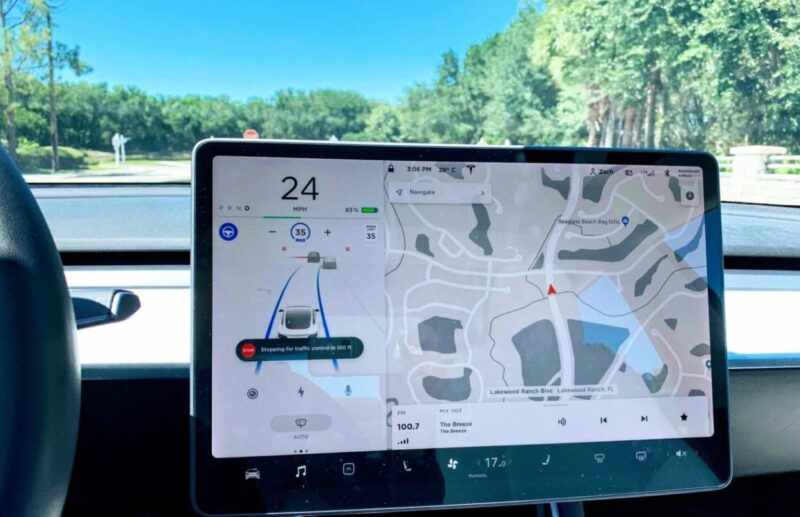
For whatever reason, the Tesla robotaxi dropped the reporter off about 15 minutes away (walking) from their destination. (Remember, Elon Musk doesn’t like reporters — maybe it was intentional.) In all seriousness, one of Tesla’s issues as long as I’ve been using “Full Self Driving” (for several years now) has been poor navigation decisions. Well, even if you have a Tesla and don’t use Full Self Driving (FSD), you’ve likely experienced navigation issues several/numerous times, but FSD amplifies even core issues by not following the navigation or getting the car trapped in the wrong lane and having to reroute. It seems that didn’t happen in this case (stay tuned for another story in a minute, though), but it’s also not that surprising to find out that the car dropped the passenger off 15 minutes away from where they wanted to go. The issue isn’t that Tesla FSD can’t drive you from point A to point B; it’s about the reliability and efficiency of the system across a large number of such trips.
Here’s more of an explanation on what happened:
“After the rider pushed a button for ‘support’ inside the car, an agent responded that the area was ‘restricted,’ even though it was inside the Dallas service area map that Tesla posted on social media last month. ‘We’re still in the beta version,’ the agent said.
“The reporter booked rides to two other locations downtown. Each time, the app showed that the car would drop off the passenger in an area that would require a walk of about 15 minutes to reach the destination. On a ride to a downtown farmers’ market, the robotaxi dropped off the reporter on the opposite side of a freeway and suggested he walk under overpasses strewn with trash and smelling of urine.”
Ah, yes, the good old “beta” excuse — a decade running.
There was another trip where the car did have trouble following the navigation, and missed a left turn four times. Yes, the car missed a key left turn four times, made right turns to get itself back to that point, and didn’t finally make the left turn until the reporter contacted a remote human attendant for help.
Welp, maybe things are going better in another area of Texas. Or maybe not.
Over in Houston, where Tesla is offering robotaxi service in a little suburban area, the results weren’t any better. “Another Reuters reporter who recently tested the service on a weeknight was able to obtain one ride. When she tried a second time, the same car showed up as being 13 minutes away, but the app later canceled the ride.
“She tried to find another car for the next 30 minutes but none were available. She ordered an Uber to her destination.”
In Tesla’s prime robotaxi city of Austin, another reported found wait times still weren’t very good. “A Reuters reporter in Austin spent three weeks in April tracking wait times for Tesla robotaxis eight times a day, from morning through evening. The wait times exceeded 15 minutes about half of the time, and were at least 25 minutes on more than one-quarter of checks. In 27% of cases, no cars were available at all.” Tesla’s robotaxis have also been involved in 15 accidents, one person has been sent to the hospital as a result of one of those, and Tesla (unlike Waymo) has asked that crash data be redacted from public records. Austin Police Lieutenant William White has ridden in the robotaxis and noted that they tend to speed. Tesla’s response is that since humans tend to speed, it’s safer if Tesla’s robotaxis tend to speed. “At no time would we ever advocate that you program your vehicles to speed,” White responded.
Sign up for CleanTechnica's Weekly Substack for Zach and Scott's in-depth analyses and high level summaries, sign up for our daily newsletter, and follow us on Google News! Advertisement Have a tip for CleanTechnica? Want to advertise? Want to suggest a guest for our CleanTech Talk podcast? Contact us here. Sign up for our daily newsletter for 15 new cleantech stories a day. Or sign up for our weekly one on top stories of the week if daily is too frequent. CleanTechnica uses affiliate links. See our policy here.CleanTechnica's Comment Policy
Share this story!
Схожі новини
CEO Sony назвал PlayStation "пластиковой коробкой": что он имел в виду
Android 17 заставит сделать паузу перед открытием TikTok и Instagram