Is the far-right AfD misusing its parliamentary questions?
In January 2024, Bavarian school principal Roland Feucht publicly urged people to join a demonstration for democracy and social diversity at his school.
But his call had consequences. Several members of the far-right Alternative for Germany (AfD) submitted a so-called Kleine Anfrage in the Bavarian state parliament, accusing Feucht and other school principals of violating the political neutrality required of those working for the state. The lawmakers asked whether the Bavarian state government would initiate disciplinary action against the principal.
Feucht stood by his actions, and the Bavarian state government saw no reason to criticize his conduct. Nevertheless, Simone Fleischmann, chair of the Bavarian teachers' association, argued that the political consequences were significant: "Every one of those questions makes you, as a teacher, pause," she told the political TV magazine Kontraste. "As a teacher, it makes you wonder: Should I do this? Am I stepping into dangerous territory? Because that's what it is when I know I might be denounced."
Why Germany's anti-AfD firewall is crumbling
To view this video please enable JavaScript, and consider upgrading to a web browser that supports HTML5 video
Fear among teachers in Germany
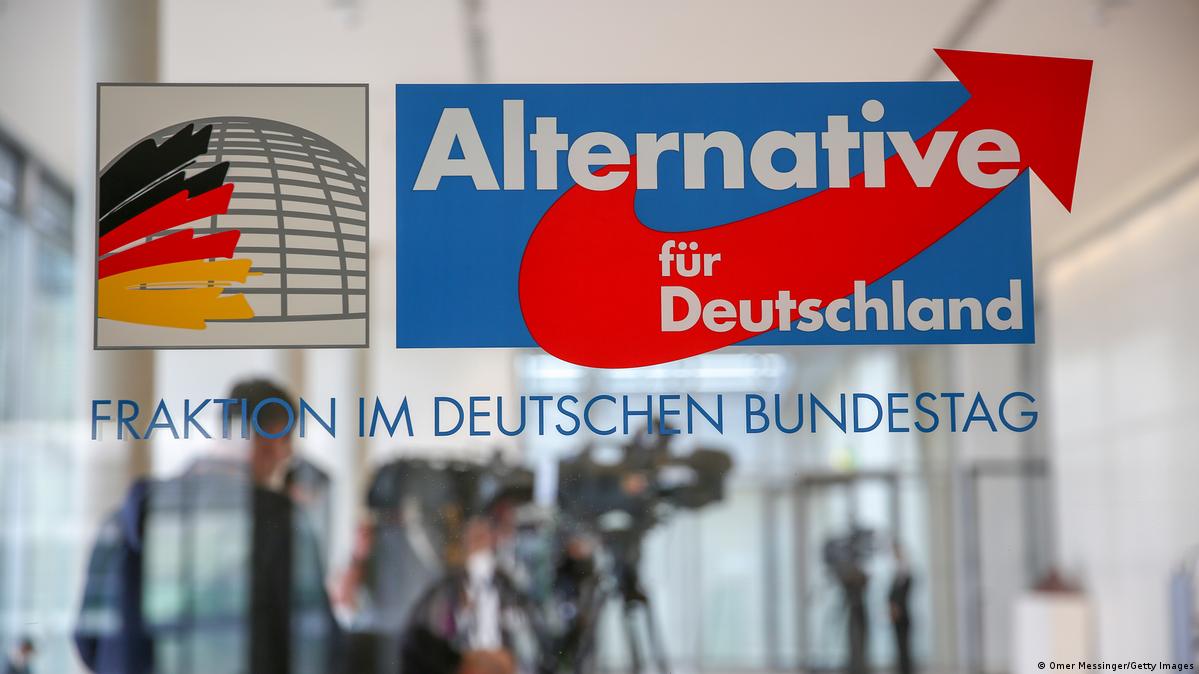
There are more and more reports of alleged attempts by the AfD to use parliamentary questions to intimidate people. Refugee support workers, for example, said they had the feeling the AfD was "breathing down their necks," according public broadcaster NDR. Across the country, researchers, associations, churches and parties are warning that the AfD is misusing its right to ask official questions to intimidate political opponents.
Kleine Anfragen — formal written questions submitted by members of parliament to both state and federal governments — are among Germany's most important democratic tools.
They enable the opposition to monitor the government's work, and since the answers to the questions have to be made public, the inquiries force the executive branch to disclose data and facts related to its policies. In Germany, politicians from all parties make extensive use of this right, and the resulting inquiries often lead to important public debates.
What is striking, however, is that the AfD is submitting ever more of them. Between March and October 2025 alone, for instance, the party submitted 525 such questions to the federal parliament, or Bundestag — more than two per day, and almost two-thirds of all parliamentary questions. The numbers are also skyrocketing on the state level.
AfD in Thuringia: Pressuring civil society?
The AfD submits a noticeably large number of inquiries in the state of Thuringia, one of the party's strongholds, where Björn Höcke, one of the party's most prominent politicians, heads its state parliamentary group. Höcke is considered one of the AfD's more radical voices, and has twice been convicted for using slogans connected with Adolf Hitler's SA, a criminal offence in Germany. The AfD's Thuringia branch has been classified by German security authorities as "confirmed right‑wing extremist."
Katharina König-Preuss, a Thuringian state parliamentarian of the socialist Left party, sees a strategy behind the flood of AfD questions. She comes from a prominent civil rights family in the former East Germany. Her late father, Lothar König, fought against the authoritarian communist state, against right-wing extremism and against antisemitism.
König-Preuss says she is often massively insulted, slandered, and even attacked by the AfD.
"Anyone who has ever spoken out against the AfD becomes the subject of a flood of questions," she told DW.
In principle, the AfD has the same right as any other elected party to submit questions. However, she questions the intention behind them: "For one thing, they try to obtain the names and data of individuals and associations from civil society. That can lead to attacks on those individuals."
She also believes that many of the questions target minorities.
"What is really extreme are those questions in which the AfD attempts to find out how many people living in Thuringia identify as gay or lesbian. And that brings back memories of dark times."
By that, she means the period under Adolf Hitler's Nazi rule, when Germany officially recorded, registered and persecuted all Jews, Sinti and Roma ― and homosexuals.
Some civil society groups are also feeling the consequences of the AfD's parliamentary questions. One example is the Amadeu Antonio Foundation in Berlin, which campaigns against racism and antisemitism and receives state funding. The foundation is openly critical of the AfD — and is therefore a thorn in the party's side.
According to the foundation's spokesperson, Lorenz Blumenthaler, the AfD has submitted numerous parliamentary questions concerning the organization, most of them focusing on its public funding.
"They paint a picture of conspiracy between the government and the so-called 'deep state' — one in which the government and NGOs are supposedly working hand-in-hand on a shared political agenda," Blumenthaler told DW.
He highlights the consequences of this flood of questions: "Above all, the aim is to create an impression among the broader public that something is wrong with these nonprofit organizations."
We asked if he thought the AfD is successfully doing so. His answer: "Absolutely."
DW also sought to speak to the AfD's Bundestag parliamentary group about its use of parliamentary questioning rights. However, our request for an interview remained unanswered by its press office.
AfD: Spying for Russia?
The most serious accusation against AfD parliamentary practices was issued by Thuringia Interior Minister Georg Maier, of the Social Democratic Party (SPD). In an interview with the German daily, Handelsblatt, in October 2025, he said there were indications that the AfD was misusing parliamentary questioning rights to benefit Russia. According to the interior minister, the AfD abuses these rights to deliberately probe German critical infrastructure.
The AfD has also submitted inquiries at the federal level concerning transport infrastructure, water and energy supply and digital infrastructure. The Bundestag's Defense Committee Chairperson Thomas Röwekamp (CDU) has even accused the AfD of having obtained sensitive information about the country's defense capabilities.
König‑Preuss also views such AfD inquiries critically: "What happens with this kind of information about critical infrastructure? There is no indication that the AfD then submits motions to better equip the police or disaster‑response services."
AfD politicians have often been criticized for their closeness to Russia. Several high‑ranking party members are suspected of having received money from Kremlin-related networks. Two parliamentarians — one from the German Bundestag and one from the European Parliament — are currently under investigation on charges of bribery by Russia and by China.
The AfD sharply rejects all espionage accusations issued by Thuringia's interior minister, and pointed to its democratic rights to hold the government accountable.
This article was originally written in German.
AdvertisementСхожі новини
US court blocks Trump order suspending asylum access, cites right to apply
Ukraine: Zelenskyy visits Saudi Arabia, Putin weighs G20 attendance
Is the far-right AfD misusing its parliamentary questions?
