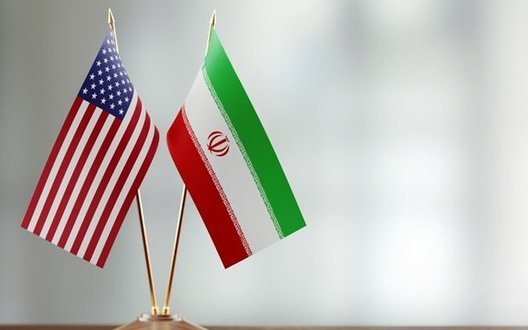
Iran war: Strait of Hormuz open amid Israel-Lebanon truce

What you need to know
- A 10-day ceasefire deal between Lebanon and Israel takes effect
- Iran says the Strait of Hormuz will reopen amid the truce
- Israeli military says it is going to stay in southern Lebanon
- US President Trump refers to war in Iran as a 'little diversion' in his second term
Here is a round-up of the latest developments on the US-Israeli war with Iran and the wider Middle East on Friday, April 17, 2026:
Skip next section Israel attack kills 1 in Lebanon after ceasefire comes into effect04/17/2026April 17, 2026Israel attack kills 1 in Lebanon after ceasefire comes into effect
An Israeli strike killed one person in southern Lebanon on Friday, Lebanese media reported, despite the beginning of a ceasefire between the two countries.
"A motorcyclist was killed in the town of Kunin, in the Bint Jbeil district, after being targeted by an enemy drone," Lebanon's state-run National News Agency reported.
Reuters reported that the report of the strike came in just minutes after President Trump said Israel was "PROHIBITED" from bombing Lebanon anymore, in a post on social media.
According to the terms of the ceasefire, Israel is allowed to target Hezbollah to prevent "planned, imminent or ongoing attacks." Israel also said it would maintain a 10-kilometer (6-mile) security buffer zone along the border.
People in Lebanon hope for 'real' ceasefire
To view this video please enable JavaScript, and consider upgrading to a web browser that supports HTML5 video
https://p.dw.com/p/5COzRSkip next section Trump says Iran will 'never' close Hormuz again04/17/2026April 17, 2026Trump says Iran will 'never' close Hormuz again
Trump has continued with a spate of posts amid what he called a "GREAT AND BRILLIANT DAY FOR THE WORLD!"
Firstly, he said the US and Iran were working together on removing mines in the strait laid by Iran.
"Iran, with the help of the U.S.A., has removed, or is removing, all sea mines!" he posted on his Truth Social platform.
He then said that Iran would not close the strait again.
"Iran has agreed to never close the Strait of Hormuz again. It will no longer be used as a weapon against the World!"
Neither of these claims could be immediately verified from the Iranian side. Throughout the war, Washington and Tehran have repeatedly contradicted each other.
https://p.dw.com/p/5COkASkip next section Germany's Merz says US should be part of international mission in Hormuz04/17/2026April 17, 2026Germany's Merz says US should be part of international mission in Hormuz
Germany has also repeated its offer to provide support to an international mission to protect shipping in the Strait of Hormuz.
Speaking after the summit hosted by France and the UK in Paris, German Chancellor Friedrich Merz said his country could offer reconnaissance and mine clearing.
"I require a decision by the federal government, a mandate from the German Bundestag and a sound military concept," Merz said.
"We will therefore take part in the further military planning discussions that are taking place and would also like to see the United States of America participate, if possible. We believe this would be desirable," he added.
https://p.dw.com/p/5COcJSkip next section Trump says he doesn't want NATO help in Hormuz04/17/2026April 17, 2026Trump says he doesn't want NATO help in Hormuz
French President Emmanuel Macron and British Prime Minister Keir Starmer have welcomed the opening of the Strait of Hormuz, saying they will go ahead with a military planning meeting next week for an international mission to secure maritime security.
The two leaders hosted a summit with some 50 countries earlier in the day, with Macron saying "we all demand the full, immediate and unconditional reopening of the Strait of Hormuz by all parties."
Starmer responded to the announcement that the Strait of Hormuz is being reopened by saying it must be "lasting," adding that the UK and France will lead a safeguarding mission "as soon as conditions allow."
However, in yet another post on Truth Social, Trump said he was not interested in NATO support now.
"Now that the Hormuz Strait situation is over, I received a call from NATO asking if we would need some help. I TOLD THEM TO STAY AWAY, UNLESS THEY JUST WANT TO LOAD UP THEIR SHIPS WITH OIL. They were useless when needed, a Paper Tiger!" he wrote, in reference to his rejected requests for support earlier in the war.
US President Trump once again upset with NATO
To view this video please enable JavaScript, and consider upgrading to a web browser that supports HTML5 video
https://p.dw.com/p/5COY5Skip next section Trump says Israel is now 'PROHIBITED' from bombing Lebanon04/17/2026April 17, 2026Trump says Israel is now 'PROHIBITED' from bombing Lebanon
Trump followed up his post celebrating the opening of the Strait of Hormuz with another rambling post.
He first appeared to deny reports that the US had been considering a cash-for-uranium exchange to remove Iran's nuclear material.
"The U.S.A. will get all Nuclear “Dust,” created by our great B2 Bombers - No money will exchange hands in any way, shape, or form," he said on his Truth Social platform.
He then went on to discuss Lebanon, where a ceasefire deal with Israel came into effect on Friday.
"This deal is in no way subject to Lebanon, either, but the USA will, separately, work with Lebanon, and deal with the Hezboolah [sic] situation in an appropriate manner."
Before finally vowing that "Israel will not be bombing Lebanon any longer."
"They are PROHIBITED from doing so by the U.S.A. Enough is enough!!!" he added.
People in Lebanon hope for 'real' ceasefire
To view this video please enable JavaScript, and consider upgrading to a web browser that supports HTML5 video
https://p.dw.com/p/5COUmSkip next section Oil prices drop by over 11% after Iran announces Hormuz reopening04/17/2026April 17, 2026Oil prices drop by over 11% after Iran announces Hormuz reopening
Oil prices dropped by over 11% after Iranian Foreign Minister Abbas Araghchi said Tehran would reopen the Strait of Hormuz for the rest of its truce with the United States.
Brent crude oil, which serves as a global benchmark for prices, plunged by $11.12 to $88.27 a barrel at 1311 UTC.
Analysts have argued that markets are reacting to a sign of deescalation between the warring parties.
"Comments from Iran's foreign minister indicate a deescalation as long as the ceasefire is in place, now we need to see also if the number of tankers crossing the Strait increases substantially," Giovanni Staunovo, an analyst at Swiss financial giant UBS, was cited by Reuters news agency as saying.
Some 20% of global oil deliveries pass through the crucial waterway.
While a two-week US-Iran ceasefire went into effect on April 8, Tehran argued that Washington ally Israel's continued offensive in Lebanon constituted a violation of the truce.
On Thursday, Israel reached a 10-day ceasefire deal with Lebanese militant group Hezbollah.
Trump threatens continued blockade
However, US President Donald Trump stressed that the United States' naval blockade of Iranian ports would stay in force until Washington reaches a deal with Tehran in a social media post issued after Araghchi's announcement.
"THE STRAIT OF HORMUZ IS COMPLETELY OPEN AND READY FOR BUSINESS AND FULL PASSAGE, BUT THE NAVAL BLOCKADE WILL REMAIN IN FULL FORCE AND EFFECT AS IT PERTAINS TO IRAN, ONLY, UNTIL SUCH TIME AS OUR TRANSACTION WITH IRAN IS 100% COMPLETE," Trump said in the post on his Truth Social platform.
He said that the negotiation process would proceed swiftly and that Washington and Tehran had already agreed on most points in talks.
The United States and Iran engaged in talks on April 11-12 in Islamabad, Pakistan, which resulted in no apparent breakthrough.
https://p.dw.com/p/5COBbSkip next section Over 38,000 women, girls killed in Gaza, UN says04/17/2026April 17, 2026Over 38,000 women, girls killed in Gaza, UN says
The UN has said Israeli attacks on Gaza between October 2023 and the end of 2025 had resulted in the deaths of more than 38,000 women and girls.
The Gaza Health Ministry has put the estimated total death toll from the war with Israel at 72,000, a number that continues to rise amid sporadic Israeli attacks despite a declared ceasefire.
This means that more than half of the victims of Israeli attacks were women and girls.
UN Women said that a further 11,000 women and girls had been left with debilitating, lifelong injuries.
The war has impacted women in other ways, with the Israeli blockade stopping access to menstrual products and leaving women having to give birth in tents without proper medical equipment.
https://p.dw.com/p/5COB4Skip next section Strait of Hormuz now 'completely open' for rest of ceasefire — Iran04/17/2026April 17, 2026Strait of Hormuz now 'completely open' for rest of ceasefire — Iran
Iranian Foreign Minister Abbas Araghchi said that Tehran was "completely" reopening the Strait of Hormuz for the rest of the ceasefire period.
"In line with the ceasefire in Lebanon, the passage for all commercial vessels through Strait of Hormuz is declared completely open for the remaining period of ceasefire, on the coordinated route as already announced by Ports and Maritime Organization of the Islamic [Republic] of Iran," Araghchi said in a post on the platform X.
Tehran effectively closed the crucial waterway, through which a large portion of the world's energy deliveries passes, on February 28 after the United States and Israel launched their war with Iran.
Iran agreed to open the Strait of Hormuz as part of a two-week ceasefire with Washington that started on April 8, but contentions remained on whether the truce included Lebanon.
Israel reached a 10-day ceasefire deal with Lebanon's Hezbollah militant group on Thursday.
https://p.dw.com/p/5CNv9Skip next section Israel's offensive in Lebanon 'still not complete' — Defense Minister Katz04/17/2026April 17, 2026Israel's offensive in Lebanon 'still not complete' — Defense Minister Katz
Israeli Defense Minister Israel Katz warned that Israel could continue its ground invasion and aerial bombardment of Lebanon after the end of a 10-day ceasefire period.
"The ground maneuver into Lebanon and the strikes on Hezbollah have achieved many gains, but they are still not complete," Katz said in a statement.
He described the 10-day ceasefire with Lebanon as a "temporary freeze" and said Israel would stick to its war aim of disarming the Iran-aligned Hezbollah militant group.
Katz said that a "significant diplomatic lever" had emerged in the goal of dismantling Hezbollah with the help of the United States by "applying pressure on the Lebanese government."
He said that residents of southern Lebanon and Beirut who had to flee their homes amid the fighting could be forced to evacuate again.
"If the fighting resumes, those residents who return to the security zone will have to be evacuated to allow completion of the mission," the Israeli minister said.
https://p.dw.com/p/5CMdwSkip next section 13 killed in Israeli strikes on Tyre just before start of Lebanon ceasefire04/17/2026April 17, 202613 killed in Israeli strikes on Tyre just before start of Lebanon ceasefire
Thursday Israeli air strikes on the southern Lebanese city of Tyre killed at least 13 people, multiple news agencies reported on Friday.
Lebanon's official NNA news agency said that around 35 people were injured in the attacks and 15 people were still missing under the rubble.
Israel launched the strikes just before a 10-day ceasefire with Israel went into effect at midnight local time (2100 UTC) on Thursday.
French news agency AFP reported that the strikes targeted six residential buildings that were destroyed, citing a city official.
https://p.dw.com/p/5CL1CSkip next section Turkey to host talks on Iran war with Egypt, Saudi Arabia and Pakistan04/17/2026April 17, 2026Turkey to host talks on Iran war with Egypt, Saudi Arabia and Pakistan
Turkey, Egypt, Saudi Arabia and Pakistan are to discuss efforts to bring the war between the United States and Israel and Iran to an end on the sidelines of a summit in the coastal Turkish city of Antalya.
Turkey's President Recep Tayyip Erdogan is to address the three-day Antalya Diplomacy Forum on Friday.
The timeline of the meeting between the four major Muslim-majority states has not been announced.
Earlier this week, Erdogan called for the current ceasefire period to be utilized for intensified diplomatic efforts.
"We are making the necessary efforts to reduce tensions, extend the ceasefire, and continue the negotiations," Erdogan told a party conference of his ruling conservative AKP.
"Negotiations cannot take place with clenched fists. Weapons must not be allowed to speak again instead of words. The window of opportunity opened by the ceasefire must be fully utilized."
It comes after US-Iranian talks in the Pakistani capital, Islamabad, with Washington saying a second round of talks is likely.
Turkey is a member of the US-led NATO military alliance and is also a major trade partner of Iran, a country it borders.
https://p.dw.com/p/5CKrsSkip next section Iranian footballers express 'deepest gratitude' for asylum in Australia04/17/2026April 17, 2026Iranian footballers express 'deepest gratitude' for asylum in Australia
Two Iranian soccer players who were granted refuge in Australia thanked the country for its support.
"We wish to express our deepest gratitude to the Australian government, and particularly Home Affairs Minister Tony Burke, for granting us humanitarian protection and a safe haven in this beautiful country," the two members of Iran's women's national soccer team said in a joint statement published by Australian public broadcaster ABC.
"The compassion and support shown to us during this challenging time has provided us with hope for a future where we can live and compete in safety," they said.
The two athletes stressed that they were "not yet ready to speak publicly" about the ordeal and called for privacy and space from the media.
Australia granted asylum to seven team members after they did not sing the Iranian national anthem at a March 2 match against South Korea in the Gold Coast, Australia, sparking concerns for their safety if they return to Iran.
Five of the members granted asylum ultimately withdrew their request and opted to go back to Iran.
https://p.dw.com/p/5CKcUSkip next section Jet fuel prices to disrupt summer travel in Europe — German air travel industry group04/17/2026April 17, 2026Jet fuel prices to disrupt summer travel in Europe — German air travel industry group
Jet fuel disruptions caused by the United States and Israel's war with Iran could soon lead to a reduction in available flights over the summer, the German Aviation Association (BDL) warned.
"The summer season is just around the corner, and the tourism ecosystem depends on air travel for incoming and outgoing tourists during the peak travel and business season," BDL chief Joachim Lang was cited by German news agency DPA as saying.
The association is made up of German airlines and airport operators.
BDL said that over 80 facilities across the Middle East have been partially and severely damaged.
Analysts warn that energy markets are likely to recover slowly in the event of an end to the war.
The head of the International Energy Agency (IEA), Fatih Birol, also warned of jet fuel shortages by the end of May in comments to Italian newspaper La Stampa on Friday.
https://p.dw.com/p/5CKbSSkip next section UK, France to host Hormuz summit in Paris04/17/2026April 17, 2026UK, France to host Hormuz summit in Paris
France and the United Kingdom are set to host a conference in Paris on devising an international plan to secure shipping in the Strait of Hormuz on Friday.
German Chancellor Friedrich Merz and Italian Prime Minister Giorgia Meloni are scheduled to take part in the Friday talks, while dozens of other countries are to attend digitally.
The United States has not been invited to the summit. Washington has repeatedly called for its allies to do more to secure shipping in the strait.
Ahead of the talks, French President Emmanuel Macron said that the mission would be "strictly defensive" and only deployed once "security conditions allow" for it.
The summit's other host, British Prime Minister Keir Starmer, called for an "unconditional and immediate reopening" of the Strait of Hormuz.
"We need to act to get global energy and trade flowing freely again," he said.
Iran effectively blocked the strait, which is a crucial artery for global energy deliveries, after the United States and Israel launched their war on the West Asian country on February 28.
Germany's DPA news agency cited German government sources as saying Berlin could supply minehunters, an escort ship and aerial surveillance assets to the international mission.
https://p.dw.com/p/5CKZOSkip next section Displaced Lebanese return home under 10-day ceasefire with Israel04/17/2026April 17, 2026Displaced Lebanese return home under 10-day ceasefire with Israel
Displaced people in Lebanon began returning home to towns and villages in the south of the country as well as to areas of the capital, Beirut, after a ceasefire deal with Israel came into effect late Thursday.
Some residents were greeted with scenes of flattened apartment blocks and other damaged buildings upon their return.
Over 1.1 million people fled the fighting in the south of Lebanon and Israel's bombing of Beirut's suburbs, amounting to around a fifth of the country's population.
Схожі новини

«Почти три дня». Андрющенко рассказал о большой переброске военных РФ и указал на «необычный» момент — фото
На світовій арені вже існує певна конкуренція за увагу України та можливість співпрацювати - Сибіга

Клименко заявил, что после теракта в Киеве не будет массовых проверок владельцев огнестрельного оружия