Iran war expands press crackdown, leaving information vacuum
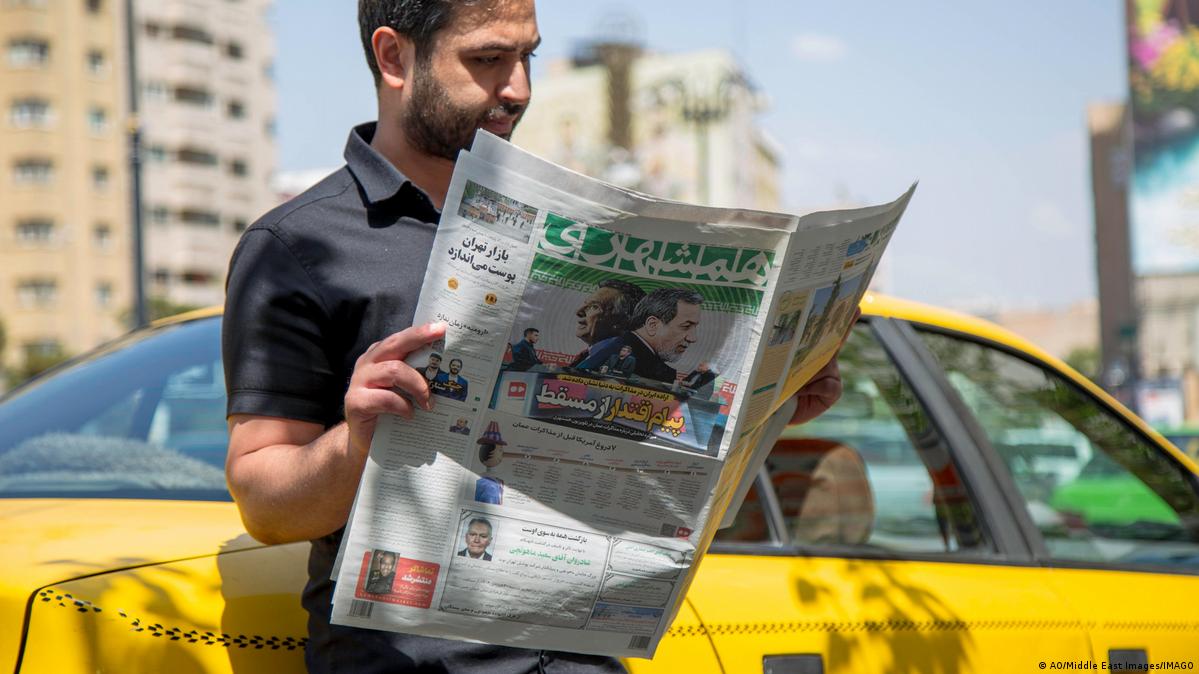
Iran has long ranked among the world's most repressive countries for press freedom. In the 2026 World Press Freedom Index, Reporters Without Borders placed Iran 177th out of 180 countries, below Taliban-ruled Afghanistan, which ranked 175th.
But journalists and media watchdogs say the US-Israel war with Iran has pushed reporting conditions to an even more dangerous point.
Authorities in Iran have long tried to control the public narrative during moments of crisis. But according to journalists inside the country, wartime conditions have made that grip even tighter.
One journalist working for a well-known Iranian outlet told DW that the publication is now being more closely monitored and that editorial instructions are being passed down from above on how coverage should be handled.
According to this journalist, who asked to remain anonymous, the newspaper's website cannot be accessed from outside Iran. Only a limited number of outlets close to the security establishment appear to have reliable access to the global internet.
That account fits a broader pattern described by press freedom groups.
In March, Reporters Without Borders (RSF) reported that journalists in Iran were facing an information blackout at the same time as they were trying to report under dangerous wartime conditions. The group also said some reporters had received threatening phone calls from state-linked institutions.
RSF said access to information inside Iran has been "severely restricted," with reporters working under bombardment while also facing pressure from state institutions.
Selective internet access
The pressure on journalists has unfolded alongside severe internet restrictions that have sharply limited the flow of information out of Iran.
Reuters news agency reported on April 28 that Iran entered the third month of an internet blackout, with the authorities introducing limited access for some businesses under a temporary scheme known as "Internet Pro."
According to the report, the blackout first began on January 8, briefly eased in February, and was reimposed after the war began on February 28.
In practice, that has created a two-tier information system. While much of the population has faced little or no normal access to the global internet, some journalists say a small number of media actors and institutions have been given exceptions.
Another Iranian journalist told DW that some colleagues had tried to collect names for access to so-called "white SIM cards," which reportedly allow freer access to the international internet for people approved by security agencies.
She said she refused, believing the arrangement was discriminatory and politically compromising. In her view, the expectation behind such privileges is clear: those who receive access are expected to stay within the boundaries of the state narrative.
Bypassing the censors: How to access blocked online content
To view this video please enable JavaScript, and consider upgrading to a web browser that supports HTML5 video
Fear, censorship and propaganda
Journalists inside Iran say the pressure extends far beyond internet access. Some describe a climate in which even routine reporting has become risky, especially around sensitive sites or politically charged events.
A journalist based in Tehran told DW that independent reporting has become nearly impossible. In his account, even some credentialed reporters who tried to cover strike locations were briefly detained and had their footage deleted.
DW could not independently verify each of those individual cases, but the broader pattern matches what press freedom groups have described: a wartime environment in which access to information is narrowing and the cost of reporting is rising.
At the same time, state media have continued to frame unauthorized reporting as harmful to national security.
Journalists say domestic outlets are effectively confined to the official version of events and avoid publishing sensitive details from the ground, including the public mood and the full human impact of the war.
Yet some analysts argue that the state's propaganda effort is failing to convince much of the public. Behrouz Tourani, a media expert and journalism trainer who has worked with several international outlets, said the Iranian regime's "media propaganda during this war has failed."
Tourani told DW the messaging has often appeared clumsy and disconnected from people's lived reality. Rather than persuading the public, he argues, it has exposed the growing gap between official narratives and what many Iranians are experiencing.
Pressure on Iran's diaspora journalists
The crackdown has also extended to exiled journalists and political activists. Reuters reported on March 9 that Tehran warned Iranians abroad who publicly backed the US and Israel that they could face legal consequences, including the confiscation of their property in Iran.
The report said the warning came from the prosecutor general's office and was directed at members of the diaspora who had expressed support online for the attacks on Iran.
That threat was reinforced later in March, when Iran's judiciary said people accused of spying, cooperating with "hostile states" or helping enemy targeting could face the death penalty and the confiscation of all assets under a law strengthened during the war.
Iranian authorities said the law could also apply to some media-related activity, including sharing images or videos deemed useful to hostile forces.
US pressure meets defiance from Iran
To view this video please enable JavaScript, and consider upgrading to a web browser that supports HTML5 video
Iran's information vacuum
Iran's judiciary and security apparatus have for years pursued journalists, media outlets and ordinary citizens over reporting and public commentary. What many reporters describe now is not an entirely new system, but a much harsher version of an old one, leading to an information vacuum.
As independent reporting becomes harder and internet access remains restricted, the space for verified journalism shrinks.
That gives the state more room to promote its own version of events while making it harder for citizens, reporters and the outside world to understand what is really happening on the ground.
Edited by: Wesley Rahn
AdvertisementСхожі новини
Зеленський анонсував посилення ППО для Дніпра та Одеси
Свириденко підбила підсумки першого року роботи спільного інвестиційного фонду України та США
Атака РФ на Тернопіль: кількість постраждалих зросла